
Critical Thinking Matching Worksheets for Ages 3-4
4 filtered results
Difficulty Level
Grade
Age
-
From - To
Subject
Activity
Standards
Unlock your child's potential with our "Critical Thinking Matching Worksheets for Ages 3-4." Designed to nurture young minds, these engaging worksheets help develop essential critical thinking skills through fun and interactive matching activities. Each worksheet challenges kids to identify patterns, make connections, and solve simple puzzles, laying the foundation for future problem-solving abilities. Perfect for both parents and educators, these resources make learning an enjoyable experience while fostering cognitive growth. Start your little learner on a path to success with our expertly crafted worksheets. Visit Kids Academy today and watch their critical thinking skills soar!
Favorites
With answer key
Interactive
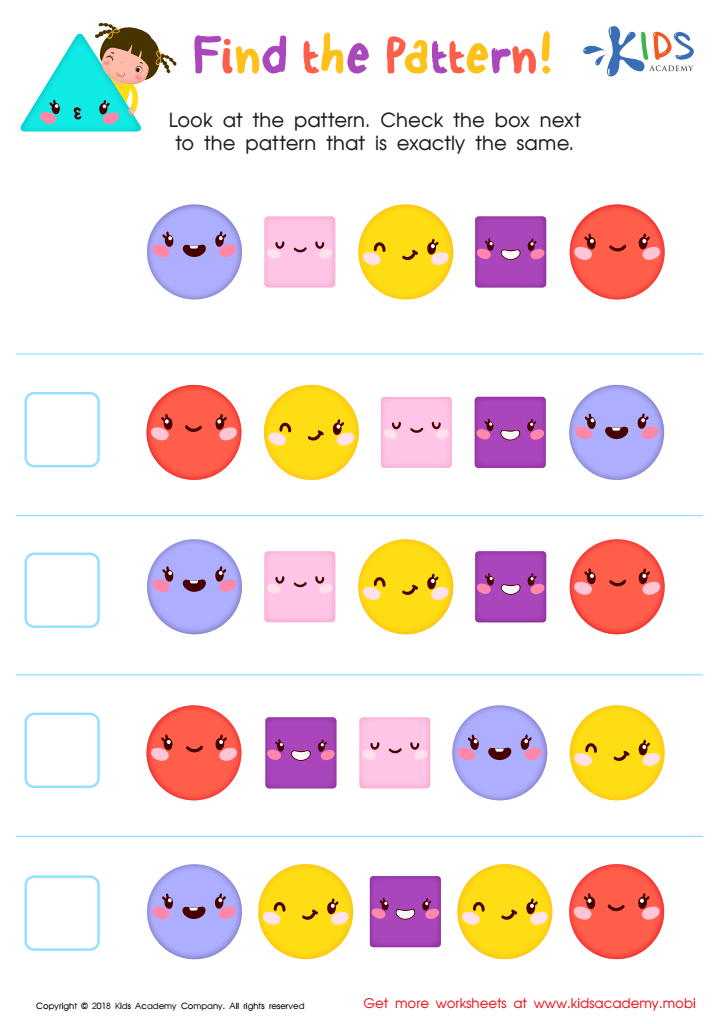
Find the Pattern Worksheet
This colorful pattern worksheet is perfect for testing your kids' pattern recognition. The bright colors will keep them engaged, while they check the box next to the pattern that is the same. Ask your kids to identify the colors used and see how well they can spot similarities!
 Assign to My Students
Find the Pattern Worksheet
Worksheet
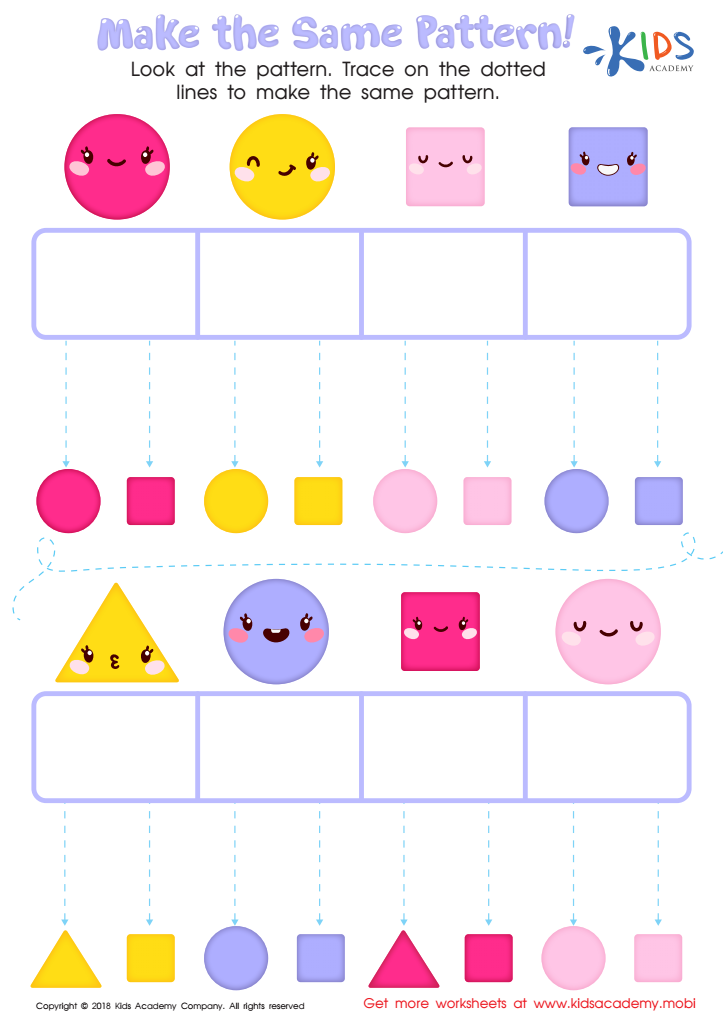
Make the Same Pattern Worksheet
Help your child look at the patterns in the tracing sheet and guide them to trace the dotted lines to match the shapes. This exercise tests their ability to copy pictures correctly, so emphasize the importance of paying attention to the instructions and details.
Make the Same Pattern Worksheet
Worksheet
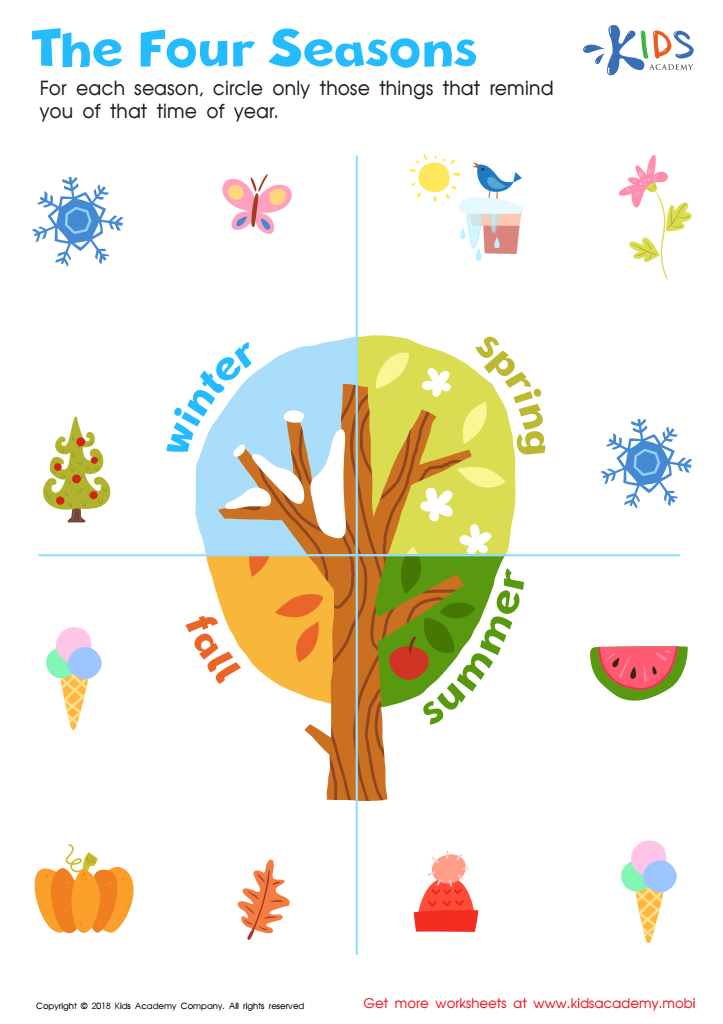
The Four Seasons Worksheet
Tell your child to circle things that remind them of each season. The tree has four squares, one for each season. Some things in each square match the season, others don't. Ask if any are out of place. Help them circle only items that remind them of that season.
The Four Seasons Worksheet
Worksheet
Join Kids Academy for Free
Who is primarily going to use this learning content?








Fostering critical thinking skills in children aged 3-4 can significantly impact their future learning and problem-solving abilities. At this early stage, their brains are developing rapidly, and engaging them in activities like critical thinking matching can lay a strong foundation for cognitive growth.
Critical thinking matching activities teach children how to observe, compare, and draw connections between different objects or concepts. This enhanced ability to notice patterns and relationships is crucial for tasks across all fields of learning, from mathematics to language arts. Additionally, these activities help children develop important life skills such as concentration, attention to detail, and the ability to make decisions based on evidence.
Parents and teachers should care about these skills because they influence a child's readiness for school. Children who have strong critical thinking abilities are more likely to excel academically, exhibit curiosity, and adapt quickly to new learning environments. Moreover, encouraging these skills at a young age helps in nurturing an independent mindset, enabling children to approach challenges confidently.
In summary, incorporating critical thinking matching into the daily routine for children aged 3-4 supports their cognitive development and prepares them for future academic and life success. By investing time and resources in these activities, parents and teachers contribute to building a stronger foundation for lifelong learning.








