
Vocabulary enhancement Matching Worksheets for Ages 3-4
9 filtered results
Difficulty Level
Grade
Age
-
From - To
Subject
Activity
Standards
Boost your child's vocabulary skills with our engaging Vocabulary Enhancement Matching Worksheets designed specifically for ages 3-4. These interactive worksheets encourage young learners to connect words with corresponding images, fostering an early love of language. Ideal for home or classroom use, these activities promote cognitive development and strengthen word recognition in a fun, playful manner. Perfect for building foundational vocabulary, our worksheets cater to various learning styles, ensuring every child thrives. Discover a variety of themes that make learning enjoyable while enhancing language skills. Visit us to download and explore these invaluable resources tailored for your little language learners!
Favorites
With answer key
Interactive
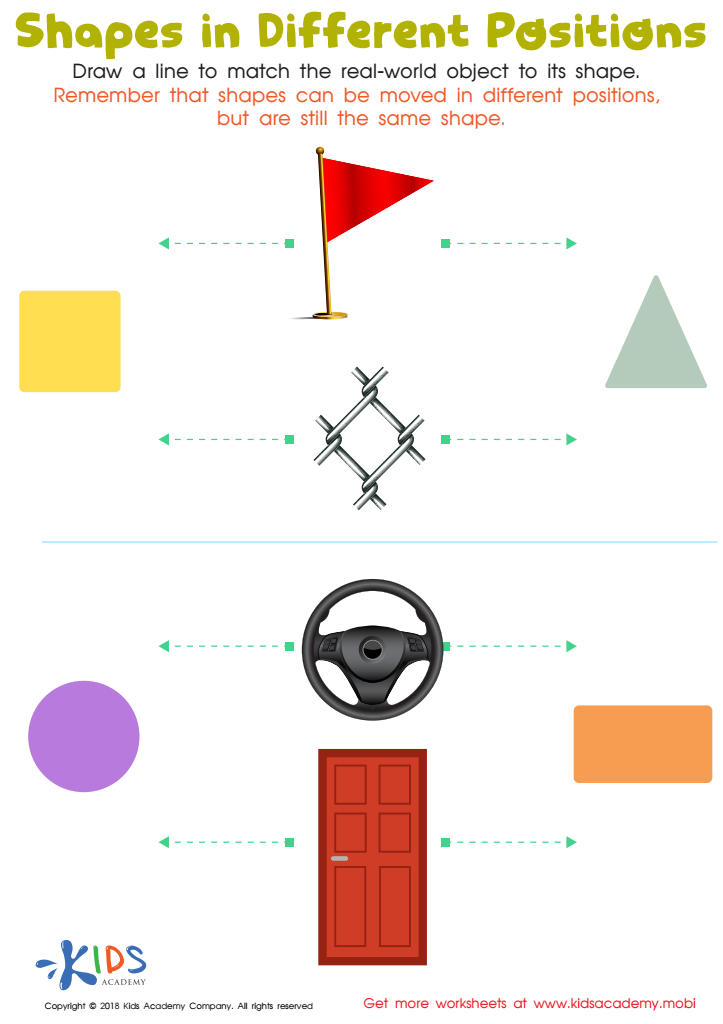
Shapes in Different Positions Worksheet
Children can practice and strengthen their visual-discernment, hand-eye coordination and neural connections by manipulating shapes in their minds and matching them with the right answer. This PDF with bright colors gives your kids the opportunity to do so.
 Assign to My Students
Shapes in Different Positions Worksheet
Worksheet
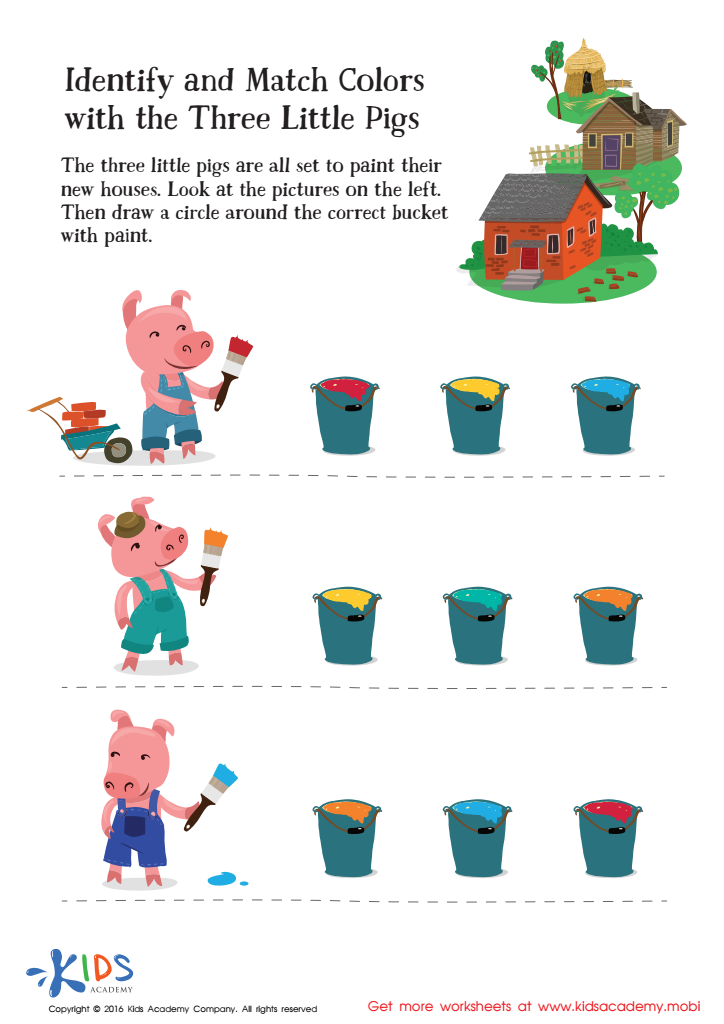
Fairy Tale Worksheet: Identify and Match Colors with Three Little Pigs
Help the 3 Little Pigs find the right color for their houses! This fun worksheet will have your child developing their problem solving and color recognition skills. It's a great way to start building the foundation for advanced logic skills. Plus, they'll love the Three Little Pigs coloring pages.
Fairy Tale Worksheet: Identify and Match Colors with Three Little Pigs
Worksheet
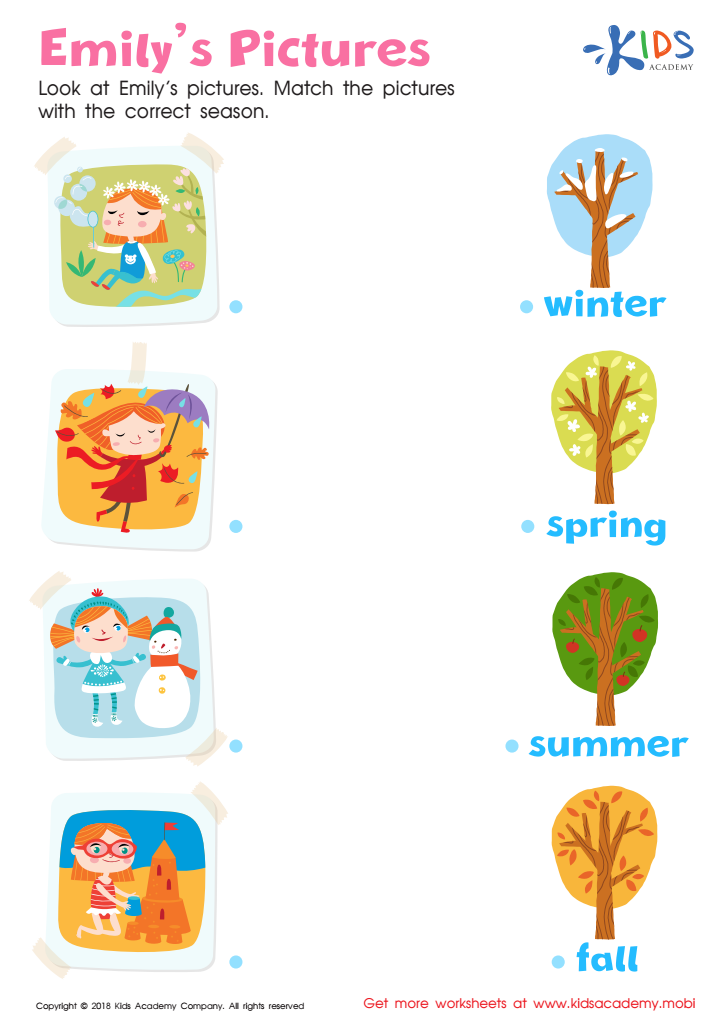
Emily's Pictures Worksheet
Look at the pictures of Emily on the left. Ask your child what she's doing in each one. Then, match the activities to the seasons on the right. Help your kids identify the correct season for each activity. Shorten to 80 words: Look at the pictures of Emily on the left. Ask your child what she's doing in each one, then match the activities to the seasons on the right. Help your kids find the correct season for each activity.
Emily's Pictures Worksheet
Worksheet
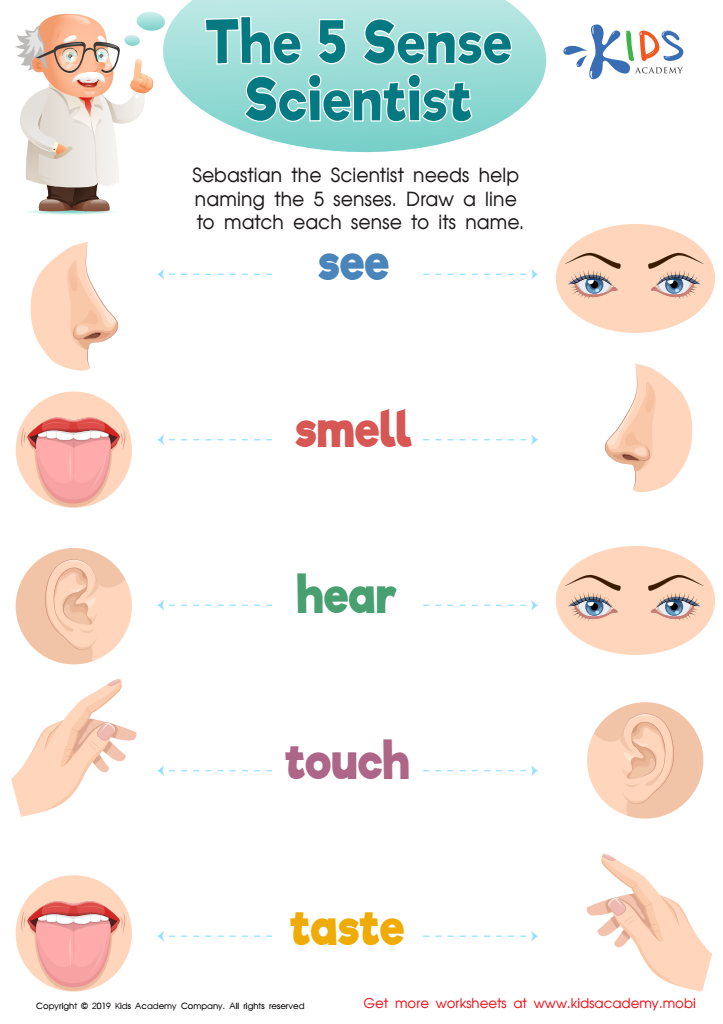
The 5 Sense Scientist Worksheet
Our young children will have fun learning about their five senses with this free Sense Scientist worksheet. Helping Sebastian the Scientist, they'll name the five senses and use traceable lines to connect each picture with its correct sense. Colorful words and pictures will create a memorable picture representation.
The 5 Sense Scientist Worksheet
Worksheet
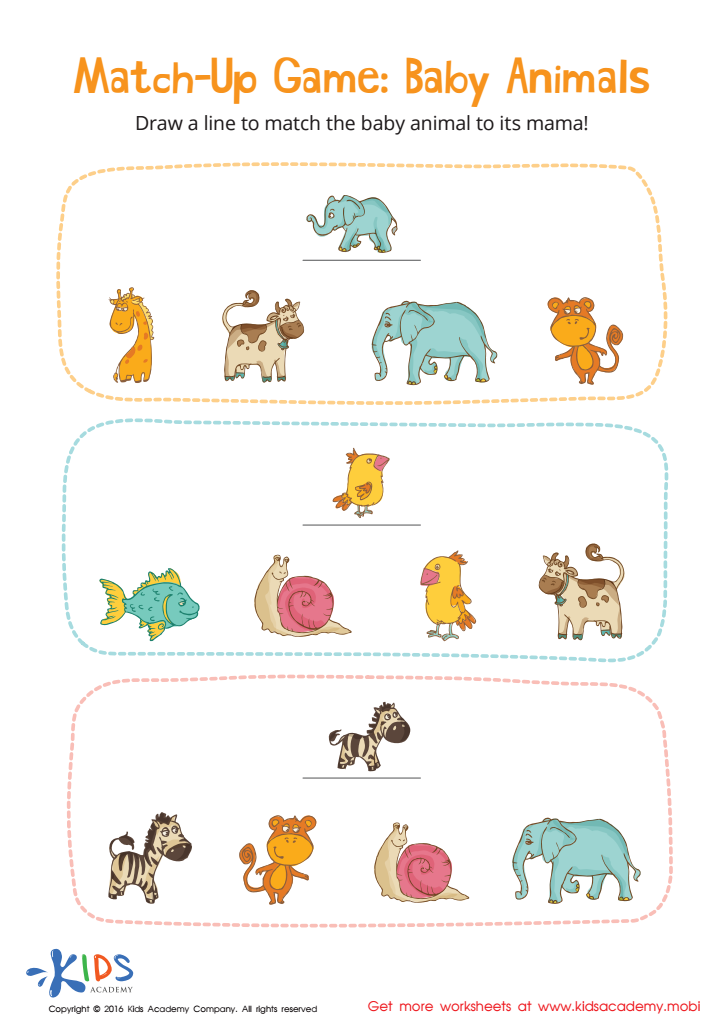
Baby Animals Match-Up Worksheet
Help baby animals find their mummies by using this fun matching worksheet. Kids can practice logical reasoning skills while recognizing similar pictures and learning about animals. Extend their knowledge by having them identify each cute animal!
Baby Animals Match-Up Worksheet
Worksheet
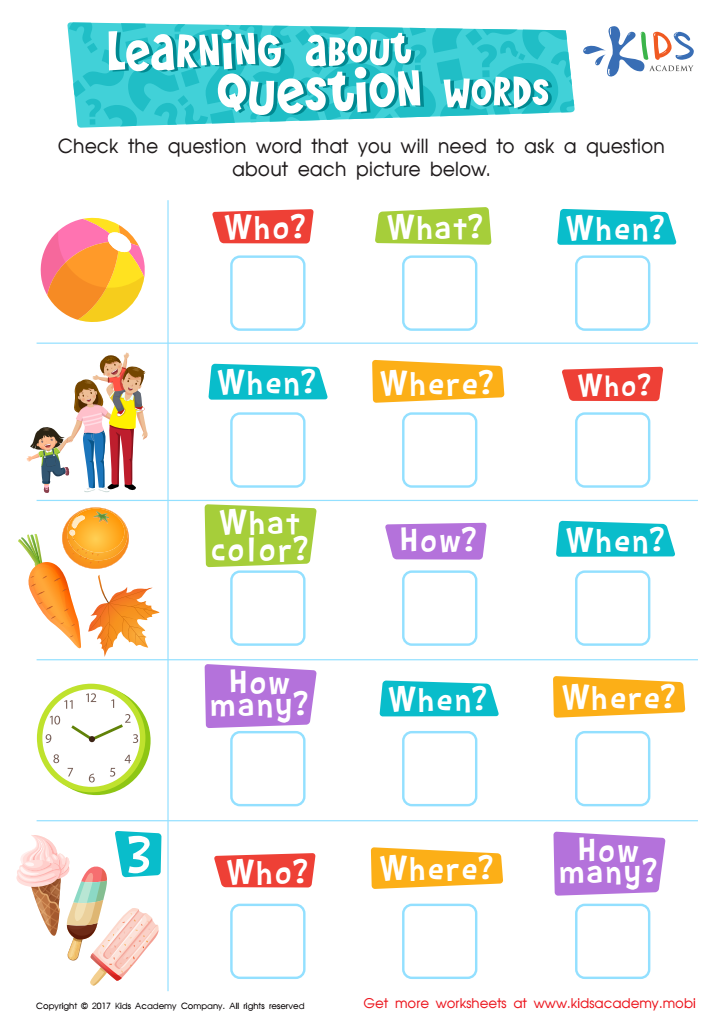
Learning about Question Words Worksheet
Learning language can be difficult, but this free printable worksheet will help! Have your child look at the picture and name it. Then help them choose the right question word to ask something about it. For example, when looking at a beach ball, you can't ask "Who?" Instead, look through the list to select the right word. It's a great way to learn language basics!
Learning about Question Words Worksheet
Worksheet
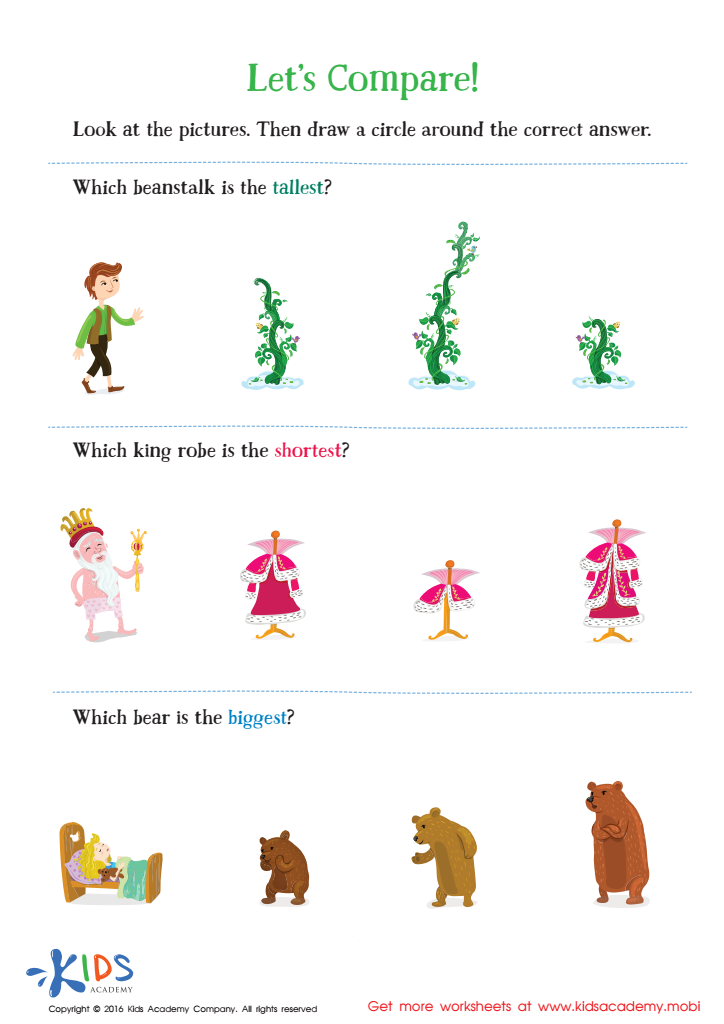
Fairy Tale Worksheet: Let's Compare
Preschoolers need to recognize different sizes of objects. This worksheet combines fun fairy tales with size practice, helping them read, problem solve, and sort through pictures. Your child will love the images and be eager to complete it. Enhance their learning by talking about the tales to build comprehension.
Fairy Tale Worksheet: Let's Compare
Worksheet
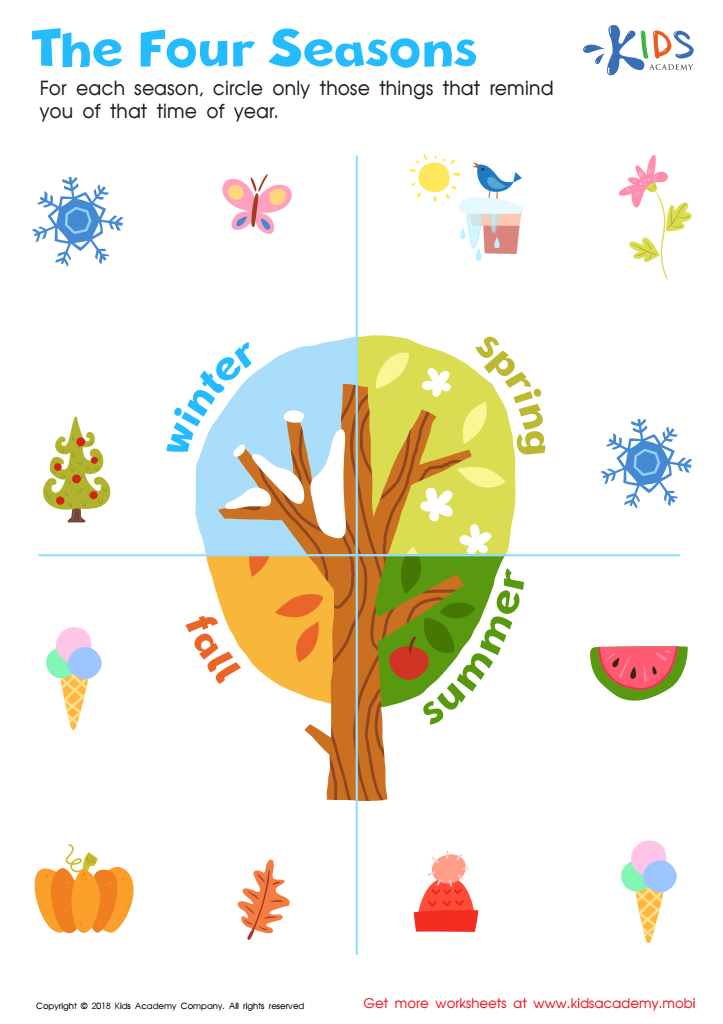
The Four Seasons Worksheet
Tell your child to circle things that remind them of each season. The tree has four squares, one for each season. Some things in each square match the season, others don't. Ask if any are out of place. Help them circle only items that remind them of that season.
The Four Seasons Worksheet
Worksheet
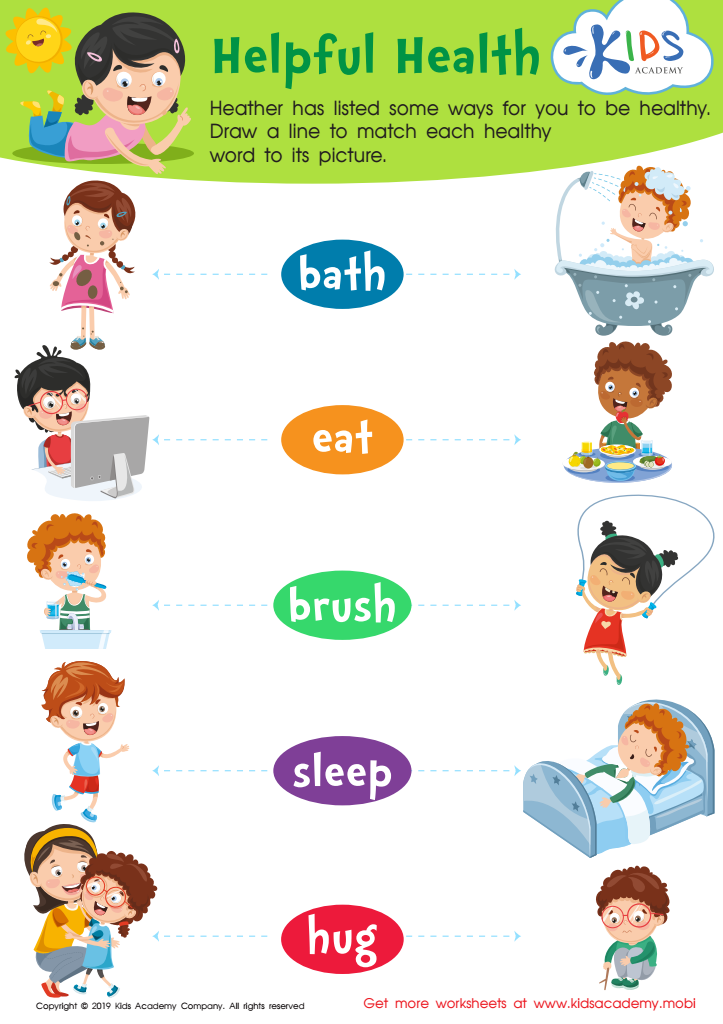
Helpful Health Worksheet
Kids can learn healthy habits with this free worksheet! With their pal Heather, they'll trace lines to connect health words with pictures like brushing teeth, hugging, and getting enough sleep. It's a great way to help young ones understand healthy activities.
Helpful Health Worksheet
Worksheet
Join Kids Academy for Free
Who is primarily going to use this learning content?



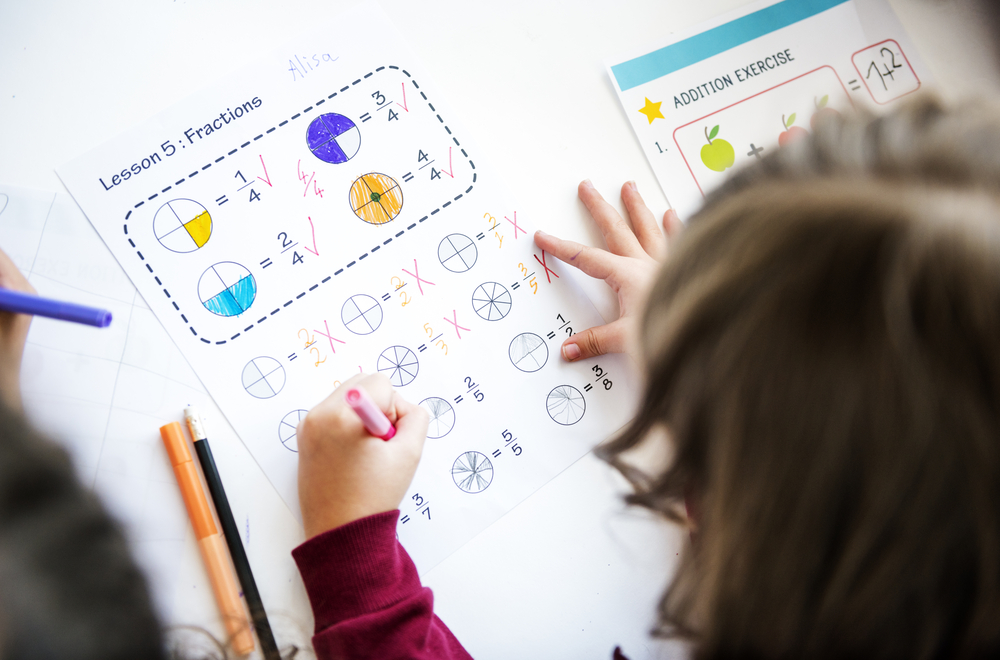



Parents and teachers should prioritize vocabulary enhancement for children aged 3-4 because this foundational skill plays a crucial role in their overall cognitive and social development. At this age, children's brains are incredibly receptive to language, making it an ideal time to expand their vocabulary. Engaging them in vocabulary-rich activities fosters language acquisition, enabling them to express their thoughts, needs, and emotions more effectively.
Furthermore, a robust vocabulary enhances literacy skills, which are essential for academic success. Children with a strong vocabulary are better equipped to understand stories and instructions, improving their comprehension and learning outcomes in later years. Vocabulary discussions also encourage critical thinking, curiosity, and creativity, as children learn to explore concepts and engage in conversations about the world around them.
Additionally, enhancing vocabulary promotes social interactions, as children with a diverse word bank can better communicate, resolve conflicts, and build friendships. It helps them conform to social norms and fit into various social settings. By incorporating vocabulary-matching activities, parents and teachers provide children with stimulating, interactive experiences that make learning enjoyable while laying the groundwork for lifelong language and literacy skills. Prioritizing vocabulary development now sets children on a path for future success in school and beyond.








