Basic Math Skills Measurement Worksheets for Ages 3-4
9 filtered results
-
From - To
Discover our engaging "Basic Math Skills Measurement Worksheets" designed specifically for children aged 3-4! These interactive worksheets introduce young learners to fundamental measurement concepts in a fun and enjoyable way. With colorful visuals and easy-to-follow activities, kids will explore notions of size, length, and comparison, helping them develop essential math skills early on. Each worksheet fosters creativity and critical thinking while ensuring your little ones build a solid foundation in mathematics. Perfect for at-home learning or classroom activities, our worksheets aim to make measuring an exciting adventure for young explorers. Start your child's math journey today!
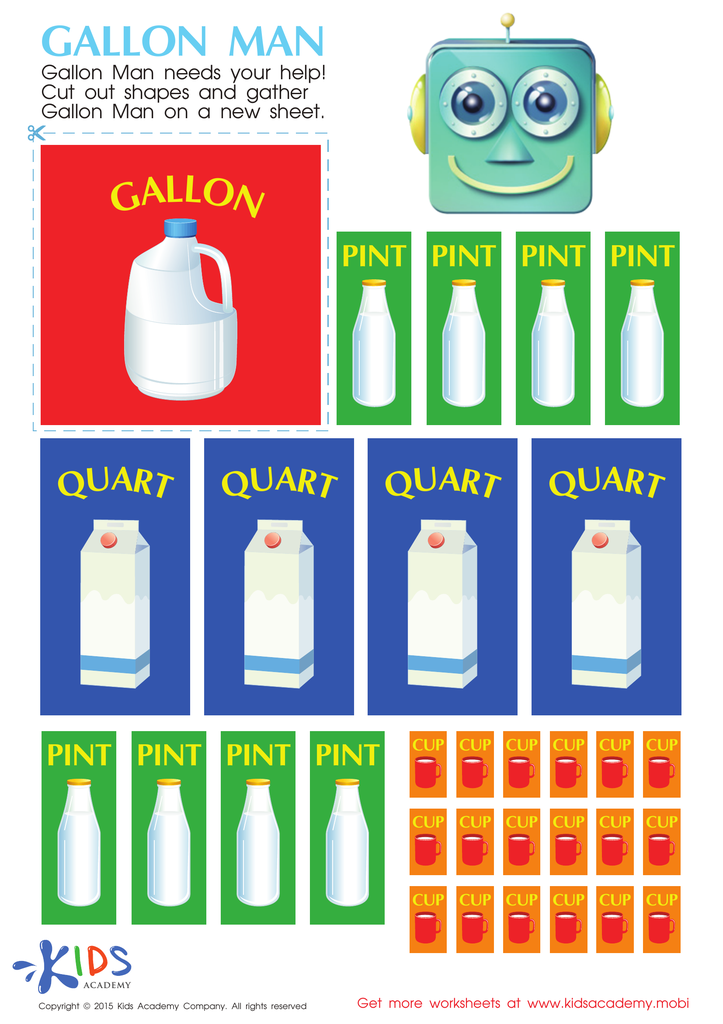
Cups, Pints and Quarts With Gallon Man Worksheet
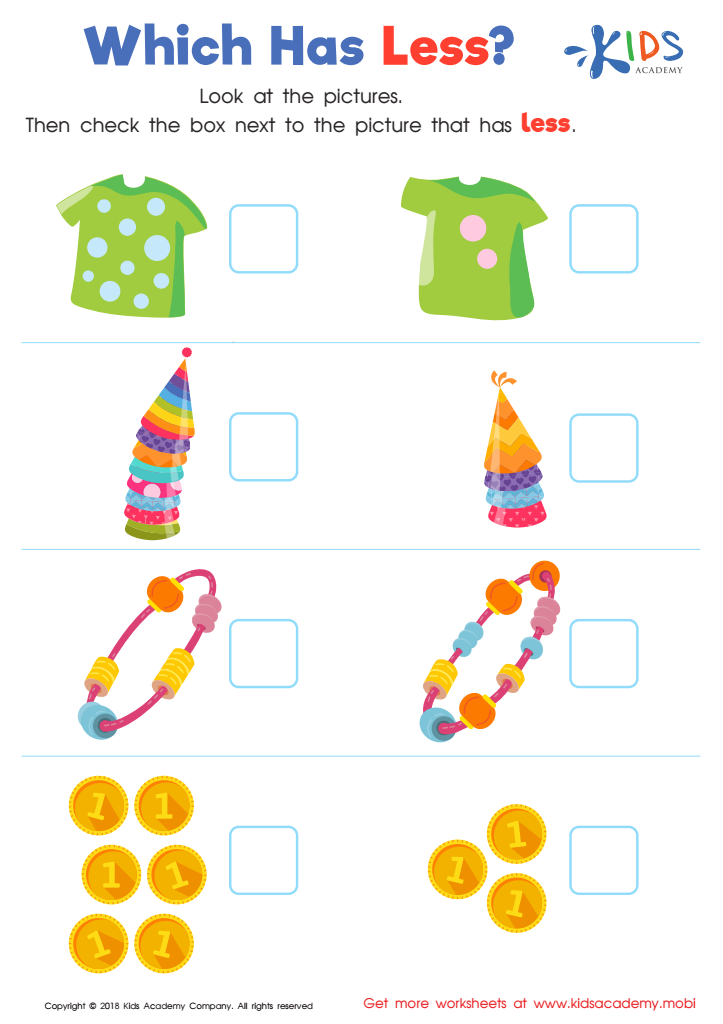
Which Has Less? Worksheet
 Assign to My Students
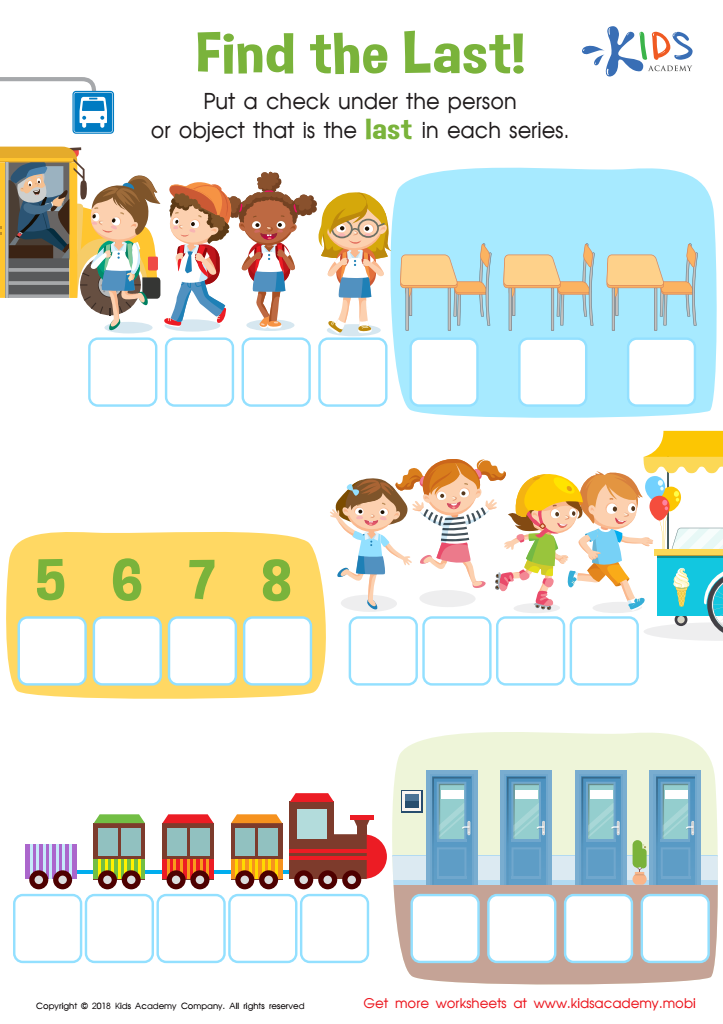
Find the Last! Worksheet
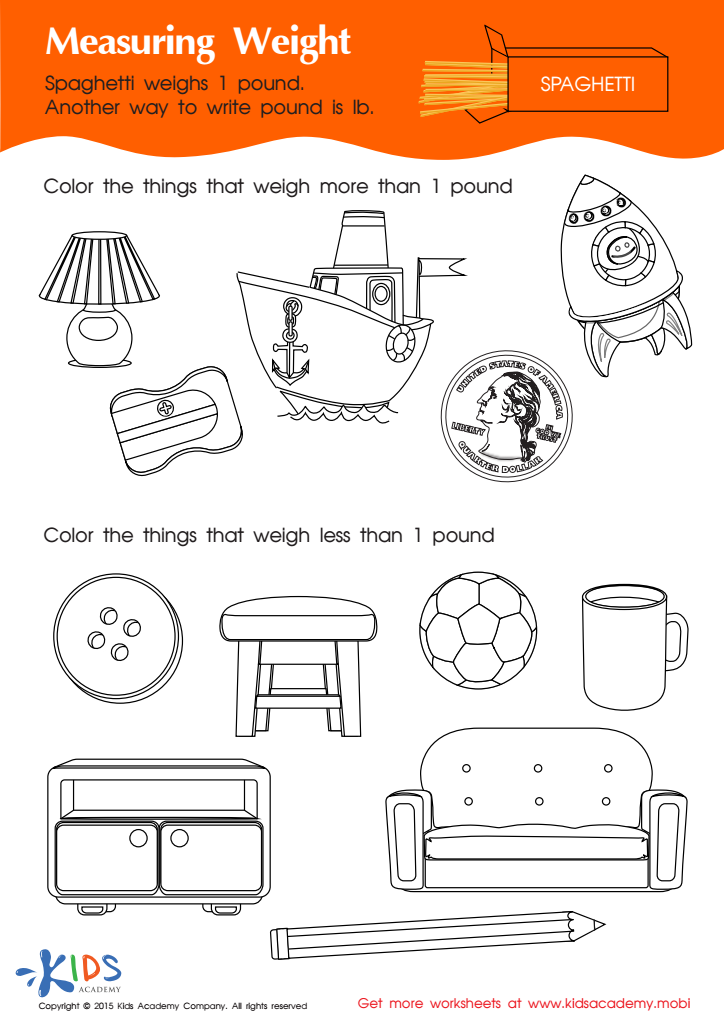
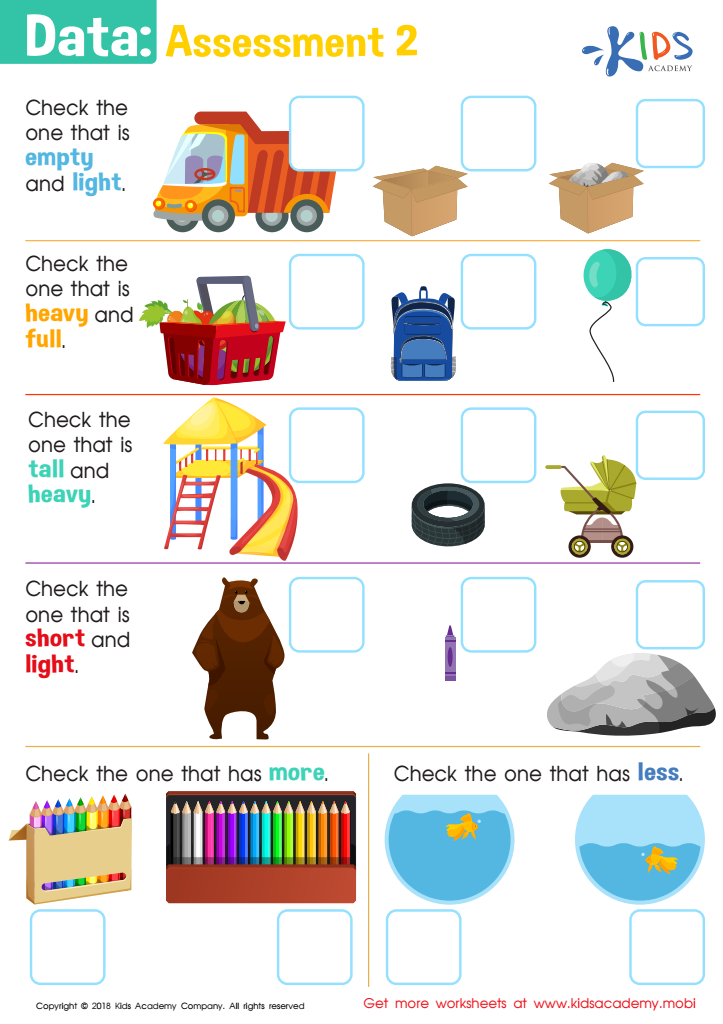
Data: Assessment 2 Worksheet
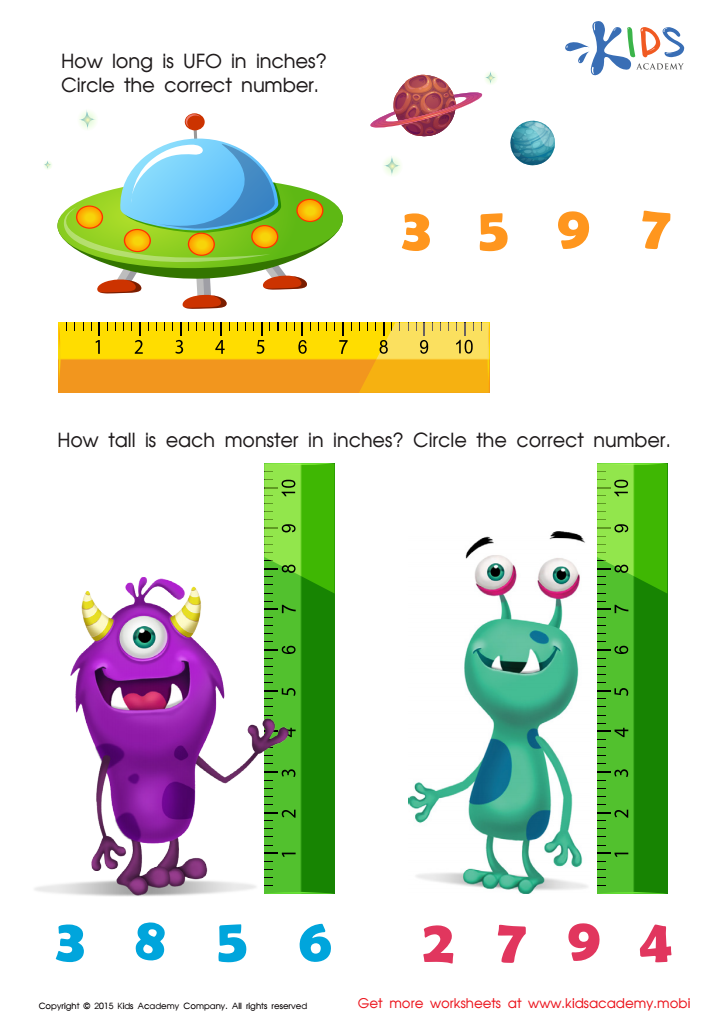
Measuring in Inches Worksheet
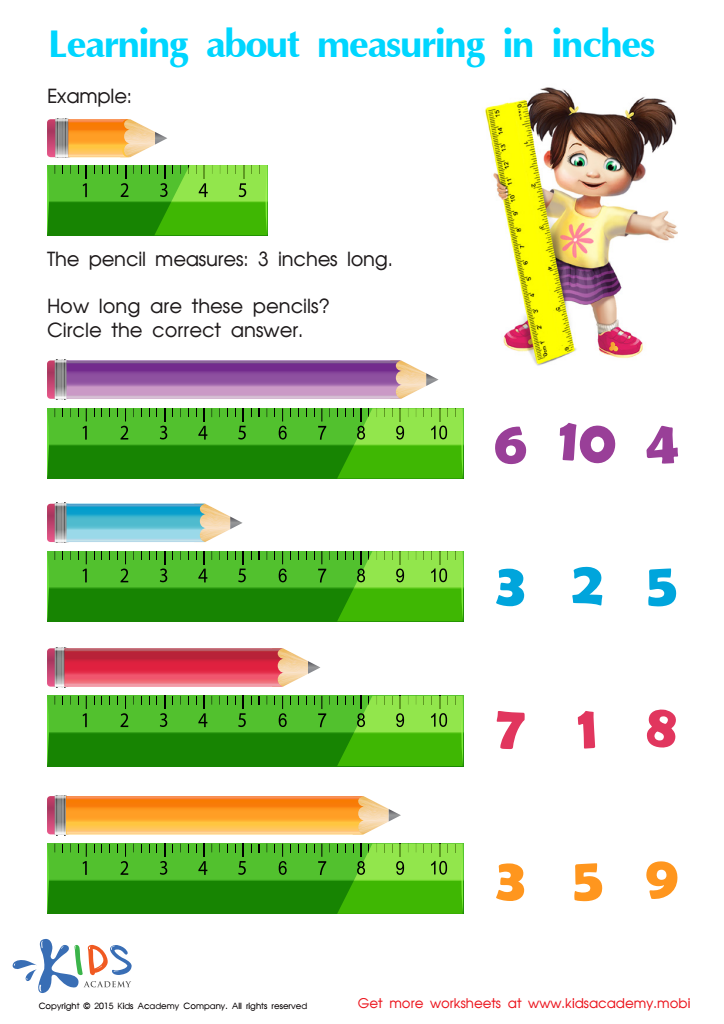
Learning About Measuring In Inches Printable
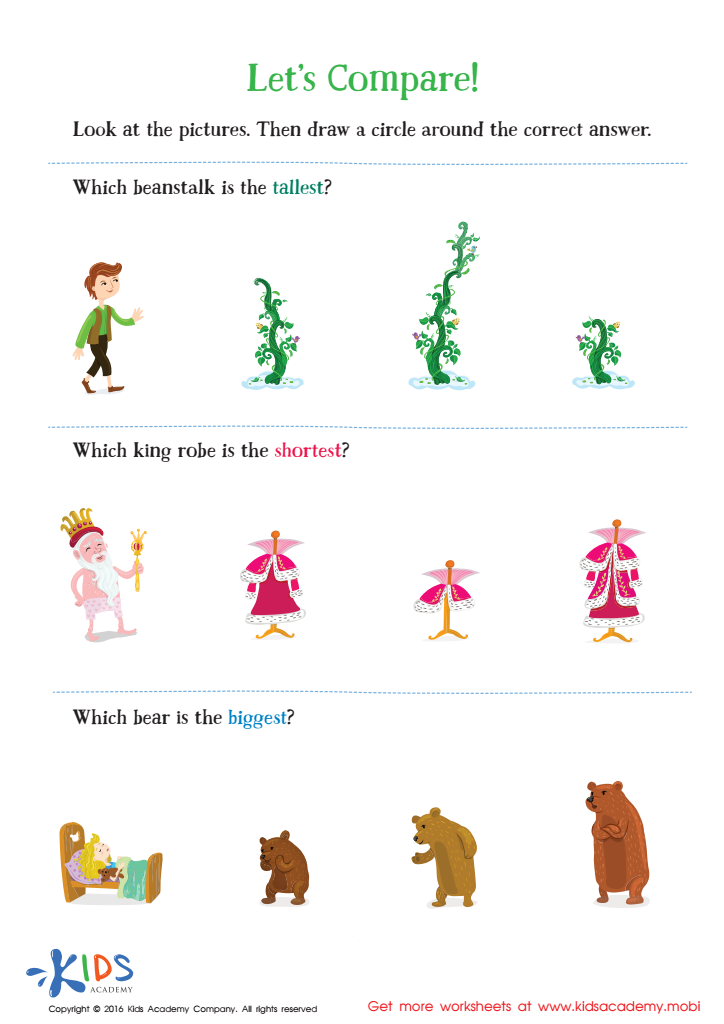
Fairy Tale Worksheet: Let's Compare
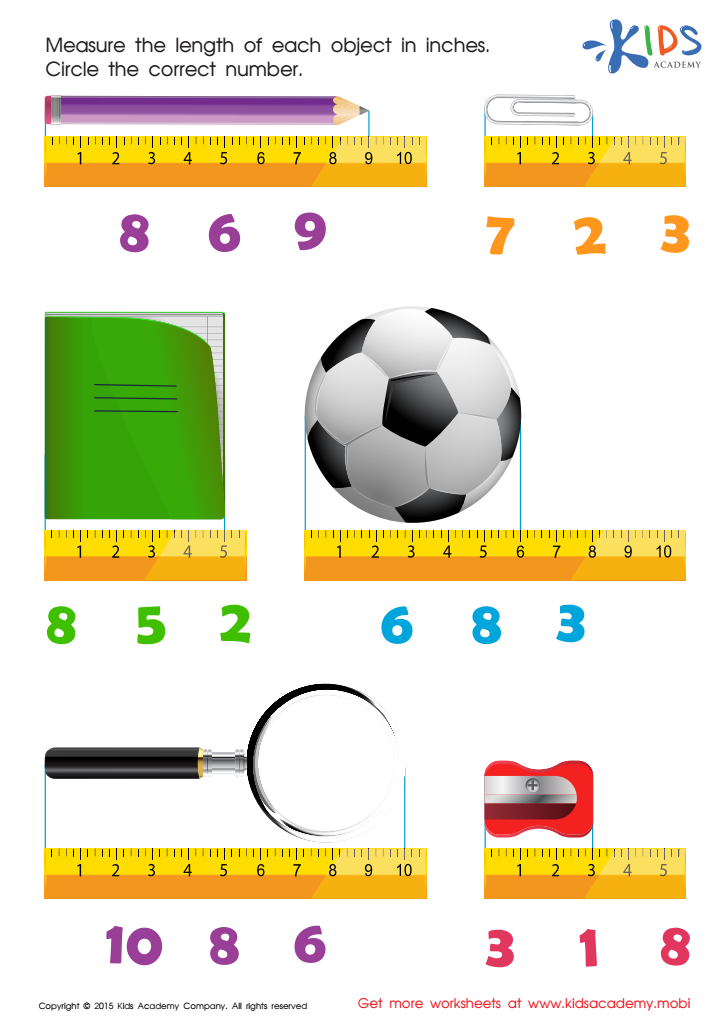
Learning measuring objects in inches Worksheet








Basic math skills, particularly measurement, are crucial for children aged 3-4, forming the foundation for future math understanding and overall cognitive development. During these early years, children are inherently curious about their environment, and incorporating measurement into their play and activities helps capitalize on this curiosity.
Teaching measurement concepts, such as size, weight, and volume, offers children hands-on experiences that enhance their ability to observe, compare, and quantify their surroundings. For parents and teachers, engaging children in measurement activities can boost their language skills, as they learn vocabulary related to dimensions and quantities. This interaction fosters critical thinking and problem-solving abilities.
Moreover, basic understanding of measurement sets the stage for more complex math skills later, such as addition, subtraction, and geometry. These foundational skills are not merely academic; they relate to everyday life, such as cooking, shopping, and even understanding time.
By nurturing these skills early on, parents and teachers empower children with the confidence and tools they need to tackle math independently in later years, drastically impacting their educational trajectory. Investment in basic math measurement skills at this age prepares children for future academic success and life skills development, making it a key area of focus in early childhood education.








