
Fine Motor Skills Sorting Worksheets for Ages 3-4
3 filtered results
Difficulty Level
Grade
Age
-
From - To
Subject
Activity
Standards
Enhance your child's fine motor skills with our engaging sorting worksheets designed for ages 3-4! These printable resources are perfect for young learners, helping them develop essential hand-eye coordination and dexterity through fun sorting activities. Each worksheet encourages exploration and learning by enabling kids to categorize and arrange various objects, such as shapes and colors. As they cut, paste, and manipulate items, children refine their coordination while building cognitive skills. Our fine motor skills sorting worksheets provide an enjoyable way for early learners to practice concentration and gain confidence in their abilities. Download now for an enriching learning experience!
Favorites
With answer key
Interactive
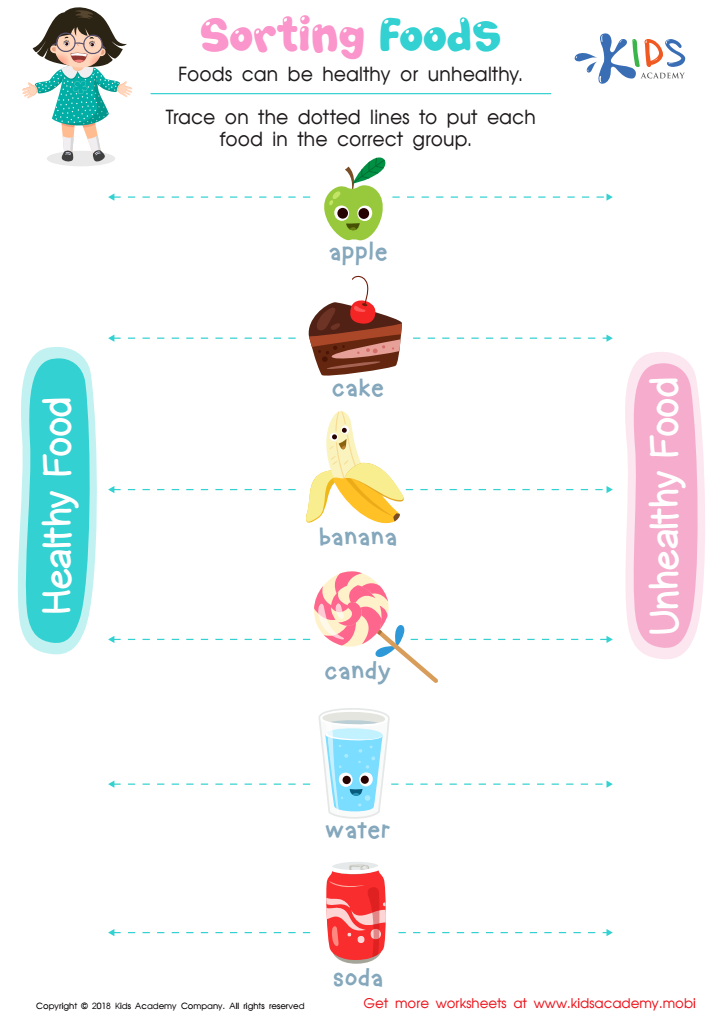
Sorting Food Worksheet
This delightful worksheet boosts critical thinking and fine motor skills. Kids use prior knowledge and pictures to sort foods into healthy and unhealthy groups. Tracing lines support accurate sorting and matching. Enjoy fun and free learning!
 Assign to My Students
Sorting Food Worksheet
Worksheet
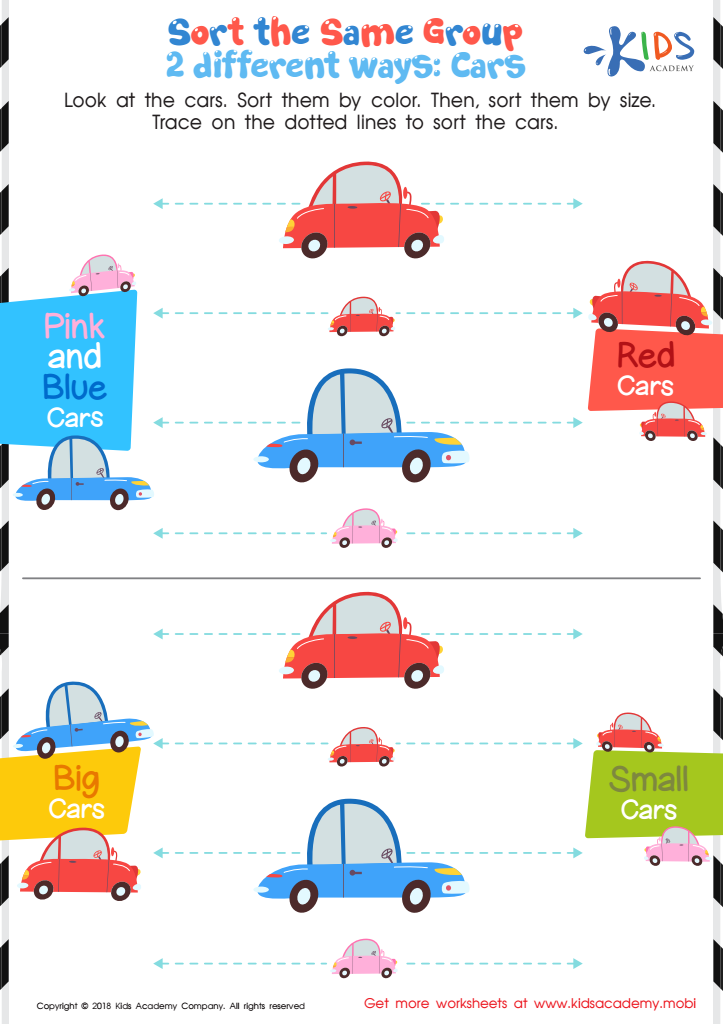
Sort the Same Group 2 Different Ways: Cars Worksheet
Look at the pictures with your child. Can they identify the objects? Ask them to sort the cars first by color and then size. Assist them to trace the dotted lines to sort the cars by color and size. This worksheet lets you easily assess your child's color and size organization skills.
Sort the Same Group 2 Different Ways: Cars Worksheet
Worksheet
Join Kids Academy for Free
Who is primarily going to use this learning content?








Fine motor skills refer to the small movements of the hands and fingers, which are crucial for children's overall development. For ages 3-4, sorting activities greatly enhance these skills. When children engage in sorting tasks—such as sorting objects by size, shape, or color—they practice precise hand movements and hand-eye coordination. These activities help strengthen the small muscles in their hands and fingers, facilitating more complex tasks like writing, buttoning clothes, and using scissors in later years.
Moreover, sorting activities also support cognitive development. Children learn to categorize information, an essential foundational skill for math and problem-solving. When they sort objects, they apply critical thinking as they recognize patterns and make decisions based on their observations.
Parents and teachers should prioritize fine motor skills sorting activities as part of early learning experiences. Engaging children in hands-on activities fosters their independence and boosts their confidence. Fine motor development not only lays the groundwork for academic skills but also enhances daily living capacities. Ultimately, prioritizing these skills nurtures well-rounded, capable individuals, equipping them for future learning and interactions. By observing and participating in sorting activities, adults can create a supportive environment for children's growth and exploration.








