Problem-Solving Skills Subtraction Worksheets for Ages 3-4
11 filtered results
-
From - To
Enhance your child's problem-solving skills with our specially designed subtraction worksheets for ages 3-4. These engaging and colorful worksheets from Kids Academy focus on developing early math skills in a fun and interactive way. Perfectly tailored for preschoolers, each activity encourages understanding basic subtraction concepts while fostering critical thinking and analytical abilities. Emphasizing hands-on learning, these worksheets make mastering subtraction enjoyable and stress-free. Ideal for parents and educators looking to give young learners a head start in math, our printable worksheets provide a solid foundation for future learning success. Discover the power of problem-solving through subtraction today!
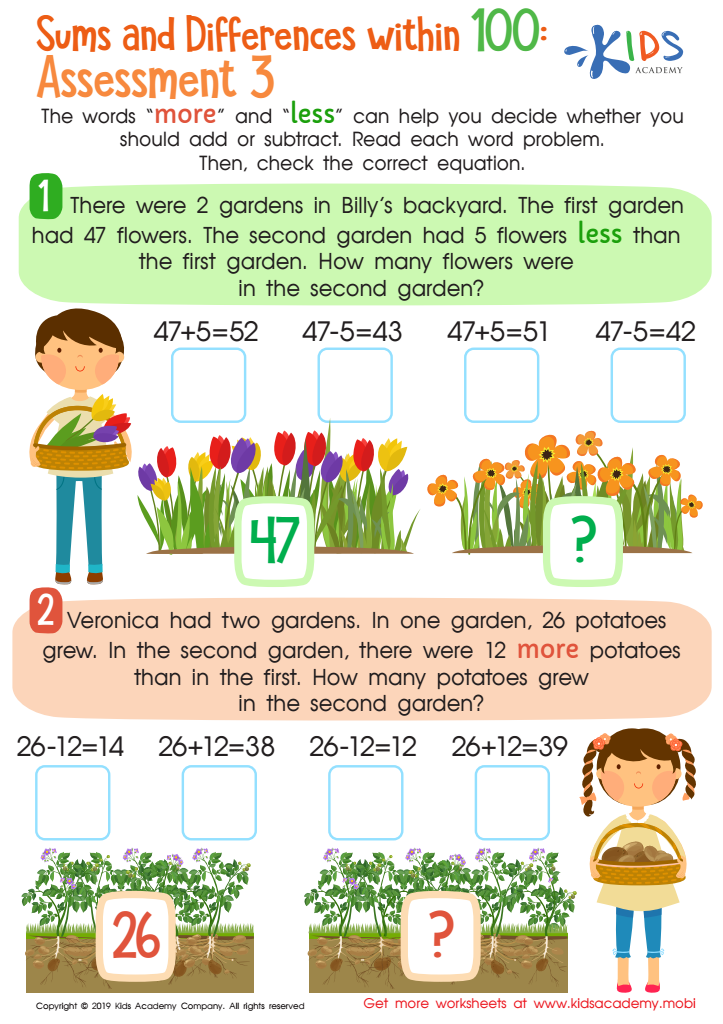
Sums and Differences Within 1 - Assessment 1 Worksheet
 Assign to My Students
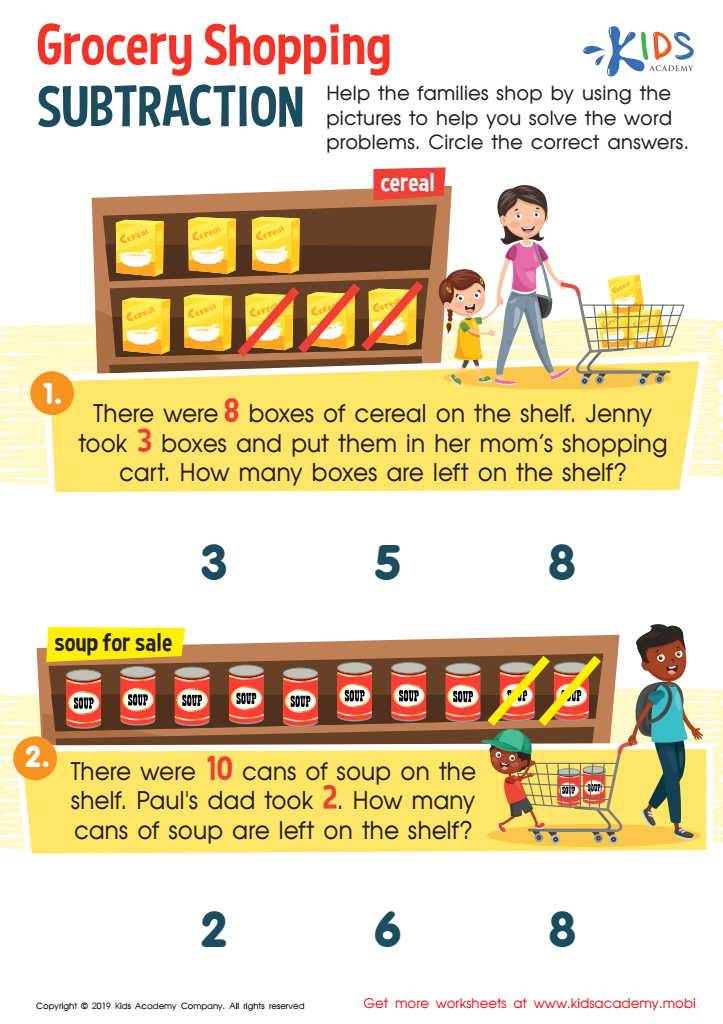
Grocery Shopping Subtraction Worksheet
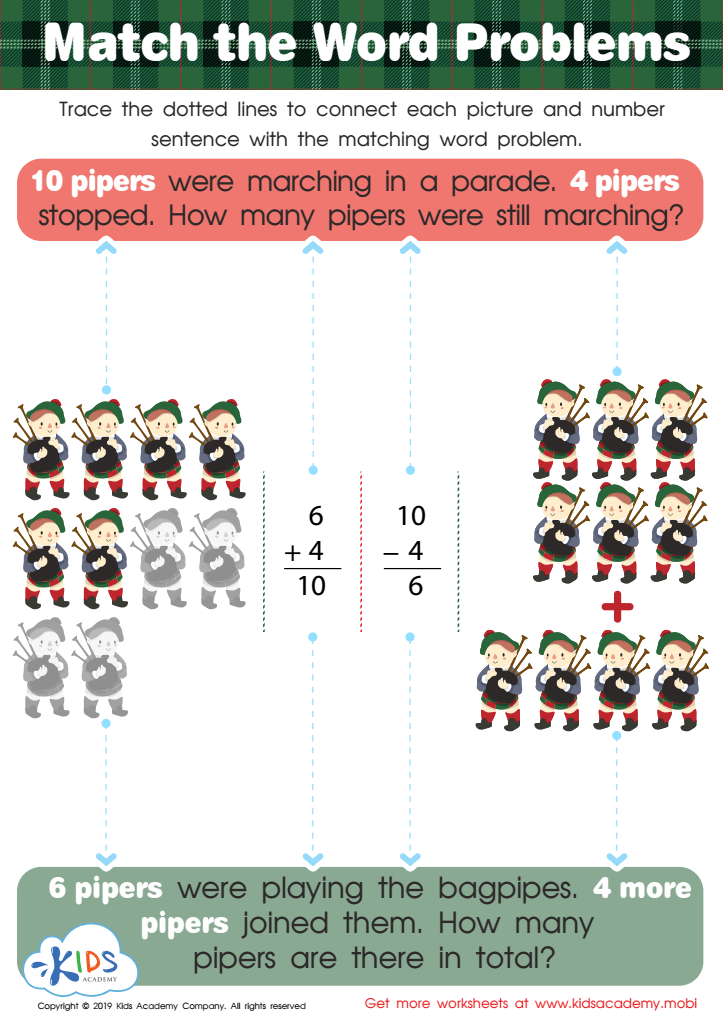
Match the Word Problems Worksheet
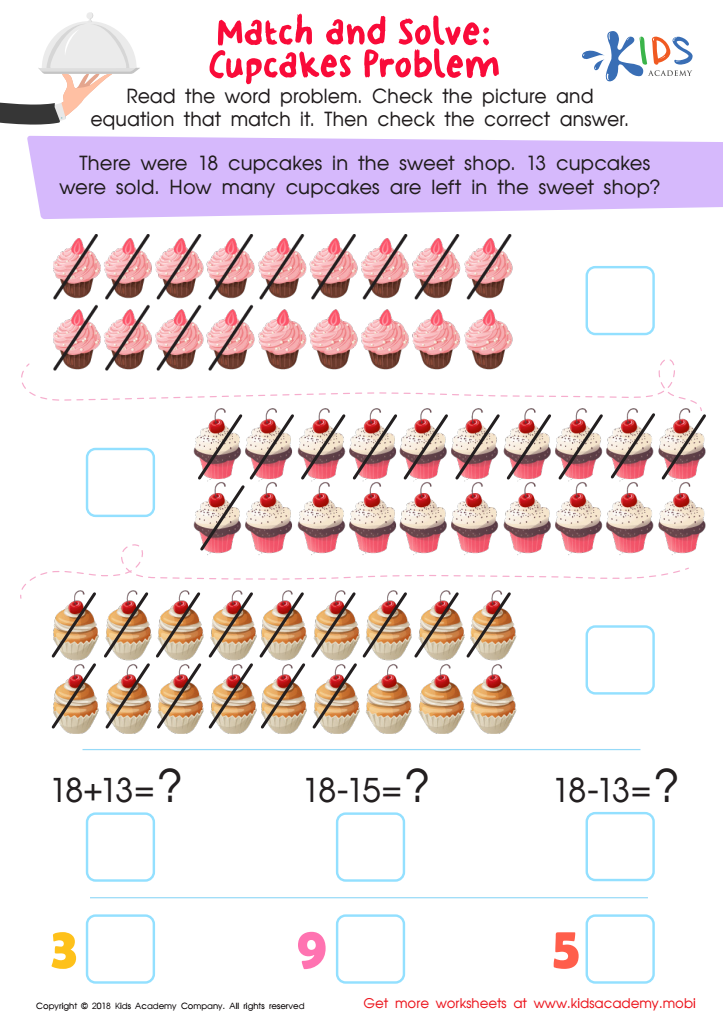
Match and Solve: Cupcakes Problem Worksheet
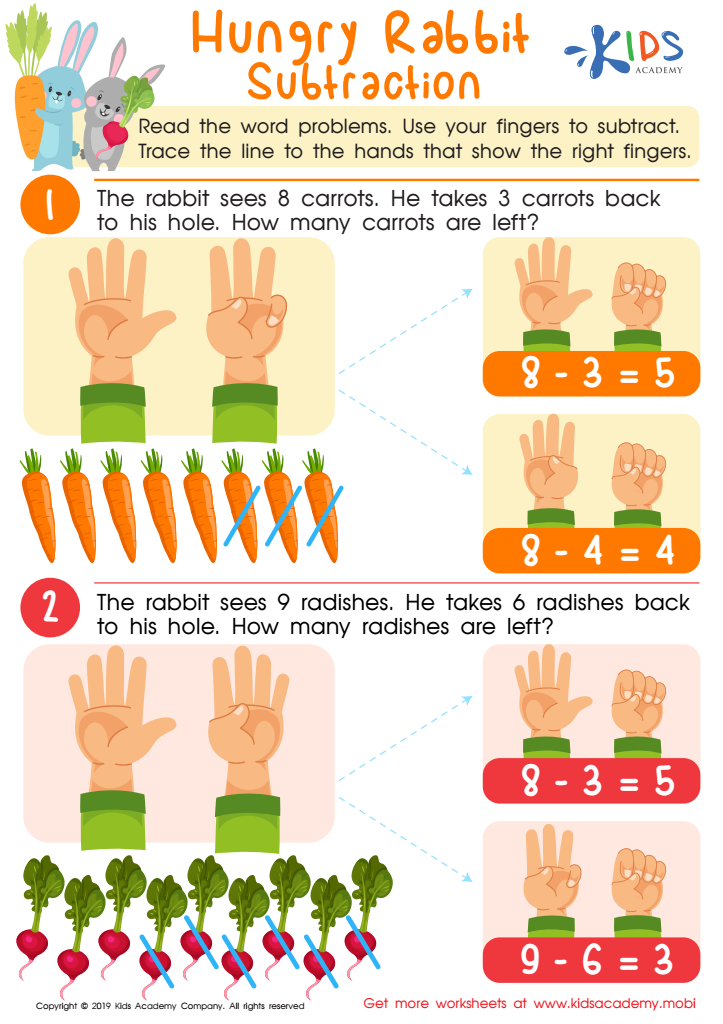
Hungry Rabbit Subtraction Worksheet
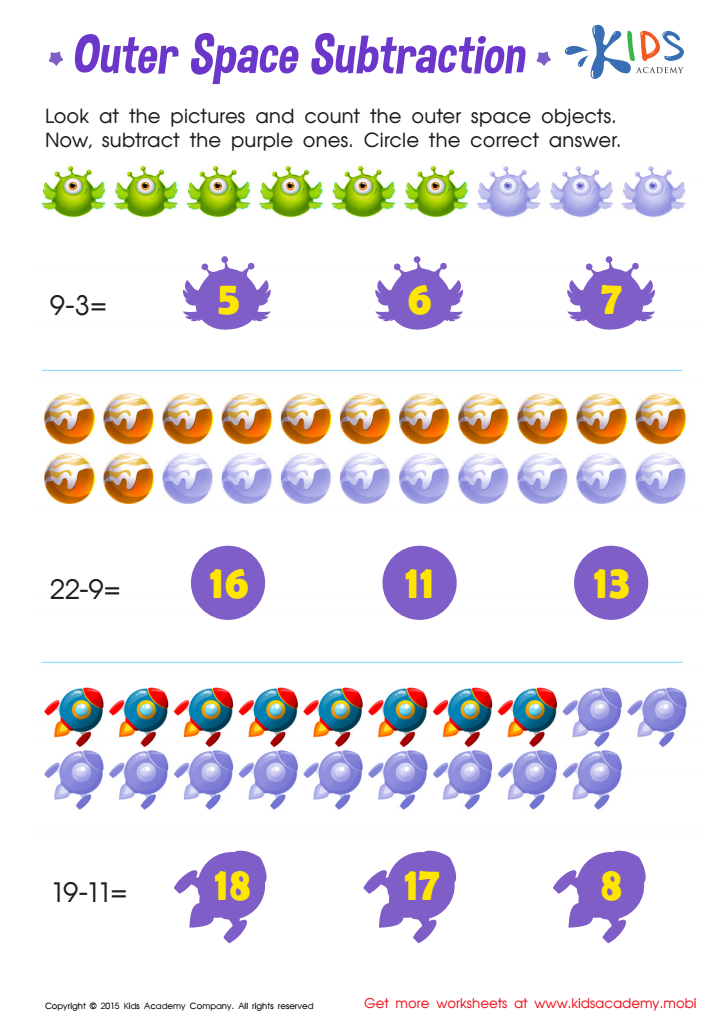
Outer Space Substraction Worksheet
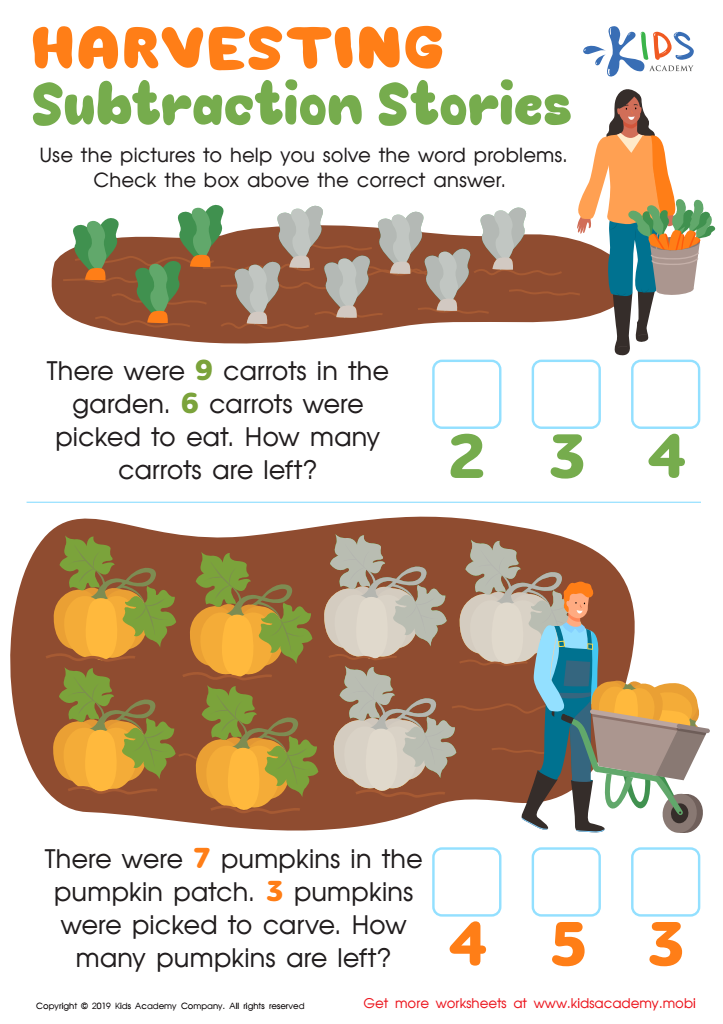
Harvesting Subtraction Stories Worksheet
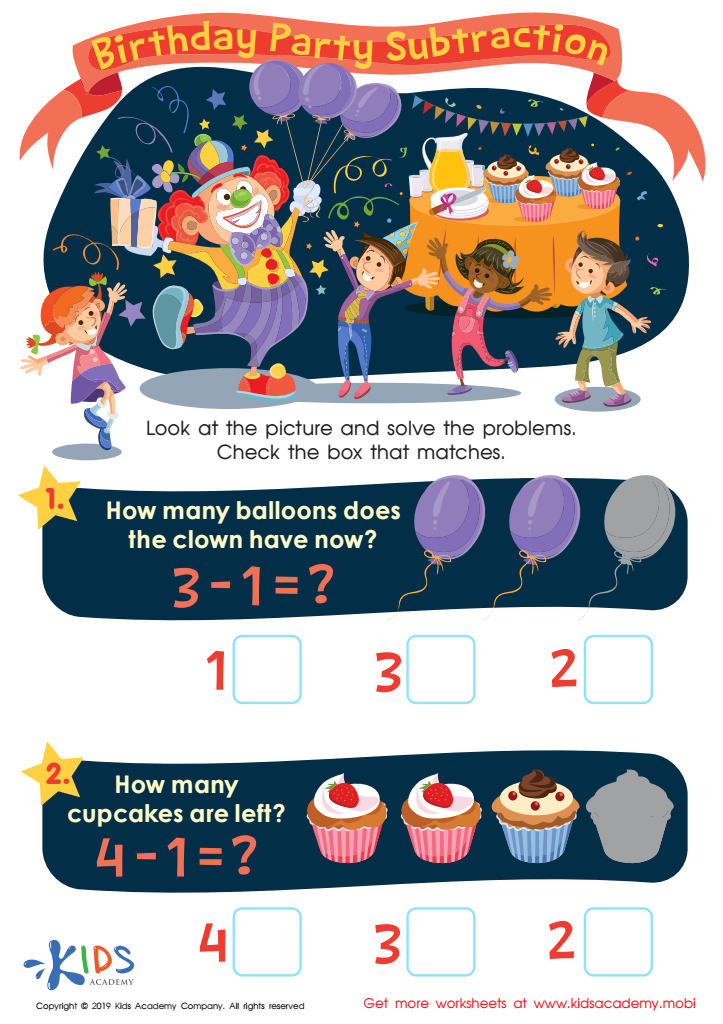
Birthday Party Subtraction Worksheet
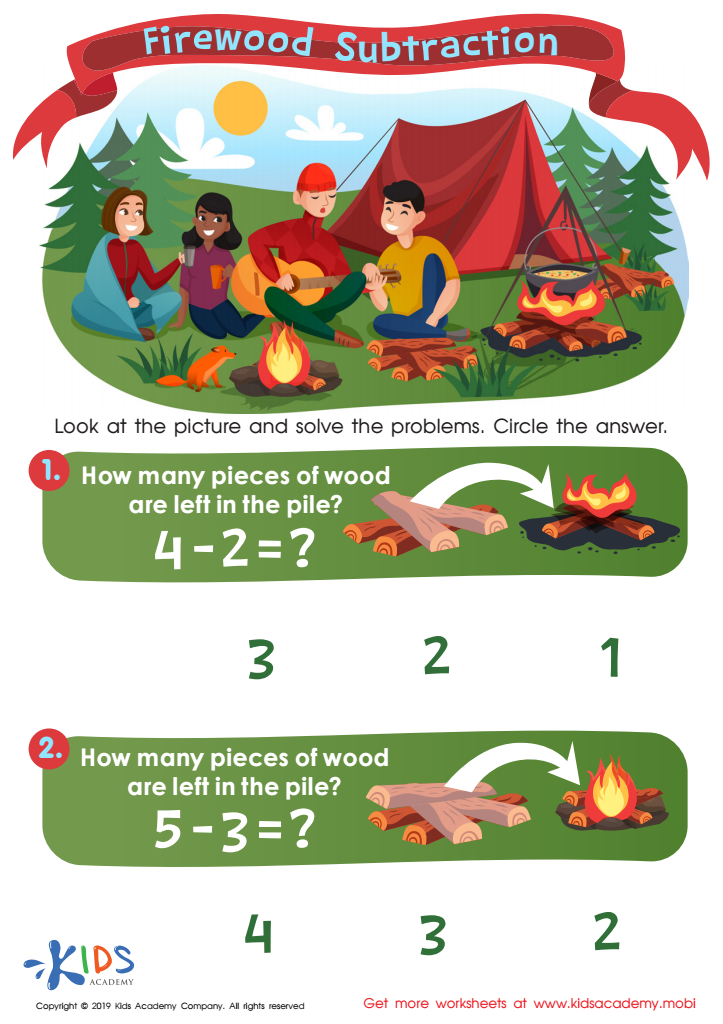
Firewood Subtraction Worksheet
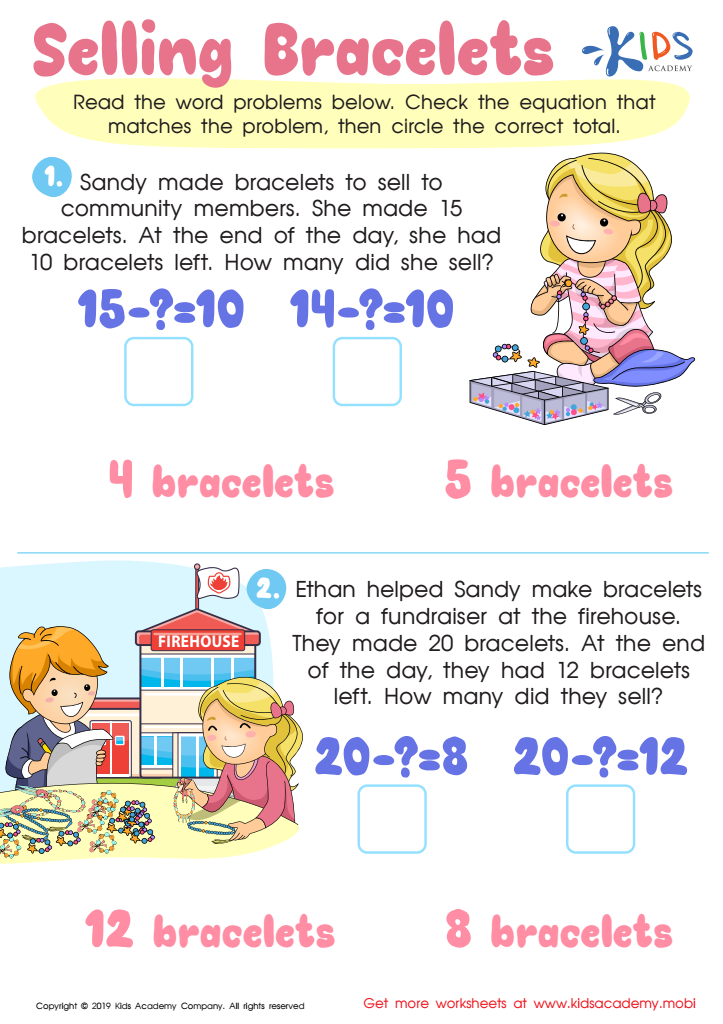
Selling the Bracelets Worksheet
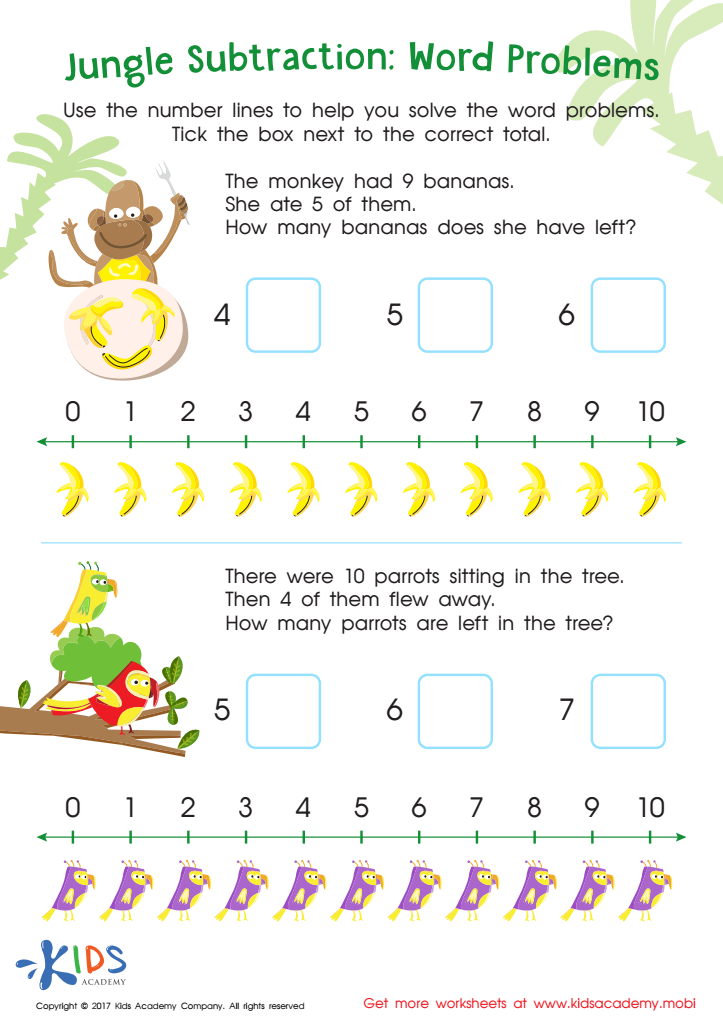
Jungle Subtraction Word Problems Substraction Worksheet








Understanding problem-solving skills in subtraction is crucial for children aged 3-4, even though they might seem a bit young for formal arithmetic. At this developmental stage, kids are just beginning to explore mathematical concepts and their relevance in everyday life. Introducing basic subtraction helps build a foundation for more advanced math skills, fostering a natural curiosity and comfort with numbers.
Problem-solving skills, especially in subtraction, are not just about numbers but also about how children approach challenges. Engaging with subtraction tasks helps them develop critical thinking, logical reasoning, and persistence. For example, when they figure out how many apples are left after a few are taken away, they're learning to think analytically and solve problems step-by-step.
Teaching subtraction early also promotes cognitive development, supporting skills like memory and attention span. This can be done in a playful, informal way—using toys, visual aids like counters, or stories. Such activities lay the groundwork for academic success and enhance their confidence in tackling both mathematical tasks and everyday problems.
In essence, problem-solving skills in subtraction prepare children for future academic challenges and everyday situations, nurturing a sense of confidence and competence. This makes it a critical aspect of early childhood education that parents and teachers should prioritize.








