
Reading comprehension Subtraction Worksheets for Ages 3-4
5 filtered results
Difficulty Level
Grade
Age
-
From - To
Subject
Activity
Standards
Enhance your child's reading and math skills with our Reading Comprehension Subtraction Worksheets designed specifically for ages 3-4. These engaging worksheets combine storytelling with basic subtraction concepts, encouraging young learners to improve their comprehension while developing foundational math skills. Each activity features colorful illustrations and relatable scenarios that captivate the imagination, making learning enjoyable. As children read through the stories, they'll encounter simple subtraction problems that reinforce understanding through context. Perfect for at-home learning or classroom activities, these worksheets provide a fun and interactive way to cultivate essential skills in your preschooler. Start building a strong educational foundation today!
Favorites
With answer key
Interactive
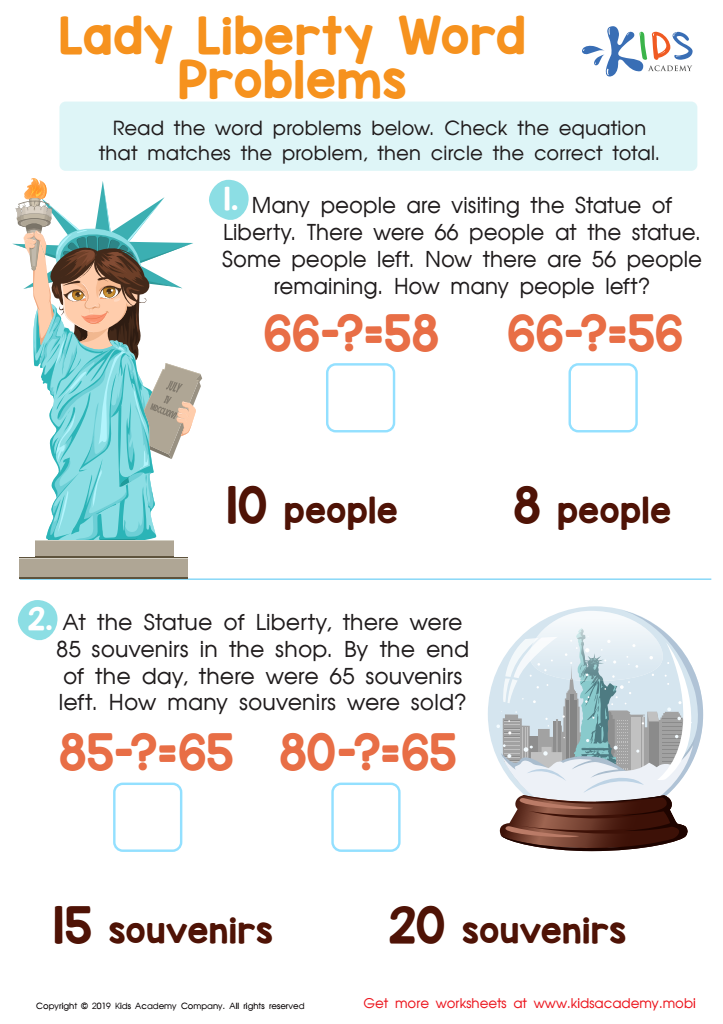
Lady Liberty Worksheet
Have your students ever been to the Statue of Liberty? Ask them to tell you where it is and what it looks like. Every day, the statue draws a crowd admiring its beauty, taking pics and learning more about it. Pose a word problem and help them check the answer. Circle the correct total. (80 words)
 Assign to My Students
Lady Liberty Worksheet
Worksheet
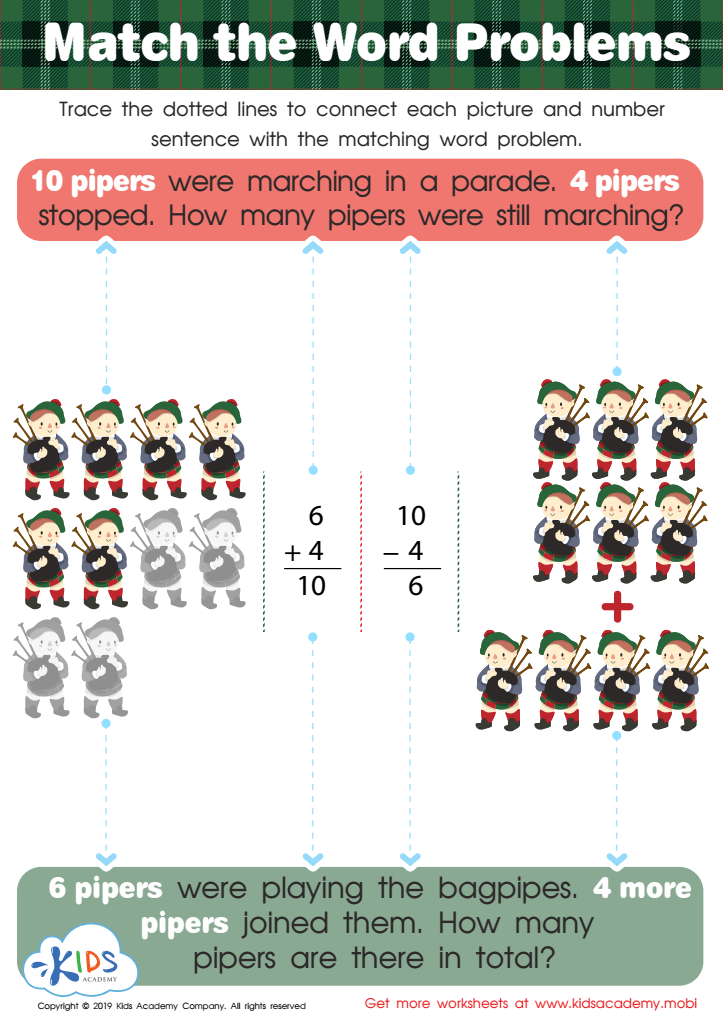
Match the Word Problems Worksheet
Read this word problem to your kids: Help them understand how it can be translated into a number problem. Trace the dotted lines to see how each picture and number sentence match the problem. With this worksheet, you can show your kids how easy it is to transform a word problem into a number problem.
Match the Word Problems Worksheet
Worksheet
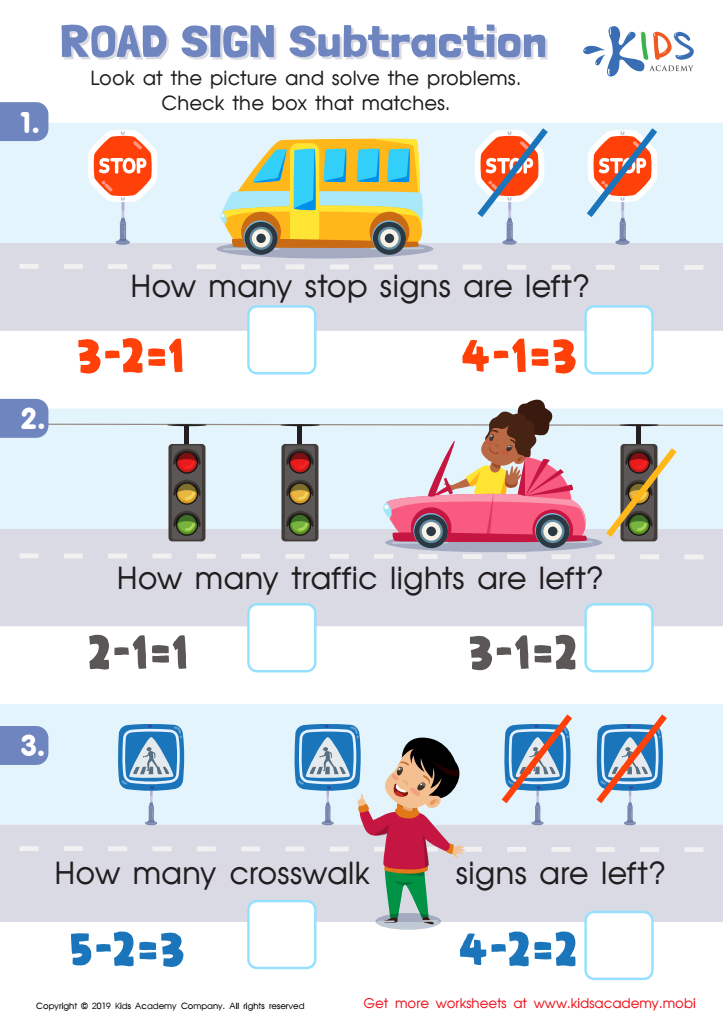
Road Sign Subtraction Worksheet
Help your kindergartners tackle addition and subtraction with fun tips. Show them the picture, have them solve the problems, then help them check the box that matches. With practice and guidance, they'll soon be ready for more complex math!
Road Sign Subtraction Worksheet
Worksheet
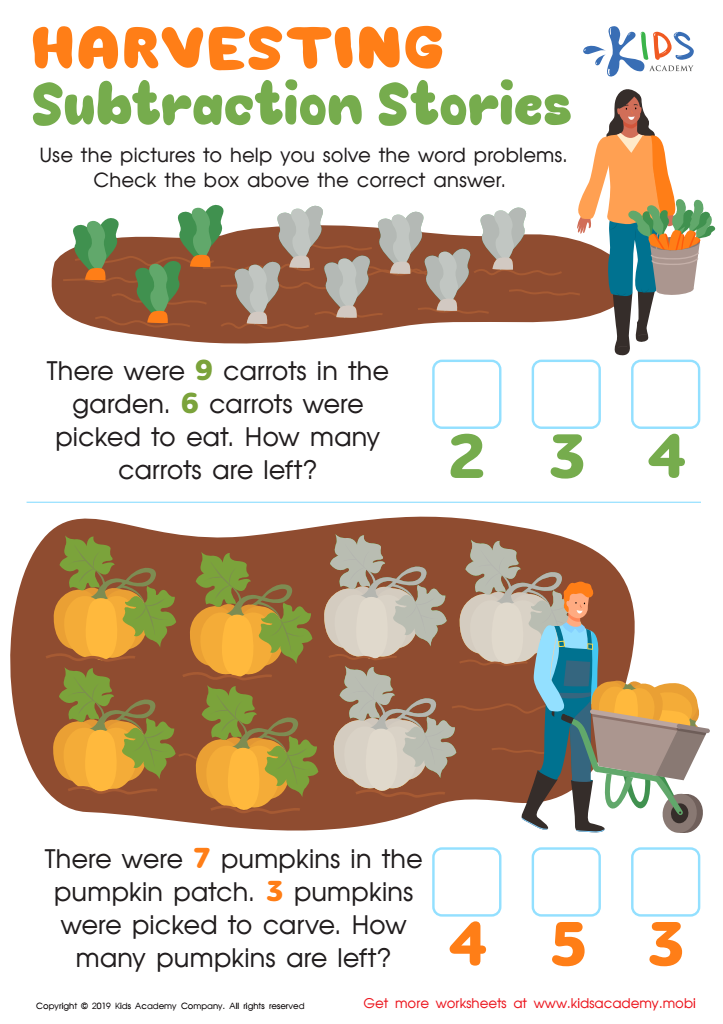
Harvesting Subtraction Stories Worksheet
Before starting the exercise, ask your kids if they know what harvesting is. Show them the pictures and explain if needed. Help them read the word problems, use the pictures to find the answer and check the box above. There are two simple word problems in the printout.
Harvesting Subtraction Stories Worksheet
Worksheet
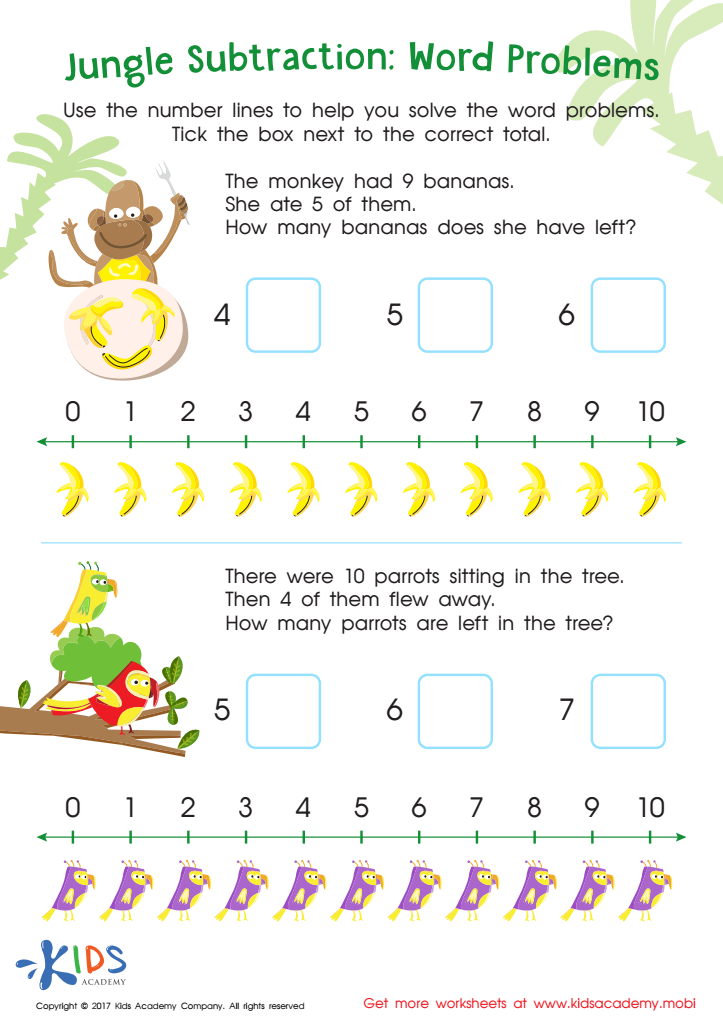
Jungle Subtraction Word Problems Substraction Worksheet
Kids will love this jungle-themed worksheet: subtraction word problems! Help the monkey work out how many bananas he has, using the number line. Encourage your child to use colorful parrots to subtract with ease and make calculations fun!
Jungle Subtraction Word Problems Substraction Worksheet
Worksheet
Join Kids Academy for Free
Who is primarily going to use this learning content?








Reading comprehension and basic subtraction are foundational skills that set the stage for a child’s academic success. For children aged 3-4, engaging in activities that promote both skills offers numerous benefits.
Firstly, reading comprehension nurtures a child’s language skills, enriching their vocabulary and understanding of narrative structures. As children listen to stories, they learn to identify characters, settings, and plot developments, fostering critical thinking and analytical skills from a young age. Furthermore, reading helps build attention span and concentration, important traits for future learning.
On the other hand, introducing basic subtraction concepts in a playful way aids in developing early numeracy skills. Understanding subtraction fosters problem-solving capabilities and logical reasoning. It provides children with the tools to make sense of the world around them, such as understanding "how many are left" when taking away objects.
Combining both reading comprehension and subtraction through interactive storytelling or counting activities allows children to make connections between concepts, deepening their understanding. Ultimately, when parents and teachers invest time in cultivating these skills, they empower children with a robust foundation for lifelong learning, ensuring they are better prepared for more complex tasks in the future.








