Basic Arithmetic Word Problems Worksheets for Ages 3-4
5 filtered results
-
From - To
Our "Basic Arithmetic Word Problems Worksheets for Ages 3-4" are designed to introduce young learners to simple math through fun and engaging activities. These printable worksheets help children develop early math skills, such as counting, addition, and subtraction, using relatable scenarios and colorful illustrations. Each problem encourages critical thinking and problem-solving while enhancing number recognition and fine motor skills. Ideal for both classroom settings and at-home practice, these worksheets are an excellent resource to build a strong foundation in basic arithmetic for preschool-aged children. Prepare your little learner for future math success with our accessible and enjoyable lessons!
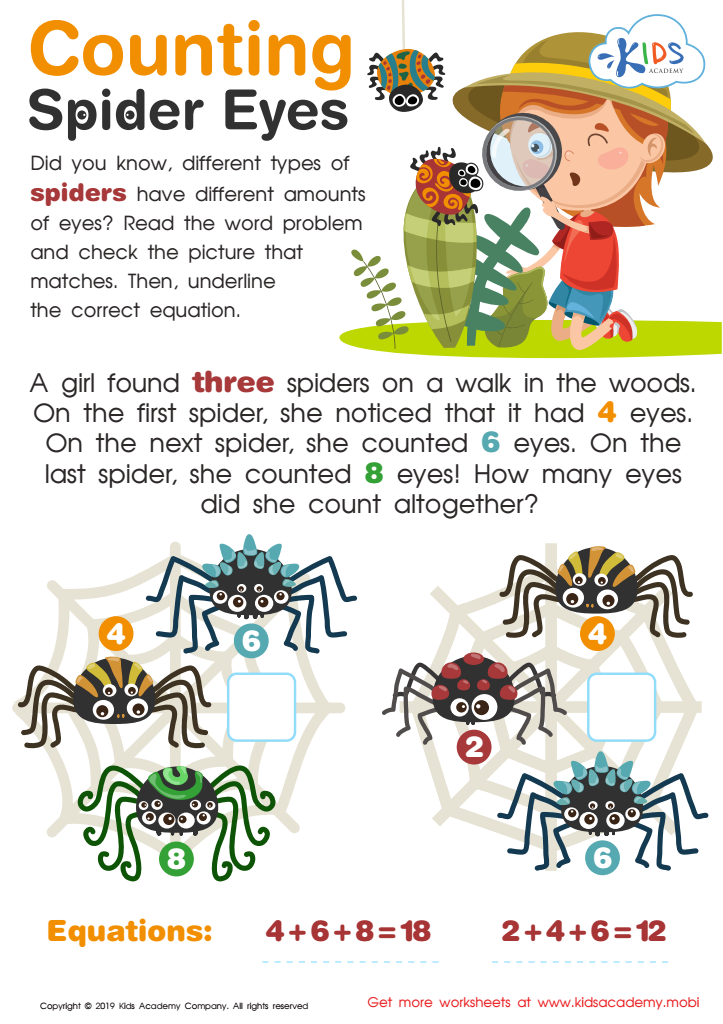
Counting Spider Eyes Worksheet
 Assign to My Students
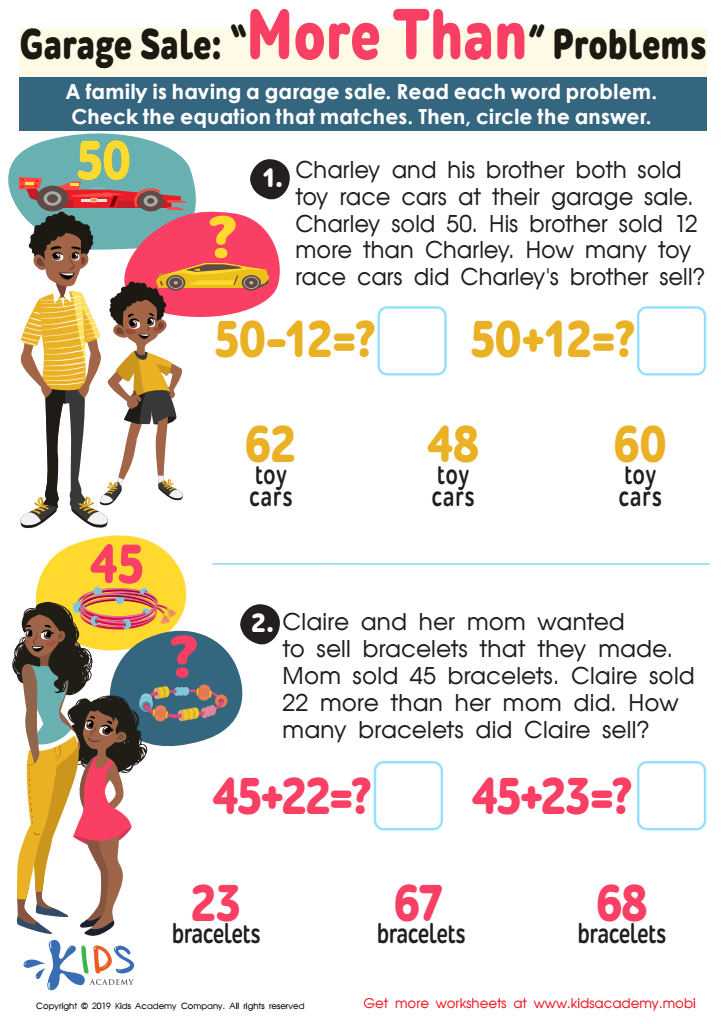
Garage Sale - More yhan Worksheet
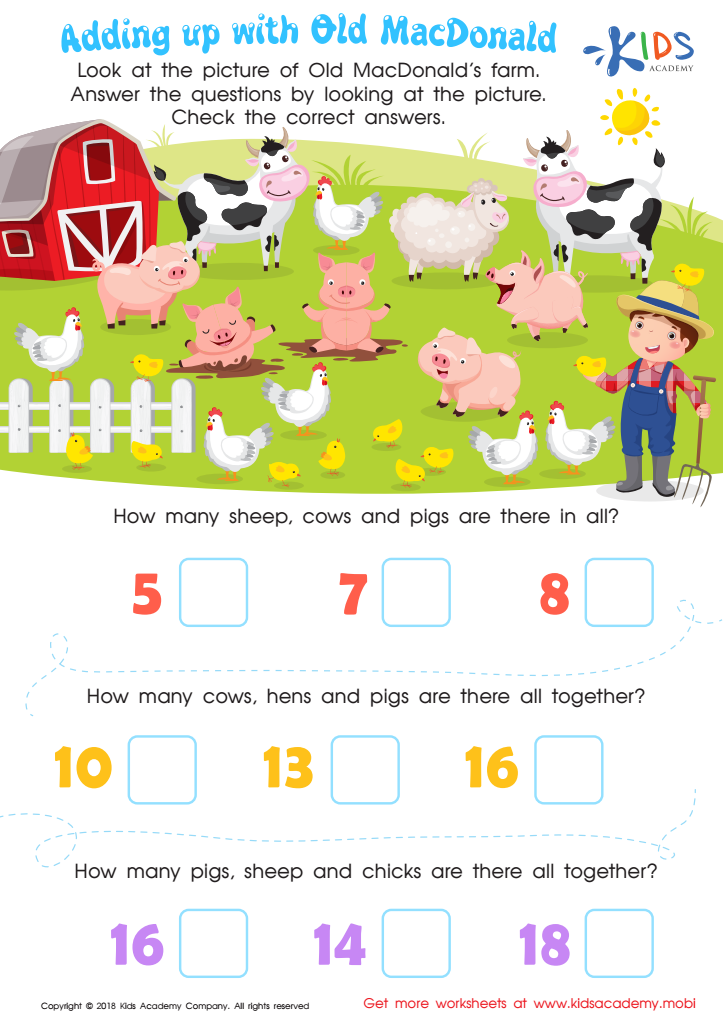
Adding Up with Old MacDonald Worksheet
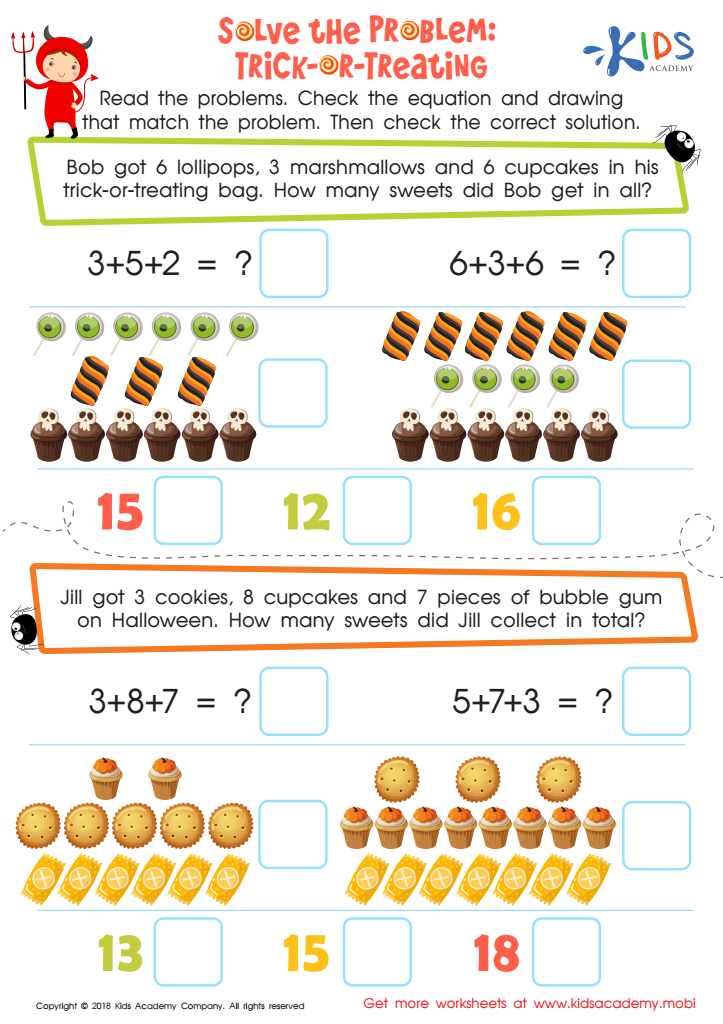
Solve the Problem: Trick–or–treating Worksheet
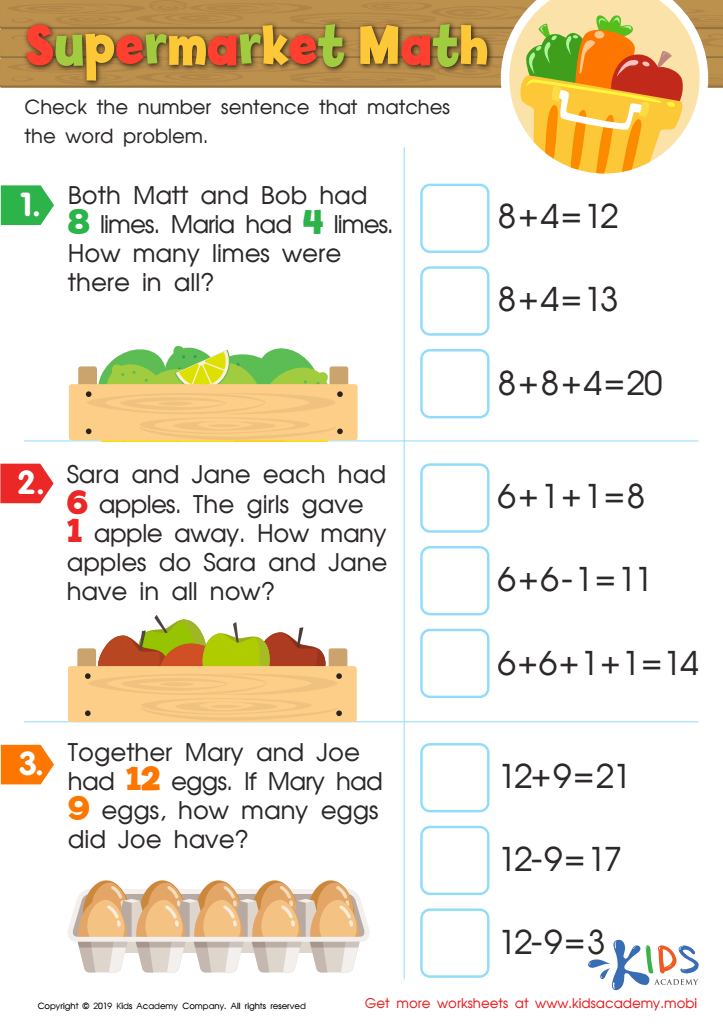
Supermarket Math Worksheet








Parents and teachers should care about basic arithmetic word problems for ages 3-4 because these foundational exercises play a critical role in developing essential cognitive and mathematical skills that benefit children throughout their education. At this early age, children's brains are highly receptive, making it an optimal time to introduce fundamental concepts of numbers and relationships through engaging and simple word problems.
These basic arithmetic activities enhance a child's problem-solving abilities and logical thinking. By interpreting real-life situations described in word problems, young learners begin to understand how math applies to the world around them. This contextual learning can boost their interest and confidence in mathematics, fostering a positive attitude towards the subject.
Moreover, working through word problems helps develop language comprehension and communication skills. Children learn to follow instructions and articulate their thought processes, which are critical life skills. This kind of early learning also supports fine motor skills through writing or drawing answers and builds their ability to focus and follow multi-step directions.
In summary, introducing arithmetic word problems at an early age lays down the groundwork for mathematical proficiency and supports overall cognitive development. It creates a strong early learning environment that encourages curiosity, critical thinking, and a lifelong love of learning.








