Division practice Word Problems Worksheets for Ages 3-4
5 filtered results
-
From - To
Our Division Practice Word Problems Worksheets for Ages 3-4 are thoughtfully designed to help young learners develop early math skills. These printable worksheets make learning fun and interactive by incorporating engaging scenarios in which children can practice basic division concepts. Perfect for preschool and early elementary students, the activities are tailored to their developmental stage, fostering confidence and understanding. From simple sharing exercises to playful number work, our worksheets aim to build a solid foundation in division through practical application. Help your child embark on an exciting mathematical journey with our carefully crafted resources!
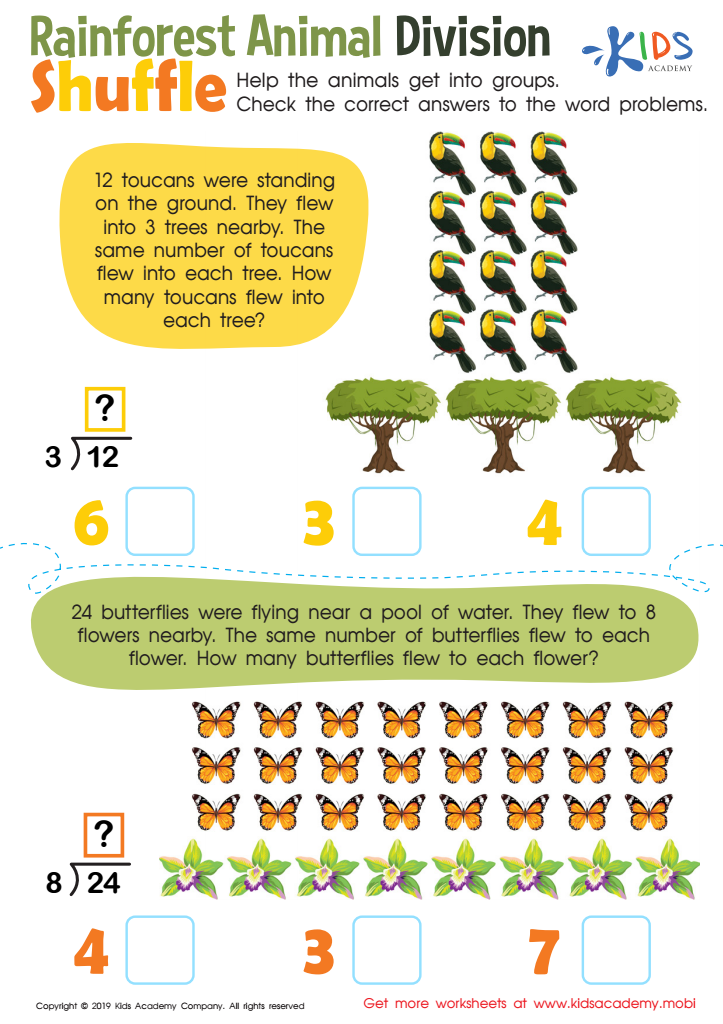
Rainforest Animal Division Worksheet
 Assign to My Students
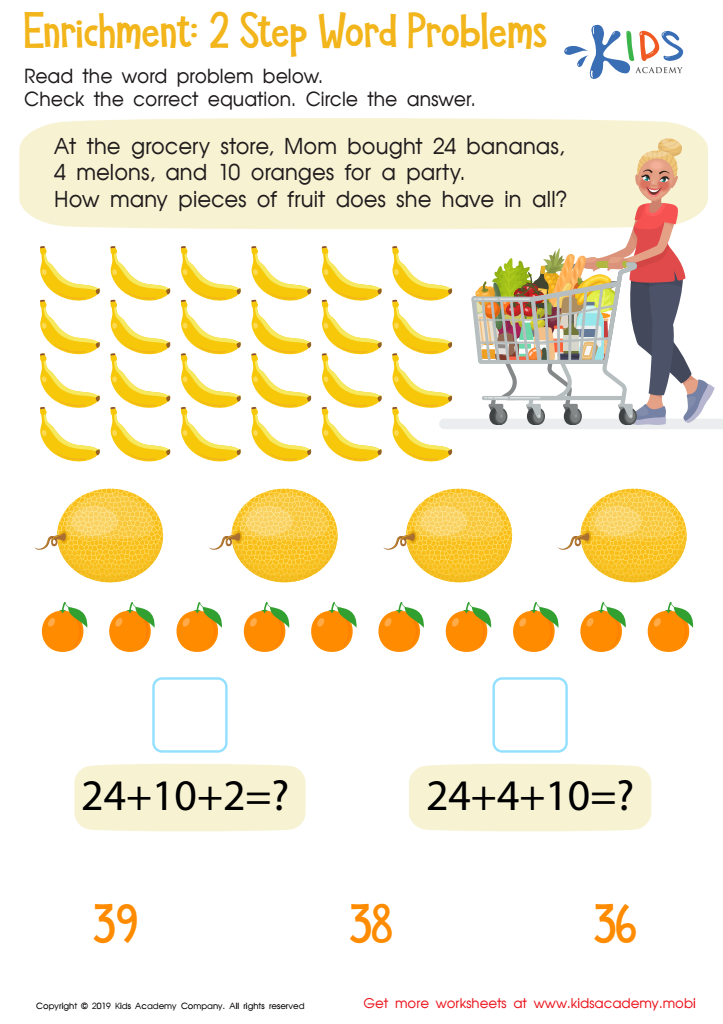
Enrichment -2 Step Word Problems Worksheet
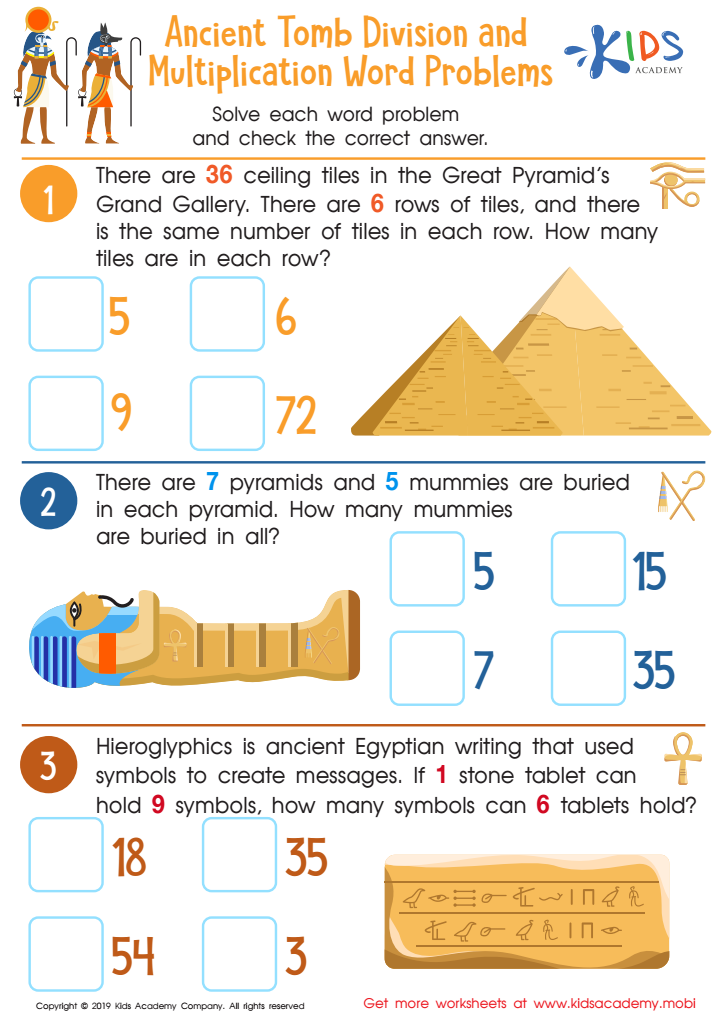
Ancient Tomb Division and Multiplication Word Problems Worksheet
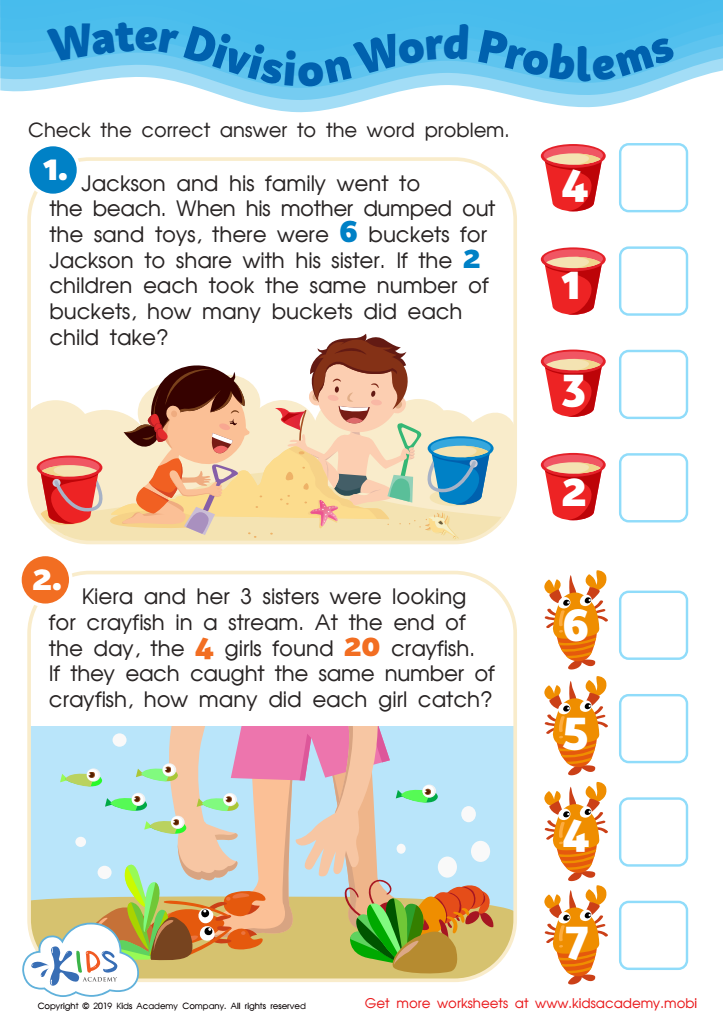
Water Division Word Problems Worksheet
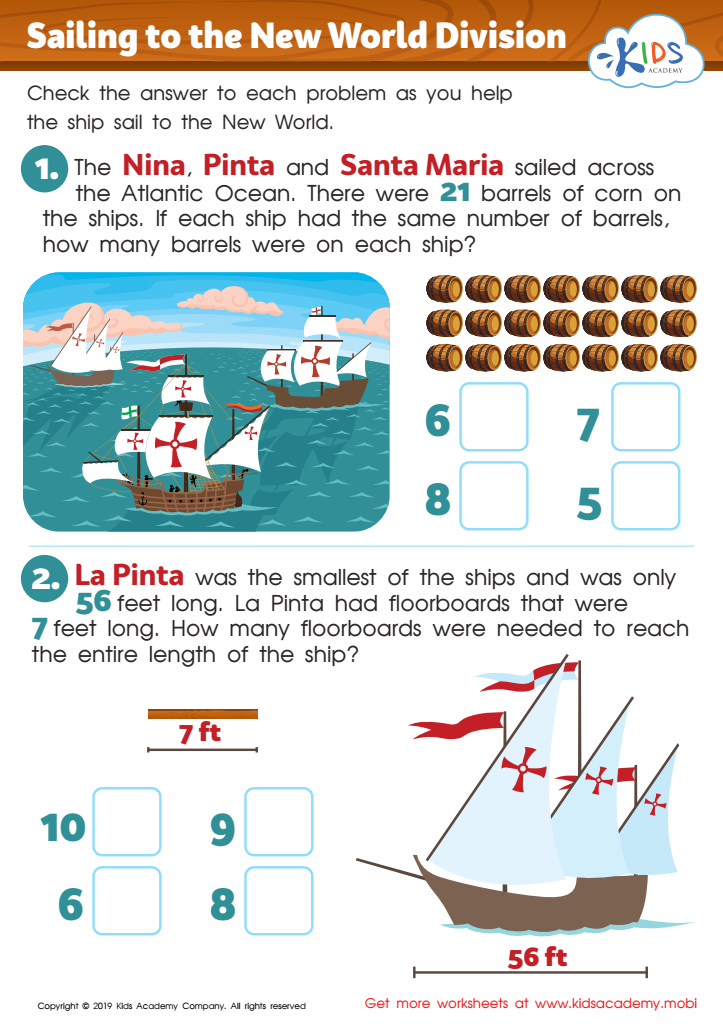
Sailing to the New World Division Worksheet


.jpg)





While children aged 3-4 may not be ready for formal division, early exposure to mathematical concepts, such as division, sets a strong foundation for future learning. Incorporating division practice into word problems for this age group isn't about solving complex equations but rather about nurturing an intuitive understanding of 'sharing,' 'grouping,' and 'fair distribution.'
For example, asking children to divide a small number of toys among friends introduces them to the idea that division means splitting objects into equal parts. Incorporating words and stories into these problems stimulates their linguistic and cognitive development simultaneously, enhancing comprehension skills.
For parents and teachers, focusing on these foundational division concepts aids in developing early mathematical curiosity and confidence. When children see math as a part of everyday life, not just a subject in school, they're more likely to be comfortable with it as they grow older. Moreover, early math skills are strongly linked to later academic achievement across disciplines.
By making division fun and accessible through age-appropriate word problems, educators can help children grasp essential life skills like problem-solving and logical thinking. The ultimate goal is to create a positive, engaging, and supportive learning environment that makes future challenges in math and beyond seem manageable and exciting.








