Fine Motor Skills Nursery Rhymes Worksheets for Ages 3-4
8 filtered results
Difficulty Level
Grade
Age
-
From - To
Subject
Activity
Standards
Explore our "Fine Motor Skills Nursery Rhymes Worksheets" designed for children aged 3-4! These engaging and colorful worksheets combine beloved nursery rhymes with fun fine motor activities, perfect for young learners. Each worksheet promotes hand-eye coordination, dexterity, and creativity while keeping little ones entertained. Activities include coloring, tracing, cutting, and pasting that will enhance your child's motor skills and cognitive development. Ideal for home or classroom use, our resources support educational growth through play and music. Download now and watch as your child develops essential skills while enjoying the magic of nursery rhymes! Perfect for preschool readiness!
Favorites
With answer key
Interactive
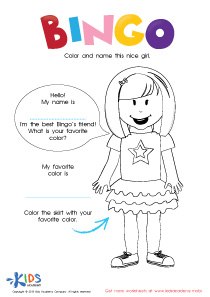
The Bingo Song: Coloring The Girl Worksheet
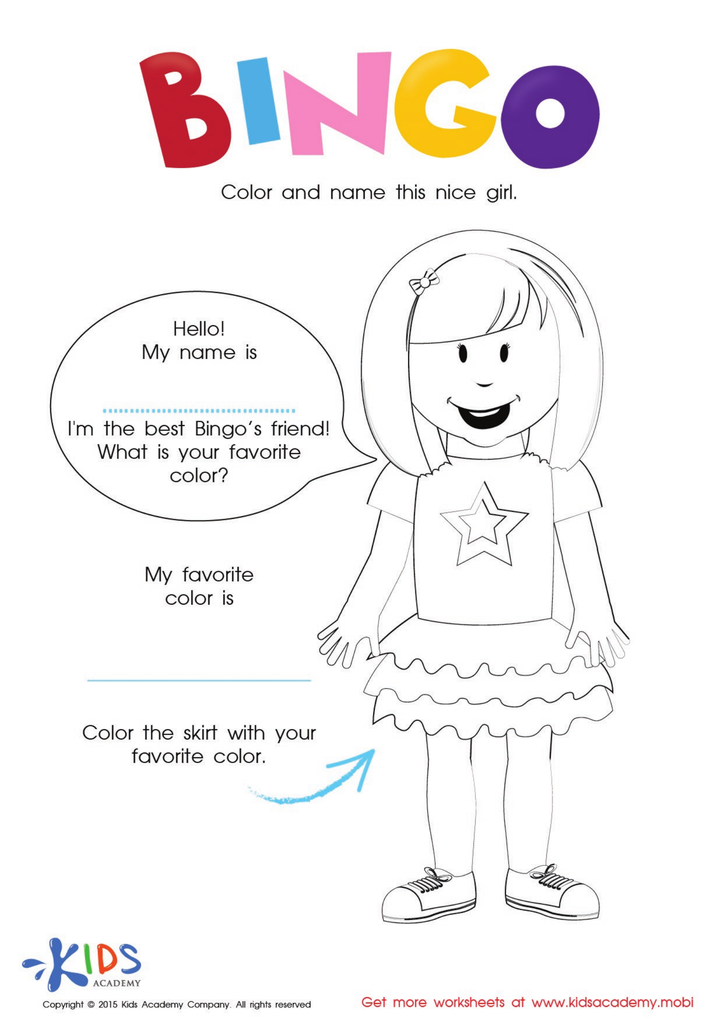
Revise colors with your kids using our free "Bingo" worksheet. Ask them to come up with a name for the girl, then have them answer her question about favorite colors and spell them out. They can even color her skirt with the colors they chose. Explore more fun worksheets at our website – they'll fascinate your kids and help them learn!
The Bingo Song: Coloring The Girl Worksheet
Worksheet
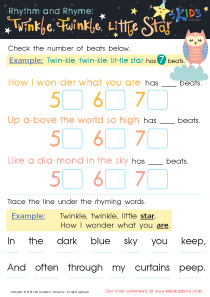
Twinkle Little Star Coloring Worksheet
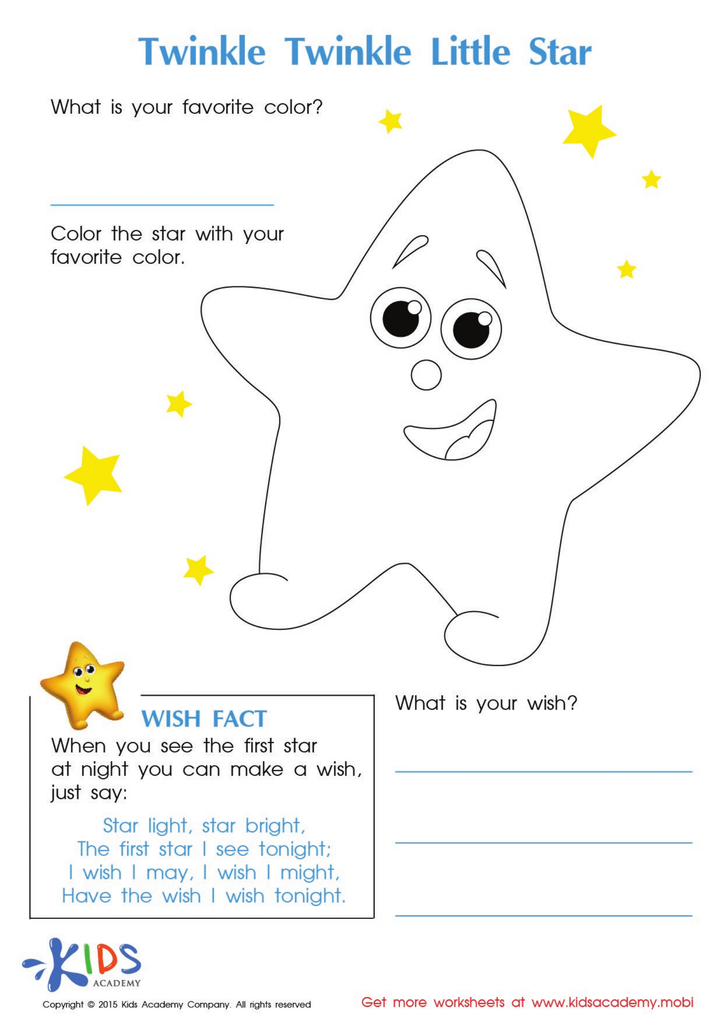
Let your child color the Twinkle Little Star page - they can choose whatever color they like! Then sing the song and encourage them to make a wish when they spot a star in the sky. If they can write, let them record the wish themselves. If not, write it down for them. Enjoy the starry night sky together!
Twinkle Little Star Coloring Worksheet
Worksheet
Twinkle Twinkle Little Star Coloring Page
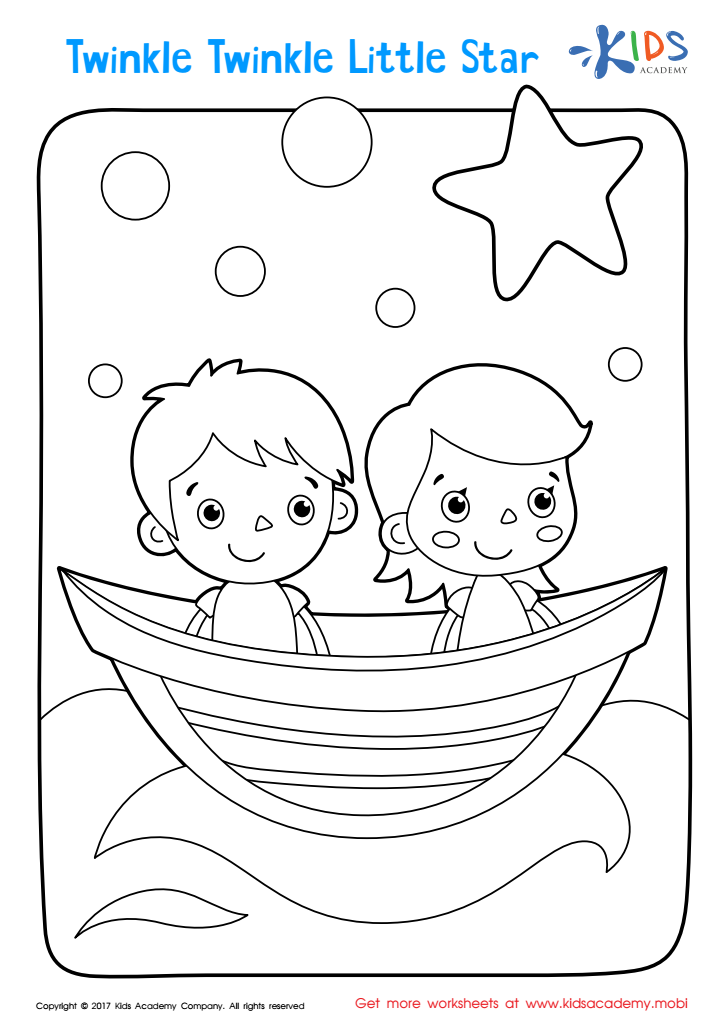
Let your child wish upon a star as they color this scene of boy and girl stargazing. Sing Twinkle Twinkle Little Star while they choose colors to show the star twinkling in the night sky.
Download (PDF)
 Assign to My Students
Assign to My Students
Twinkle Twinkle Little Star Coloring Page
Worksheet
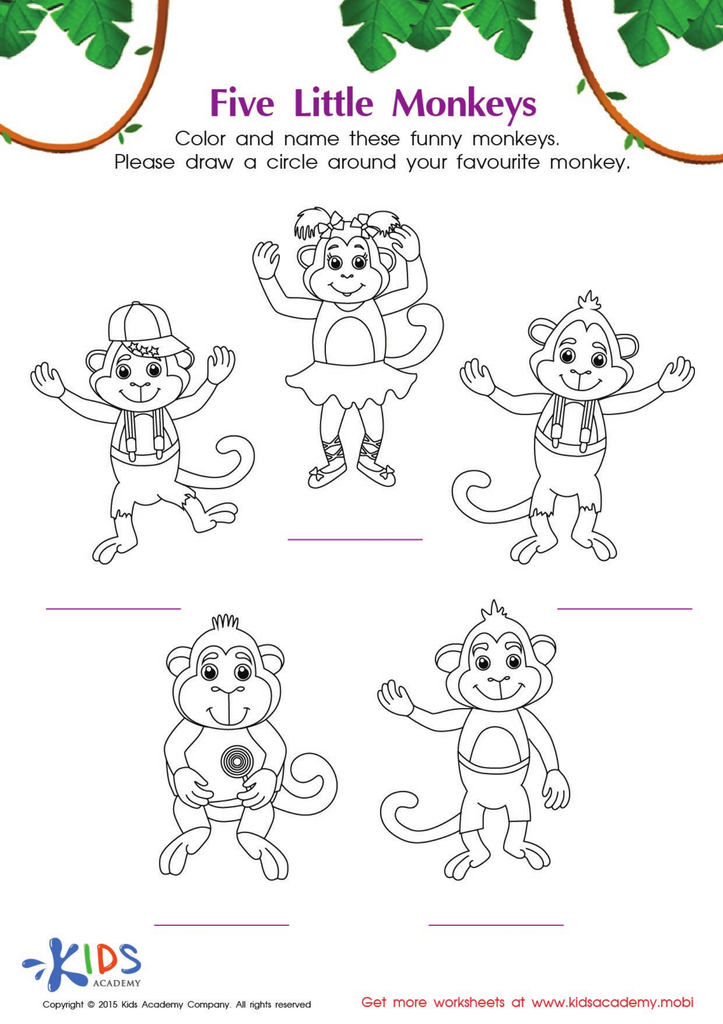
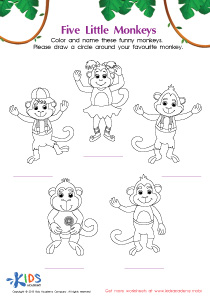
The Five Little Monkeys Coloring Worksheet
Let your child have fun coloring these naughty yet adorable little monkeys! Print out this page and encourage your kid to invent names and write in the names. Sing the Five Little Monkeys nursery rhyme and check out more coloring pages on Kids Academy!
The Five Little Monkeys Coloring Worksheet
Worksheet
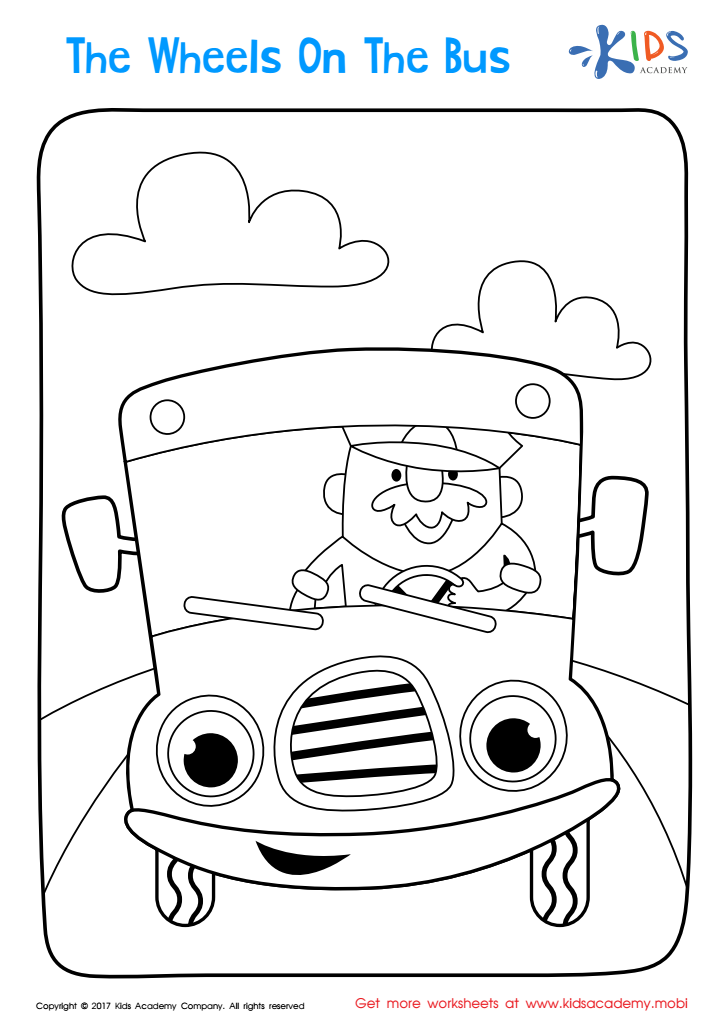
The Wheels on the Bus Coloring Page
Colour and sing with this printable Wheels on the Bus page! Let your child have fun singing the song with you as they colour. It'll make the activity even more entertaining and memorable.
Download (PDF)
Assign to My Students
Assign to My Students
The Wheels on the Bus Coloring Page
Worksheet
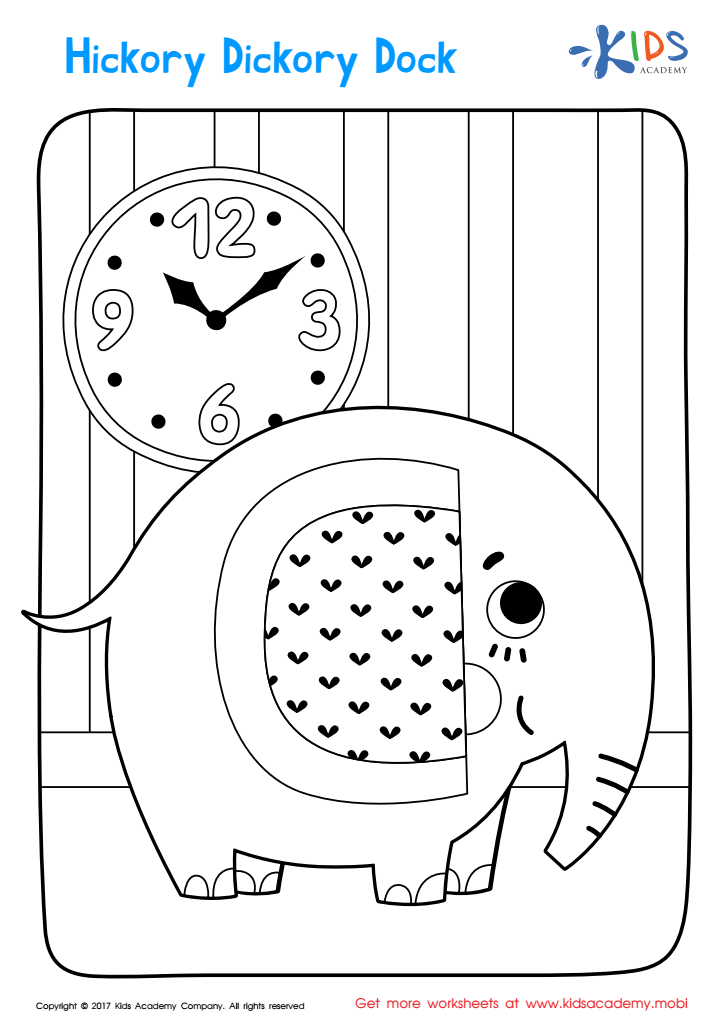
Hickory Dickory Dock Coloring Page
Sing and color with your child! Enjoy the classic nursery rhyme Hickory Dickory Dock as they color this fun printable. Watch the elephant climb and crash down the clock in the final part of the song. It's sure to bring smiles and giggles!
Download (PDF)
Assign to My Students
Assign to My Students
Hickory Dickory Dock Coloring Page
Worksheet
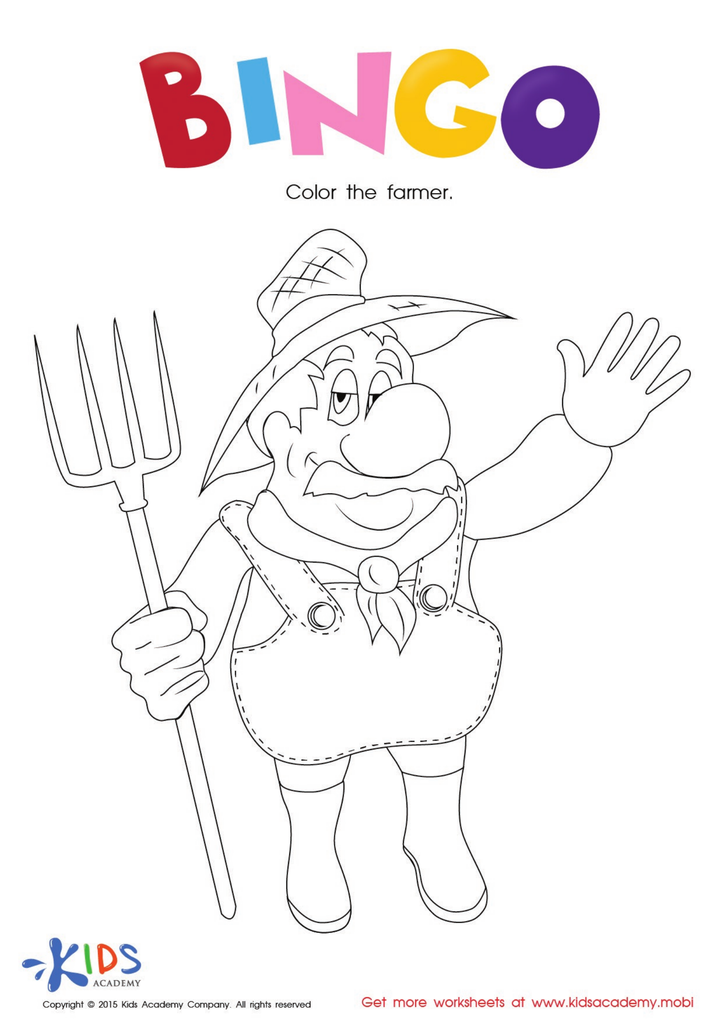
The Bingo Song: Coloring The Farmer Worksheet
Introduce The Bingo Song with concept questions then get your kids to color the free PDF coloring page. Visualize the characters while they sing and make the activity more fun with free nursery rhymes worksheets from our website. Clap along to The Bingo Song and enjoy!
The Bingo Song: Coloring The Farmer Worksheet
Worksheet
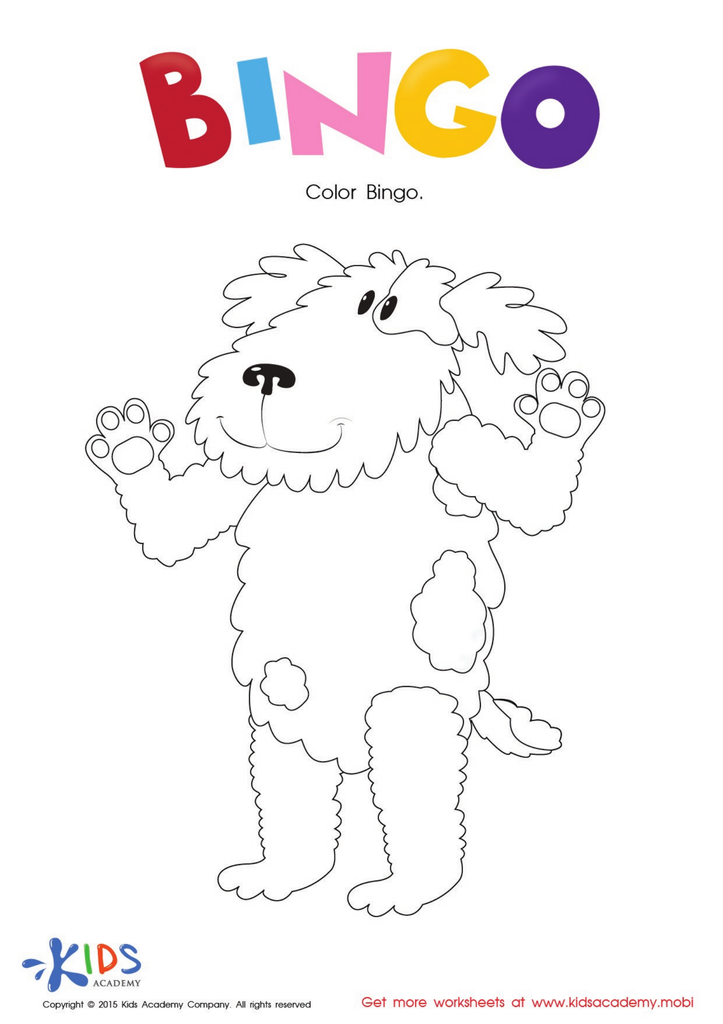
The Bingo Song: Coloring The Dog Worksheet
Introduce your kids to Bingo with this coloring worksheet from Kids Academy. Have them spell his name and color him the way they imagine. Develop their skills and get them excited with this fun activity. Visit our website for more nursery rhymes worksheets and activities for your little learners.
The Bingo Song: Coloring The Dog Worksheet
Worksheet
Join Kids Academy for Free
Who is primarily going to use this learning content?







Fine motor skills are crucial for preschool-aged children as they lay the foundational abilities needed for daily tasks and academic success. Nursery rhymes play a significant role in enhancing these skills through engaging and interactive activities. When children sing or act out nursery rhymes, they often incorporate hand movements, finger play, and craft projects that bolster dexterity and hand-eye coordination.
For parents and teachers, providing opportunities to explore fine motor skills through nursery rhymes is essential for fostering independence and confidence in young learners. These skills directly impact a child's ability to perform essential tasks such as writing, buttoning clothes, and using utensils, which are necessary for their development.
Moreover, nursery rhymes often encourage social interaction and imaginative play, creating a fun environment for children to learn. Engaging in these activities promotes language development, cognitive skills, and emotional expression. By integrating fine motor skill practice into nursery rhymes, parents and teachers can ensure that children are not just developing physically, but are also becoming well-rounded individuals ready for the challenges of school and beyond. Hence, focusing on fine motor skills through nursery rhymes should be a priority in early childhood education.