
Spatial awareness Reading Worksheets for Ages 3-4
5 filtered results
Difficulty Level
Grade
Age
-
From - To
Subject
Activity
Standards
Discover engaging Spatial Awareness Reading Worksheets designed specifically for children ages 3-4. These fun, educational activities help young learners understand and improve their spatial reasoning skills through interactive worksheets. Each exercise focuses on fundamental concepts like identifying shapes, understanding positions, and recognizing directions, all while fostering early reading skills. Developed by experts, these worksheets are crafted to ignite curiosity and encourage hands-on learning. Perfect for little ones beginning their educational journey, they promise to make learning enjoyable and effective. Download now and watch your child’s spatial awareness and reading abilities flourish!
Favorites
With answer key
Interactive
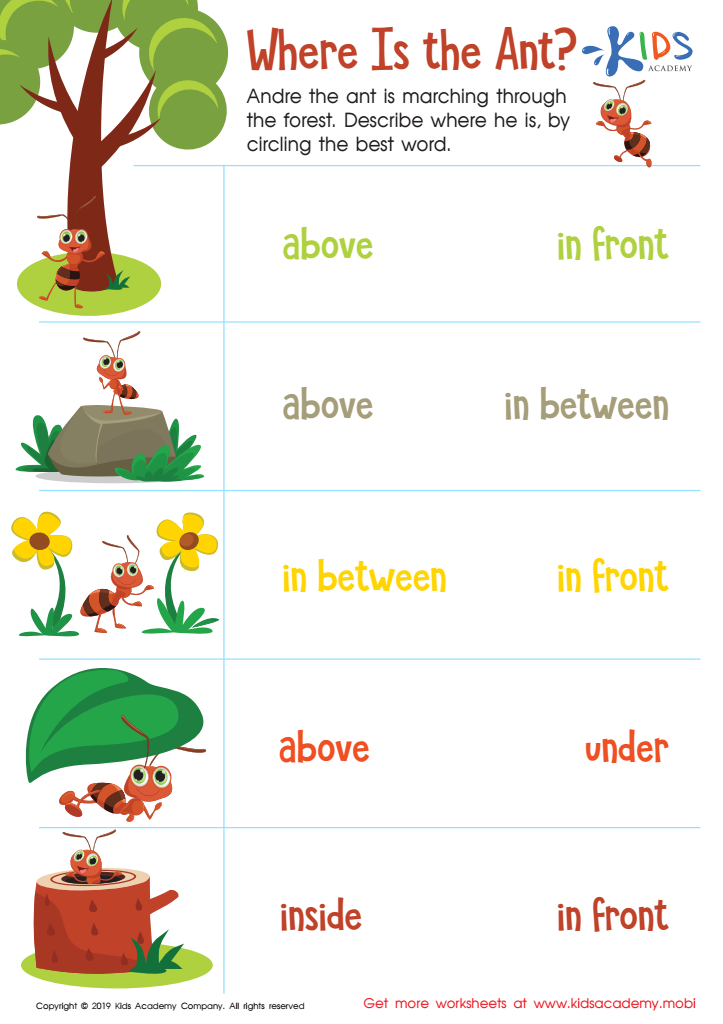
Where Is the Ant? Worksheet
Kids are captivated by ants. Andre is a busy ant, marching through the forest. Help your child circle the best word that best describes what he's doing in each picture. This colorful printout will show them the way.
 Assign to My Students
Where Is the Ant? Worksheet
Worksheet
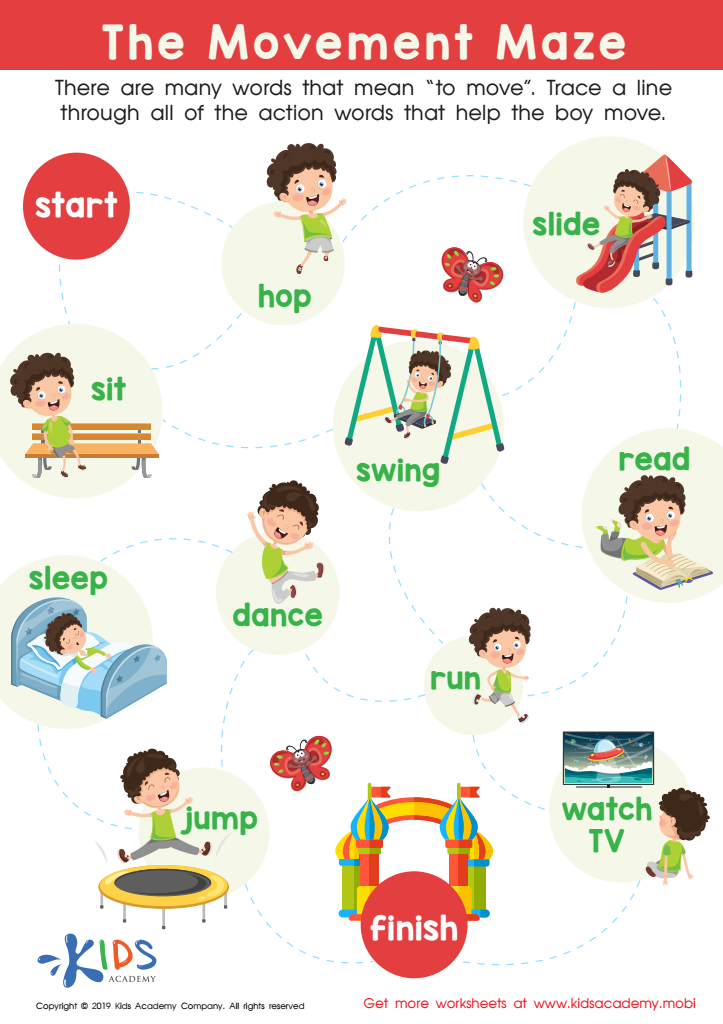
The Movement Maze Worksheet
Let your child have fun with this interactive PDF download. Kids will learn movement words with cute pictures, plus practice fine motor skills as they trace. A fun way to reinforce vocabulary. Jump, hop and sit – it's all here!
The Movement Maze Worksheet
Worksheet
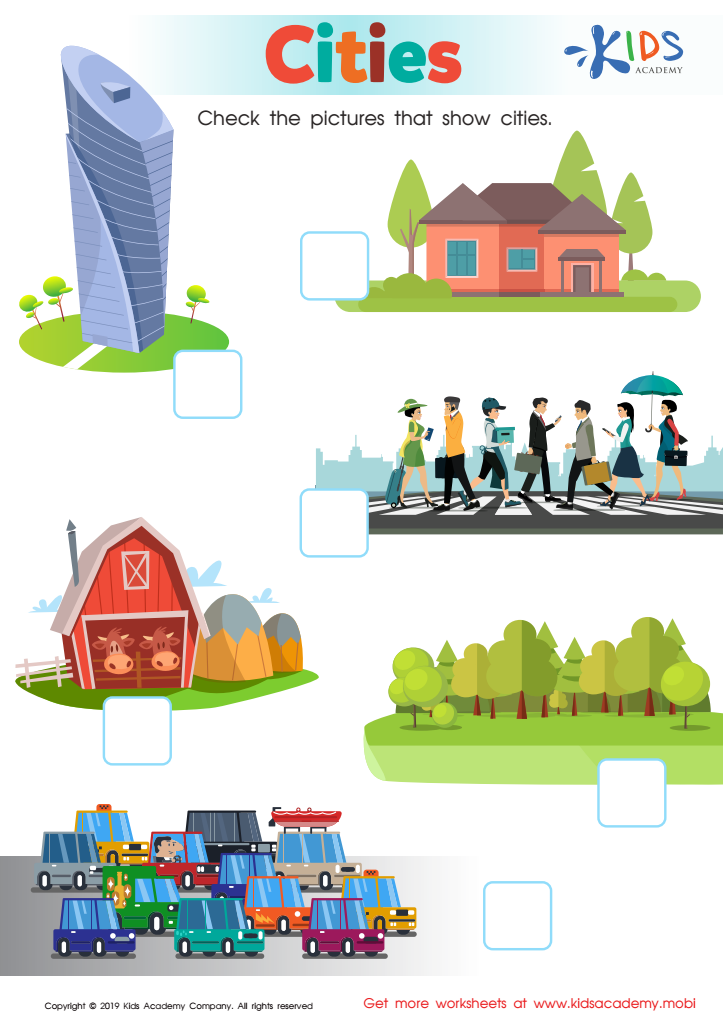
Cities Worksheet
This social studies PDF introduces kids to the differences between cities and towns. Colorful imagery helps them to distinguish between the two; for example, cities have traffic, business people and skyscrapers, while suburbs and rural areas do not. This allows children to have a reference point for what makes cities unique.
Cities Worksheet
Worksheet
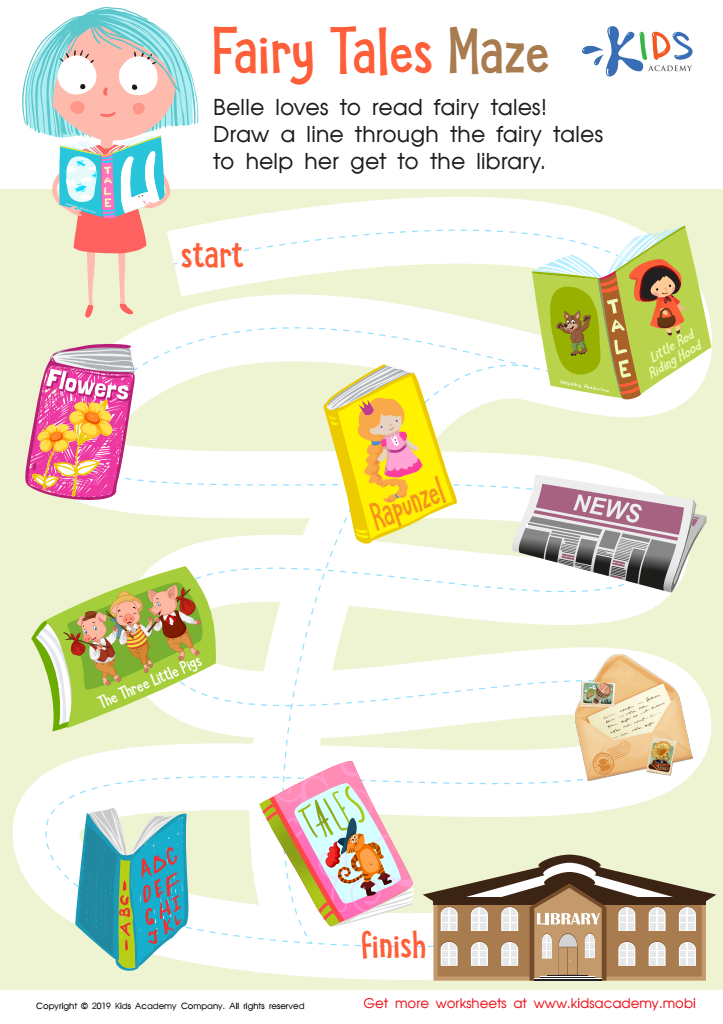
Fairy Tales Maze Worksheet
Kids love mazes and fairy tales, so this free worksheet is a great way to help teach young readers about familiar topics. They'll join Bella and use the traceable lines to travel through different reading genres, and find their way to the library for a nice reward!
Fairy Tales Maze Worksheet
Worksheet
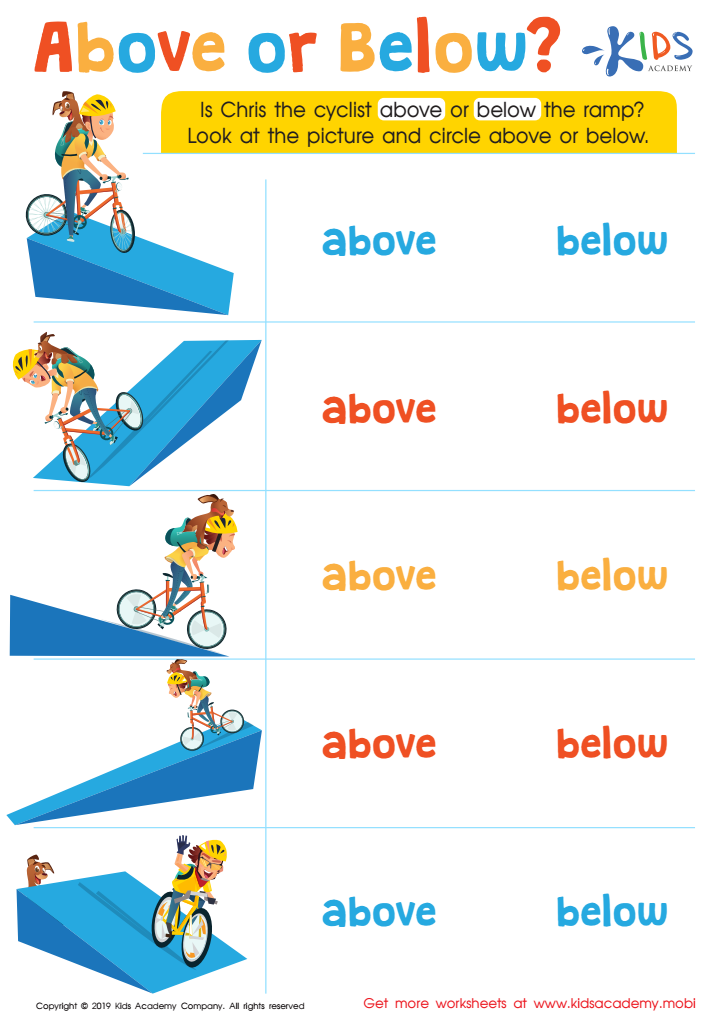
Above or Below? Worksheet
Do your kids cycle? Chris is a cyclist practicing on a ramp. Look at the pictures with them and decide if Chris is above or below the ramp. It's an important skill to help your kids become fluent speakers and writers - using the right words to describe something. Cycling is a fun sporting event.
Above or Below? Worksheet
Worksheet
Join Kids Academy for Free
Who is primarily going to use this learning content?








Spatial awareness is crucial for children aged 3-4 because it forms the foundation for many important skills they will need throughout life. At this age, children are rapidly developing their cognitive and motor abilities, and spatial awareness—understanding and interacting with the space around them—plays a pivotal role in this growth. This foundational skill helps them learn how objects relate to one another in terms of distance and position, which is essential for everyday activities.
For instance, when a child learns to navigate around obstacles or fit shapes into corresponding holes, they are employing and refining their spatial skills. This ability aids in their understanding of basic math concepts such as geometry, measurement, and eventually problem-solving abilities. Furthermore, spatial awareness is linked to success in tasks requiring hand-eye coordination, such as writing, drawing, and playing sports.
Parents and teachers should emphasize spatial awareness because it is not only key to academic success but also vital for personal safety and independence. Activities like puzzles, building blocks, and interactive reading that encourage children to discuss locations, directions, and positions, can greatly enhance their spatial understanding. Investing time in fostering these skills during early childhood sets the stage for more advanced academic and life skills, promoting a holistic developmental trajectory.








