Filters

7 filtered results

Clear all filters
Favorites
With answer key
Interactive

7 filtered results

Difficulty Level

Grade


Boost your child's vocabulary with our engaging Rhyming Words Worksheets designed specifically for ages 3-4! These colorful, interactive worksheets introduce young learners to the concept of rhyming, enhancing their language skills through playful activities. With a focus on vocabulary enhancement, your little ones will connect words with similar sounds, fostering both phonemic awareness and auditory discrimination. Each worksheet is crafted to stimulate creativity and critical thinking while keeping learning fun. Discover a variety of rhyming exercises that will inspire your child's love for language and build a solid foundation for their reading journey. Explore our worksheets today for an exciting learning experience!

Check out this FREE Trial Lesson on Rhyming Words for age 3-4!

Recognize Words that Rhyme

Favorites
With answer key
Interactive
  • 3-4
  • Vocabulary enhancement
  • Rhyming Words
Odd Word Out Printable Worksheet

Odd Word Out Rhyming Worksheet

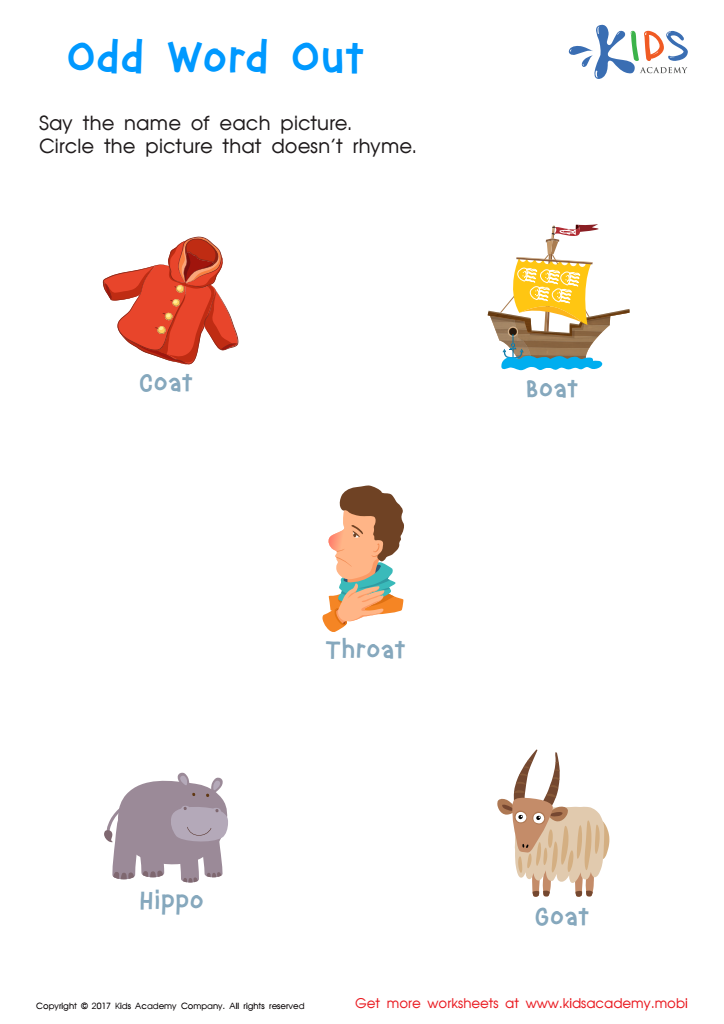
Try this worksheet to help your child practice finding odd words out and build their knowledge of rhyming words. They'll use problem solving and create their own words with enough room to write them down!
Odd Word Out Rhyming Worksheet
Worksheet
Rhyming Words Worksheet PDF

Rhyming Words Rhyming Worksheet

This worksheet is great for honing pre-reading skills. It helps kids make connections between pictures and written words, use problem-solving, and recognize sounds and words that rhyme. Have fun exploring rhyming words with your child, and they'll be rhyming in no time!
Rhyming Words Rhyming Worksheet
Worksheet
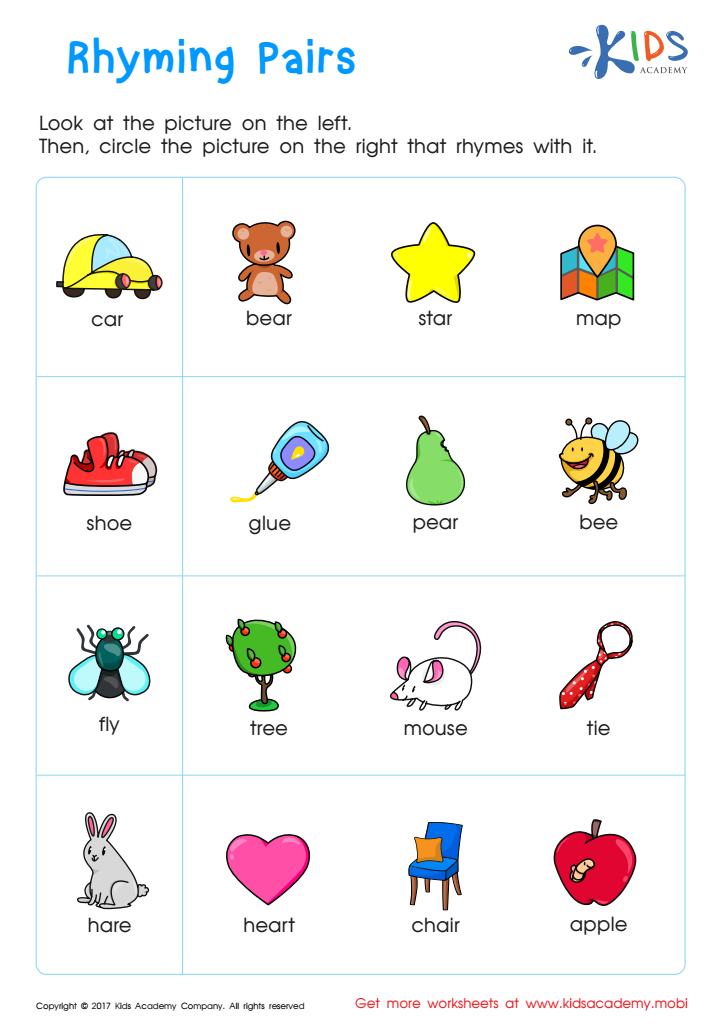
Free Rhyming Pairs Worksheet

Rhyming Pairs Worksheet

Rhyming Pairs Worksheet
Worksheet
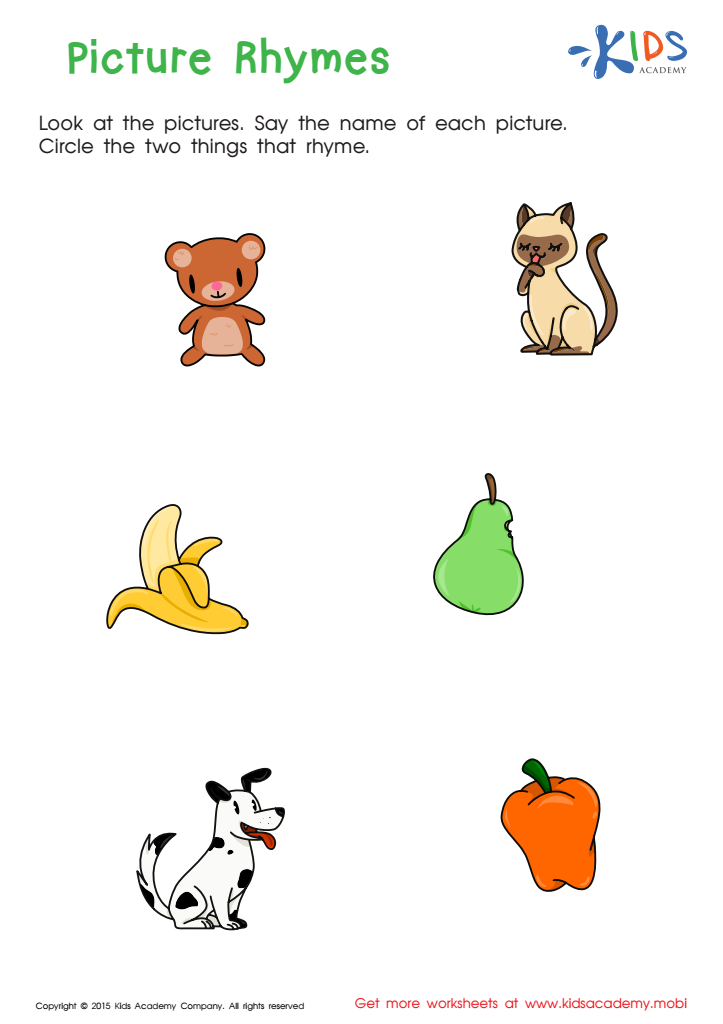
Picture Rhymes Printable

First Words: Picture Rhymes Worksheet
Rhyming helps kids understand language, read and write better. This printable worksheet boosts problem-solving and cognitive skills with vibrant pictures. It teaches kids to identify words, recognize rhymes, complete mental tasks and write words. An extra activity: show them how rhyming words share some of the same letters.
First Words: Picture Rhymes Worksheet
Worksheet
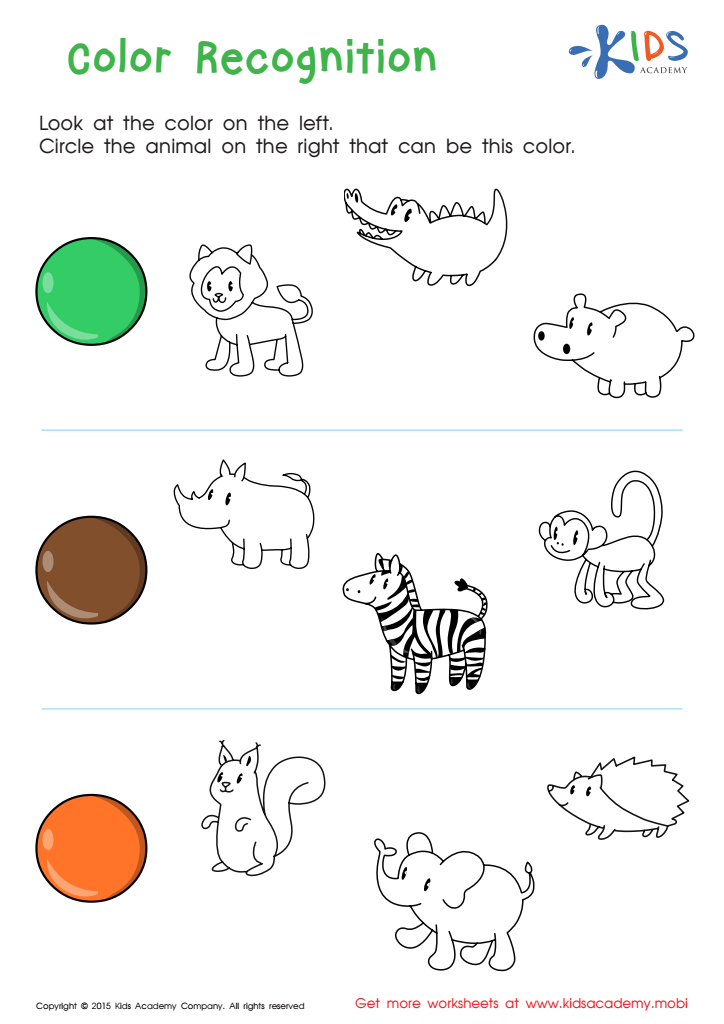
Free Printable Color Recognition Worksheet for Preschoolers

First Words: Color Recognition Worksheet
Kids learn colors early. This free printable color recognition worksheet for preschoolers helps them practice important cognitive skills. It encourages your child to match colors to animals, plus use artistic skills to color their answers. After solving each section, encourage them to color the picture with the indicated color! Fun and learning go hand in hand!
First Words: Color Recognition Worksheet
Worksheet
Rhyming Words in Poems Worksheet

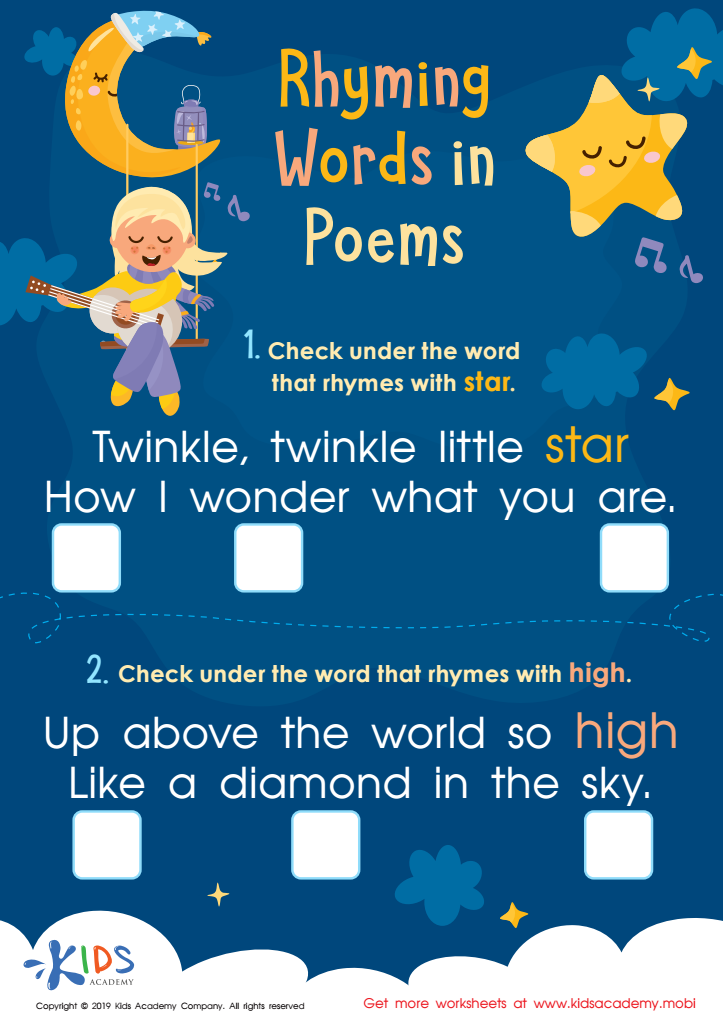
Rhyming Words in Poems Worksheet

If your kids love poems, get them to recite some to you or have them write their own. Use this worksheet to help them find words that rhyme. Read the short poems and have them check the highlighted words for rhyming.
Rhyming Words in Poems Worksheet
Worksheet
Finish Rhyming Poem Worksheet


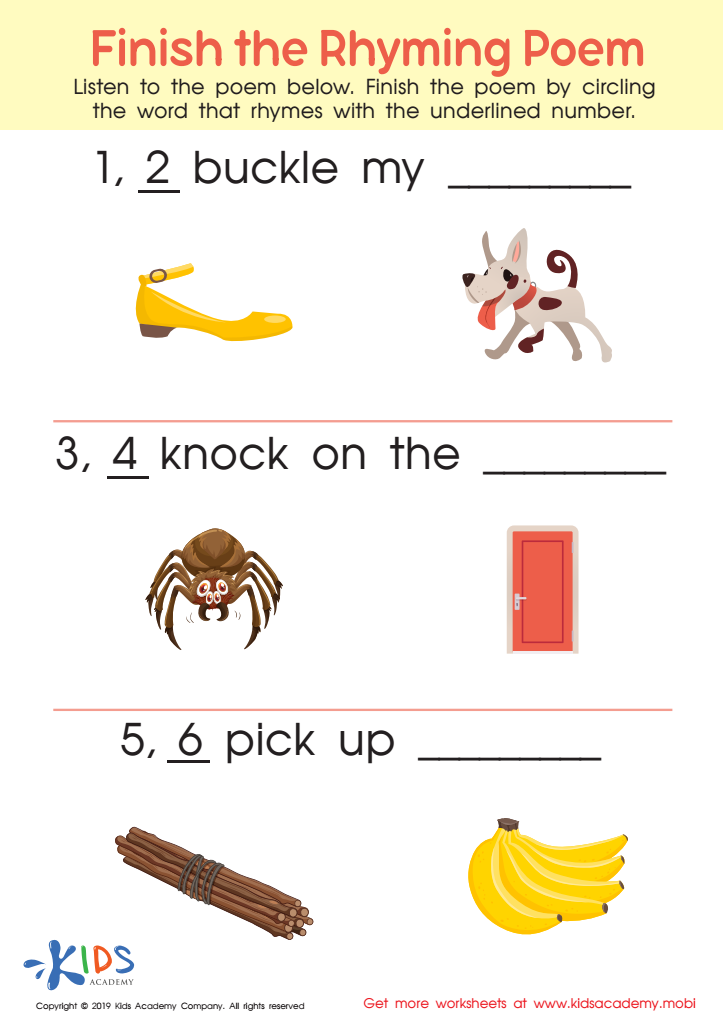
Finish Rhyming Poem Worksheet

Poems are a great way to express emotions and spark imagination. Does your child enjoy poetry and even have their own creations? If so, they'll love this worksheet. It's a great way to develop their rhyming skills. Challenge them to find and circle the words that rhyme with the ones underlined.
Finish Rhyming Poem Worksheet
Worksheet


Vocabulary enhancement through rhyming words is crucial for children aged 3 to 4 because it lays a solid foundation for language development and literacy skills. At this stage, children are like sponges, eagerly absorbing language cues and expanding their communication abilities. Engaging with rhyming words enhances phonemic awareness, the essential skill for deciphering the sounds that make up words. This plays a pivotal role in their reading readiness.

Rhyming activities also foster cognitive abilities, as children begin to recognize patterns in sounds, improving their memory and attention spans. Additionally, these playful linguistic exercises enhance creativity, encouraging children to explore language through songs, poems, and games. Such activities often promote social interaction, as children enjoy sharing and creating rhymes together, thereby boosting their confidence and enthusiasm about language.

Moreover, understanding and using rhymes can make learning more enjoyable, encouraging a positive attitude towards reading and learning. When parents and teachers prioritize vocabulary enhancement with rhyming words, they actively contribute to a solid linguistic groundwork that cultivates not just skilled readers, but also lifelong learners who appreciate the beauty of language. Ultimately, this investment in early language development yields long-term academic and social benefits.