Understanding directions Science Worksheets for Ages 3-4
3 filtered results
-
From - To
Introduce your young learners to the exciting world of science with our "Understanding Directions Science Worksheets" designed specifically for children ages 3-4. These fun, engaging printable worksheets help kids develop crucial understanding of spatial language and movement concepts, such as left, right, up, and down. Packed with colorful illustrations and simple activities, our worksheets foster essential cognitive and language skills in a way that's easy for toddlers to grasp. Perfect for parents and educators, these tools ensure a strong foundation in early learning while making the process enjoyable and interactive for the little ones. Discover the adventure of learning with Kids Academy!
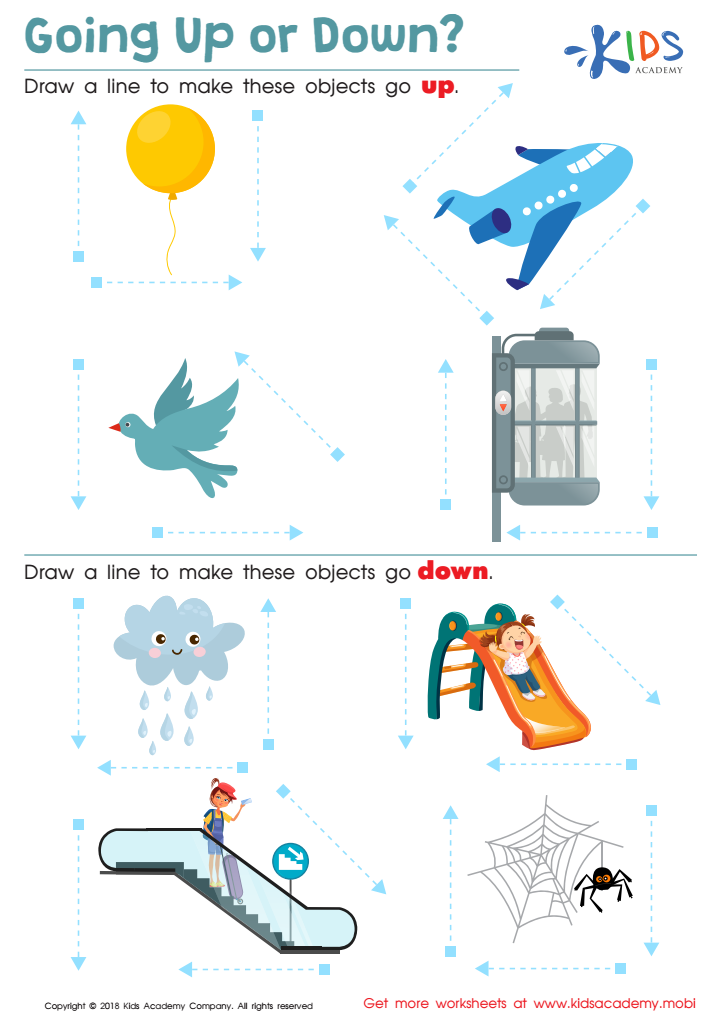
Going up or Down? Worksheet
 Assign to My Students
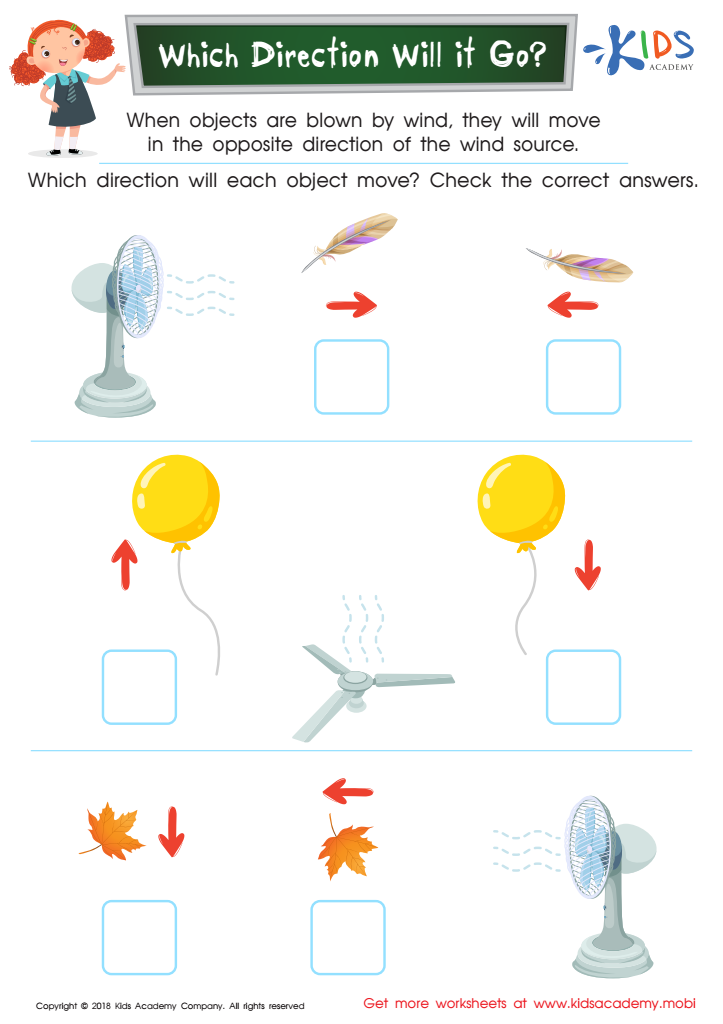
Which Direction Will it Go? Worksheet
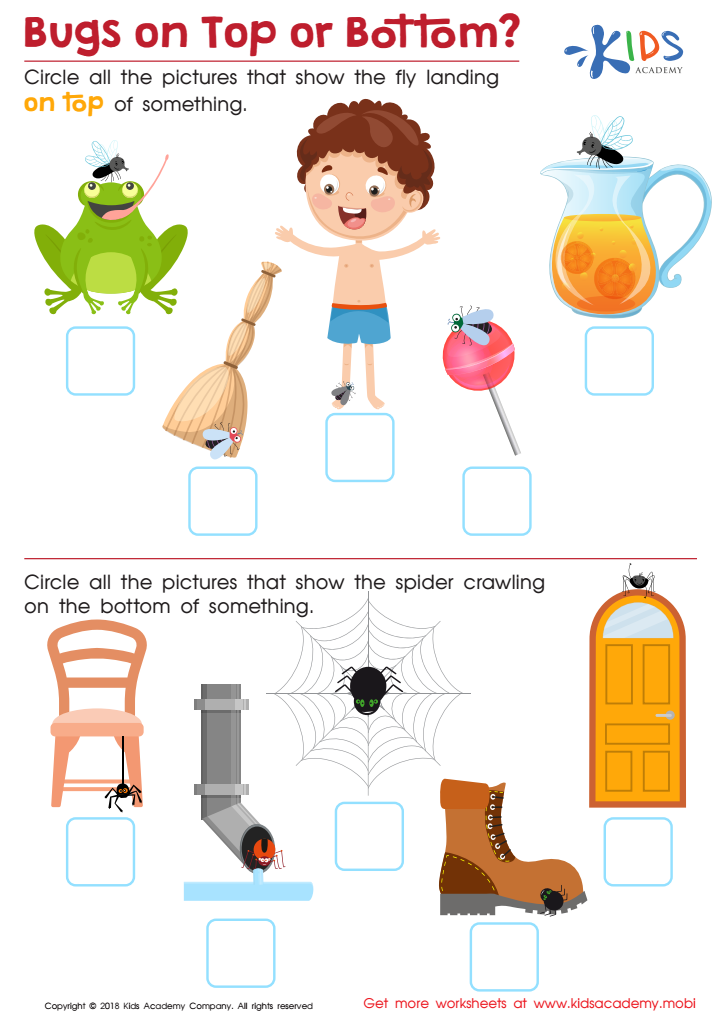
Bugs on Top or Bottom? Worksheet




.jpg)



Understanding directions is a foundational skill in early childhood education that plays a crucial role in cognitive, emotional, and social development. For ages 3-4, grasping directions helps children comprehend basic scientific concepts and fosters a curious mindset. As young learners navigate simple instructions, they build critical thinking skills and learn to sequence actions, observe effects, and predict outcomes—a prelude to deeper scientific inquiry.
Parents and teachers who emphasize understanding directions facilitate more effective communication, which is vital for establishing routines, safety, and classroom management. Children who can follow directions will more readily participate in group activities and experiments, enhancing their cooperation and teamwork skills. These early experiences with structured tasks and guided exploration pave the way for more complex scientific thinking and problem-solving in later years.
Moreover, mastering directions nurtures children’s confidence, as they feel accomplished when they complete tasks and understand their world better. This self-esteem boost further motivates them to engage with their surroundings, ask questions, and persist in finding solutions. In essence, helping children ages 3-4 understand directions is not just about science; it’s about equipping them with the tools to succeed academically and socially by developing discipline, attention to detail, and an inquisitive nature.







