Alphabet Recognition ABC Order Worksheets for Ages 3-5
11 filtered results
Difficulty Level
Grade
Age
-
From - To
Subject
Activity
Standards
Explore our engaging Alphabet Recognition ABC Order Worksheets, designed for children ages 3-5! These interactive printables support early childhood development by introducing kids to the alphabet in a fun and educational way. Each worksheet encourages children to practice identifying letters and understanding their sequence, fostering essential pre-reading skills. Our vibrant designs and age-appropriate activities motivate young learners to recognize letters while enhancing fine motor skills through hands-on practice. Perfect for parents and educators alike, these worksheets offer a convenient way to make learning the alphabet enjoyable and effective. Start your child’s journey to reading success today with our ABC Order Worksheets!
Favorites
With answer key
Interactive
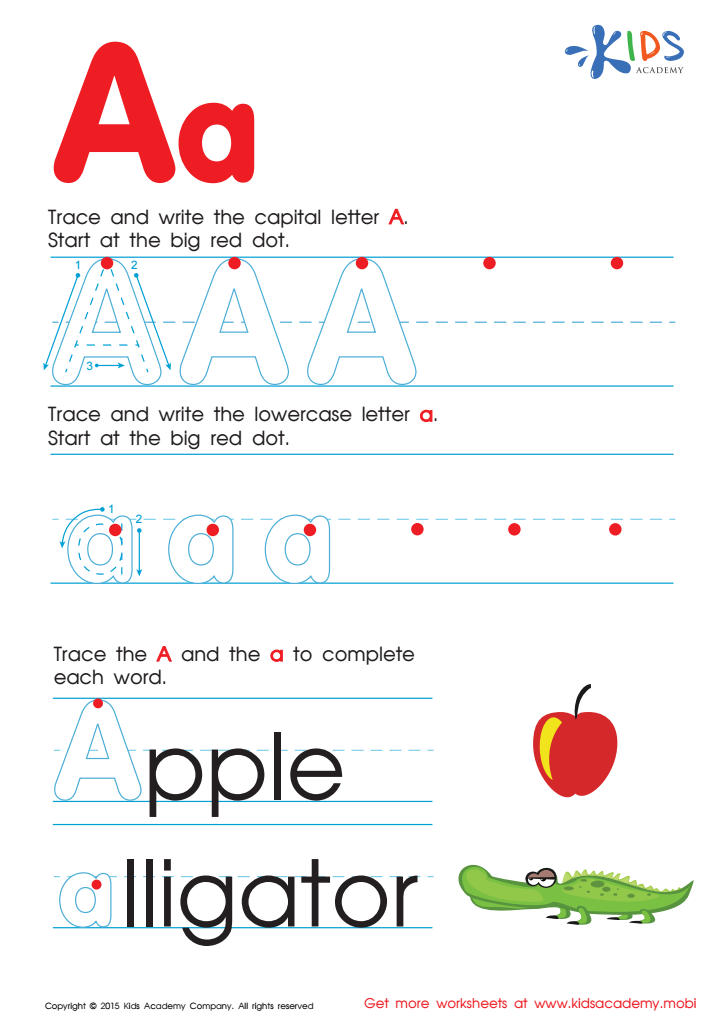
Letter A Tracing Page
Trace and write the letter "A"! Start with the big red dot, then do the capital and lowercase versions. Then write it again with two words - apple and alligator. Download more tracing worksheets at Kids Academy.
 Assign to My Students
Letter A Tracing Page
Worksheet


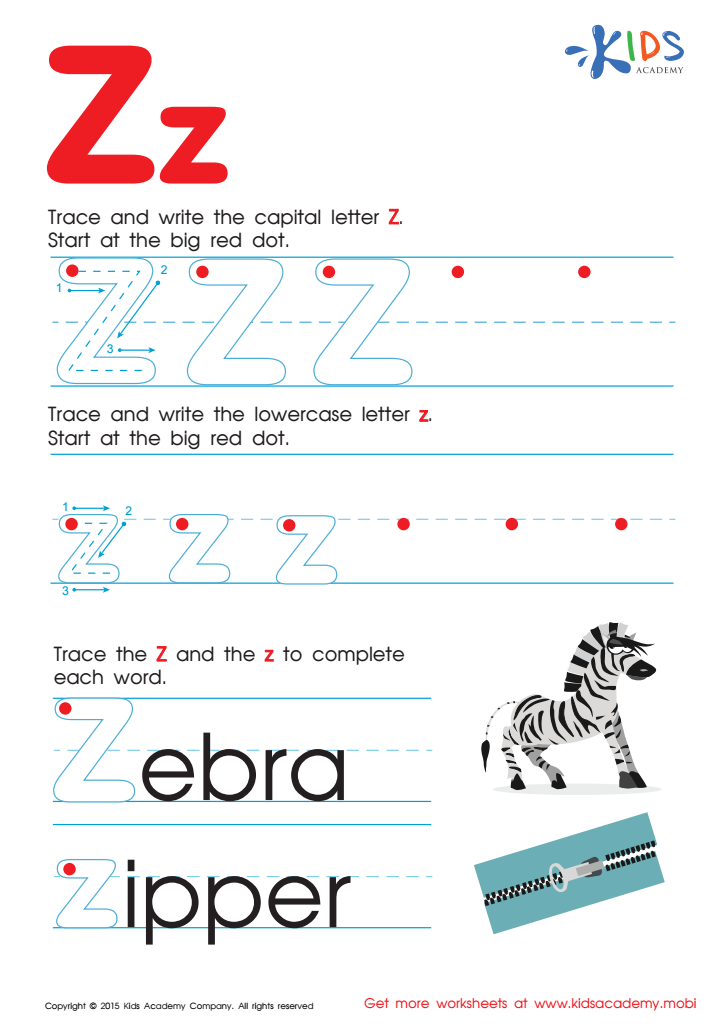
Letter Z Tracing Page
Trace and write capital "Z" and lowercase "z". Complete words "zebra" and "zipper". Be attentive and have fun! (80 words)
Letter Z Tracing Page
Worksheet
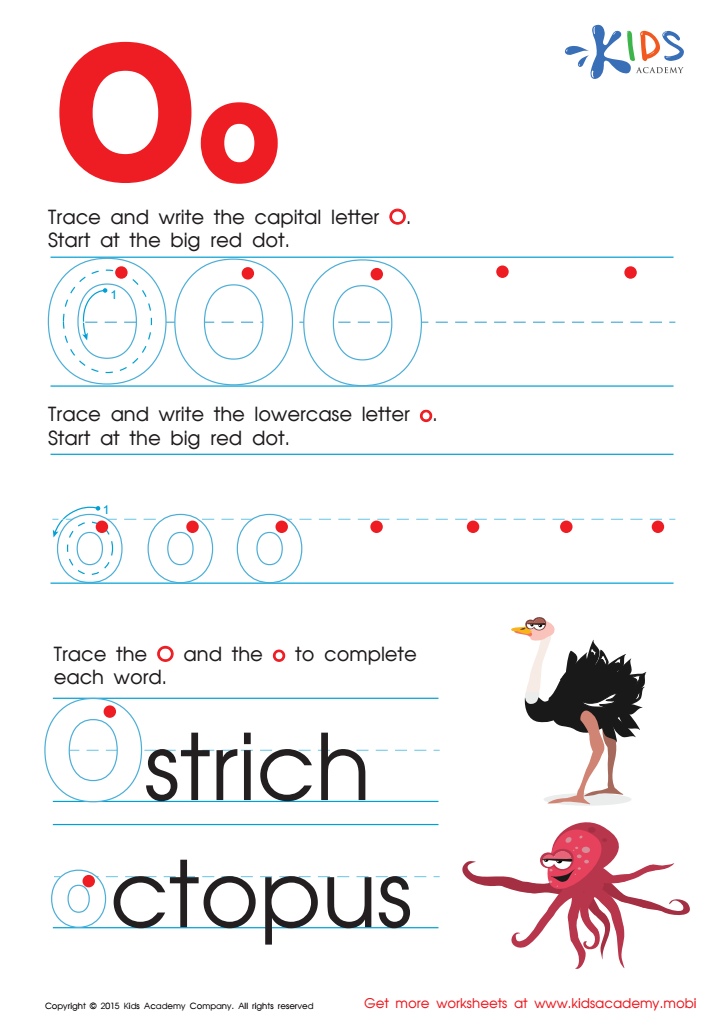
Letter O Tracing Page
Practice writing the letter "O" with our new worksheet. Trace and write the letter several times, starting at the red dot. First do the uppercase letter, then the lowercase. Use the pictures to complete the words "Ostrich" and "octopus". Kids Academy offers more fun alphabet worksheets.
Letter O Tracing Page
Worksheet
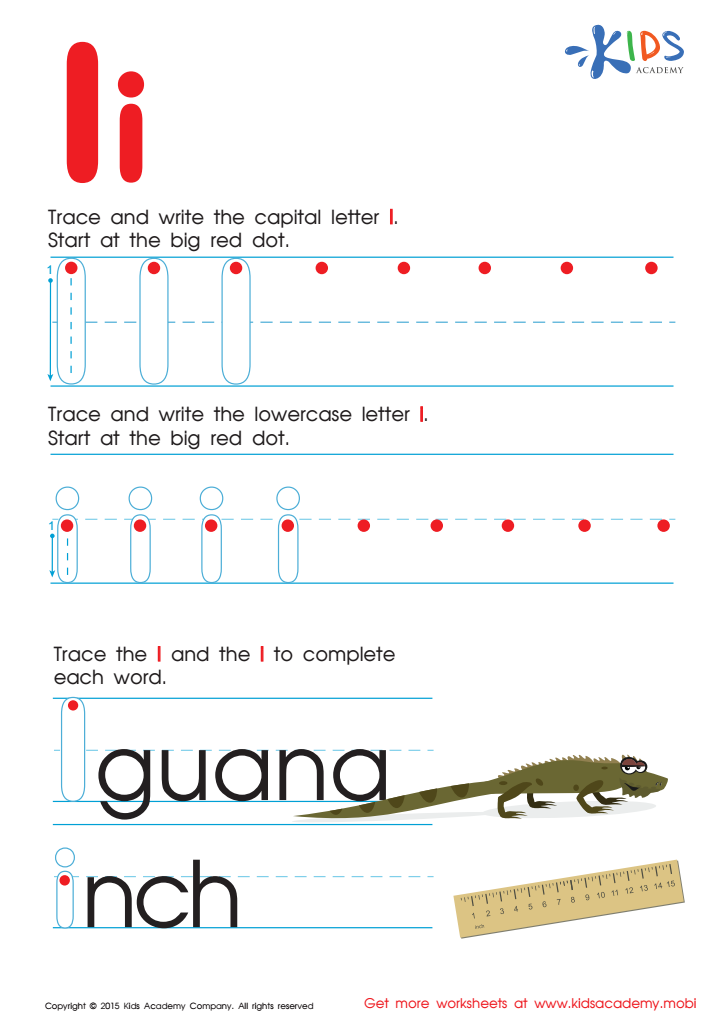
Letter I Tracing Page
Trace and write "I" uppercase and lowercase. An iguana's tail looks like the uppercase "I" and the lowercase "i" is as small as an inch. Make learning fun with Kids Academy worksheets.
Letter I Tracing Page
Worksheet
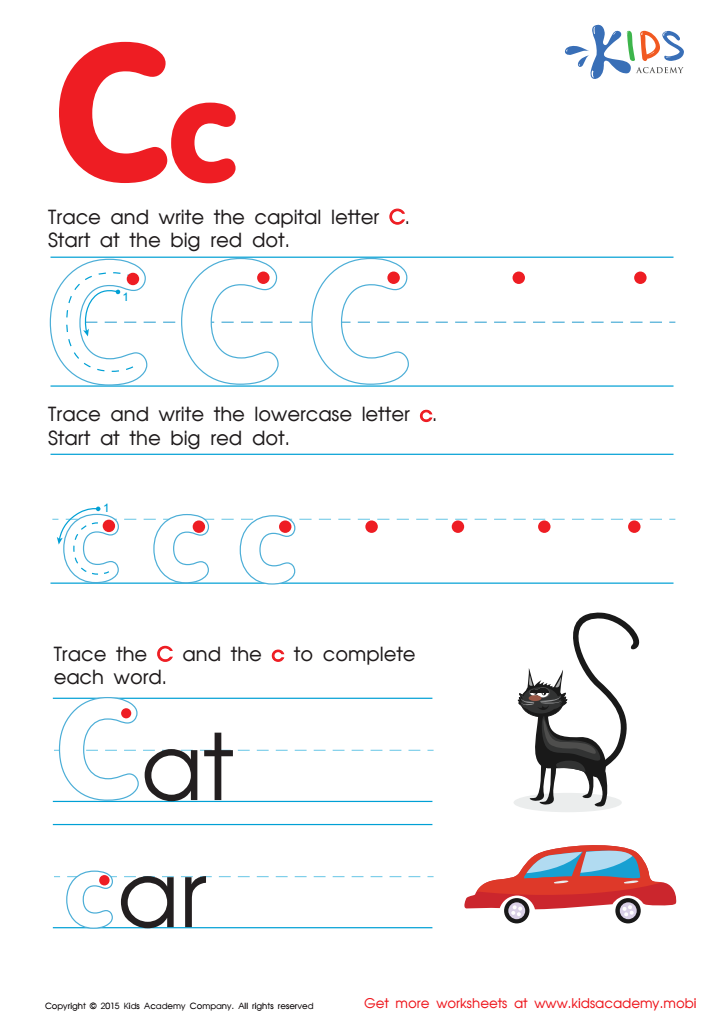
Letter C Tracing Page
Trace and write the letter 'C'! Put the pencil at the red dot then follow the lines – the capital letter first then the lowercase one. Cats love it and so will you! Get more free printables to practice tracing and writing.
Letter C Tracing Page
Worksheet
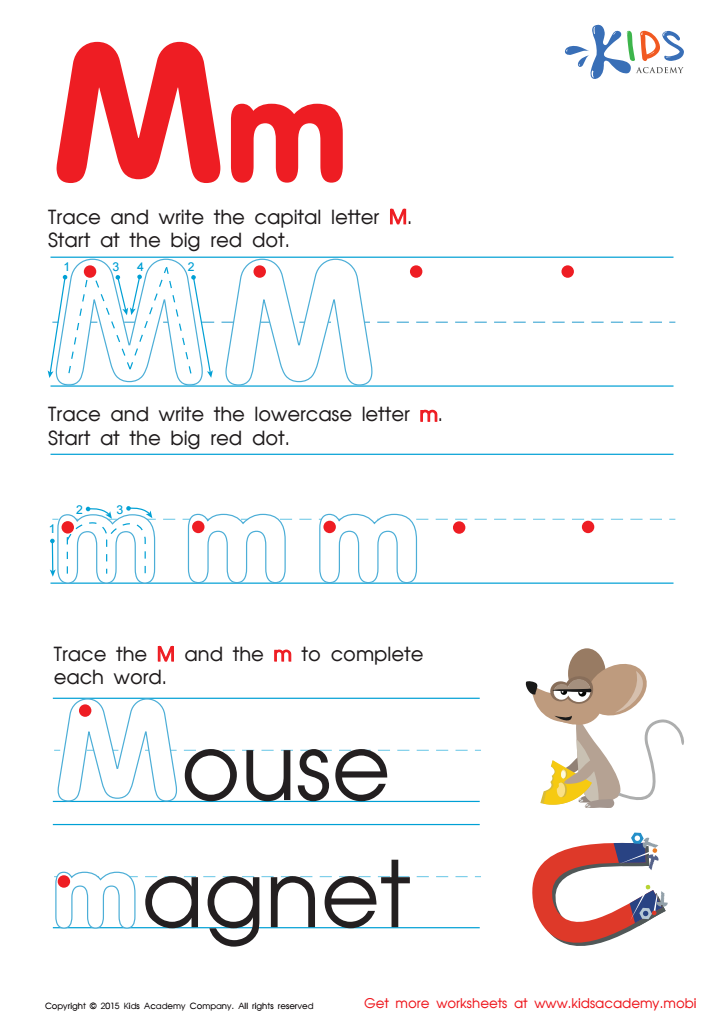
Letter M Tracing Page
Trace and write the letter "M" to help kids learn the alphabet. Start at the red dot and practice several times. Trace the capital letter first, then move on to the lowercase. Complete words like "mouse" and "magnet" in the further exercise. Get more free printables here.
Letter M Tracing Page
Worksheet
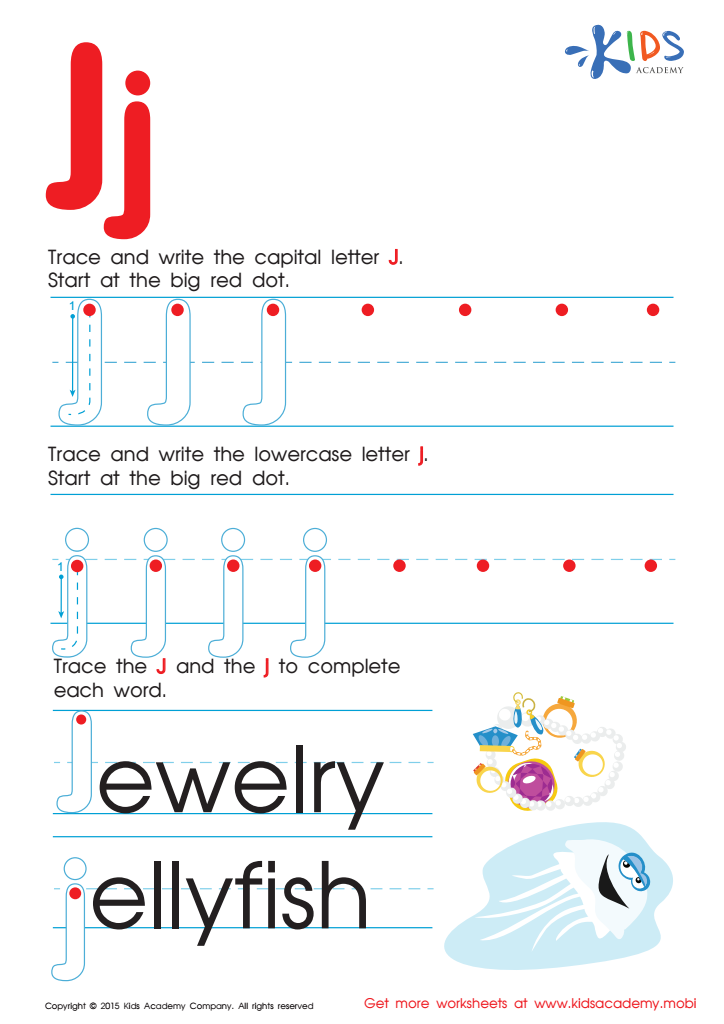
Letter J Tracing Page
Trace and write the letter "J" with our ABC worksheet - start at the big red dot! Have fun completing words like jewelry, jellyfish and more. Check out our kindergarten activities for more alphabet practice.
Letter J Tracing Page
Worksheet
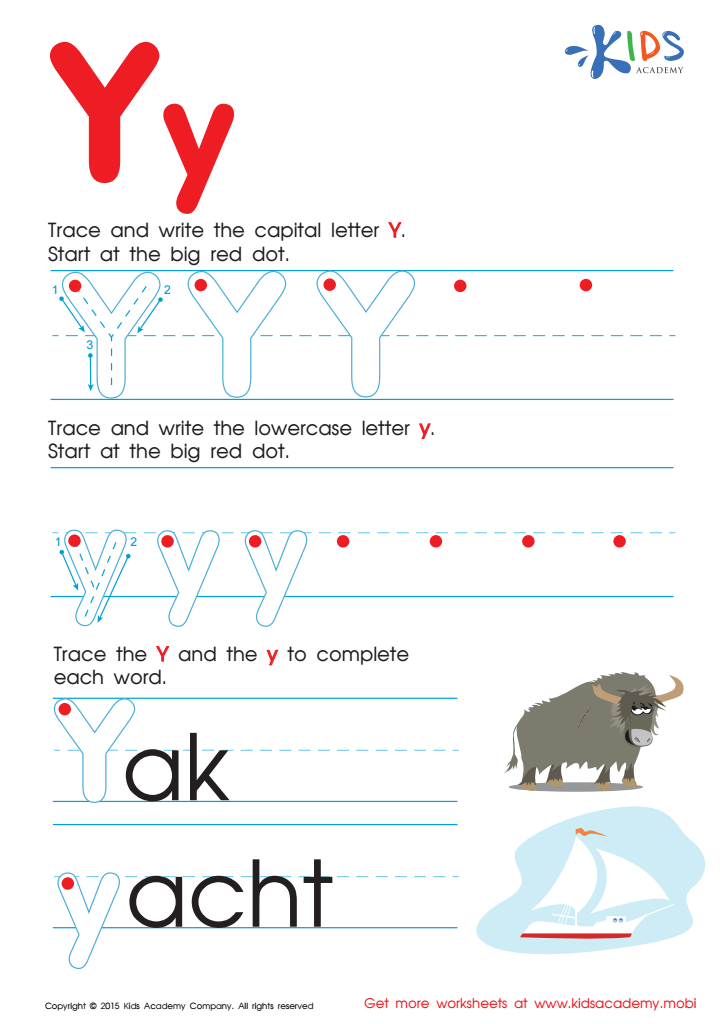
Letter Y Tracing Page
Trace the capital letter "Y" on the red dot, then trace and write the lowercase letter. Complete the words to help the Yak walk and the yacht swim. More worksheets at Kids Academy.
Letter Y Tracing Page
Worksheet
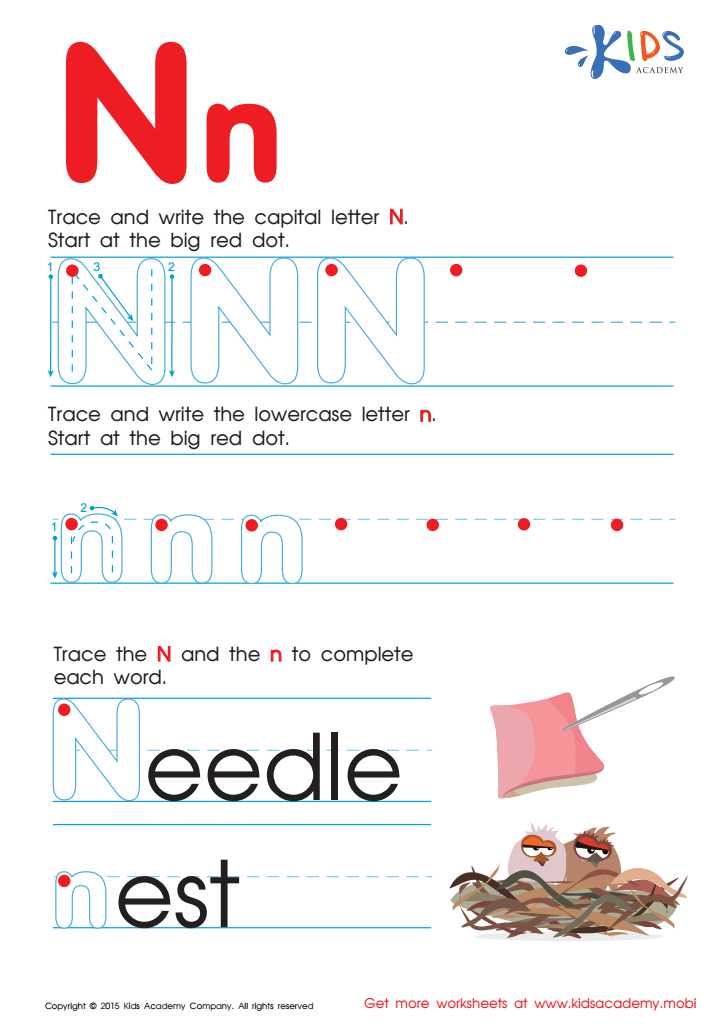
Letter N Tracing Page
Trace and write capital "N" and lowercase "n" several times. Then try forming words like "needle" and "nest". Master letter writing with Kids Academy's collection of ABC worksheets for kindergarten.
Letter N Tracing Page
Worksheet
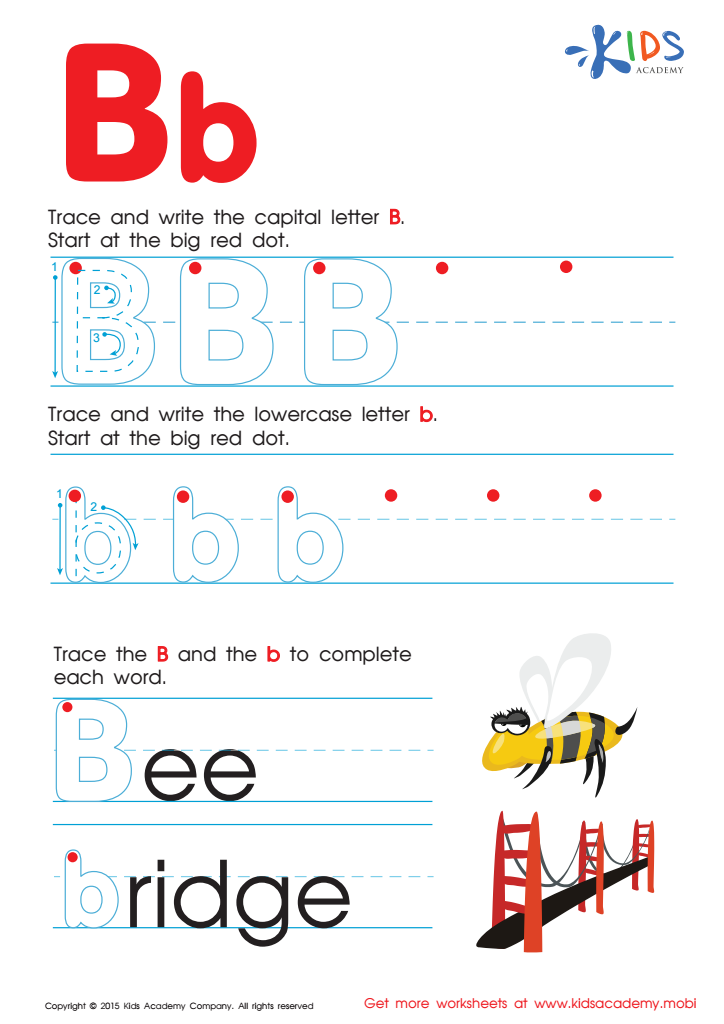
Letter B Tracing Page
Ready to learn the Alphabet? Put your pencil on the red dot and trace & write both capital & lowercase "B". Then have a look at the pictures. Catch the bee, cross the bridge & write the letters to complete the words. More ABC worksheets for kindergarten available!
Letter B Tracing Page
Worksheet
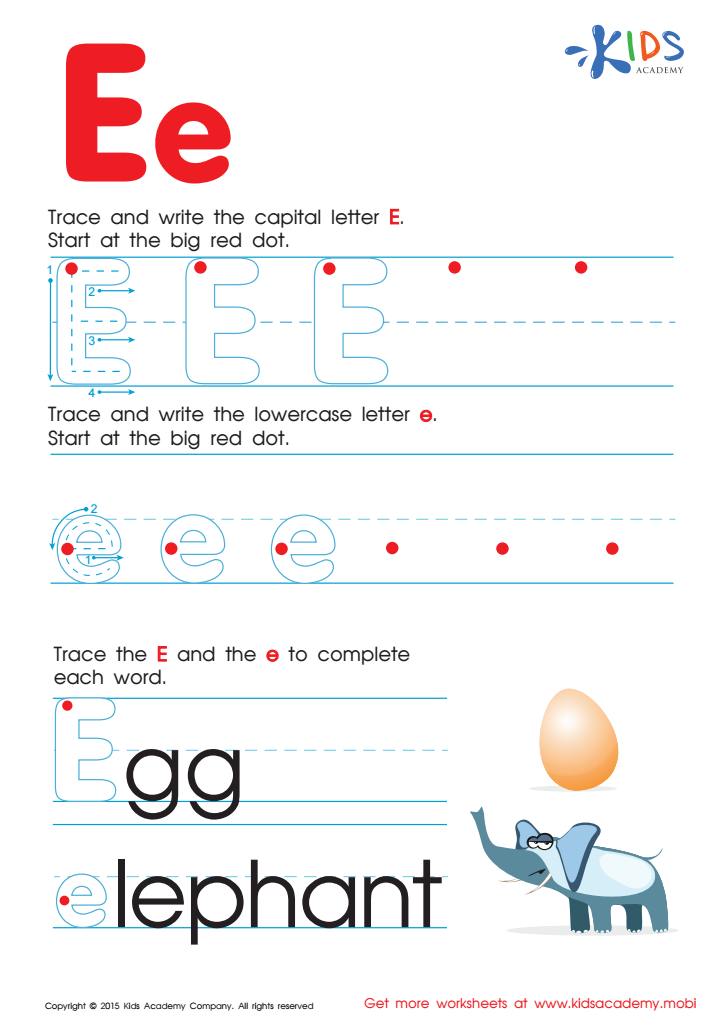
Letter E Tracing Page
Trace and write the uppercase and lowercase "E" starting at the big red dot. Complete words to perfect letter writing. Egg and Elephant must be written carefully. More alphabet worksheets for kindergarten are available for download to spend more time with your children learning.
Letter E Tracing Page
Worksheet
Join Kids Academy for Free
Who is primarily going to use this learning content?








Alphabet recognition and understanding ABC order are fundamental skills for children aged 3-5, laying the groundwork for future literacy and academic success. When parents and teachers prioritize these skills, they help young learners gain familiarity with letters and sounds, which enhances their phonemic awareness—the ability to hear, identify, and manipulate sounds in words. This awareness is pivotal in developing reading skills later on.
Recognizing letters in order paves the way for understanding the structure of the written language and improves children's ability to interact with books and other texts. It also facilitates word recognition and spelling as children learn to associate letters with their sounds and meanings. Moreover, engaging with the alphabet in a fun and interactive way fosters enthusiasm for learning and helps build self-confidence in young learners.
In addition, early exposure to the alphabet supports fine motor skills through writing and drawing activities, integrating learning through play. This approach not only makes learning enjoyable but also deepens the child's cognitive development. Ultimately, the ability to recognize and order letters is crucial for honing skills that children will draw upon throughout their educational journey and beyond. Therefore, a commitment to alphabet recognition and sequence is essential for fostering early literacy.