Alphabet understanding ABC Order Worksheets for Ages 3-5
3 filtered results
Difficulty Level
Grade
Age
-
From - To
Subject
Activity
Standards
Our "Alphabet Understanding ABC Order Worksheets for Ages 3-5" are expertly designed to engage young learners in mastering the ABCs. These vibrant, engaging printables help preschoolers and kindergarteners understand alphabet order through fun activities. Each worksheet offers interactive exercises, from tracing letters to matching and sequencing, fostering early literacy skills. Perfect for both classroom and home use, these worksheets support foundational learning in a playful, effective way. Empower your child's alphabet mastery with our thoughtfully crafted resources, ensuring they gain confidence and a strong base for future reading and writing success.
Favorites
With answer key
Interactive
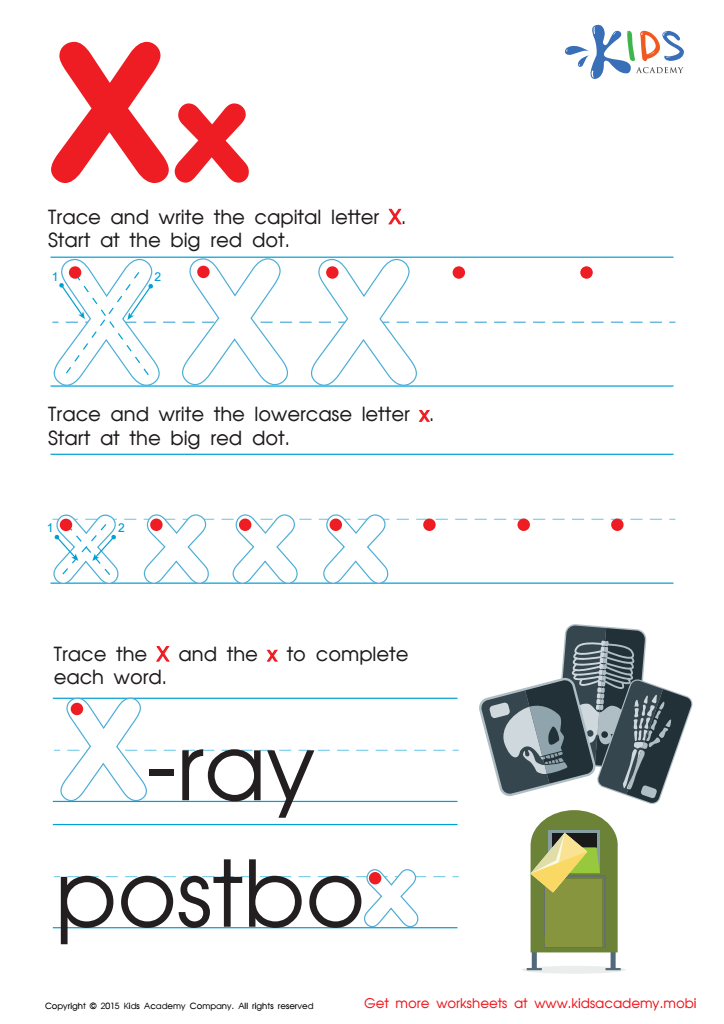
Letter X Tracing Page
Trace the uppercase letter "X" to learn, then write it yourself and practice. Then do the same with the lowercase "x" before completing the words "X-ray" and "postbox". Enjoy our alphabet printables!
 Assign to My Students
Letter X Tracing Page
Worksheet

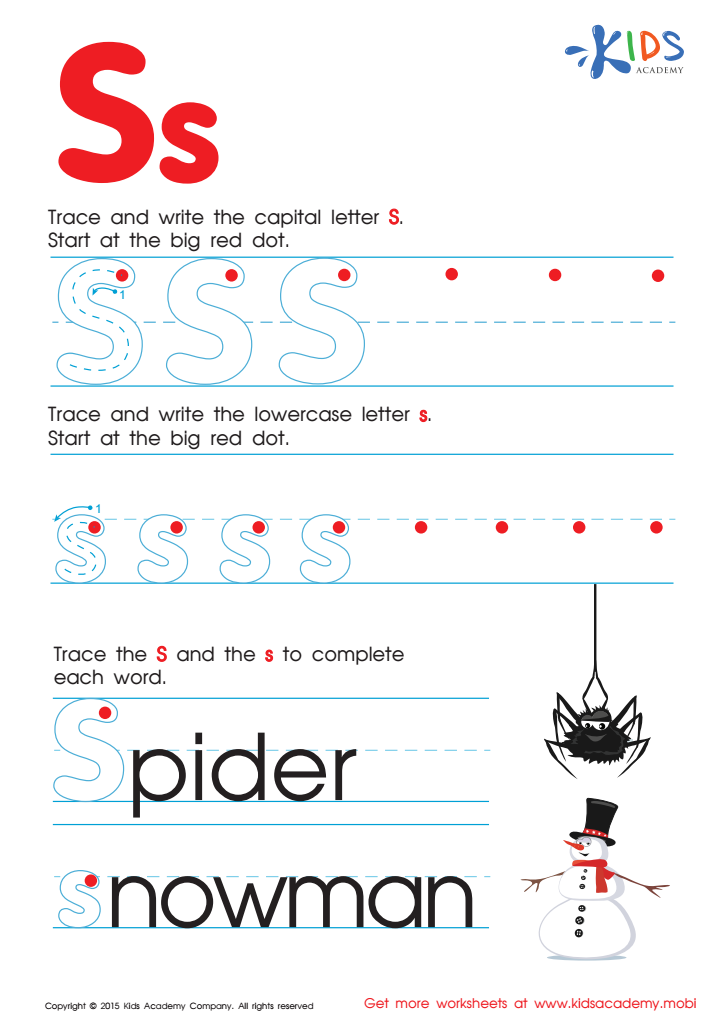
Letter S Tracing Page
Trace and write the capital and lowercase "S" on this ABC worksheet for kindergarten. Start with the big red dot and be careful. When you finish, help the spider and snowman in the pictures restore their words with the capital and lowercase letters. Continue learning the alphabet with Kids Academy.
Letter S Tracing Page
Worksheet
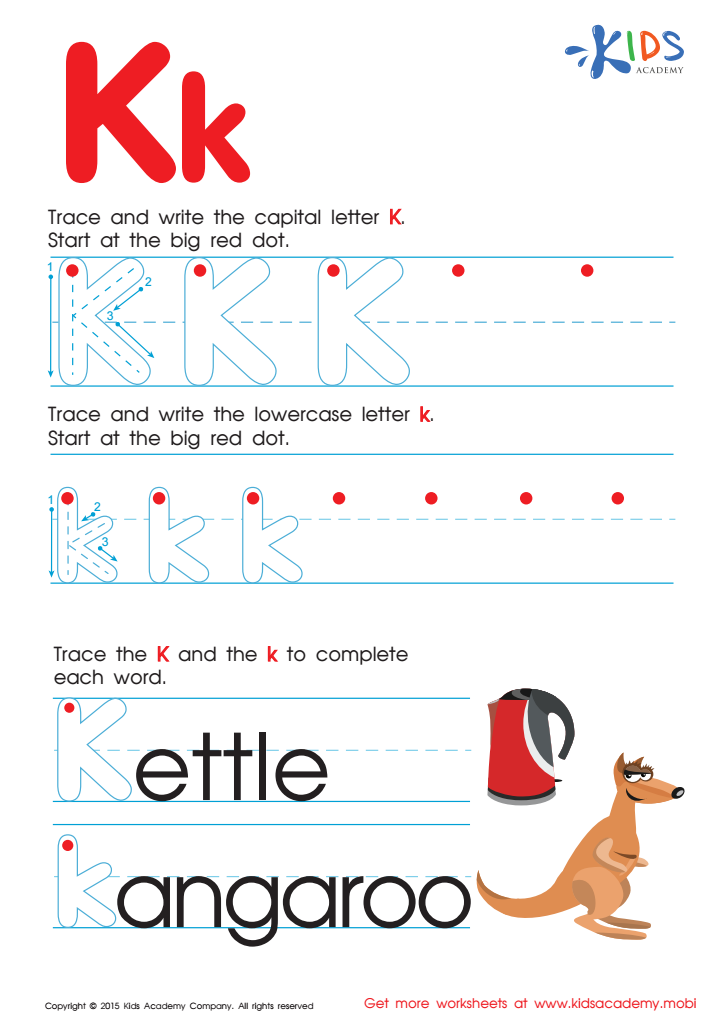
Letter K Tracing Page
Trace and write the letter K; start at the big red dot. Use it to complete words like "Kettle" and "Kangaroo". Visit Kids Academy for more free alphabet worksheets for kindergarten.
Letter K Tracing Page
Worksheet
Join Kids Academy for Free
Who is primarily going to use this learning content?







Understanding the alphabet and the concept of ABC order (alphabetical order) is fundamentally important for children ages 3-5, as it lays the groundwork for their future literacy and learning skills. Grasping the sequence of letters helps young learners to recognize and differentiate between them, facilitating both reading and writing abilities. When children get familiar with alphabetical order, they start to understand how letters come together to form words and comprehend their sorting systems. This awareness contributes to their organizational and cognitive development.
For parents and teachers, fostering this early skill comes with practical and educational advantages. Activities emphasizing the alphabet can enhance children's memory, concentration, and sequencing skills, all of which are essential for performing more complex tasks as they grow. Furthermore, being literate in the order of alphabets aids in their ability to use dictionaries, access helpful educational resources, and sort items logically in future academic and everyday contexts. These activities can be turned into fun, interactive games that also strengthen the bond between child and adult.
Thus, investing time in teaching alphabetical order at a young age constructs the foundation from which children can launch into fluent reading, spelling, and comprehending texts, ensuring they are well-prepared for kindergarten and beyond.