
Phonics Skills Consonants Worksheets for Ages 3-5
5 filtered results
Difficulty Level
Grade
Age
-
From - To
Subject
Activity
Standards
Discover our Phonics Skills Consonants Worksheets, designed specifically for children ages 3-5. These engaging and interactive activities help young learners master consonant sounds and enhance their phonemic awareness. Our worksheets provide a fun and effective way to reinforce letter recognition, pronunciation, and early reading skills through captivating visuals and simple exercises. Parents and educators will appreciate the structured format that promotes independent learning while fostering a love for language. Perfect for at-home practice or classroom activities, our worksheets serve as essential tools in building foundational skills for emerging readers. Start your child's reading journey today with our thoughtfully crafted phonics resources!
Favorites
With answer key
Interactive
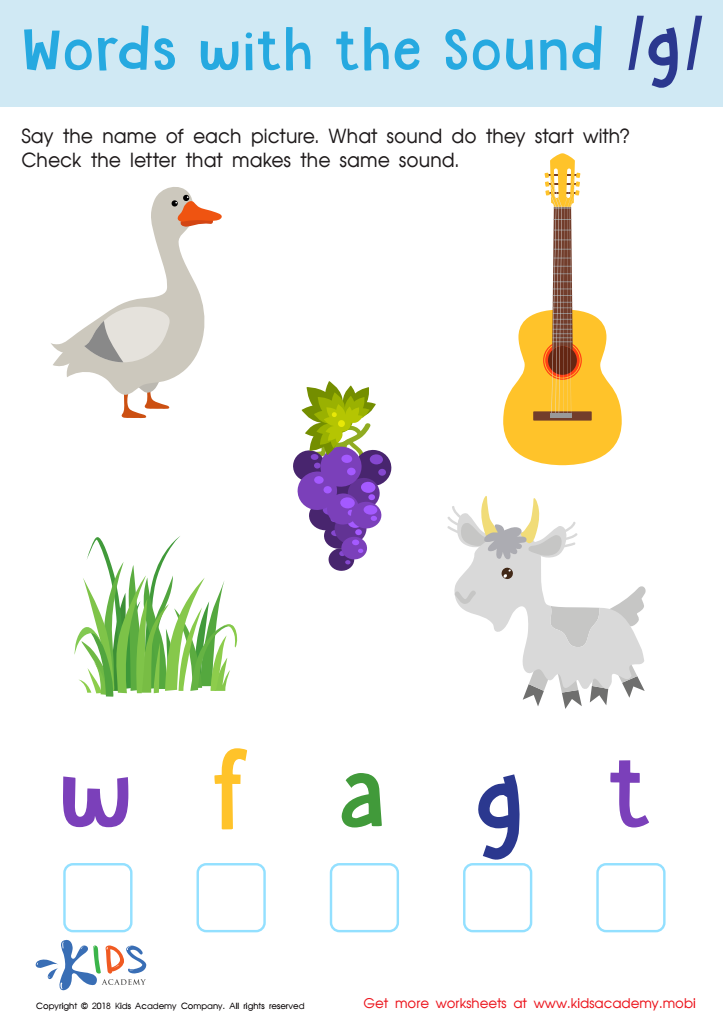
Words with sound g Reading Worksheet
Help your child learn the soft "g" sound with this phonics worksheet. Ask them to name each picture, then identify the letter sound it begins with. If it's "g", they can check the box. Have them repeat each word, listening for the soft "g" sound before moving on to the next page.
 Assign to My Students
Words with sound g Reading Worksheet
Worksheet
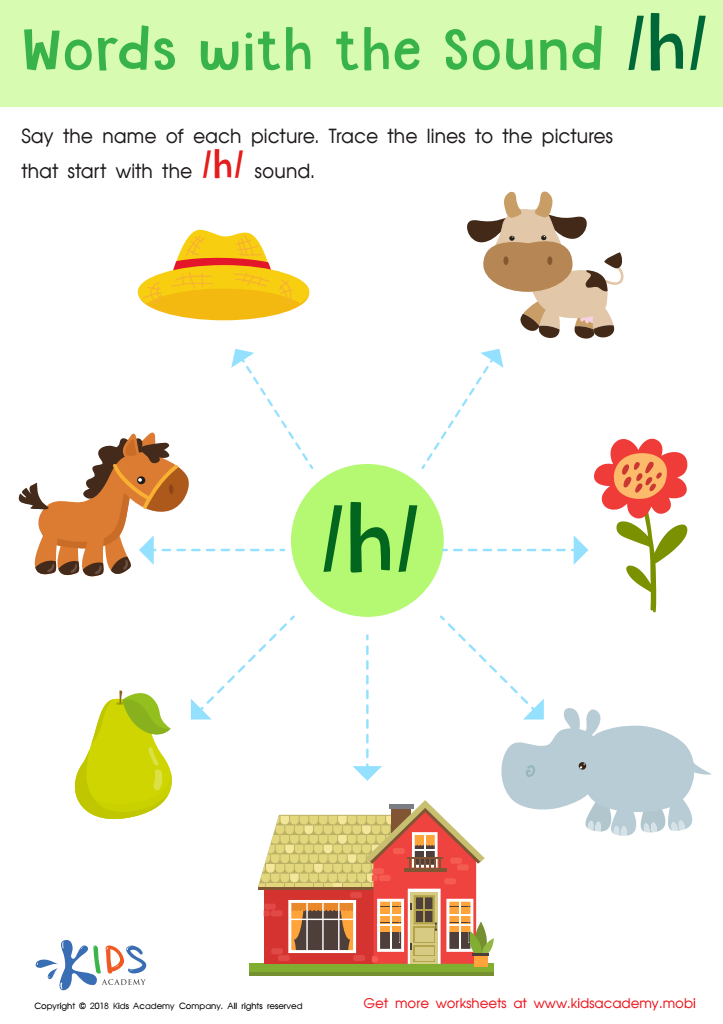
Words with sound h Reading Worksheet
The letter H can often be heard in words! Check your child's knowledge with an engaging worksheet from Kids Academy. Ask them to go around a circle and name each image aloud. Listen for the starting sound and trace the line from the middle letter to the images with the sound. This is a great way to practice phonics!
Words with sound h Reading Worksheet
Worksheet
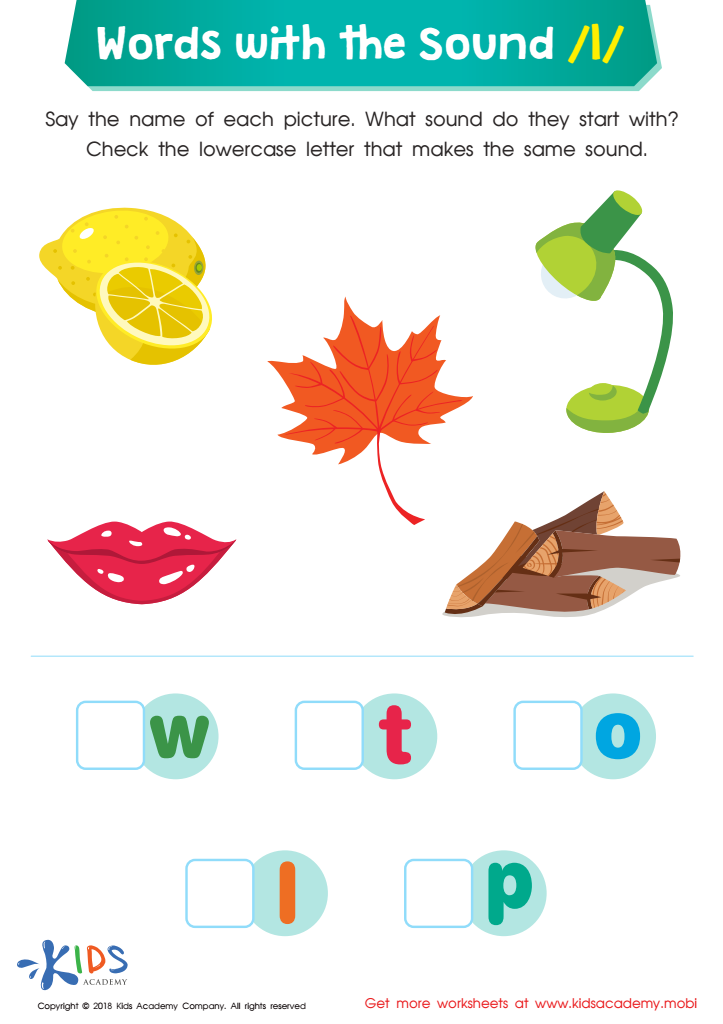
Words with Sound L Reading Worksheet
This PDF worksheet is great for helping emerging readers isolate initial sounds. Kids name familiar pictures, then identify the correct letter for the "l" sound. This worksheet strengthens fine motor skills, plus builds visual discernment. It's fun and colorful too!
Words with Sound L Reading Worksheet
Worksheet
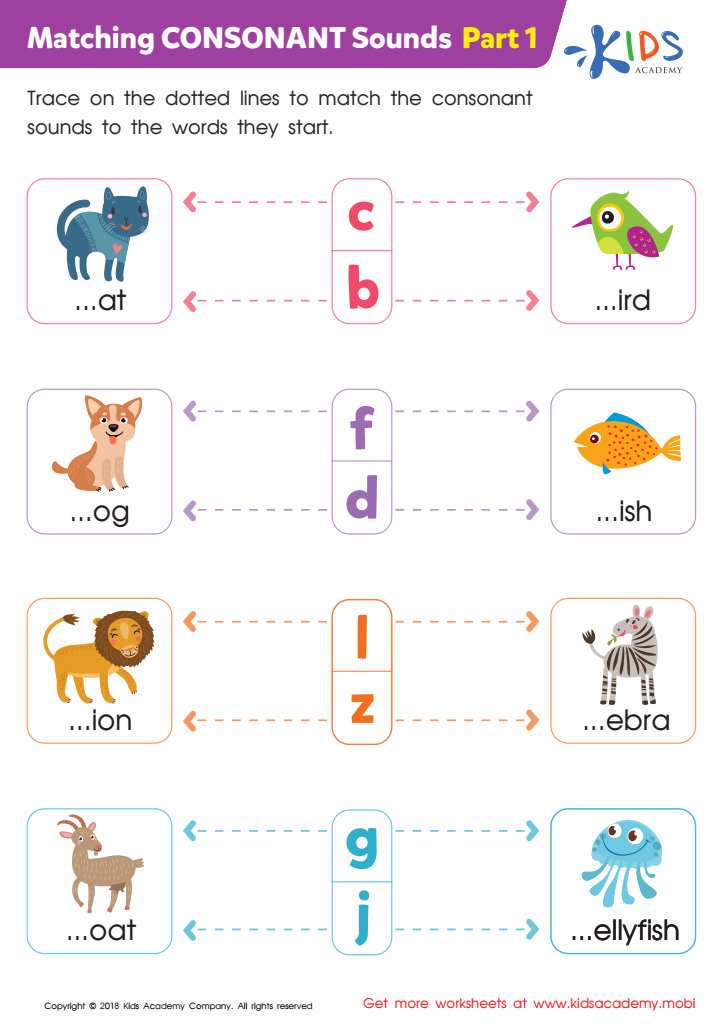
Matching Consonant Sounds: Part 1 Worksheet
Decide which letter matches each word and picture in this fun phonics worksheet. Slide your finger over each word, trying out each letter to check for matches. Once each pair is solved, trace the dotted lines with pencil to complete the printable. Who knew learning could be so enjoyable?
Matching Consonant Sounds: Part 1 Worksheet
Worksheet
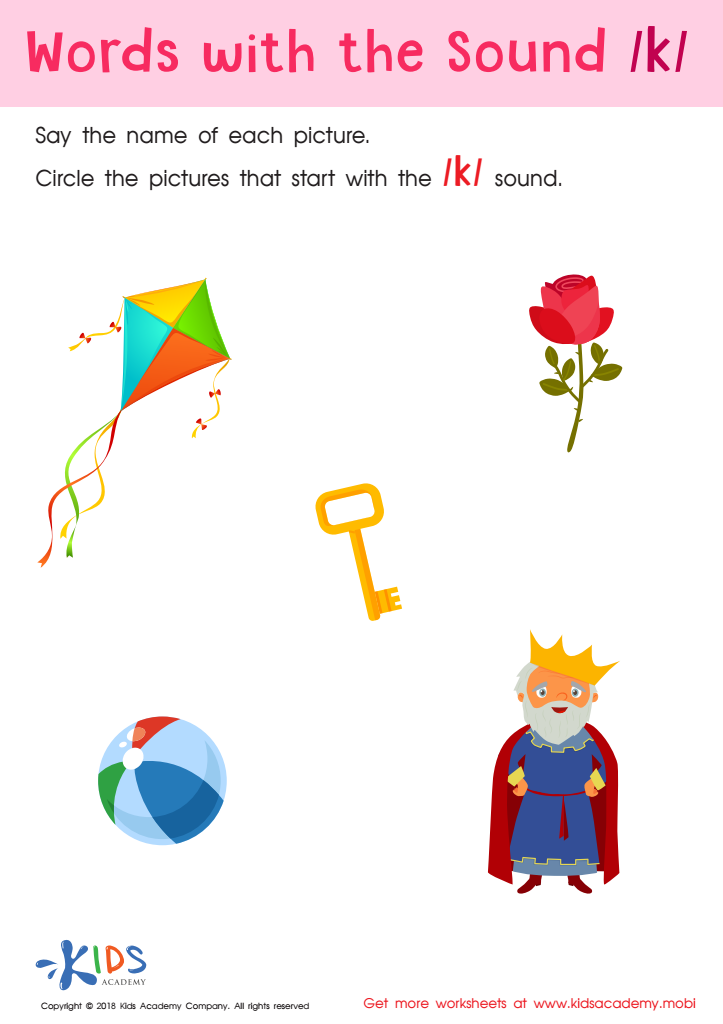
Words with sound k Reading Worksheet
Help your preschooler master the hard "k" sound with this fun worksheet from Kids Academy! Ask your child to say each picture aloud and circle only the pictures that start with "k". This early reading exercise will boost phonics skills and is sure to be loved by your little learner!
Words with sound k Reading Worksheet
Worksheet
Join Kids Academy for Free
Who is primarily going to use this learning content?



Phonics skills, particularly understanding consonants, are crucial for children aged 3-5 as they lay the foundation for reading and writing. At this early developmental stage, children are typically exploring language and beginning to understand how letters connect to sounds. When parents and teachers prioritize phonics skills focusing on consonants, they help children develop phonemic awareness—the ability to recognize and manipulate sounds in spoken language. This skill is vital for reading because it enables children to decode words effectively.
Consonant sounds are the building blocks of words and phonetic patterns, helping children recognize and articulate that letters correspond to specific sounds. Engaging children in phonics through interactive games, songs, and stories makes learning enjoyable and effective. As they gain confidence in their phonics skills, they will be better equipped to read simple texts, spelling words accurately, and writing will become less daunting.
Moreover, strong phonics skills contribute to vocabulary development and comprehension, which are essential for academic success. By fostering these skills early, parents and teachers can create a robust learning environment, setting children up for a lifelong love of reading and learning. Recognizing the significance of consonants in phonics is a crucial step in supporting early literacy development.







