Vocabulary expansion Consonants Worksheets for Ages 3-5
4 filtered results
-
From - To
Enhance your child's language development with our Vocabulary Expansion Consonants Worksheets designed specifically for ages 3 to 5. These engaging worksheets help young learners identify consonant sounds and improve their vocabulary in a fun and interactive way. Featuring colorful illustrations and diverse activities, children will practice letter recognition, sound matching, and word formation. Perfect for at-home or classroom use, our worksheets encourage imagination and enhance cognitive skills through hands-on learning. With exciting exercises tailored for early education, these resources make mastering consonants a delightful adventure. Give your child a head start in literacy with our thoughtfully crafted consonant worksheets today!
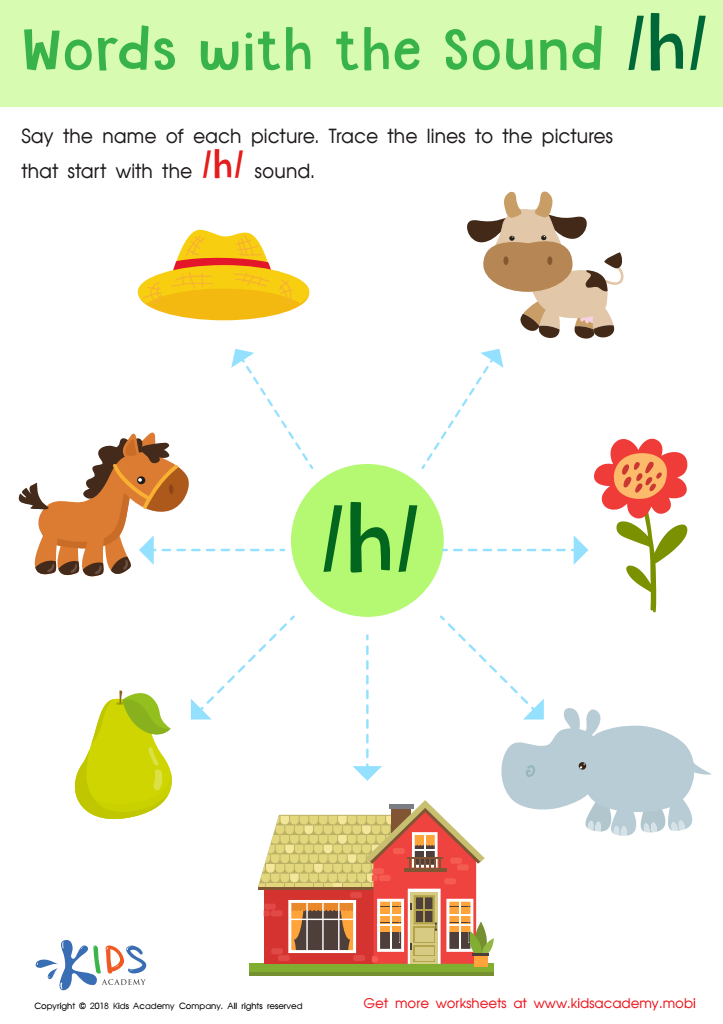
Words with sound h Reading Worksheet
 Assign to My Students
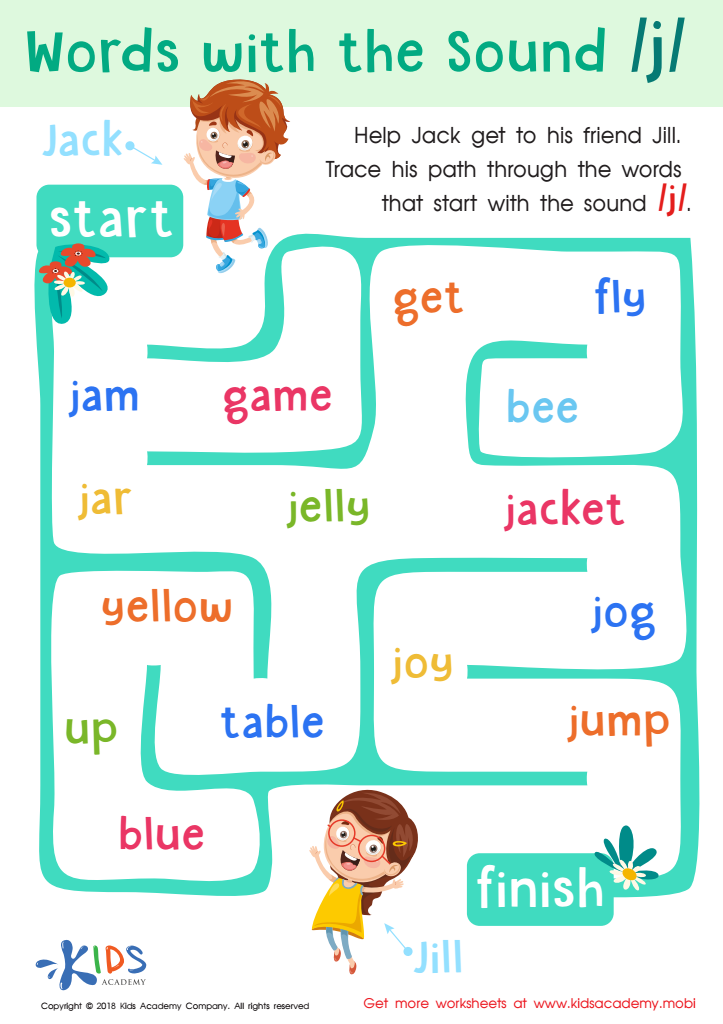
Words with sound j Reading Worksheet
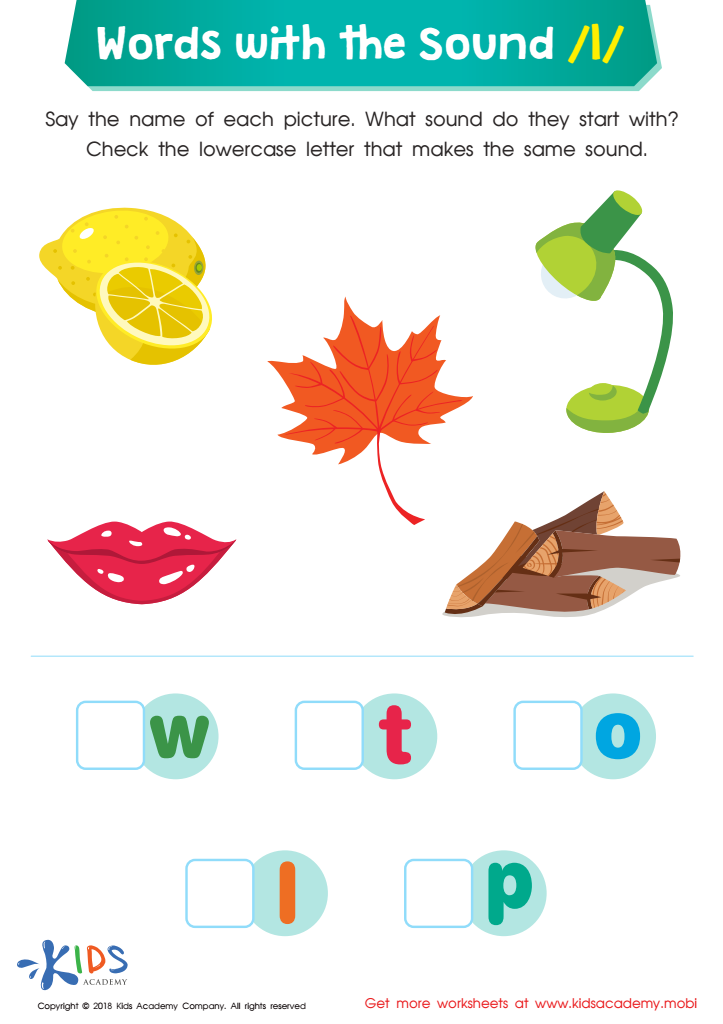
Words with Sound L Reading Worksheet
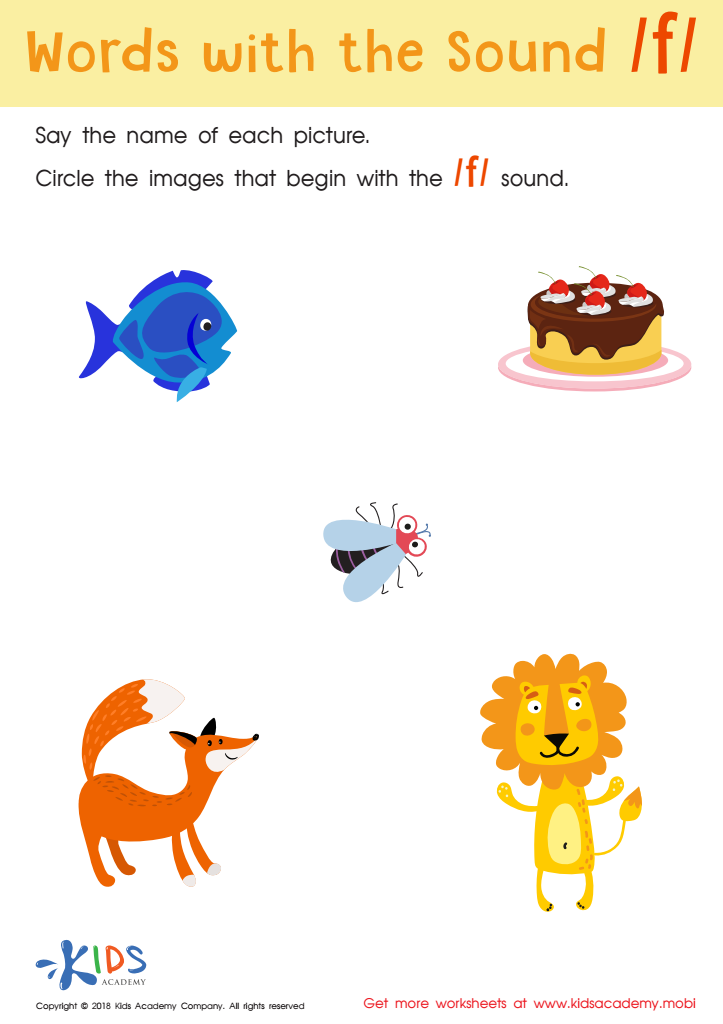
Words with sound f Reading Worksheet



Vocabulary expansion is crucial for children aged 3 to 5, as it lays the foundation for effective communication and literacy skills. During these formative years, children's brains are rapidly developing, and exposure to a rich variety of words enhances their cognitive and language capabilities. Understanding consonants specifically is vital since they form the backbone of most words, influencing pronunciation and spelling.
When parents and teachers emphasize vocabulary expansion related to consonants, children learn to associate sounds with letters, fostering phonemic awareness, which is essential for reading. Engaging activities such as singing alphabet songs, playing rhyming games, or reading aloud stimulate children’s curiosity about words and their meanings. This interactive vocabulary exposure not only nurtures language development but also boosts confidence, encouraging children to express themselves effectively.
Moreover, a robust vocabulary aids in cognitive development, as children begin to categorize and comprehend their environment more deeply. It enhances their social interactions, equipping them with the language skills needed to articulate thoughts and feelings. Ultimately, prioritizing vocabulary expansion related to consonants supports holistic development, setting the stage for academic success and lifelong learning. For these reasons, it is imperative for parents and teachers to commit to fostering vocabulary growth during these critical early years.







