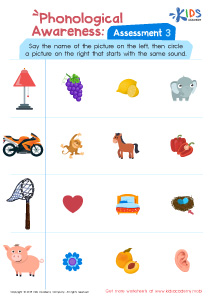
Phonics recognition Elementary Phonics Worksheets for Ages 3-5
3 filtered results
Difficulty Level
Grade
Age
-
From - To
Subject
Activity
Standards
Enhance young learners' reading skills with our Phonics Recognition Elementary Phonics Worksheets for ages 3-5! Tailored to introduce and reinforce letter sounds, these fun and engaging printable activities foster early literacy skills in preschoolers and kindergarteners. Children will love identifying, matching, and sounding out letters alongside vibrant images and characters. Perfect for both at-home practice and classroom use, our worksheets provide a solid foundation for reading success. Help your child discover the joy of phonics and develop confident readers through playful, interactive exercises designed to make learning effortless and enjoyable. Explore now at Kids Academy!
Favorites
With answer key
Interactive
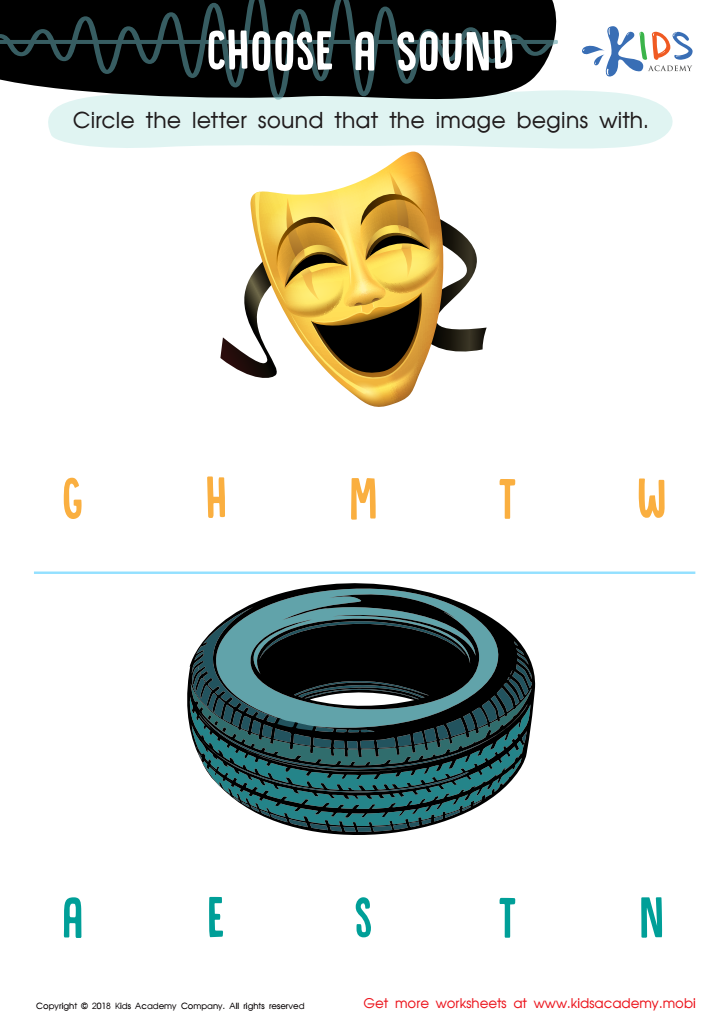
Choose a Sound Worksheet
Help your child hone pre-reading skills with this colorful worksheet! They'll practice tracing letter sounds, develop phoneme awareness, and gain confidence. Plus, it's a fun way to work on their fine motor skills.
 Assign to My Students
Choose a Sound Worksheet
Worksheet
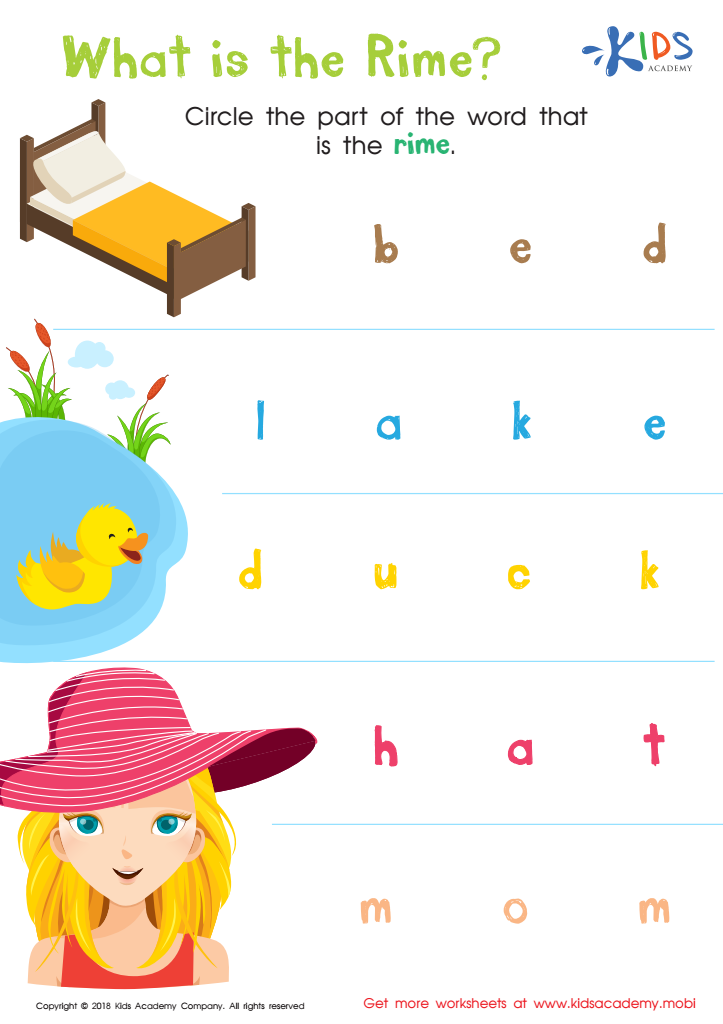
What Is the Rime? Worksheet
Kids will love this PDF worksheet that boosts their reading skills and fine motor skills as they trace the correct rimes for each picture. Knowing onset and rime is key to decoding and fluency, and this worksheet makes it fun! They won't even know they're learning and will be asking for more.
What Is the Rime? Worksheet
Worksheet
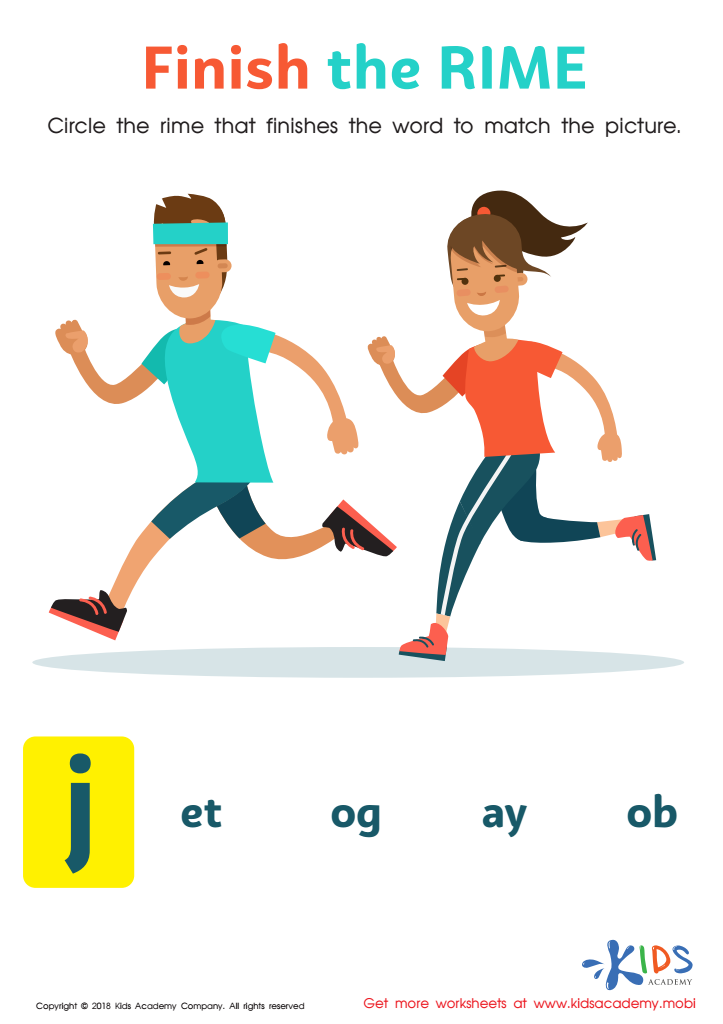
Finish the Rime Worksheet
Rimes help kids learn word families and spelling strategies. This PDF worksheet gives new readers practice with initial consonants, pictures, colors and motor skills. It's fun and cheery, and a great way to boost phonological awareness and rime identification.
Finish the Rime Worksheet
Worksheet
Join Kids Academy for Free
Who is primarily going to use this learning content?




Phonics recognition is a cornerstone of early literacy development, making it crucial for parents and teachers to focus on this aspect when teaching children aged 3-5. Phonics, the understanding of sound-letter relationships, helps young learners decode words, facilitating smoother and more fluent reading. This foundation not only supports reading skills but also enhances spelling and writing abilities.
At ages 3-5, children are at a critical developmental stage where their brains are highly receptive to acquiring new sounds and patterns. Introducing phonics during this window fosters an intuitive understanding of how language works. When taught effectively, phonics can demystify the reading process, turning what might be abstract symbols into meaningful, readable words.
Early phonics recognition also boosts confidence in young readers. Success in decoding new words makes reading a rewarding experience, encouraging continued interest and effort. Beyond just academic achievement, early phonics skills contribute to cognitive development, enhancing memory, attention, and phonemic awareness.
For parents and teachers, prioritizing phonics in early education aligns with developing essential life-long skills, opening doors to wider learning opportunities and a richer, broader, intellectual landscape for the child. Investing time and effort into phonics instruction now builds a solid foundation for future academic success and a joy of reading.