Phonetics understanding Alphabet Worksheets for Ages 3-5
3 filtered results
-
From - To
Explore our engaging "Phonetics Understanding Alphabet Worksheets" designed specifically for children ages 3 to 5! These colorful, interactive worksheets aim to introduce young learners to the sounds of letters through fun activities that blend education with play. We focus on essential phonetic skills, helping kids recognize letter sounds, match them to corresponding images, and develop early reading abilities. Perfect for preschool classrooms or home learning, these worksheets promote foundational literacy skills in an enjoyable way. Transform your little one's learning experience as they embark on their journey through the alphabet while building confidence in their phonetic understanding!
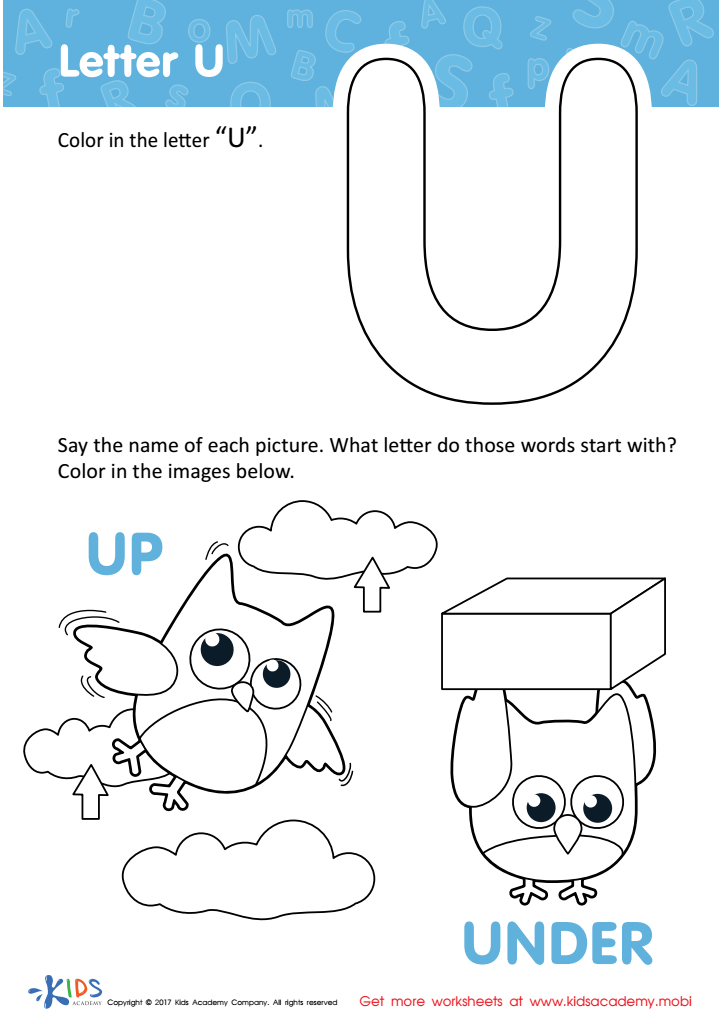
Letter U Coloring Sheet
 Assign to My Students
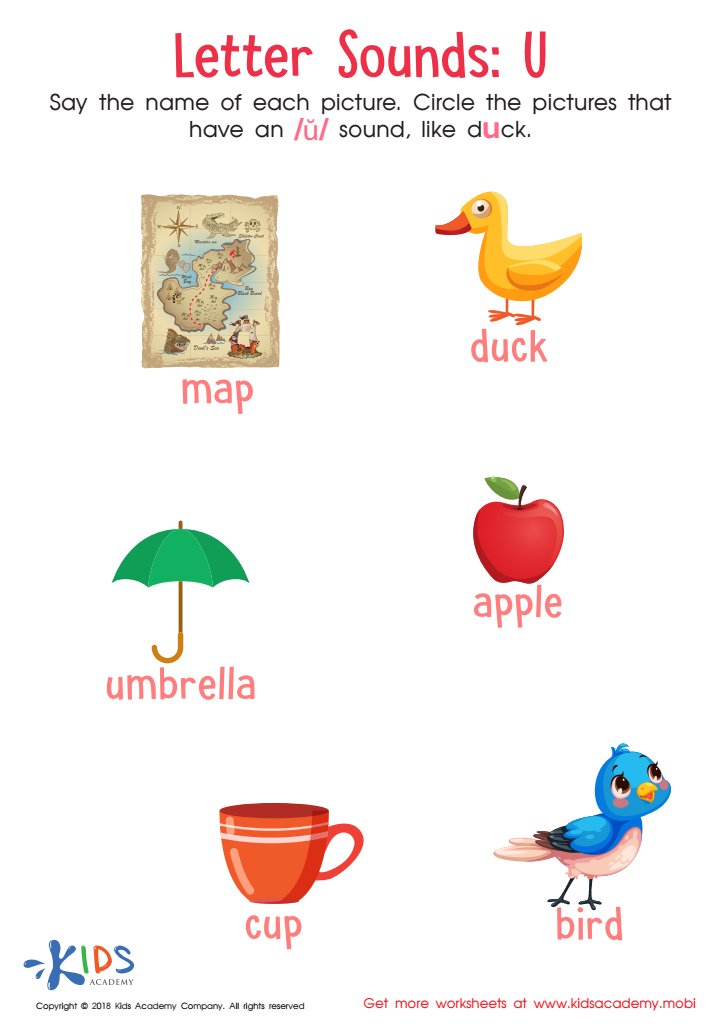
Letter U Sounds Worksheet
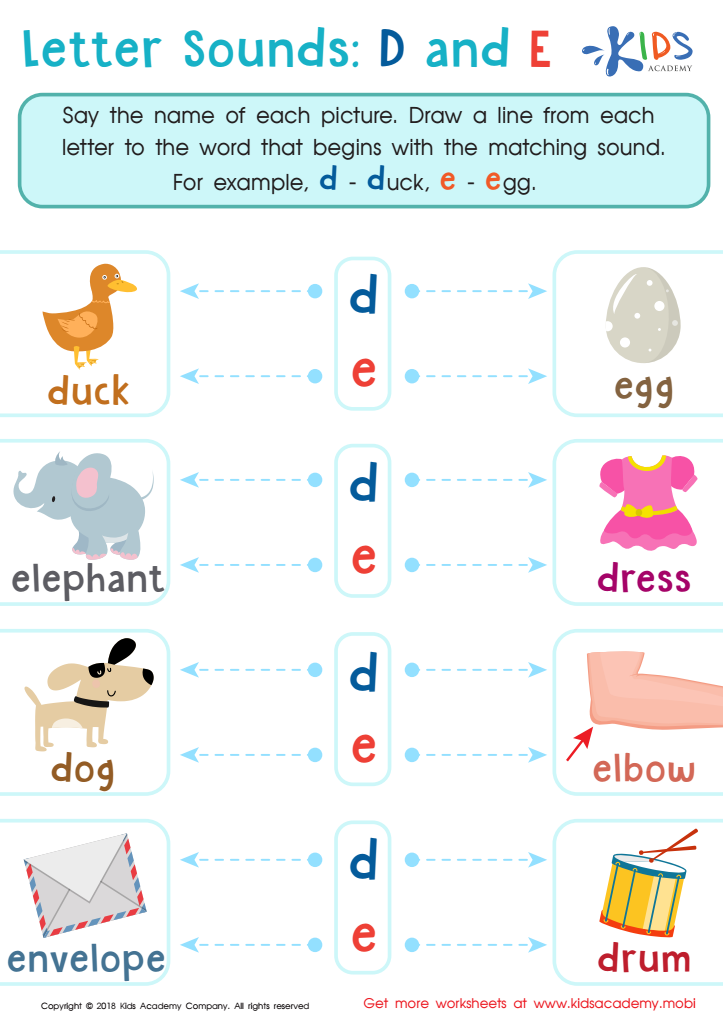
Letter D and E Sounds Worksheet








Understanding phonetics and the alphabet is crucial for children aged 3-5, as it lays a strong foundation for reading and language development. Early exposure to phonetic principles helps kids make connections between sounds and letters, fostering skills essential for decoding and comprehension. Teaching phonetics encourages children to recognize that spoken language can be broken down into individual sounds (phonemes) associated with specific letters or groups of letters.
When parents and teachers focus on phonetic understanding, they enhance children's ability to sound out words, which boosts their confidence in reading. Engaging in fun activities that introduce letter sounds – such as rhymes, songs, and phonetic games – makes learning enjoyable and effective. This interactive approach cultivates curiosity and enthusiasm about language, leading to a love for reading and learning.
Additionally, strong phonetic skills can support broader cognitive development, helping children improve their vocabulary, spelling, and verbal abilities. By prioritizing phonetics and the alphabet in early education, caregivers equip young learners with key skills that will not only benefit their academic journey but also enrich their communication and social interactions throughout life. In this way, early phonetic understanding becomes a vital component in nurturing well-rounded, literate individuals.







