Reading skills development Alphabet Worksheets for Ages 3-5
5 filtered results
-
From - To
Discover our engaging Reading Skills Development Alphabet Worksheets designed specifically for children ages 3-5. These interactive activities help young learners build essential reading skills by exploring letter recognition, phonics, and vocabulary development. Each worksheet is crafted to make learning fun, featuring colorful illustrations and easy-to-follow exercises that reinforce the connection between letters and their sounds. As children practice tracing, matching, and identifying letters, they gain confidence in their reading abilities. Perfect for both home and classroom use, our alphabet worksheets foster a love for reading from an early age. Start your child’s reading journey today!
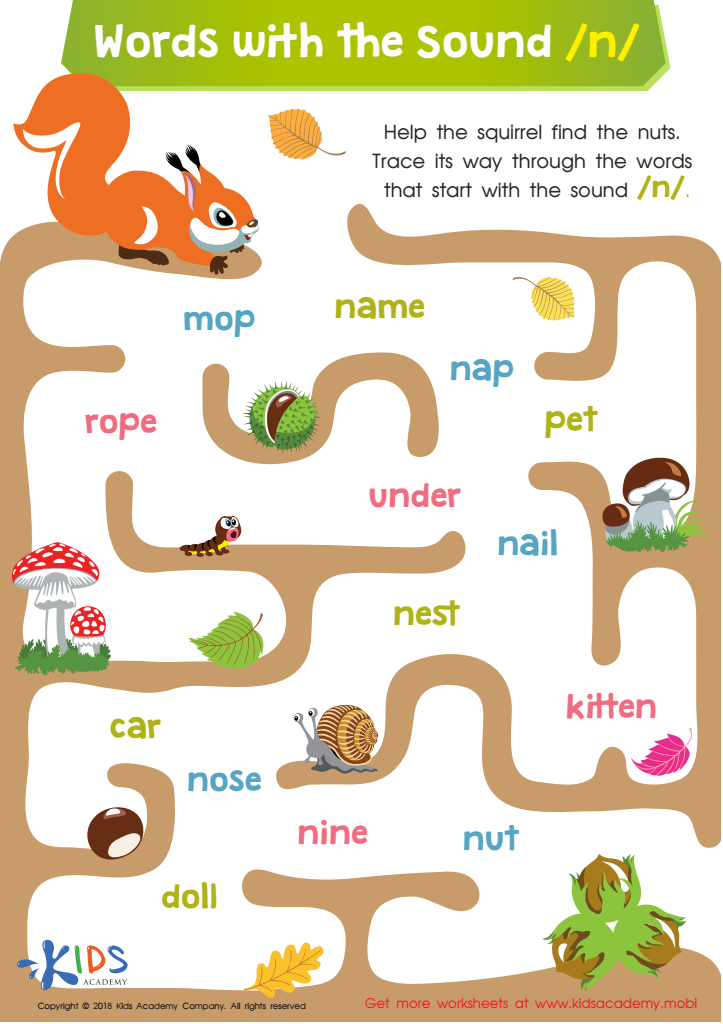
Words with Sound N Reading Worksheet
 Assign to My Students
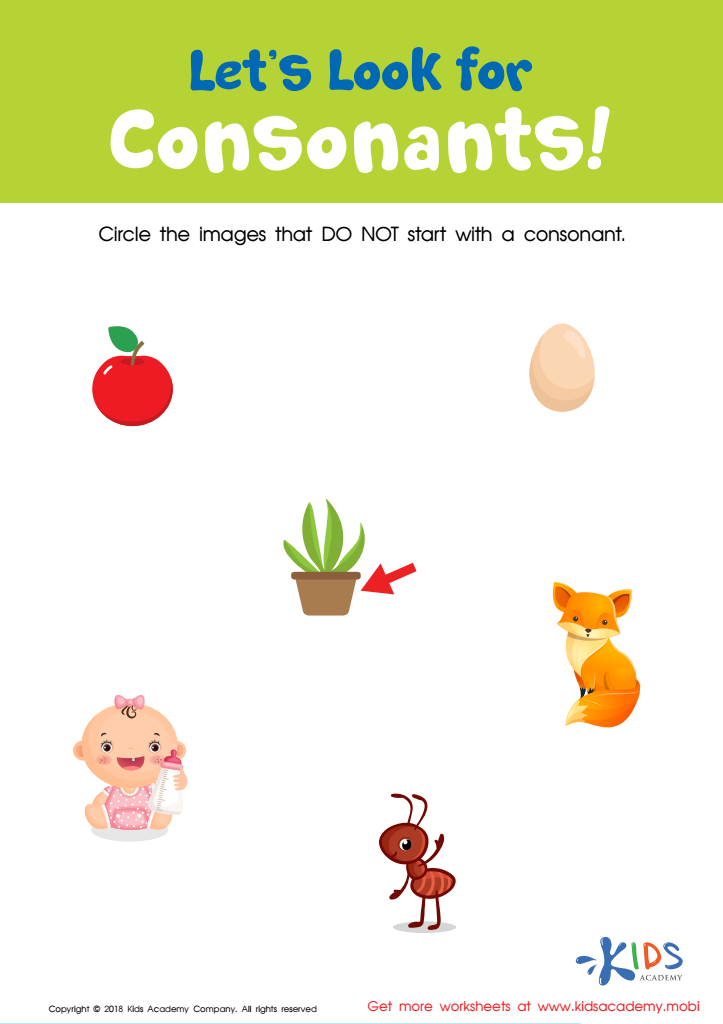
Let's Look for Consonants Worksheet
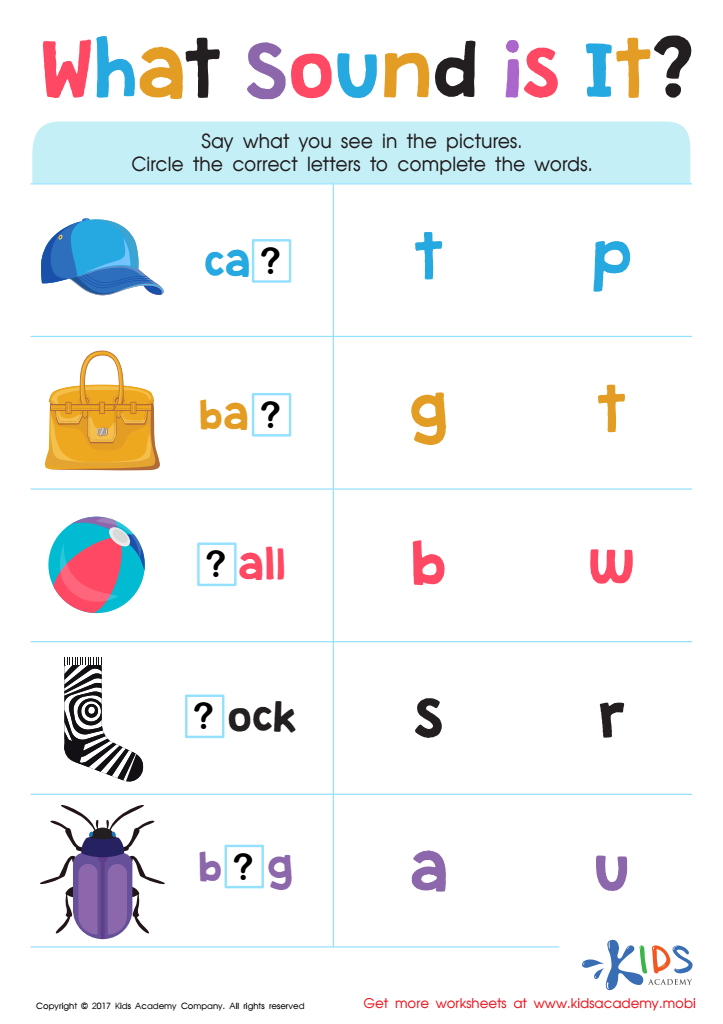
What Sound Is it? Worksheet
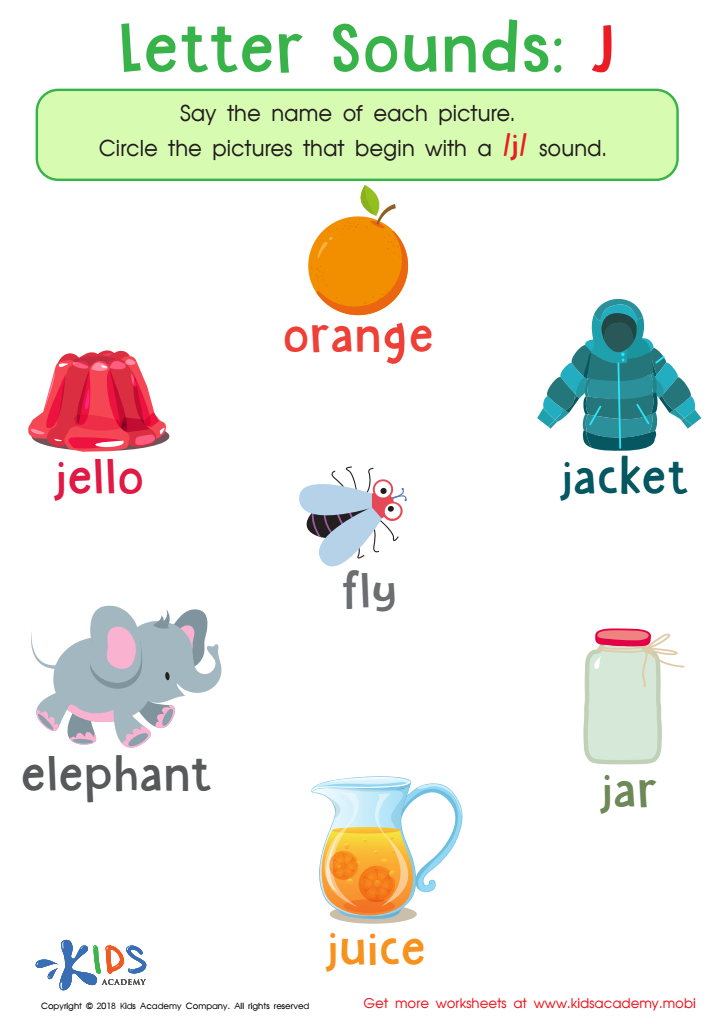
Letter Sounds: J Printable Worksheet
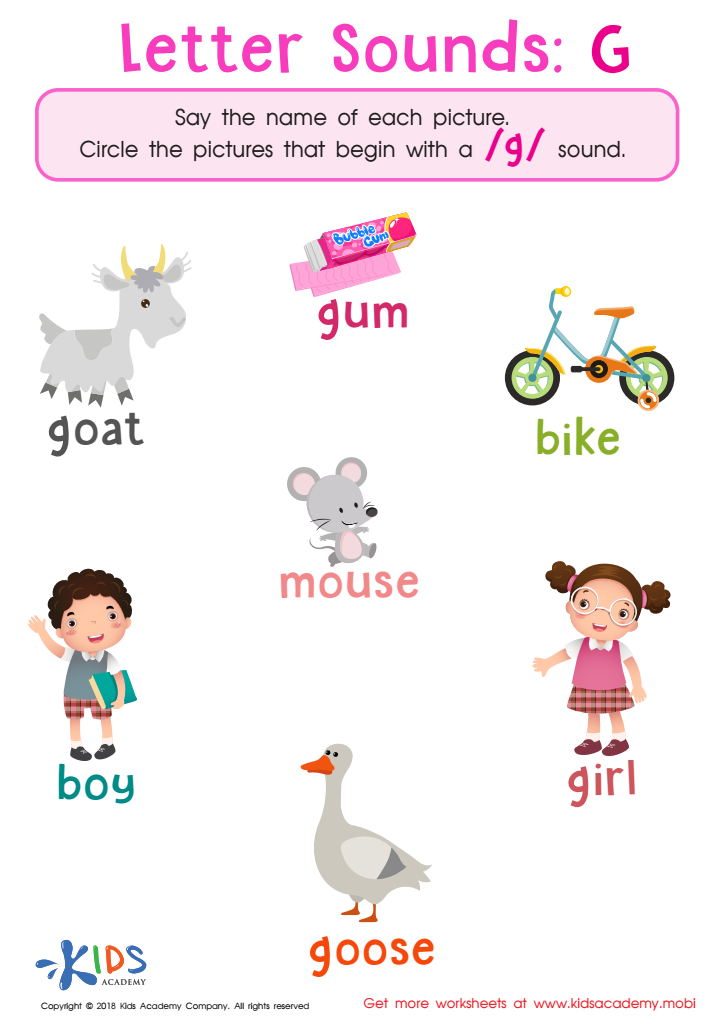
Letter G Sounds Worksheet





Reading skills development, particularly focusing on the alphabet, is crucial for children aged 3 to 5 for several reasons. Firstly, this stage is the foundation for all future learning. Mastery of the alphabet aids in phonemic awareness, which is essential for reading fluency. Children who recognize letters and their sounds early on tend to develop stronger literacy skills, which significantly influences their academic success later in life.
Secondly, engaging with the alphabet fosters cognitive skills. As children learn to identify letters, they are also developing critical thinking, vocabulary, and memory skills. Activities centered around the alphabet can enhance their ability to categorize and make connections, promoting overall cognitive development.
Moreover, early reading skills serve as a gateway for emotional and social growth. Shared reading experiences allow parents and teachers to bond with children, as well as encourage communication and expression. This can boost confidence and self-esteem as children start recognizing letters and forming words.
Lastly, in an increasingly literate world, the ability to read is vital for everyday functioning and lifelong learning. Prioritizing alphabet skills development ensures children are well-equipped to navigate education and the world beyond, making it a key concern for parents and educators alike.







