
Alphabetical understanding Letter Recognition Worksheets for Ages 3-5
3 filtered results
Difficulty Level
Grade
Age
-
From - To
Subject
Activity
Standards
Alphabetical Understanding Letter Recognition Worksheets for Ages 3-5 offer engaging and educational activities designed to teach young children the fundamentals of the alphabet. These colorful and interactive worksheets help kids identify, recognize, and match letters through fun exercises like tracing, coloring, and sorting. Ideal for preschoolers, these printables nurture early literacy skills, making learning enjoyable and effective. Our expertly crafted worksheets support cognitive development, foster letter familiarity, and prepare children for the next stages of their educational journey. Give your child a head start with our thoughtfully designed letter recognition resources, perfect for classroom or home use.
Favorites
With answer key
Interactive
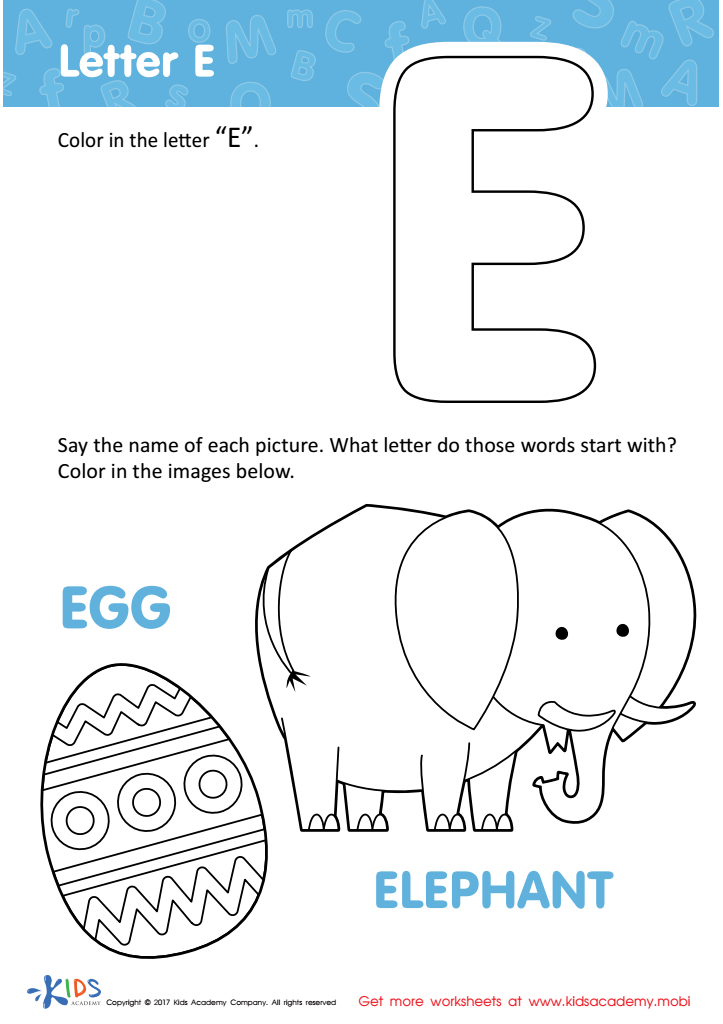
Letter E Coloring Sheet
Coloring pages are great for teaching kids the alphabet and words! This "E" page features a cute elephant and Easter egg. Kids will love it and learn the letter "E" at the same time. 80 words
Download (PDF)
 Assign to My Students
Assign to My Students
Letter E Coloring Sheet
Worksheet
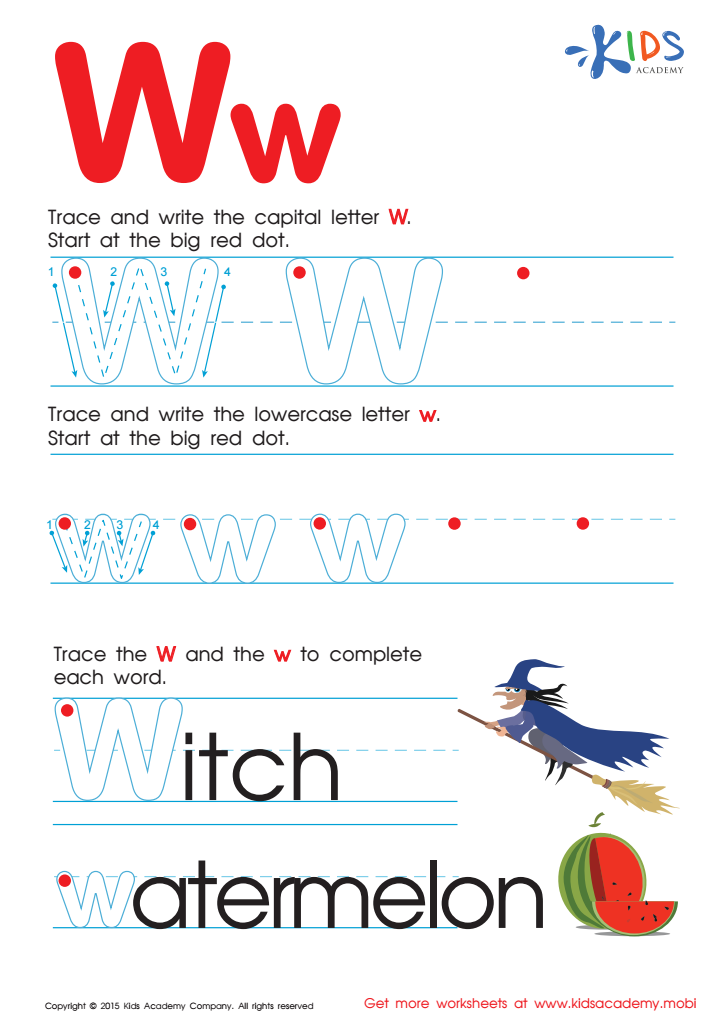
Letter W Tracing Page
Trace and write the capital and lowercase letter W with this free letter tracing worksheet by Kids Academy. Complete the words "Witch" (capital) and "watermelon" (lowercase). Check out our other kindergarten alphabet worksheets!
Letter W Tracing Page
Worksheet
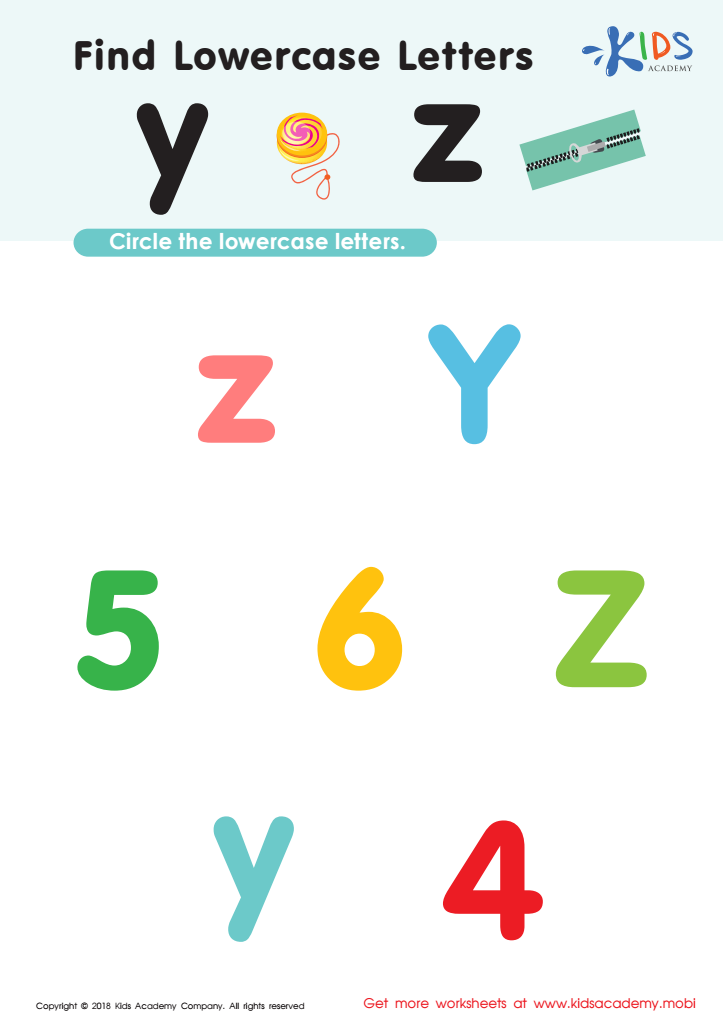
Find Lowercase Letters y z Worksheet
Help your kid learn the alphabet. Before they can move on to words and reading, they must first know the lower and uppercase letters. Show them how to find the letters y and z in this worksheet, which is filled with uppercase letters and numbers. Together, find and circle them.
Find Lowercase Letters y z Worksheet
Worksheet
Join Kids Academy for Free
Who is primarily going to use this learning content?








Alphabetical understanding and letter recognition are essential foundational skills for young children, particularly those aged 3-5. These skills set the groundwork for reading and writing, which are critical components of literacy. When children can recognize and differentiate letters, they begin to understand that each letter has its own distinct sound. This phonemic awareness is crucial for spelling and deciphering words as children advance in their education.
Moreover, early mastery of letter recognition can bolster children’s confidence and enthusiasm for learning. For instance, being able to write their own name provides a sense of accomplishment and personal identity. It also makes the transition to formal schooling smoother and less intimidating because they are already familiar with the basics of written language.
Teachers and parents should pay attention to this early stage of learning because early interventions and engaging educational activities can prevent potential future difficulties in reading and writing. Fun activities like singing alphabet songs, playing letter-matching games, and engaging with alphabet books help embed these skills in a playful and effective manner. Therefore, cultivating letter recognition at ages 3-5 is not just about understanding the alphabet; it’s about setting the stage for successful lifetime learning and cognitive development.







