
Phonics practice Letter Recognition Worksheets for Ages 3-5
3 filtered results
Difficulty Level
Grade
Age
-
From - To
Subject
Activity
Standards
Discover our Phonics Practice Letter Recognition Worksheets designed for children ages 3-5. These engaging and educational printables help young learners identify and recognize letters, laying a crucial foundation for reading success. Each worksheet offers fun activities such as tracing, matching, and coloring which make learning effortless and enjoyable. Tailored to captivate little minds, our worksheets reinforce phonics skills and bolster alphabet familiarity. Perfect for both parents and educators, these resources effectively support early literacy development, essential for academic achievement. Visit our site to give your child a head start in their reading journey with our expertly crafted phonics worksheets.
Favorites
With answer key
Interactive
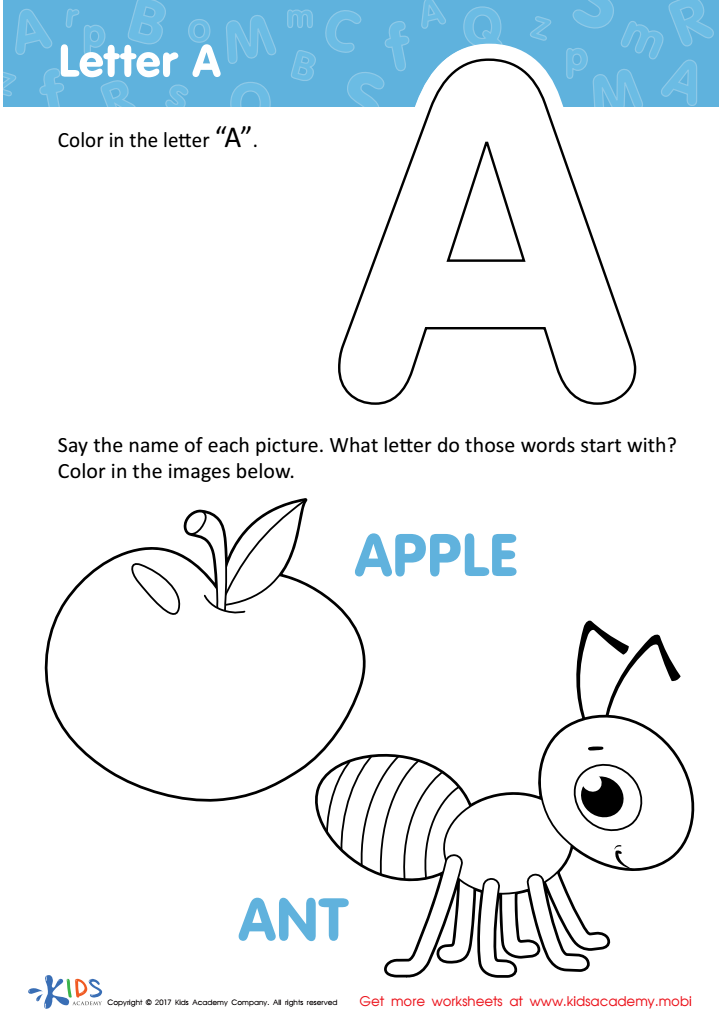
Letter A Coloring Sheet
This letter "A" coloring page is great for introducing kids to the alphabet! Let them exercise their creativity while they learn to recognize letters and sounds - it's a fun and easy way to help them get started.
Download (PDF)
 Assign to My Students
Assign to My Students
Letter A Coloring Sheet
Worksheet
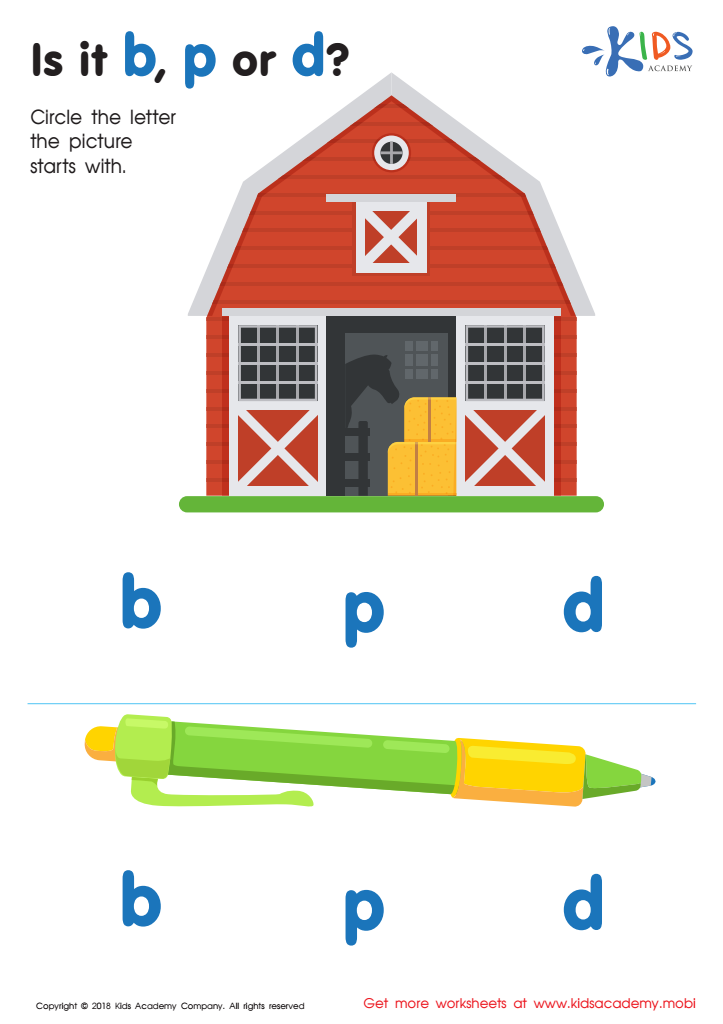
Is it b, p or d? Worksheet
Test your child's identification skills with this worksheet. They must identify the image and then circle the letter it begins with: 'b', 'p', or 'd' (e.g. an image of the sun would mean they circle 's').
Is it b, p or d? Worksheet
Worksheet
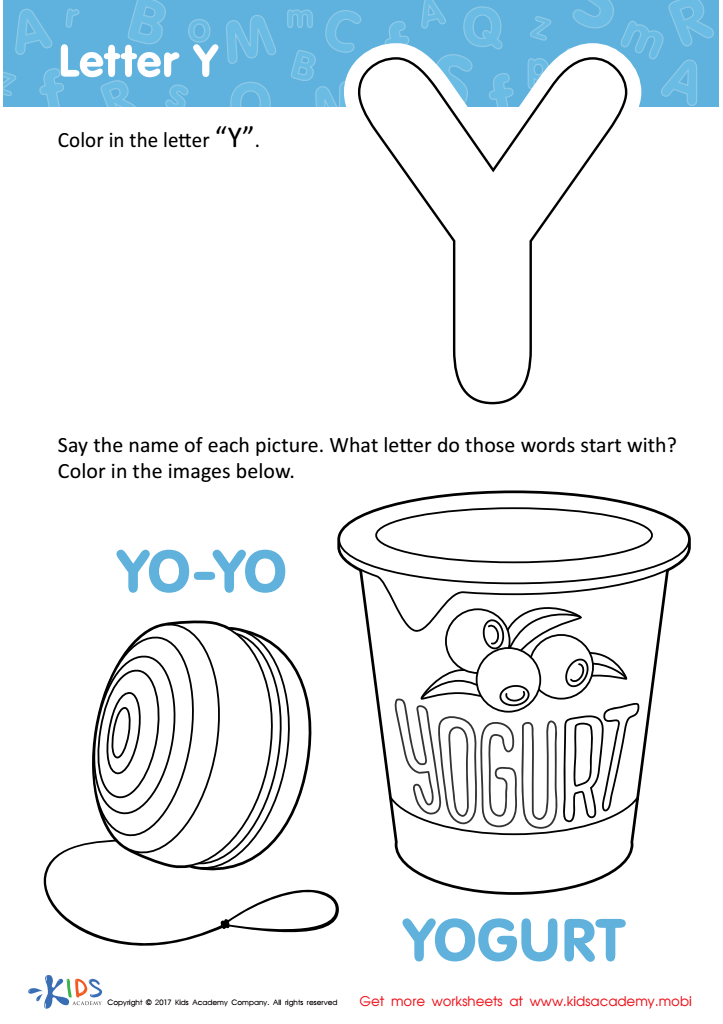
Letter Y Coloring Sheet
Let's celebrate letter "Y"! Here's a fun coloring page that'll help your child learn this end-of-the alphabet letter. It's packed with familiar objects that'll help build their art and literacy skills. So let's say "Yay"!
Download (PDF)
Assign to My Students
Assign to My Students
Letter Y Coloring Sheet
Worksheet
Join Kids Academy for Free
Who is primarily going to use this learning content?








Phonics practice and letter recognition are foundational elements for young children's early literacy development, making them paramount for children aged 3-5. The ability to recognize letters and understand their associated sounds is the first step toward reading fluency, one of the most critical skills that underpin academic success in later years. For parents and teachers, prioritizing these practices equates to empowering children with the tools they need to decode words, spell, and eventually enjoy reading—a lifelong skill that can open doors to continuous self-education.
Engaging children this age in playful, interactive letter recognition activities caters to their natural curiosity and boundless energy. At an age where the brain develops rapidly, such activities capitalize on their cognitive plasticity, facilitating stronger neural connections related to language. Furthermore, early success with phonics and letter recognition boosts children's confidence and enthusiasm for learning, encouraging a positive attitude towards schooling—a vital consideration for parents. By offering consistent practice through games, songs, and story-telling, teachers help solidify these skills in a contextually rich and engaging manner.
The benefits are multifaceted: children gain keen listening skills, better problem-solving abilities, and enhanced concentration. Moreover, equipped with initial literacy skills, children can transition smoothly to more complex reading and academic tasks in their educational journey.







