
Phonics Skills Letter Recognition Worksheets for Ages 3-5
3 filtered results
Difficulty Level
Grade
Age
-
From - To
Subject
Activity
Standards
Discover engaging and educational Phonics Skills Letter Recognition Worksheets designed for ages 3-5 at Kids Academy. Our expert-crafted worksheets blend fun activities with effective learning techniques to help young children master letter recognition and early phonics skills. Each worksheet offers colorful, interactive exercises that captivate preschoolers and kindergarteners, making learning enjoyable. Perfect for early learners, our resources build a solid foundation in reading readiness, paving the way for future academic success. Start your child's journey towards literacy today with Kids Academy's innovative and child-friendly printable worksheets.
Favorites
With answer key
Interactive
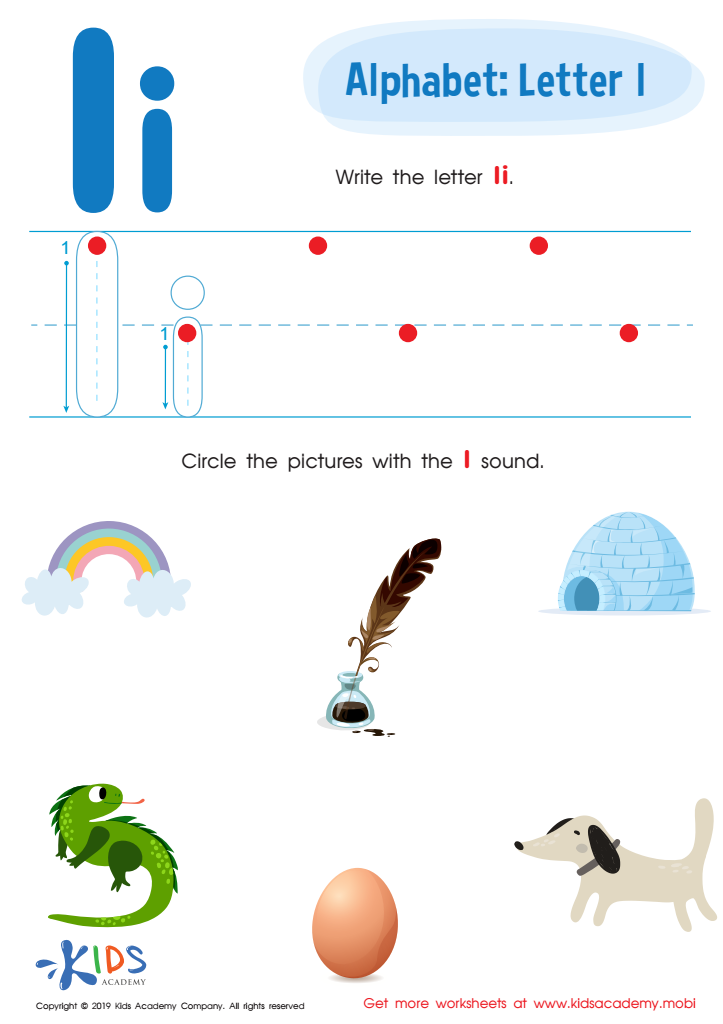
Letter I Tracing Worksheet
Kids can hone tracing, writing and identifying skills for the letter 'I' with this worksheet. Whether visual or reading/writing learners, every child can benefit from the tasks - tracing, writing and circling objects beginning with 'I'. This free sheet will soon get preschoolers confident with the 'I' letter!
 Assign to My Students
Letter I Tracing Worksheet
Worksheet
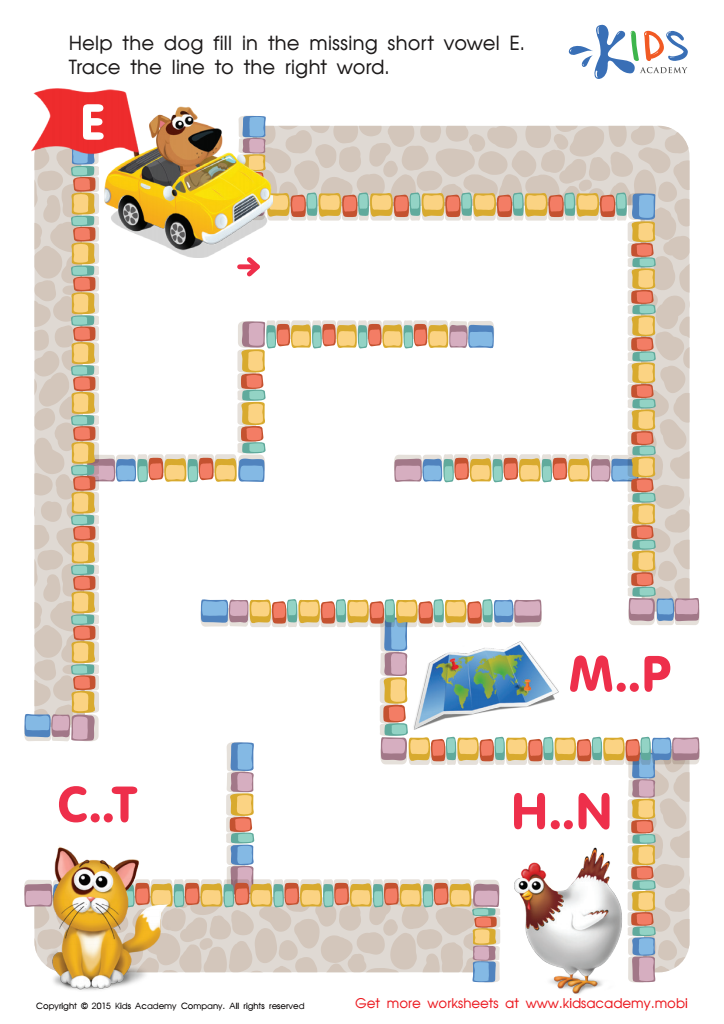
Short Vowel Sound E Worksheet
This free printable phonics worksheet helps kids learn the short vowel sound E. Kids need to help the dog complete the word “hen” by finding their way through a maze. It teaches kids to see the connection between letters and sounds and also strengthens their writing and spelling skills. Fun and educational, this phonics worksheet is great for kids. Want more? Check out here.
Short Vowel Sound E Worksheet
Worksheet
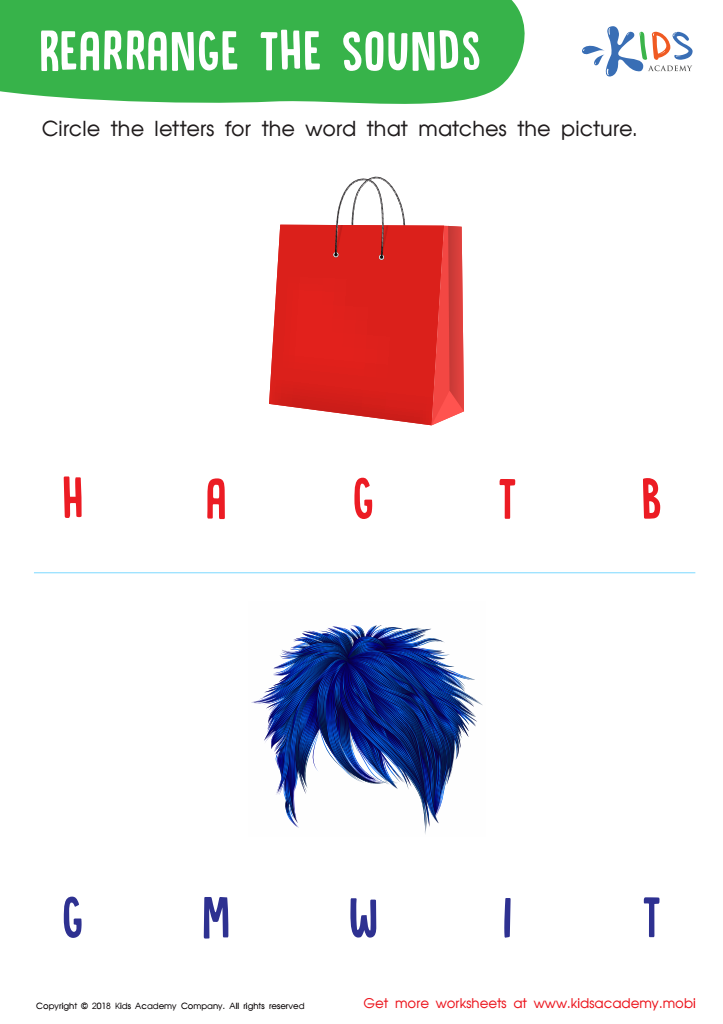
Rearrange the Sounds Worksheet
Ask students if they can identify the objects in the worksheet and spell the words. Guide them to find and circle the letters that match the picture. This exercise should be easy-peasy for advanced spellers.
Rearrange the Sounds Worksheet
Worksheet
Join Kids Academy for Free
Who is primarily going to use this learning content?








Phonics skills and letter recognition are foundational components critical to early childhood education. For children aged 3-5, these skills act as the bedrock for reading and writing development. Parents and teachers should prioritize this area because letter recognition provides children with the necessary tools to start decoding words. When children recognize letters, they can link them with sounds, thereby understanding phonics.
Phonics instruction helps young learners understand the predictable relationship between letters and their sounds. This understanding is essential for developing reading proficiency. Early letter recognition fosters a child’s ability to distinguish between different sounds (phonemic awareness), which is directly correlated to their future reading skills and academic success.
Moreover, children who master these basic skills tend to experience increased reading fluency, improved comprehension, and greater self-confidence in their learning abilities. Engaging children in fun and interactive letter-recognition games can enhance their excitement and interest in learning to read.
In summary, focusing on phonics and letter recognition for preschoolers helps create a strong literacy foundation, facilitating smoother transitions to more complex reading skills in later grades. This proactive step arms children with the confidence and ability to tackle future educational challenges, thus setting them on a path toward lifelong learning and achievement.







