Rhyming skills development Rhyming Worksheets for Ages 3-5
3 filtered results
-
From - To
Unlock your child's potential with our engaging rhyming worksheets designed for ages 3-5! These activities foster essential language skills, enhance phonemic awareness, and nurture creativity through fun, interactive tasks. Your little learners will explore sound patterns, discover word relationships, and boost vocabulary while enjoying rhyming games and exercises tailored to their developmental stage. Our worksheets are perfect for homeschooling, classroom settings, or reinforcing learning at home. With colorful illustrations and playful themes, children will be motivated to practice and gain confidence in their reading skills. Start your journey towards a love for language and storytelling today!
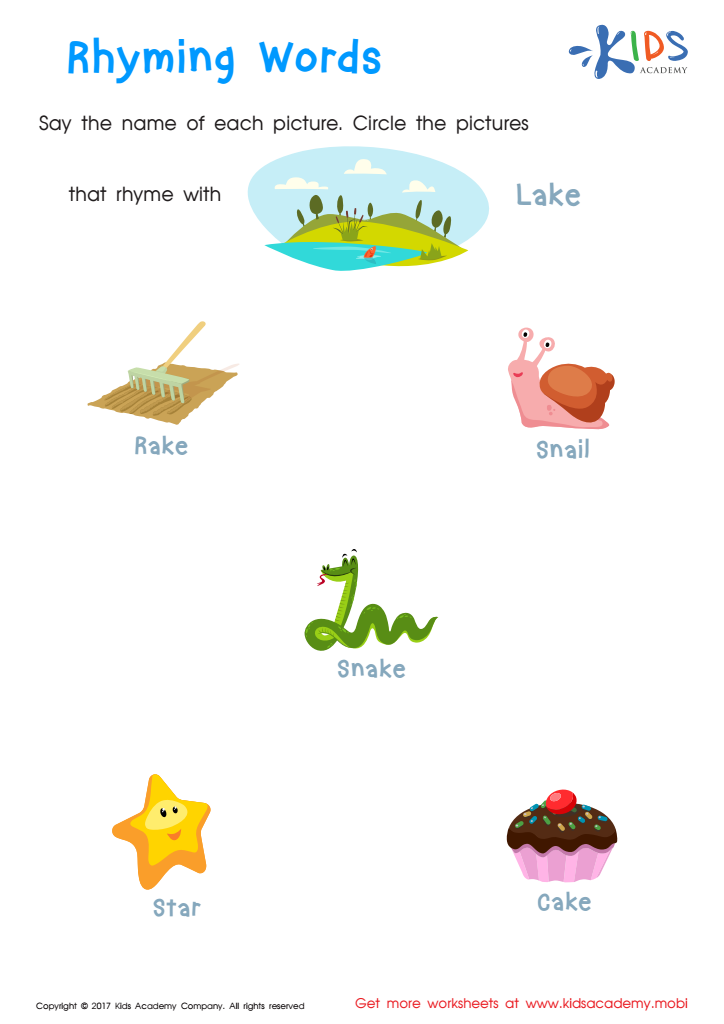
Rhyming Words Rhyming Worksheet
 Assign to My Students
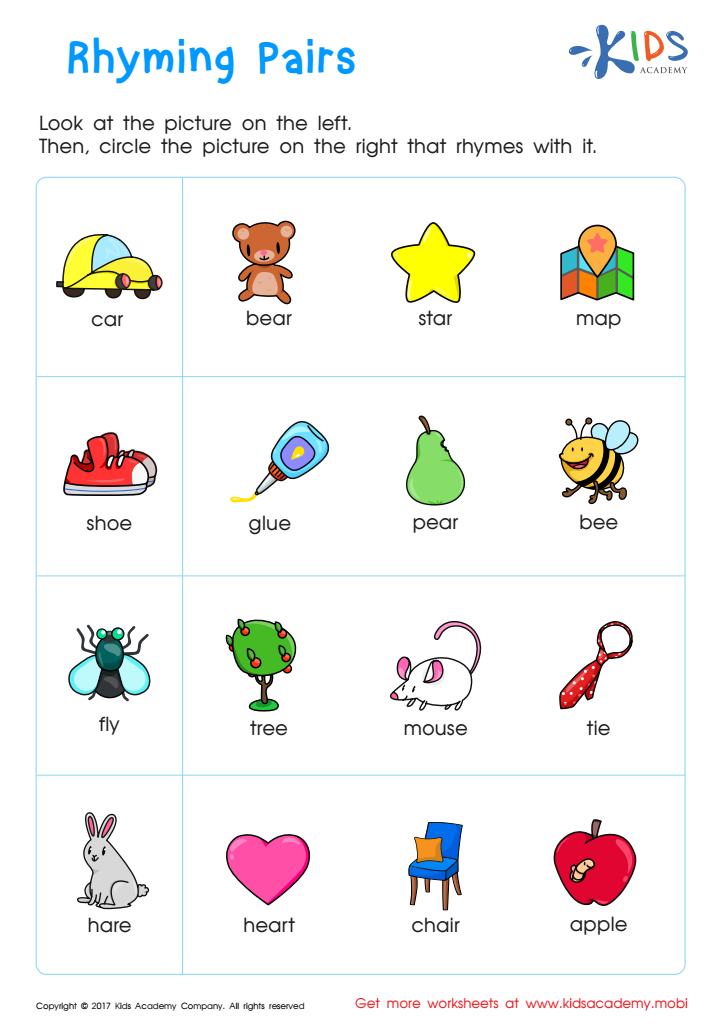
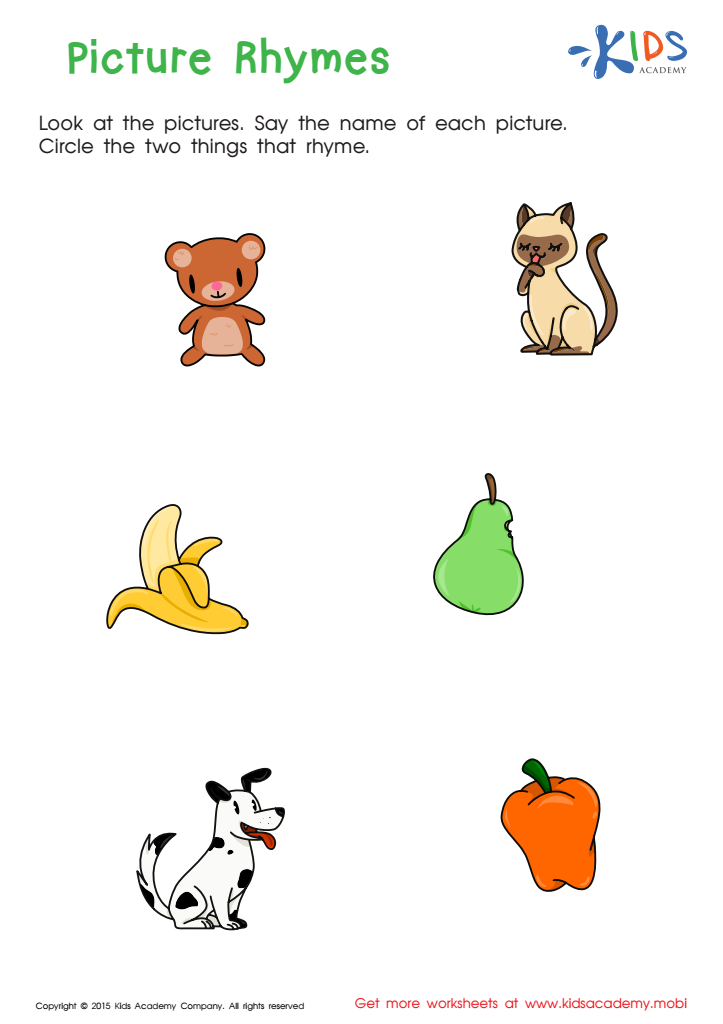
First Words: Picture Rhymes Worksheet








Rhyming skills development is crucial for children aged 3-5, as it lays the foundation for their literacy and language abilities. During this stage, children's brains are uniquely receptive to sounds and patterns, making it an ideal time to introduce rhyming through playful activities like songs, poems, and games.
Understanding rhyme helps young learners develop phonemic awareness, which is the ability to hear, identify, and manipulate phonemes—the building blocks of words. This essential skill directly contributes to their reading and writing proficiency later on. When children recognize and produce rhymes, they become more adept at decoding words and spelling, critical skills they will need in school.
Furthermore, engaging with rhymes promotes vocabulary development, as children learn new words in a fun and memorable context. It also enhances their listening skills and encourages greater phonological processing ability, which is pivotal for learning to read.
Lastly, rhyming activities foster creativity and imagination, allowing children to express themselves through language. Overall, parents and teachers who prioritize rhyming skills not only support cognitive growth but also create positive, enjoyable experiences that cultivate a lifelong love for language and reading.







