Vocabulary enhancement Rhyming Worksheets for Ages 3-5
4 filtered results
-
From - To
Enhance your child's vocabulary with our Rhyming Worksheets designed specifically for ages 3-5! These engaging activities will help young learners develop language skills while having fun. Our worksheets feature colorful illustrations and simple prompts that encourage children to recognize word patterns and sounds through matching and completing rhymes. By exploring rhymes, kids will not only expand their vocabulary but also improve their reading and pronunciation skills. Perfect for parents and educators alike, these worksheets provide an interactive way for little ones to build confidence in their speech and language development. Explore our collection today and watch your child's vocabulary blossom!
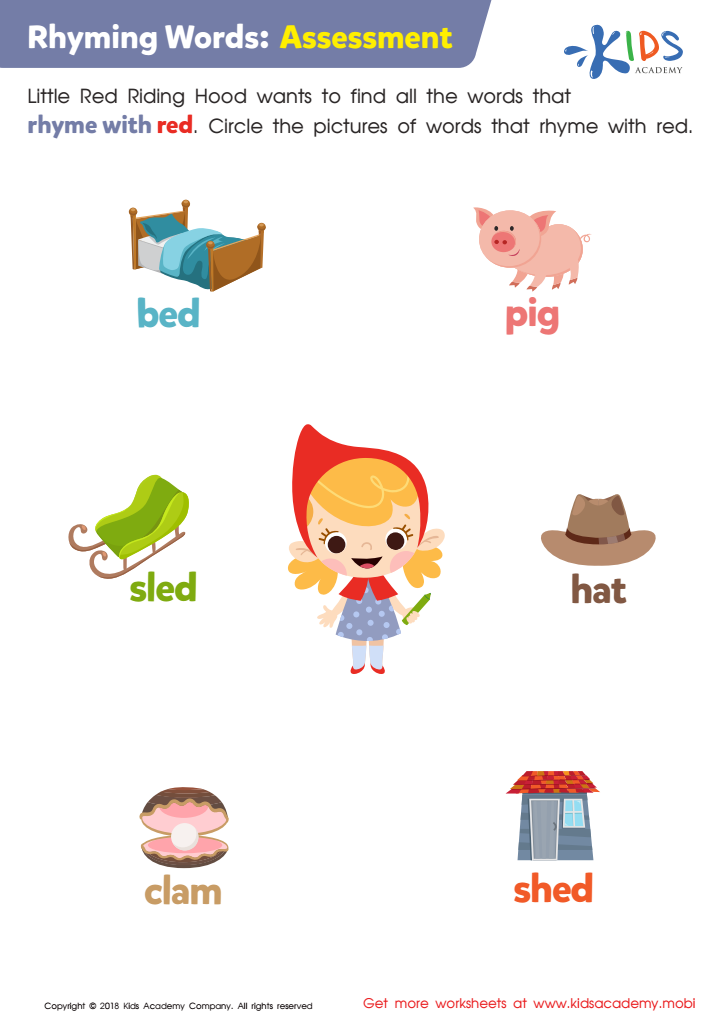
Rhyming Words: Assessment Worksheet
 Assign to My Students
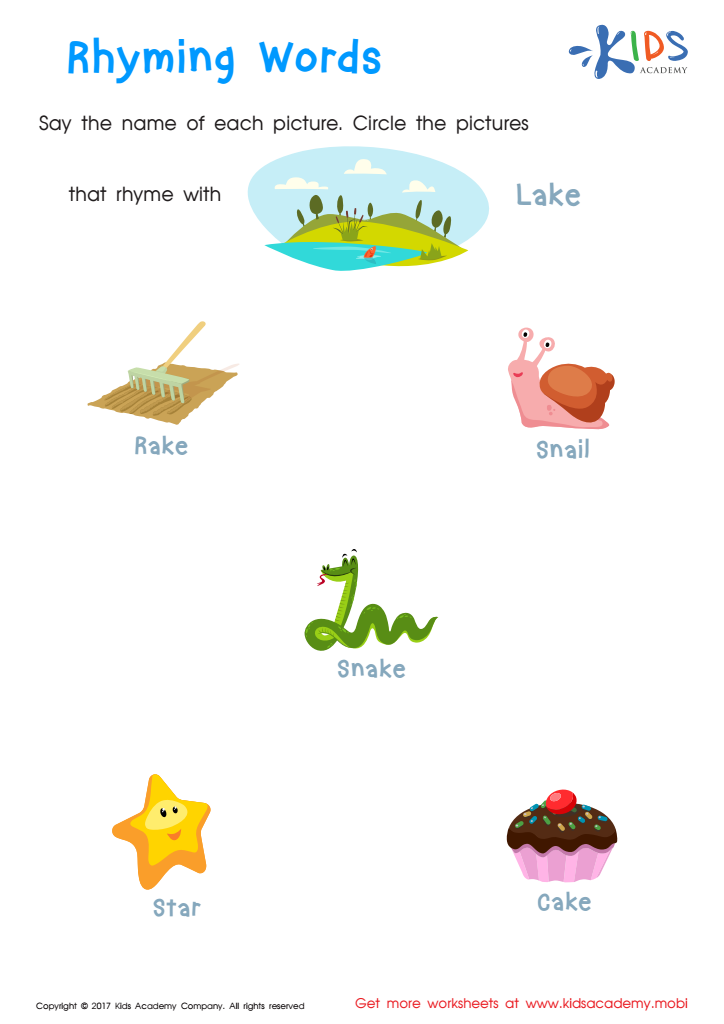
Rhyming Words Rhyming Worksheet
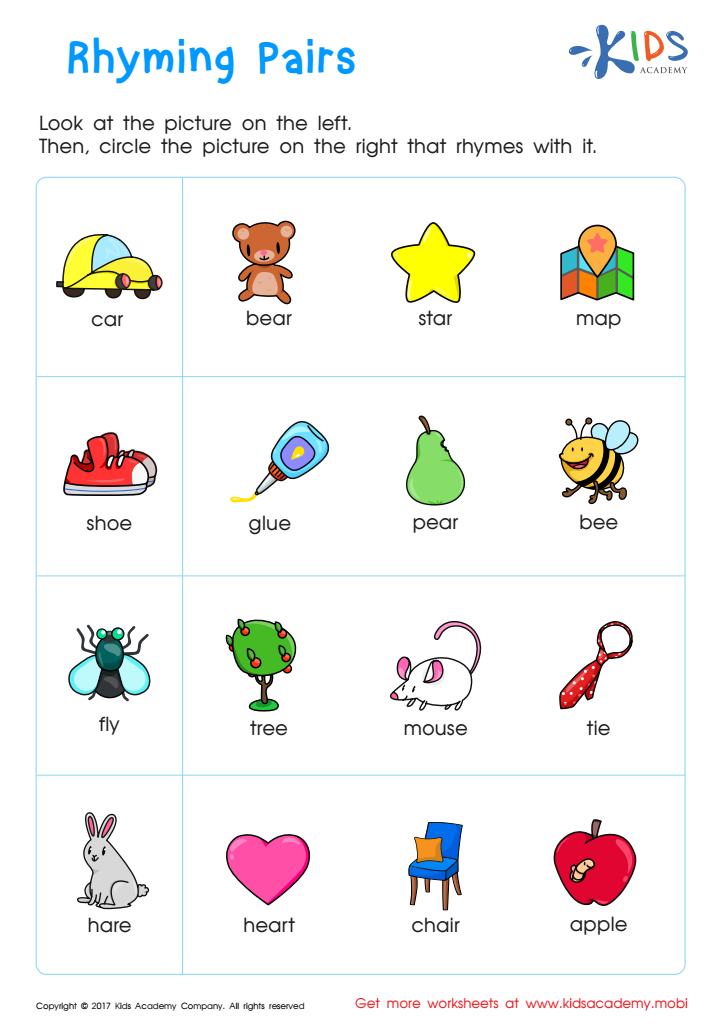
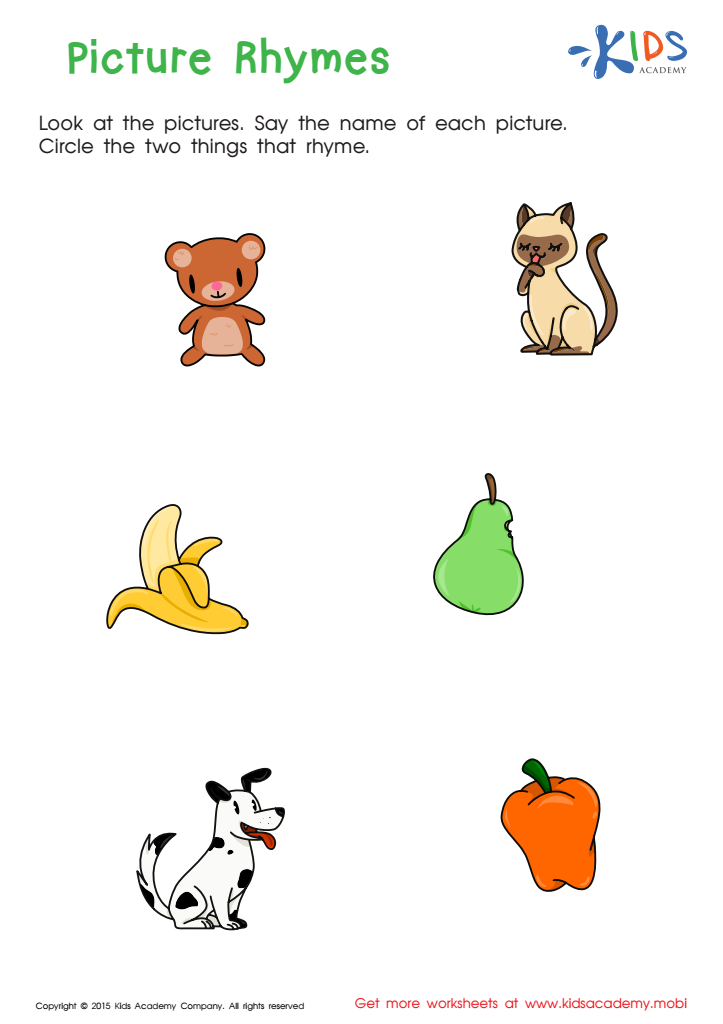
First Words: Picture Rhymes Worksheet








Vocabulary enhancement through rhyming is vital for children ages 3-5 as it fosters crucial language development skills. During these formative years, children are naturally inclined to explore sounds and patterns in speech, making rhyming an engaging way to introduce new words. Incorporating rhyming activities helps improve phonemic awareness, which is the ability to hear, identify, and manipulate sounds in words—an essential skill for reading success.
Rhyming also aids memory retention, as children enjoy the musical quality of rhymes. This familiarity with word sounds can enhance their ability to decode words as they learn to read. Additionally, exposure to rhyming builds a rich vocabulary by introducing them to a broader range of words in a fun and memorable context.
Parents and teachers can create interactive and playful learning experiences through songs, poems, and games that emphasize rhymes. These activities not only encourage linguistic skills but also foster a love for language and literacy from an early age. Ultimately, prioritizing vocabulary enhancement through rhyming lays a solid foundation for future academic success and boosts children's confidence as communicators. By supporting this essential aspect of language development, adults can help shape curious, articulate, and capable learners.







