Fine motor skills development Tracing Letters Worksheets for Ages 3-5
3 filtered results
-
From - To
Enhance your child's fine motor skills with our engaging Tracing Letters Worksheets, specially designed for ages 3-5! These educational resources provide little learners with enjoyable exercises that promote hand-eye coordination and dexterity while they practice letter formation. Each worksheet features colorful illustrations and playful activities to keep young minds intrigued. As your child traces letters, they not only develop essential writing skills but also gain confidence in their ability to express themselves. Perfect for home or classroom use, our worksheets nurture early literacy while making learning a fun, hands-on experience. Start your child’s journey to writing success today!
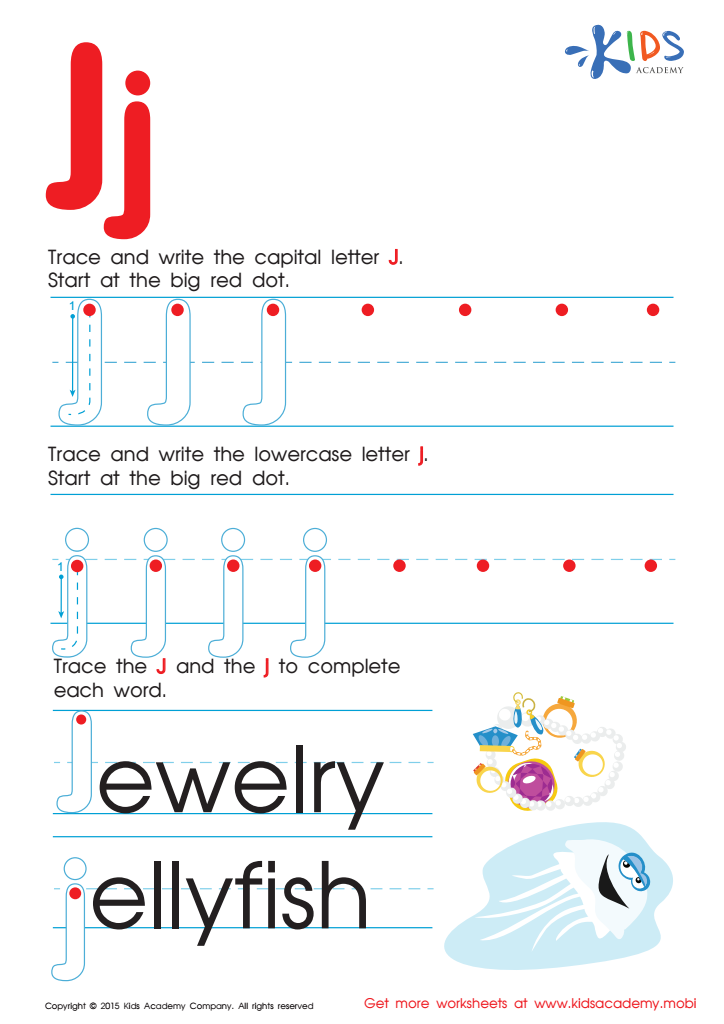
Letter J Tracing Page
 Assign to My Students
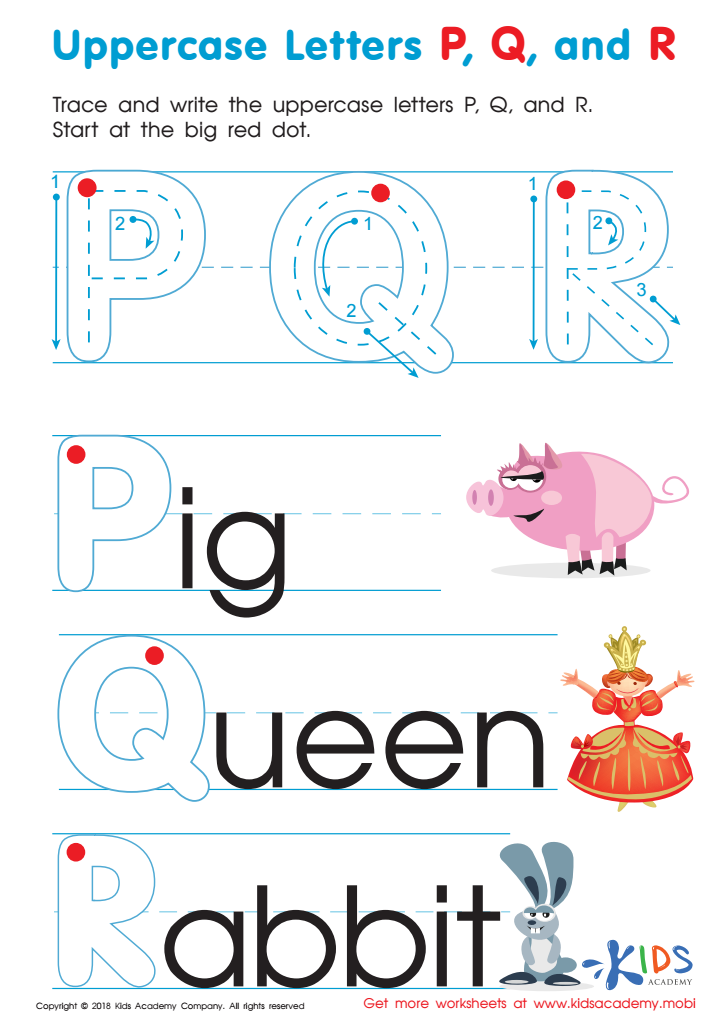
Uppercase Letters P, Q, and R Worksheet
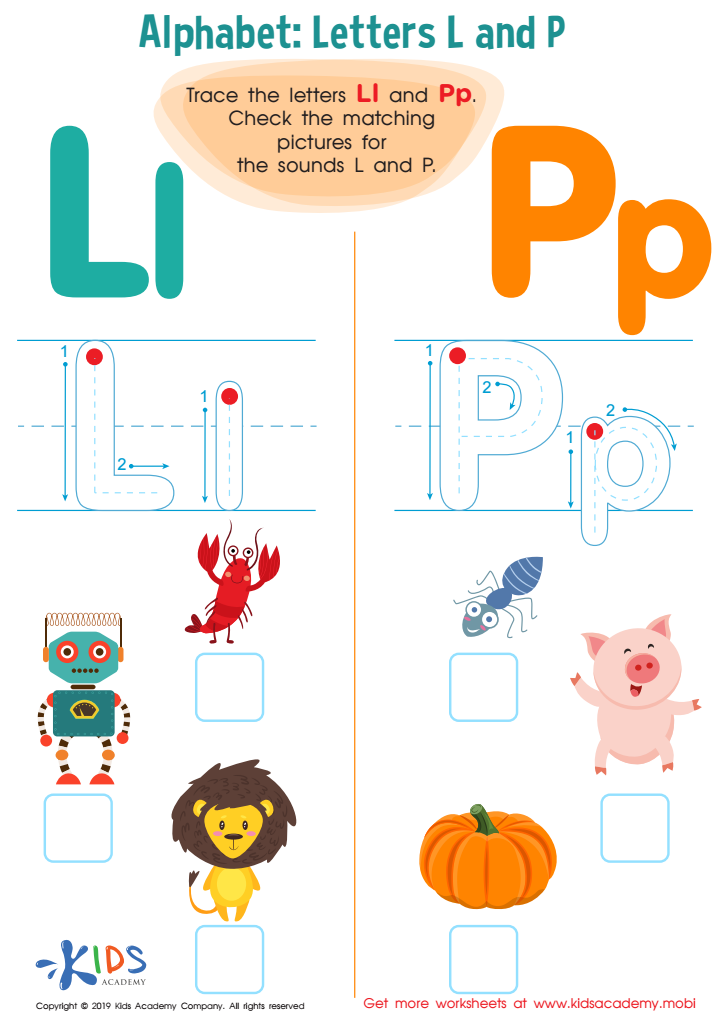
Letter L and P Tracing Worksheet








Fine motor skills development, particularly through tracing letters, is crucial for children aged 3-5 as it lays the foundation for many essential life skills. During these formative years, children’s cognitive, physical, and social abilities are rapidly developing. Fine motor skills involve the coordination of small muscle movements, especially in the hands and fingers, which are vital for a variety of tasks such as writing, using utensils, and self-care. Tracing letters provides children the opportunity to refine their grip, hand-eye coordination, and control of their movements.
Moreover, tracing letters enhances cognitive skills by connecting motor reflexes to visual input, fostering early literacy skills. It encourages children to understand letter shapes and sounds, creating a stronger basis for reading and writing. Additionally, engaging in these activities boosts concentration and fosters a sense of accomplishment as children see their progress.
For parents and teachers, nurturing fine motor skills through such activities promotes overall development, encouraging creativity and confidence in young learners. This foundation is essential not only for academic success but also for daily life tasks, making it a priority for early childhood education. By prioritizing fine motor skills, we empower children to explore, learn, and thrive.








