Letter-sound association Tracing Letters Worksheets for Ages 3-5
5 filtered results
-
From - To
Discover engaging Letter-sound Association Tracing Letters Worksheets for ages 3-5 at Kids Academy! These printable worksheets are designed to help young learners master essential alphabet skills through interactive tracing activities. By connecting letters with their corresponding sounds, children enhance their reading readiness and phonics knowledge. Perfect for preschoolers and kindergarteners, these fun and educational printables support early literacy development in a playful, effective way. Equip your child with the skills they need to succeed in their early learning journey. Visit Kids Academy to explore our extensive collection and give your child a head start in reading!
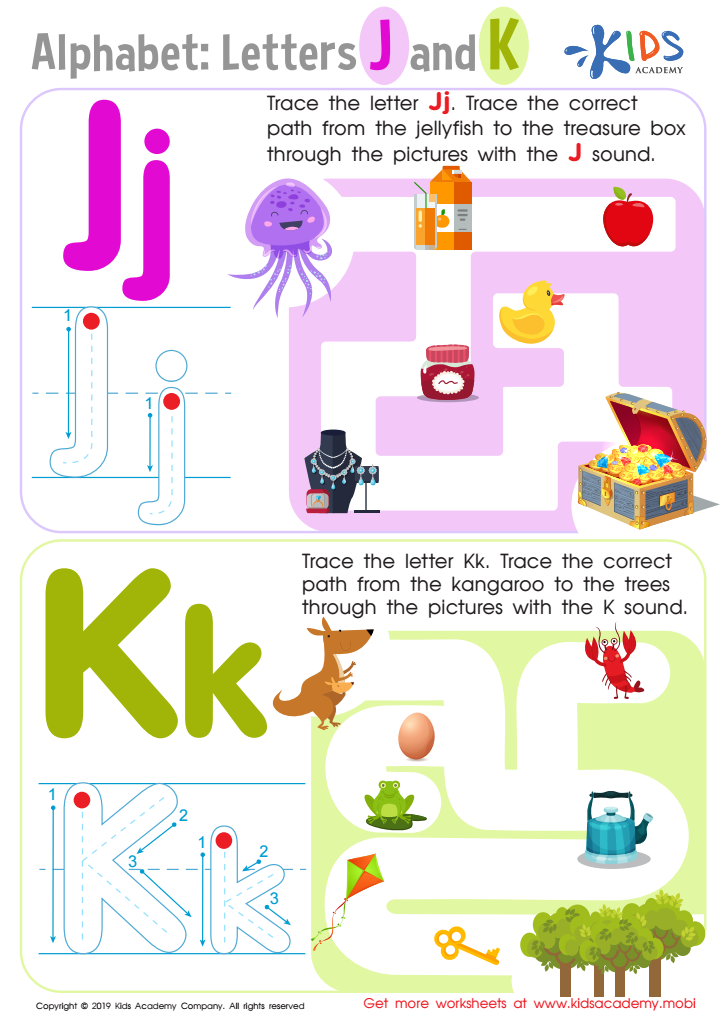
Letters J and K Tracing Worksheet
 Assign to My Students
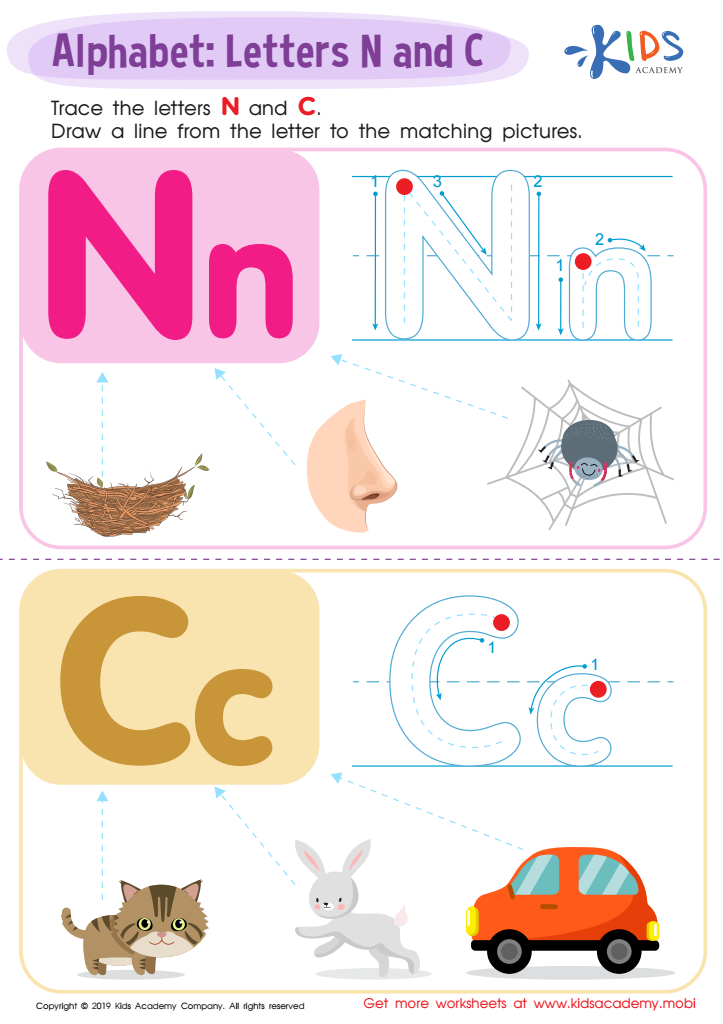
Letter N and C Tracing Worksheet
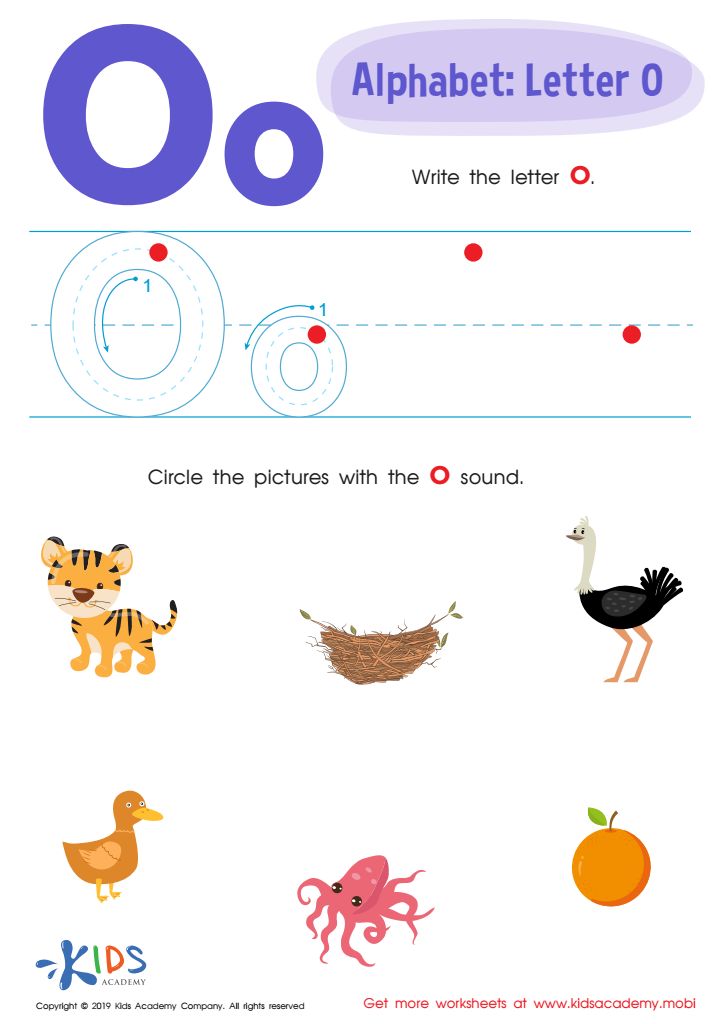
Letter O Tracing Worksheet
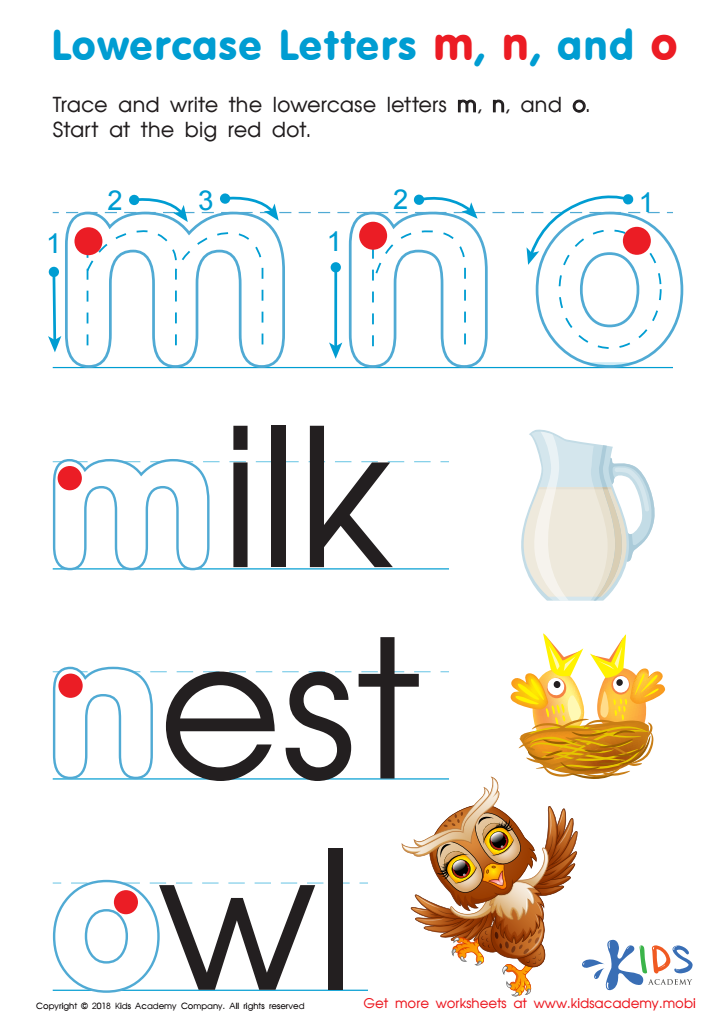
Lowercase Letters m n o Worksheet
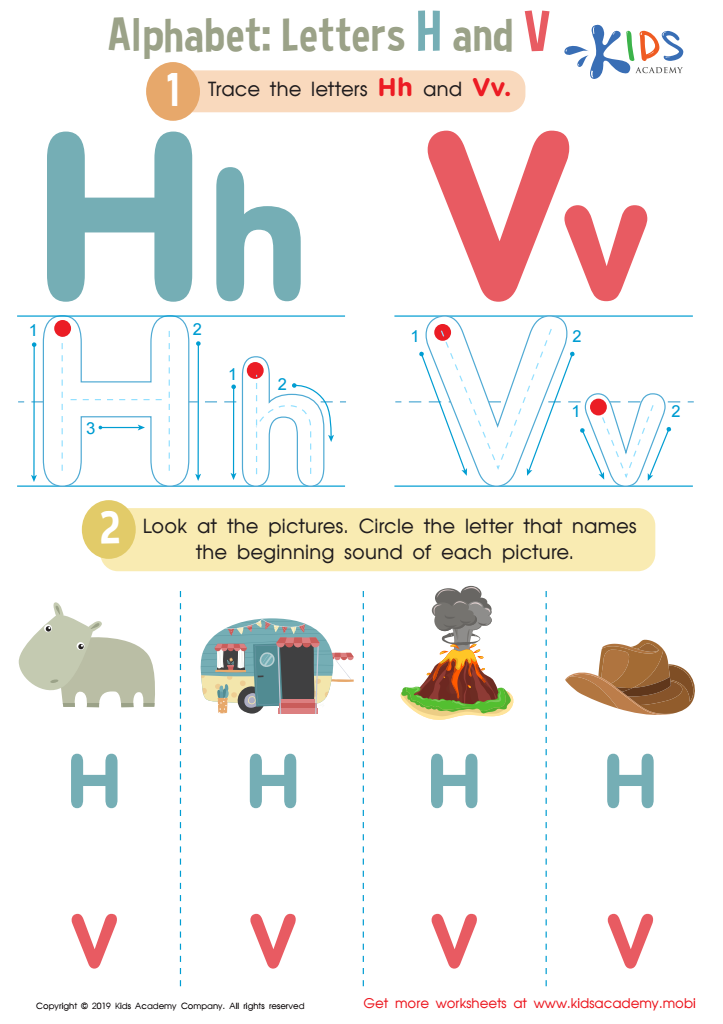
Letters H and V Tracing Worksheet








Parents and teachers should deeply value letter-sound association and the practice of tracing letters for children aged 3-5 as these activities are foundational to literacy development. At this early and impressionable age, children's brains are incredibly receptive to learning fundamental skills that will shape their future academic success.
Letter-sound association, where children learn the relationship between written letters and their corresponding sounds, is essential for developing phonemic awareness, a critical skill for reading and spelling fluency. When kids understand that letters represent specific sounds, they begin to decode words, a step toward independent reading.
Incorporating tracing letters into learning further enhances this process. Engaging in tactile experiences like tracing helps solidify the connection between sight, sound, and motor memory. It allows children to familiarize themselves with the shapes of letters, which reinforces their memory and recognition skills. Tracing aids in developing fine motor skills, which are necessary for writing, and promotes better handwriting skills.
Early mastery of these skills boosts confidence, fosters motivation, and sets a positive tone for future learning experiences. By prioritizing letter-sound association and letter tracing, parents and teachers provide young learners with the crucial building blocks they need to become proficient readers and enthusiastic lifelong learners.








