
Letter-sound association Upper & Lowercase Letters Worksheets for Ages 3-5
3 filtered results
Difficulty Level
Grade
Age
-
From - To
Subject
Activity
Standards
Introducing our "Letter-Sound Association Upper & Lowercase Letters Worksheets" tailored for children ages 3-5! These engaging, printable worksheets are designed to help little learners connect letters with their corresponding sounds, reinforcing both uppercase and lowercase letter recognition. Through interactive activities and vibrant visuals, our worksheets make learning the alphabet fun and effective. Developed by educational experts, they are perfect for enhancing early literacy skills in a stress-free manner. Ideal for preschool and kindergarten students, these resources support foundational reading abilities and set the stage for a lifetime of learning success. Visit Kids Academy to start your child's educational journey today!
Favorites
With answer key
Interactive
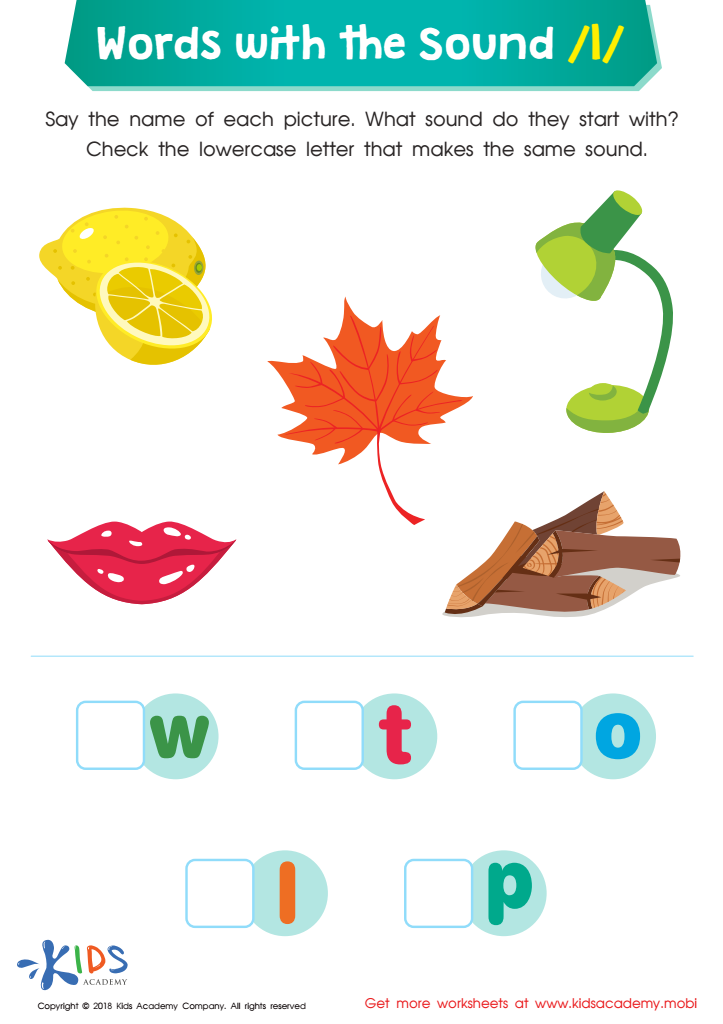
Words with Sound L Reading Worksheet
This PDF worksheet is great for helping emerging readers isolate initial sounds. Kids name familiar pictures, then identify the correct letter for the "l" sound. This worksheet strengthens fine motor skills, plus builds visual discernment. It's fun and colorful too!
 Assign to My Students
Words with Sound L Reading Worksheet
Worksheet

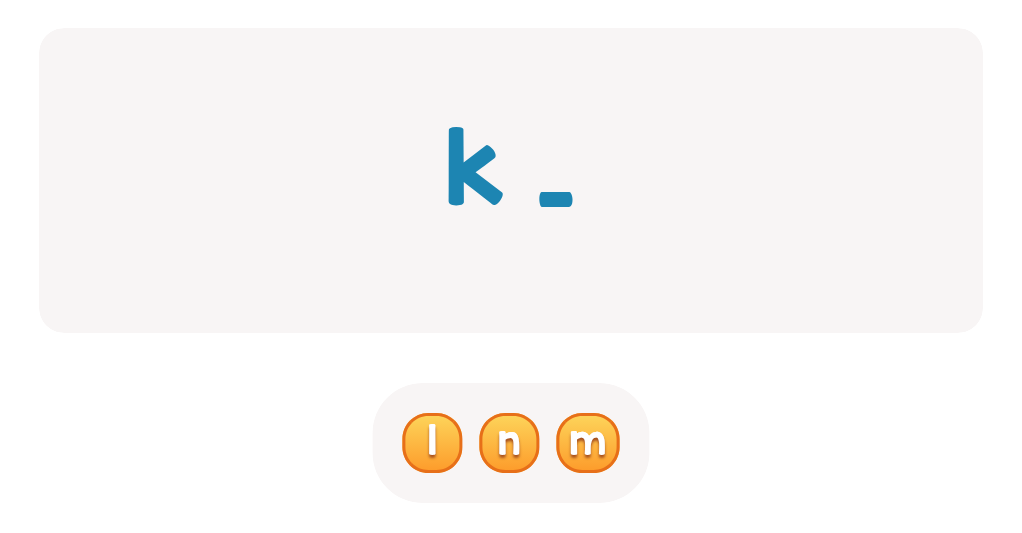
Lowercase Letters m n o Worksheet
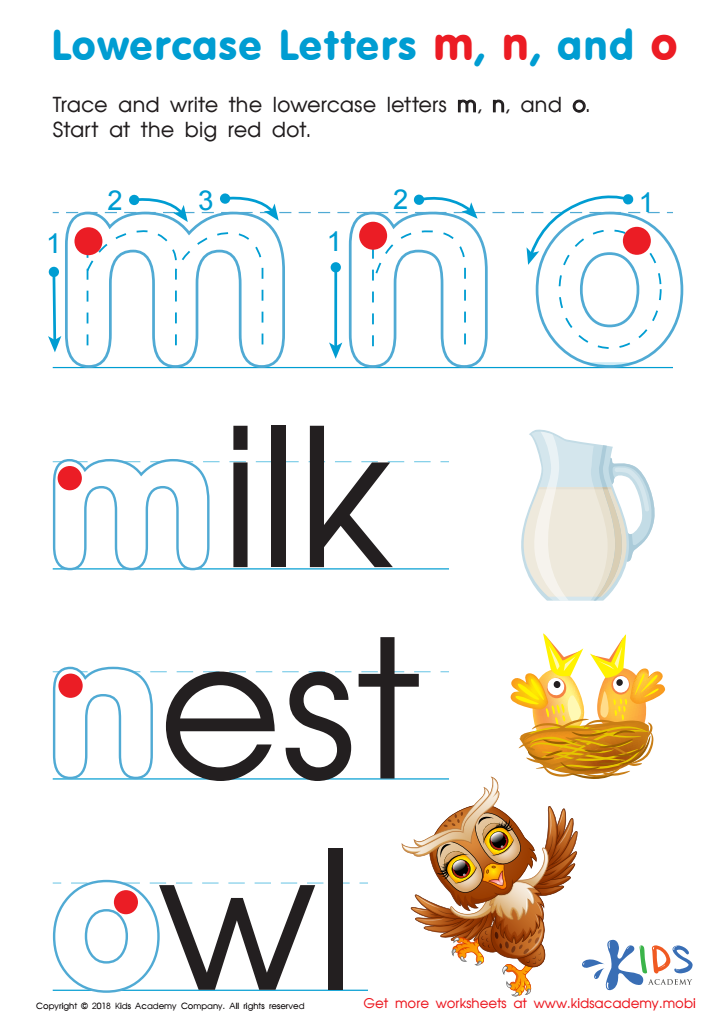
Help your child learn the alphabet with letter tracing. Show them the difference between uppercase and lowercase letters by working through this free worksheet, tracing and writing lowercase m, n and o.
Lowercase Letters m n o Worksheet
Worksheet
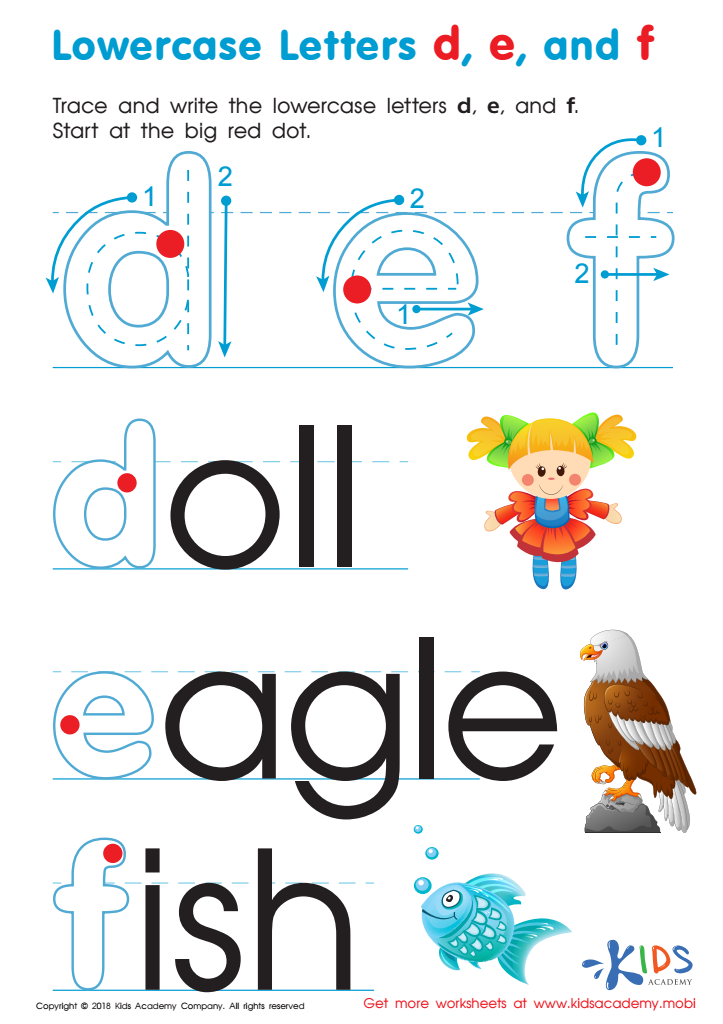
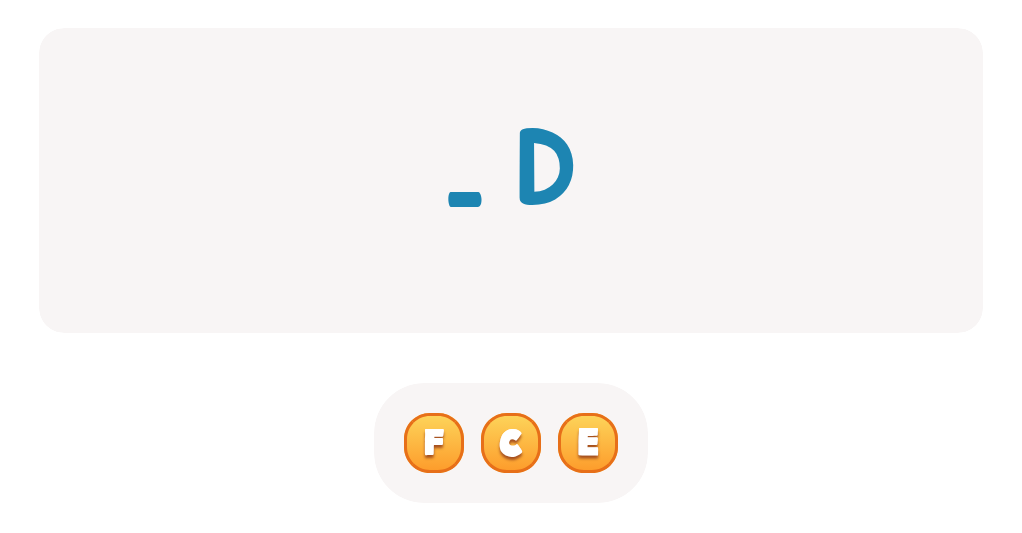
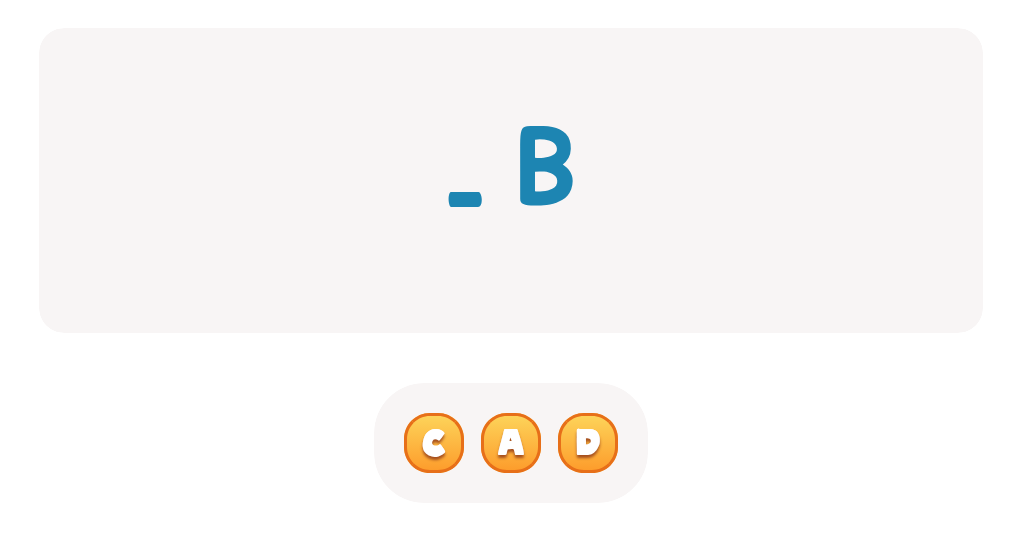
Lowercase Letters d e f Worksheet
Help your child learn the alphabet letters by tracing and writing the lowercase letters d, e, and f. Begin at the big red dot and follow the dots. This worksheet will help your little one gain a better understanding of the letters.
Lowercase Letters d e f Worksheet
Worksheet
Join Kids Academy for Free
Who is primarily going to use this learning content?






Letter-sound association, also known as phonics, along with the recognition of uppercase and lowercase letters, is fundamental for early childhood education. For ages 3-5, these skills form the cornerstone of literacy development. Parents and teachers should focus on these areas because they significantly contribute to a child's ability to read and write, which are critical for academic success and overall communication skills.
Understanding letter-sound association enables children to decode words, turning spelling into sounds and thus facilitating word recognition and vocabulary expansion. This process is essential for the development of phonemic awareness, which is the ability to hear, identify, and manipulate individual sounds in words. Early mastery of these skills builds the confidence children need to tackle more complex reading and writing tasks as they progress in school.
Additionally, distinguishing between uppercase and lowercase letters is crucial since both forms are ubiquitous in text. Recognizing these variations ensures that children do not become confused when they encounter different letter forms in books, signs, or instructional materials. Raising proficient readers at an early age sets a strong foundation for lifelong learning, academic achievement, and self-expression, making the investment in teaching letter-sound associations and letter recognition invaluable.







