Lowercase letter writing Upper & Lowercase Letters Worksheets for Ages 3-5
3 filtered results
-
From - To
Introduce your little ones to the world of writing with our engaging "Lowercase Letter Writing Upper & Lowercase Letters Worksheets" for ages 3-5. Designed to make learning enjoyable, these printable worksheets help preschoolers and kindergarteners master both uppercase and lowercase letters. Each activity combines visual aids and fun exercises to enhance letter recognition, improve fine motor skills, and build the foundations for successful handwriting. By providing structured yet playful practice, these worksheets empower young learners to gain confidence and develop essential literacy skills. Give your child a head start on their educational journey with our expertly crafted resources!
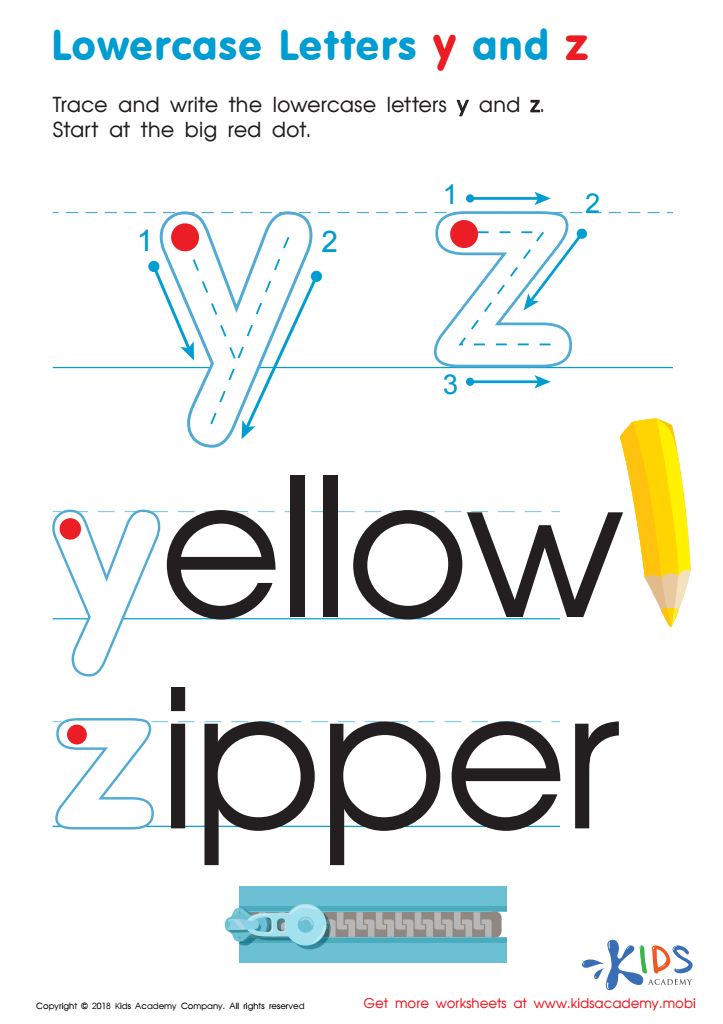
Lowercase Letters y z Worksheet
 Assign to My Students




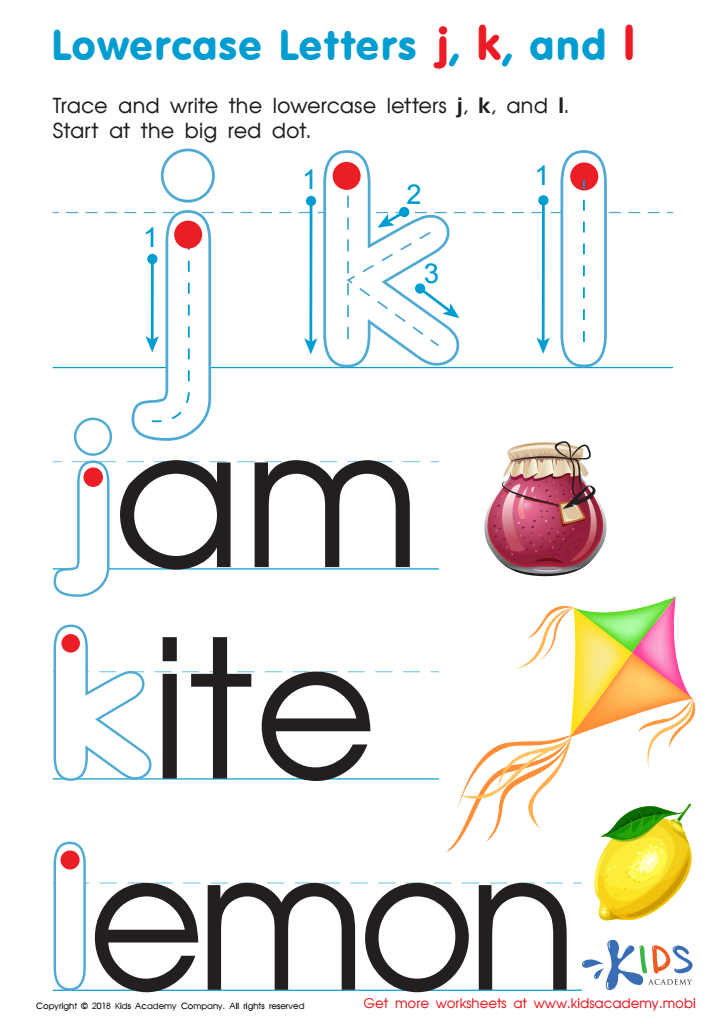
Lowercase Letters j k l Worksheet
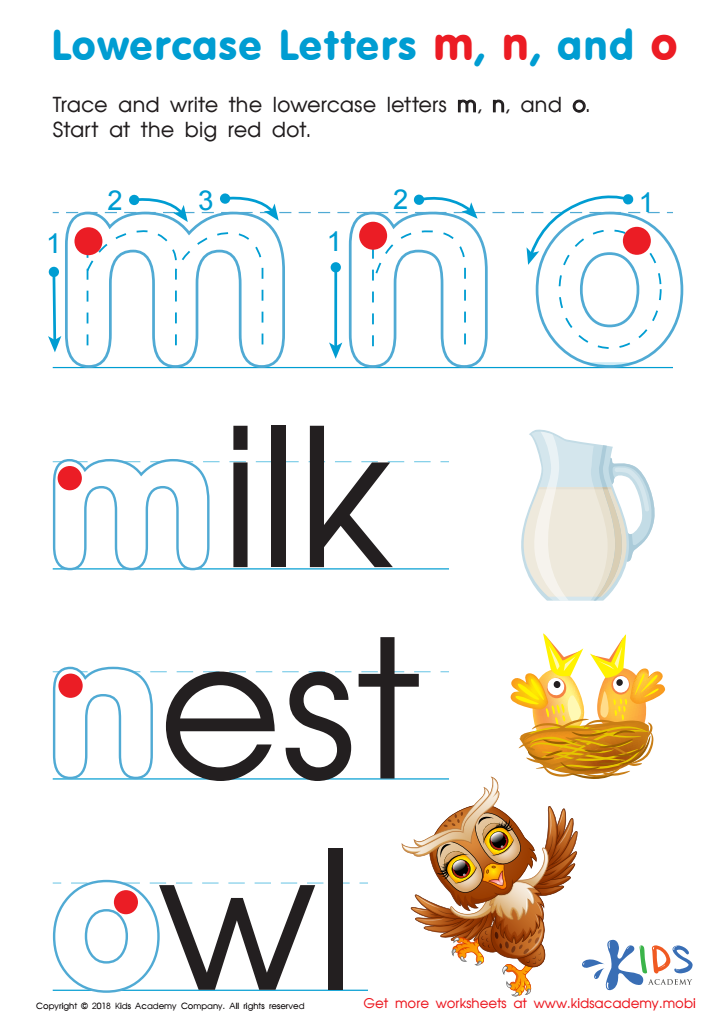
Lowercase Letters m n o Worksheet






It is essential for parents and teachers to emphasize the importance of writing lower and uppercase letters for children aged 3-5, as this foundational skill significantly contributes to their literacy development. At this early stage, children’s brains are exceptionally receptive to learning and forming new neural connections. Introducing them to both uppercase and lowercase letters prepares them for more complex aspects of reading and writing, which are critical components of communication and academic success.
Engaging in these activities helps children understand the relationship between letters and sounds, forming the basis for phonemic awareness. Mastery of both letter cases enhances their ability to recognize words accurately in different contexts. For example, seeing a word in both uppercase and lowercase helps them understand that "DOG" and "dog" are the same word, fostering reading fluency and comprehension.
Writing both types of letters also develops fine motor skills, which are crucial for tasks beyond writing, such as buttoning a shirt or using utensils. The practice encourages hand-eye coordination, control, and dexterity. Teachers and parents caring about this skill are essentially investing in their children’s cognitive and physical development, setting a strong foundation for lifelong learning and academic achievement. Encouragement and consistent practice can make the process enjoyable, making education an exciting part of a child's early life.







