Uppercase identification Upper & Lowercase Letters Worksheets for Ages 3-5
5 filtered results
-
From - To
Discover our engaging "Uppercase Identification Worksheets" designed specifically for children ages 3-5! These interactive resources help young learners recognize and differentiate between uppercase and lowercase letters in a fun, playful way. Our worksheets promote cognitive development, fine motor skills, and letter familiarity through a variety of activities, including tracing and identification exercises. With colorful imagery and age-appropriate challenges, kids will enjoy mastering the alphabet. Perfect for both classroom and home learning environments, our worksheets support early literacy and pave the way for a strong educational foundation. Explore our printable resources today and watch your child's confidence in reading flourish!
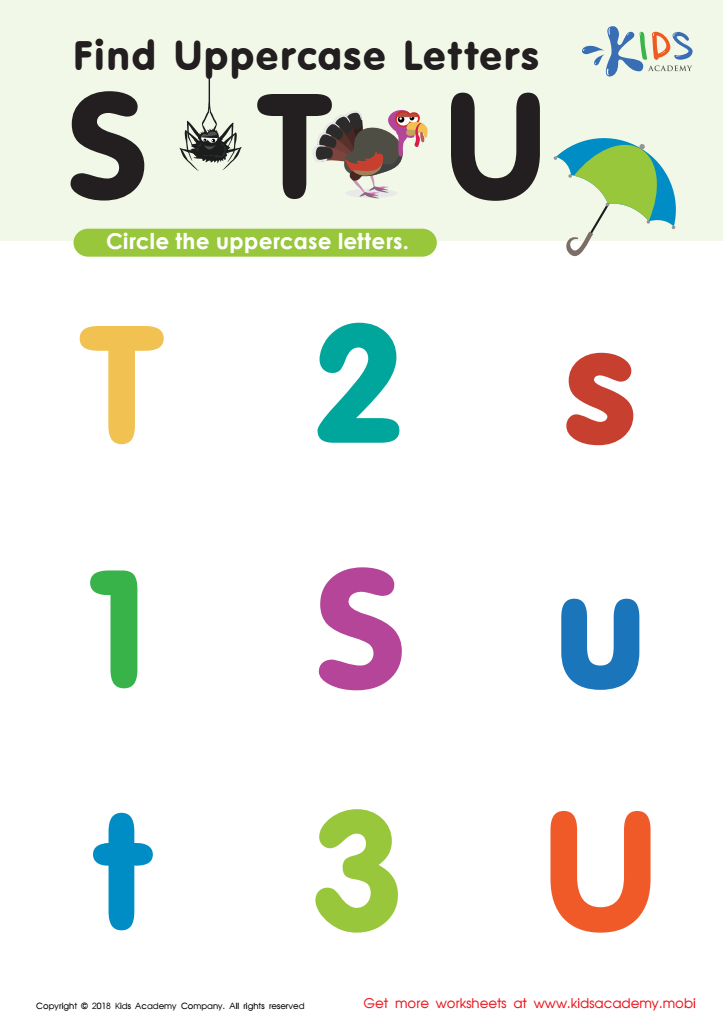
Find Uppercase Letters Worksheet
 Assign to My Students





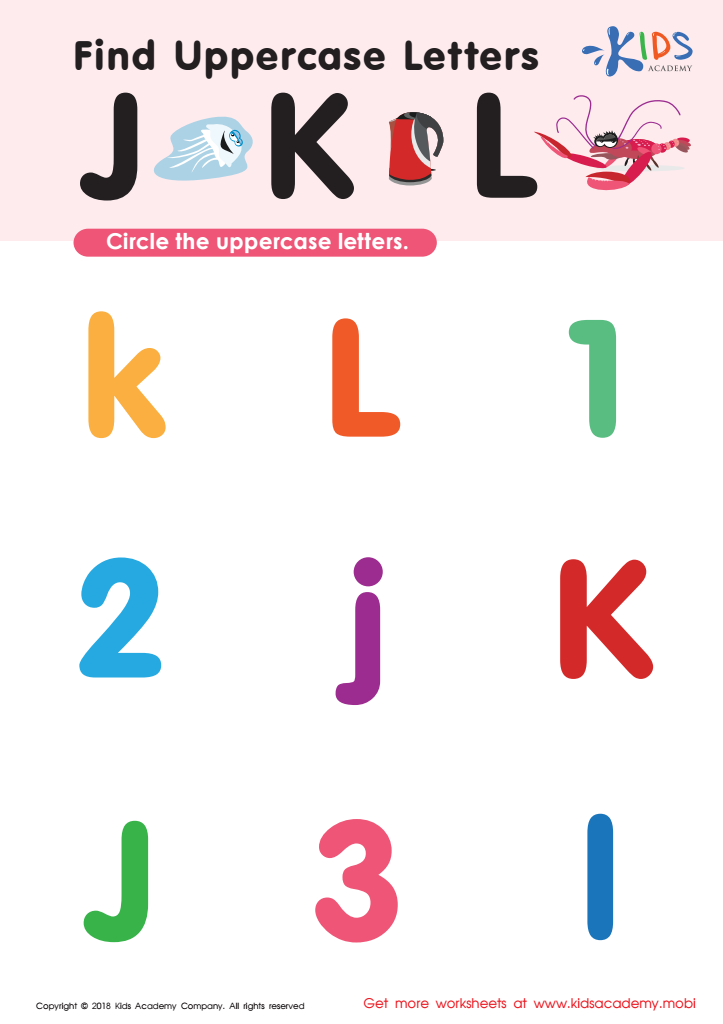
Find Uppercase Letters J, K, and L Worksheet
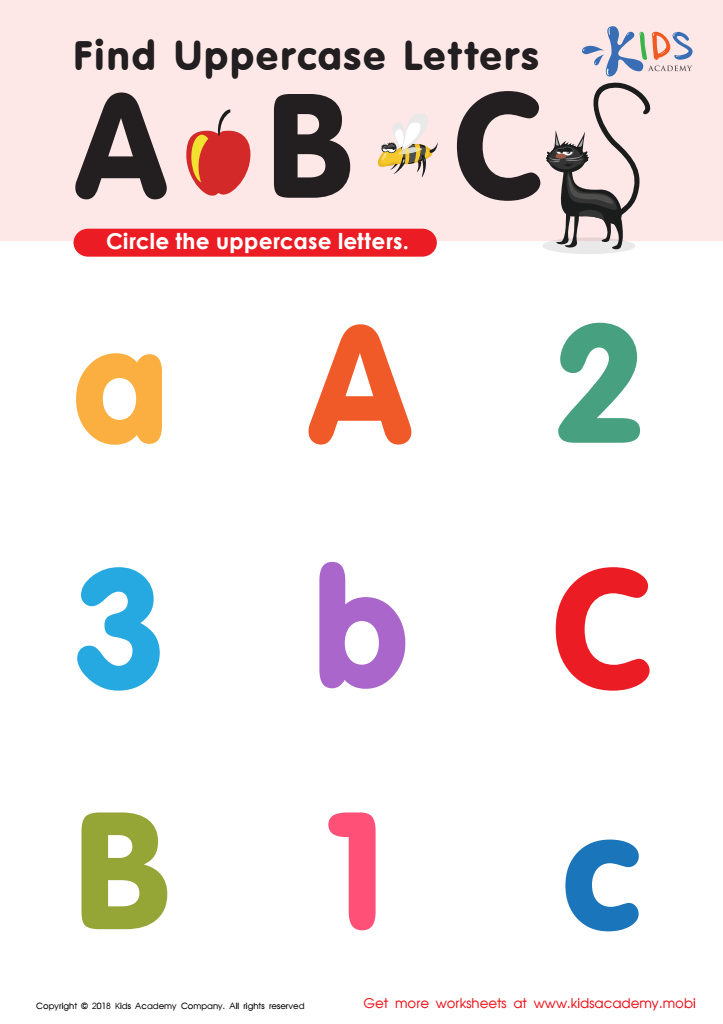
Find Uppercase Letters A, B, and C Worksheet
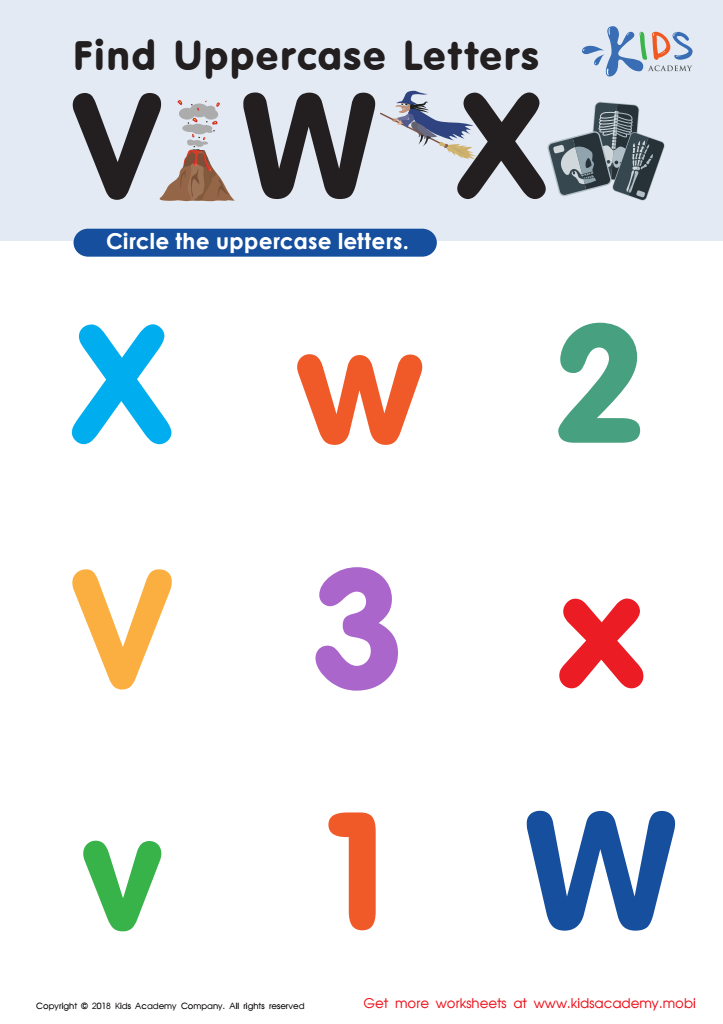
Find Uppercase Letters V, W, X Worksheet
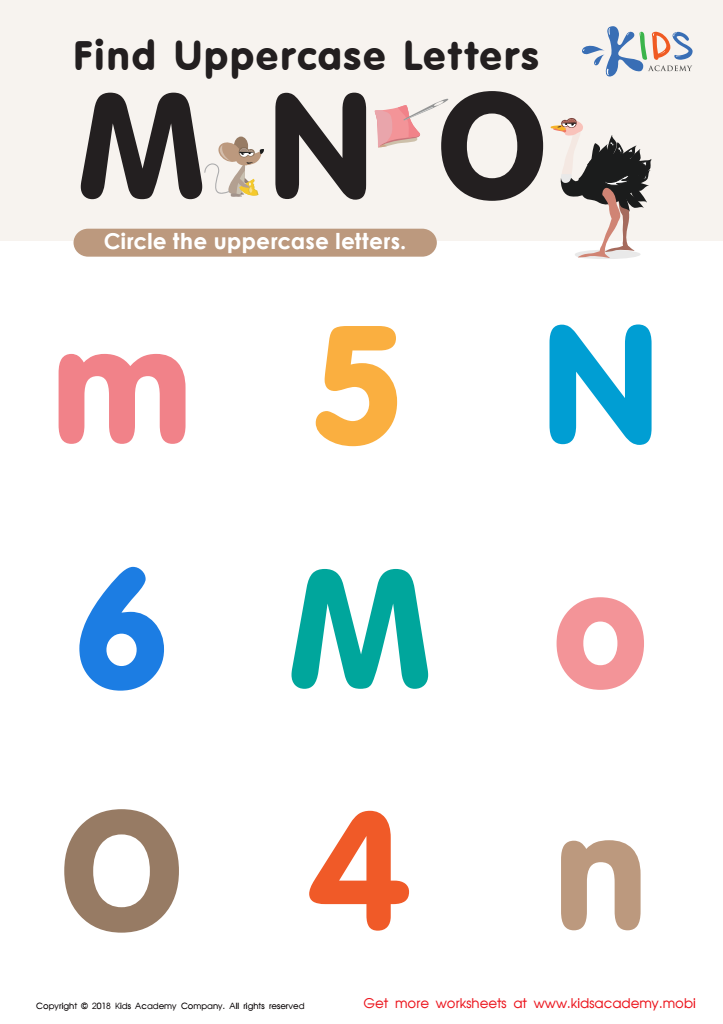
Find Uppercase Letters M, N, and O Worksheet






Identifying uppercase and lowercase letters is crucial for children ages 3-5, as it lays the foundation for literacy development. During this period, children are exposed to print in everyday environments, making letter recognition a vital skill that will aid in their future reading and writing abilities.
Uppercase letters, often used at the beginning of sentences or for proper nouns, serve as markers that guide a child's understanding of written text structure. Recognizing these letters equips children to effectively navigate books, signs, and content they encounter daily. Similarly, lowercase letters make up the majority of written text and their recognition is essential for reading fluency.
Furthermore, understanding the difference between uppercase and lowercase fosters phonemic awareness and supports vocabulary development as children begin to associate sounds with the corresponding letters. By engaging in activities that emphasize both letter types, teachers and parents can encourage memorization and recall, enhancing a child’s self-confidence in using language.
Ultimately, nurturing these foundational skills not only prepares children for formal schooling but also instills a love for reading that can last a lifetime. Investing time in letter recognition activities promotes literacy growth and overall academic success in early childhood.







