Vocabulary development Vowels Worksheets for Ages 3-5
4 filtered results
-
From - To
Nurture early literacy and vocabulary skills with our engaging Vowels Worksheets designed for children ages 3-5. These expertly crafted worksheets from Kids Academy help young learners enhance their understanding of vowels while building their vocabulary. Through colorful illustrations and easy-to-follow activities, children will learn to identify, pronounce, and use vowels in everyday words. Perfect for home or classroom use, our fun and interactive worksheets make learning enjoyable and effective, setting your child on the right path to reading and writing success. Unlock your child's full potential with our comprehensive vowel and vocabulary development resources today!
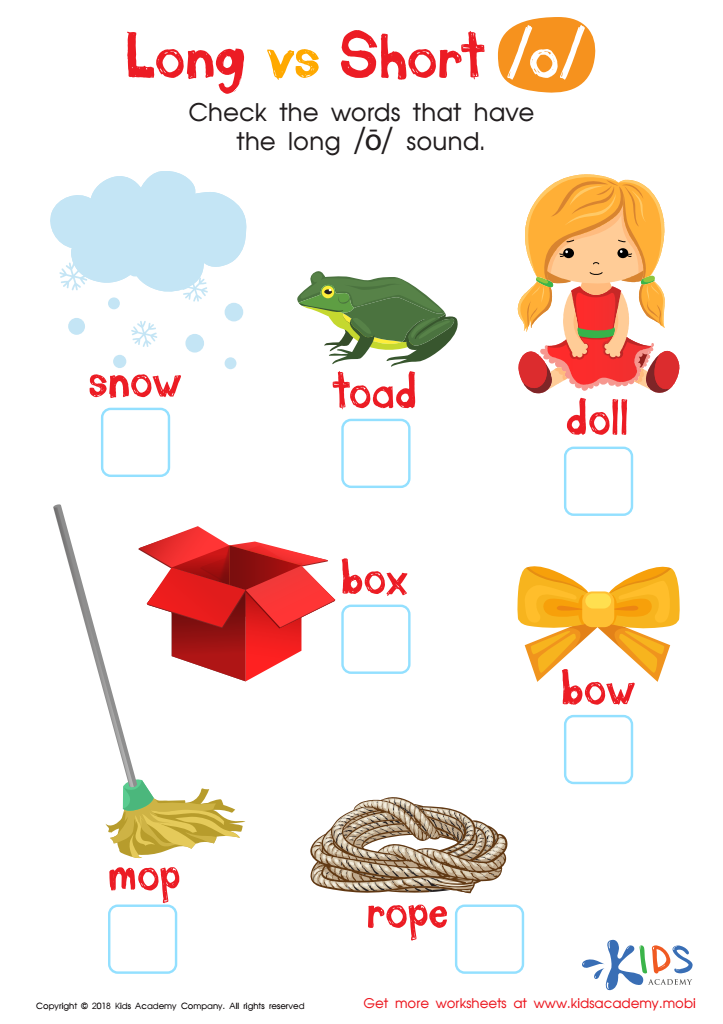
Long vs Short O Reading Worksheet
 Assign to My Students
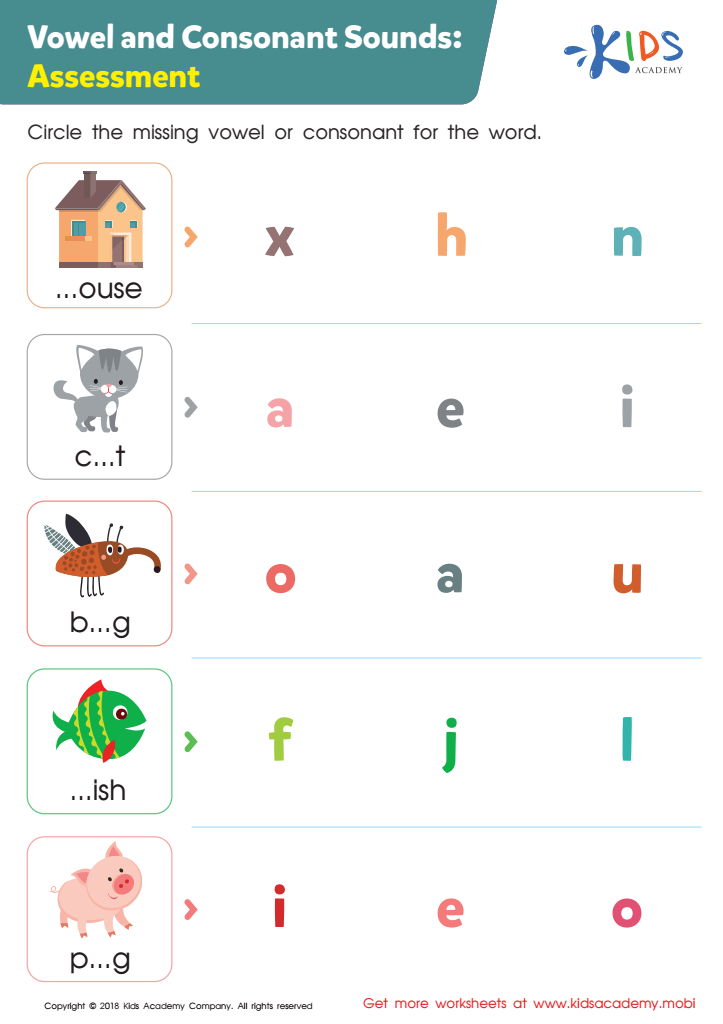
Vowel and Consonant Sounds: Assessment Worksheet
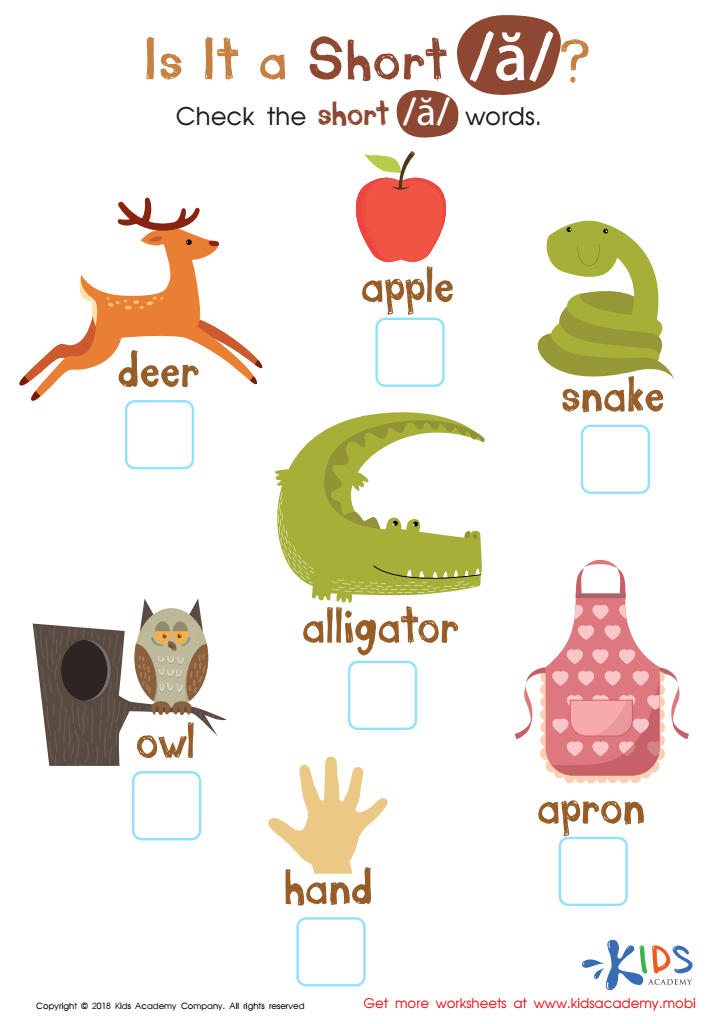
Is It Short A? Reading Worksheet
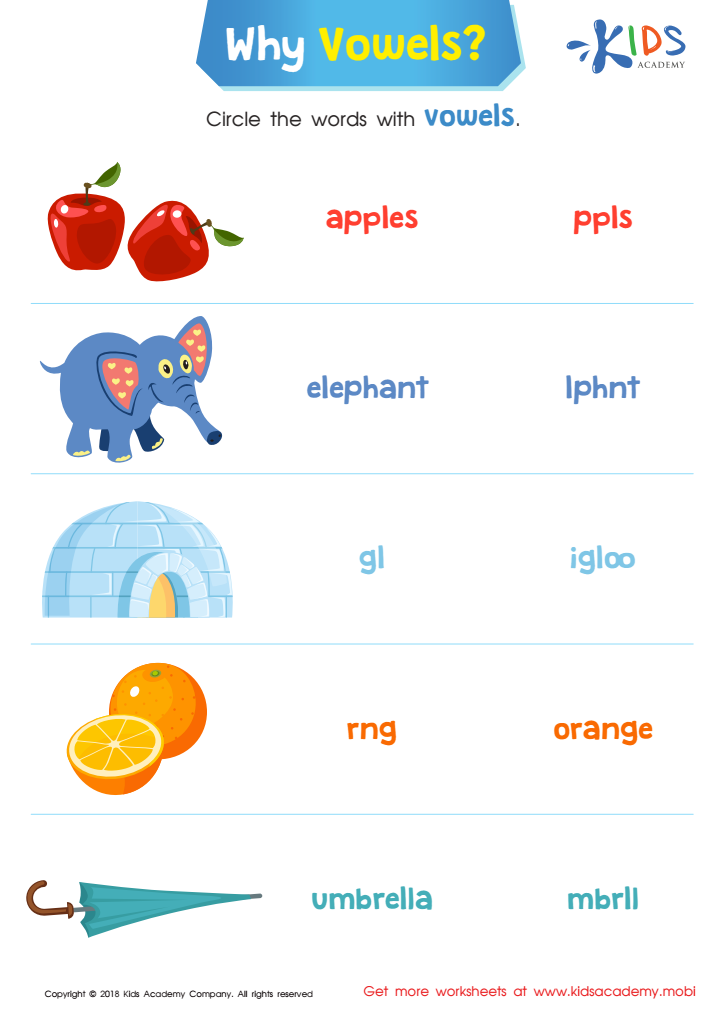
Why Vowels? Reading Worksheet





Vocabulary development and understanding of vowels for children ages 3-5 are crucial aspects of early education that parents and teachers should prioritize. During these formative years, children experience rapid brain development and language acquisition that will set the foundation for their educational journey.
First, early vocabulary development is directly linked to later reading comprehension and academic success. A broad vocabulary enables children to understand and express themselves clearly, laying the groundwork for effective communication. When children know more words, they can better understand stories, follow instructions, and grasp new concepts.
Second, vowels are the building blocks of words and play a critical role in forming syllables and pronunciation. By grasping vowels early on, children develop phonemic awareness, which is the ability to hear, identify, and manipulate individual sounds in words. This skill is essential for learning to read.
Incorporating fun and engaging activities that focus on vocabulary and vowel recognition helps children retain information and develop a love for learning. This could involve simple games, songs, and reading together.
Ultimately, investing time and resources in early vocabulary and vowel education empowers children with essential language tools, promoting confidence, curiosity, and a solid educational foundation. Parents and teachers are instrumental in fostering this growth, ensuring children are well-prepared for their academic future.







