Animal recognition Worksheets for Ages 3-5 - Page 4
116 filtered results
-
From - To
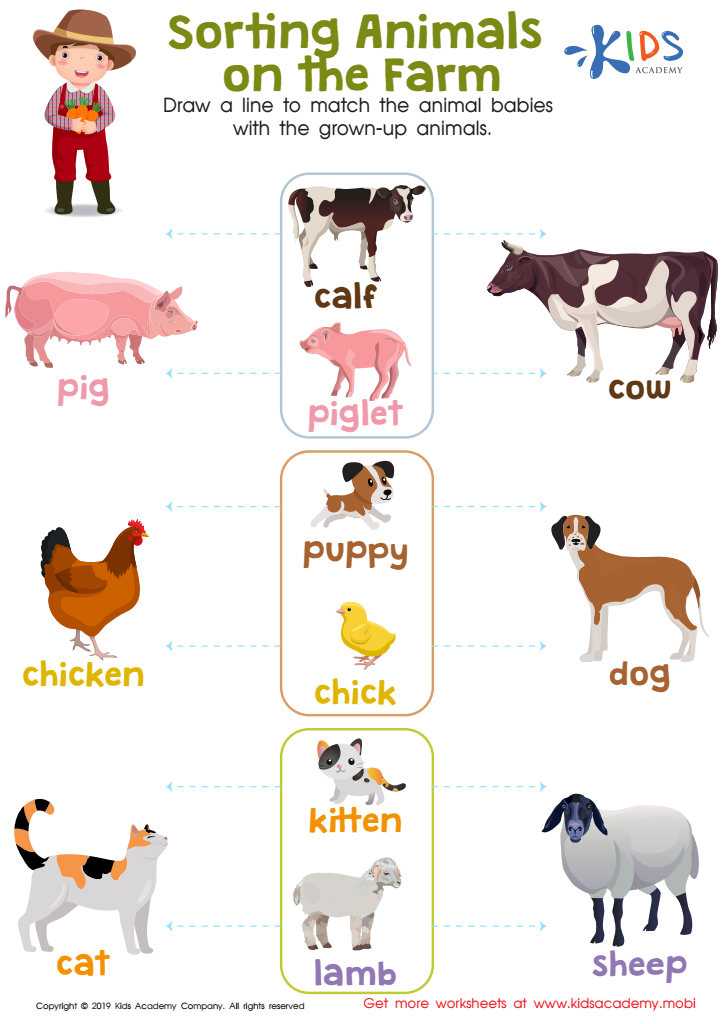
Sorting Animals on the Farm Worksheet
 Assign to My Students
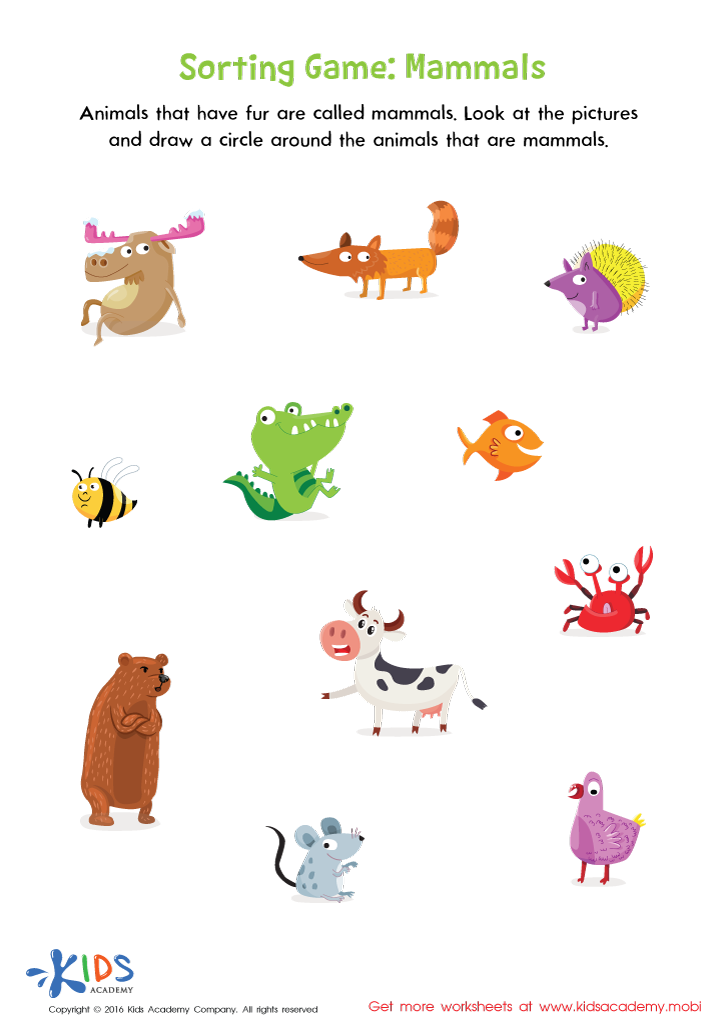
Mammals Sorting Worksheet
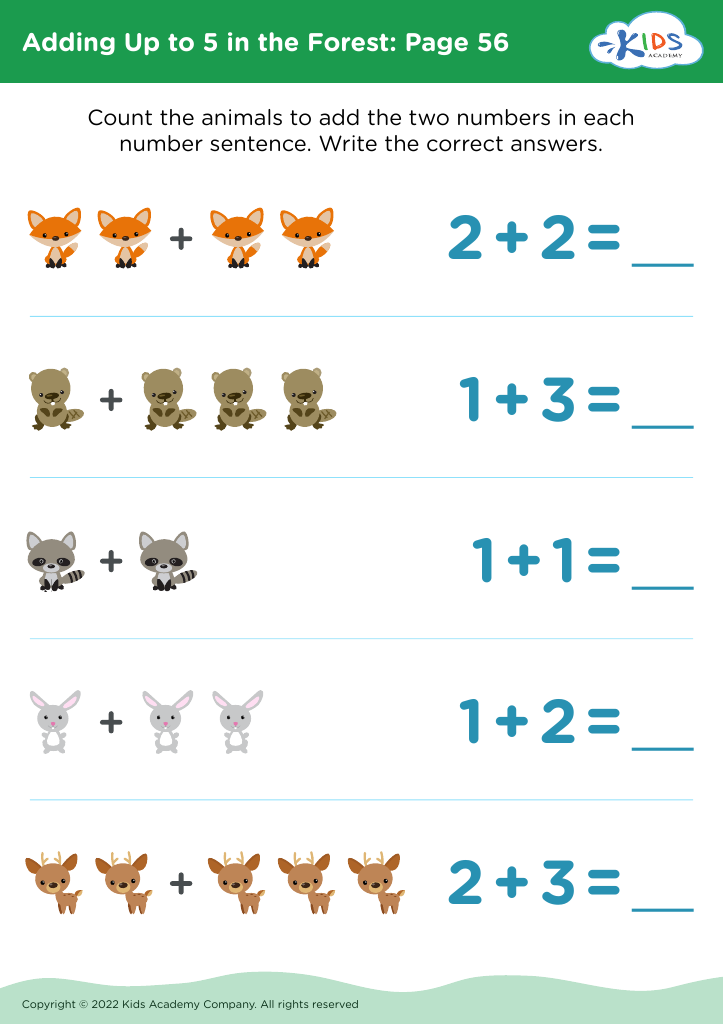
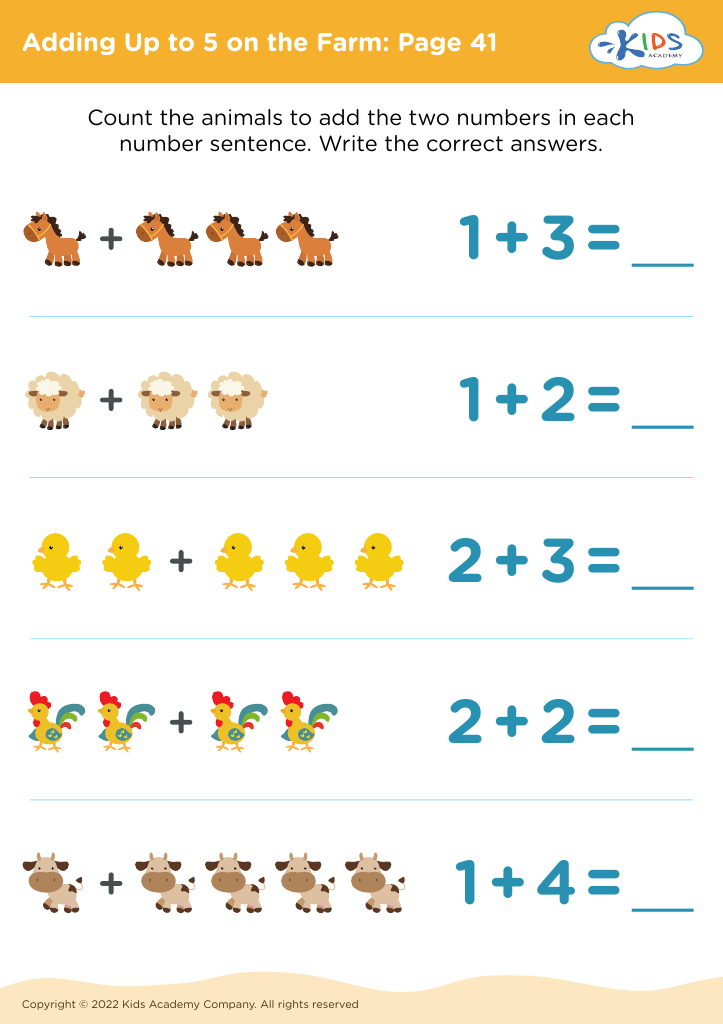
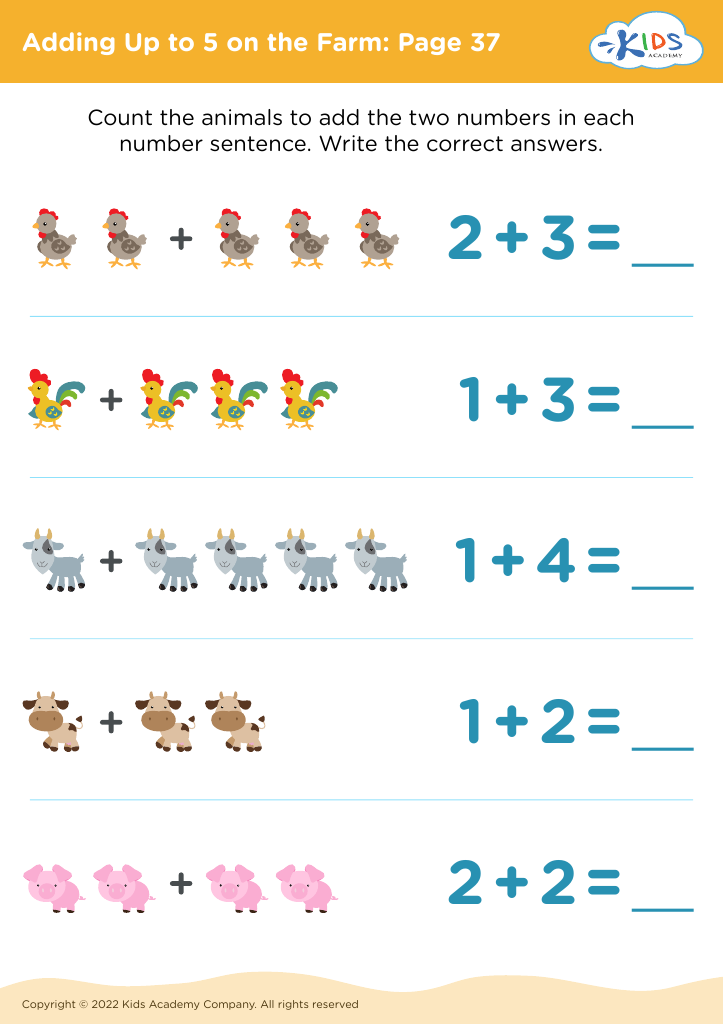
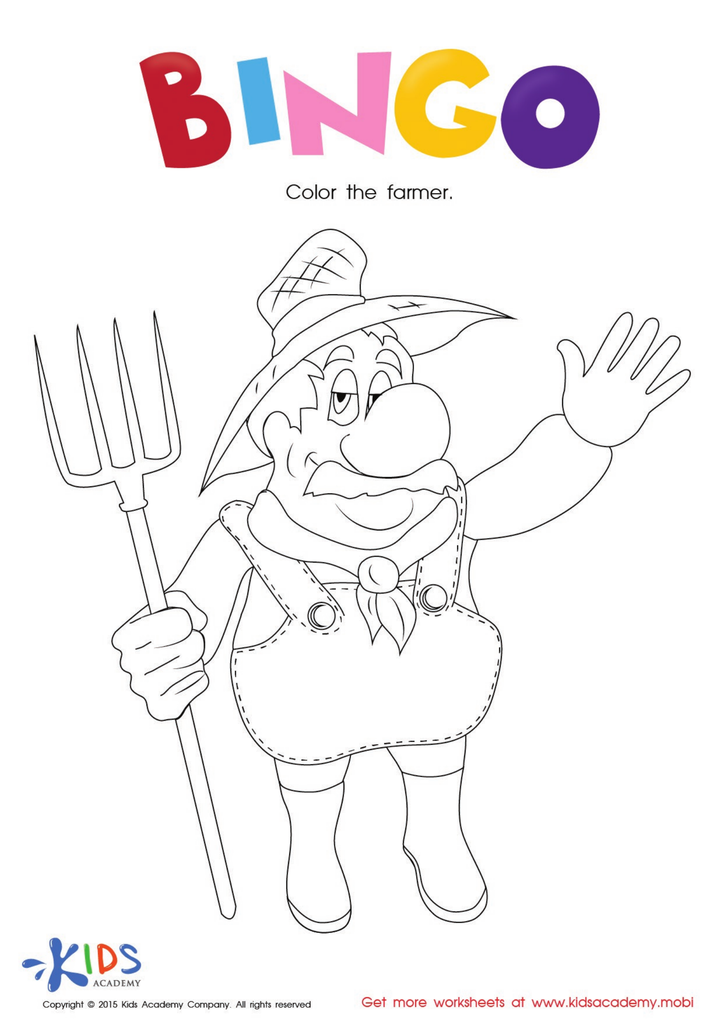
The Bingo Song: Coloring The Farmer Worksheet
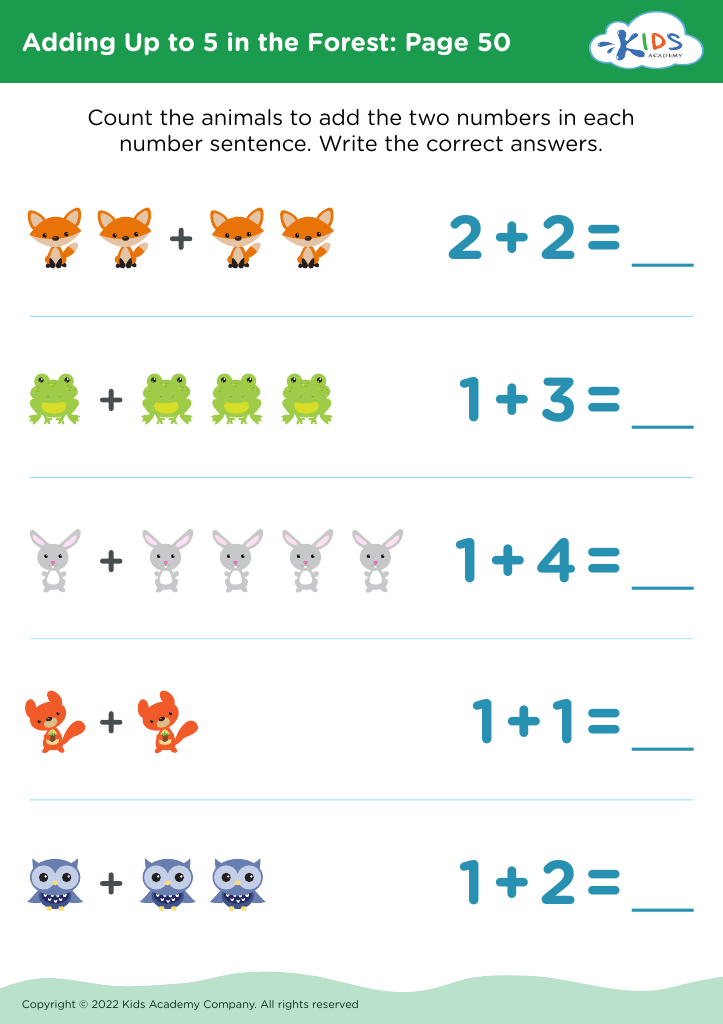
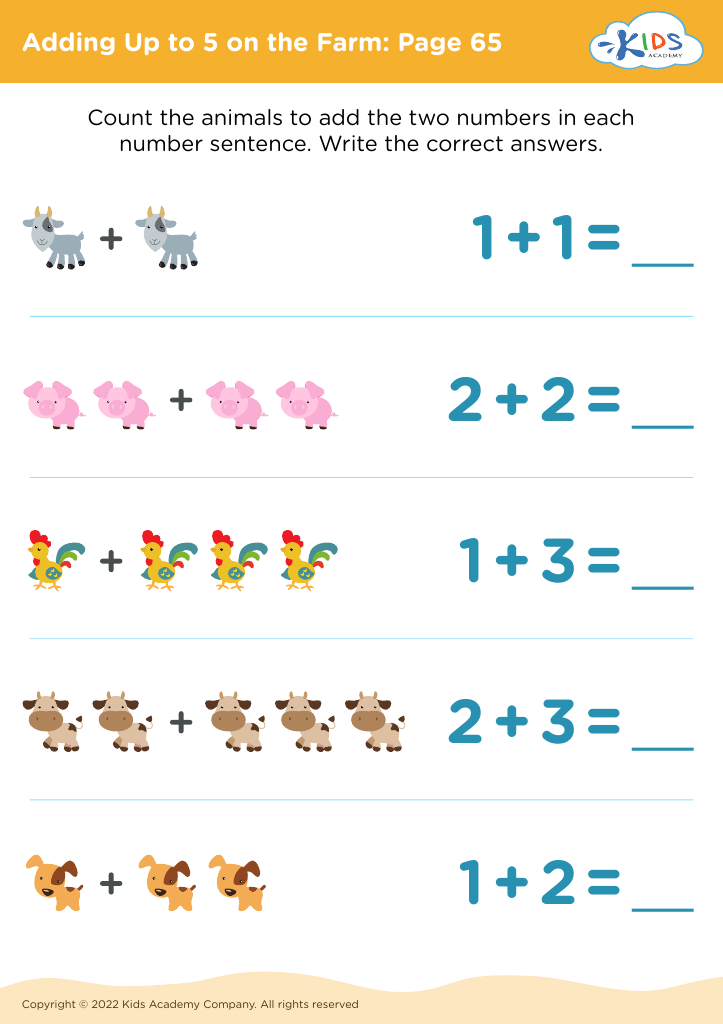
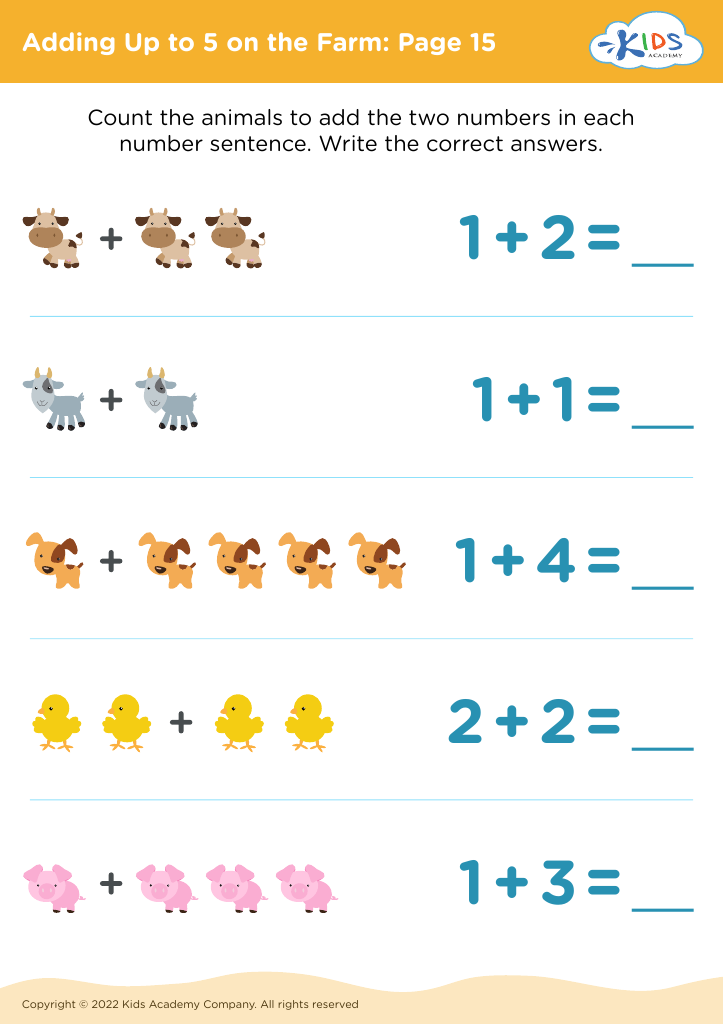
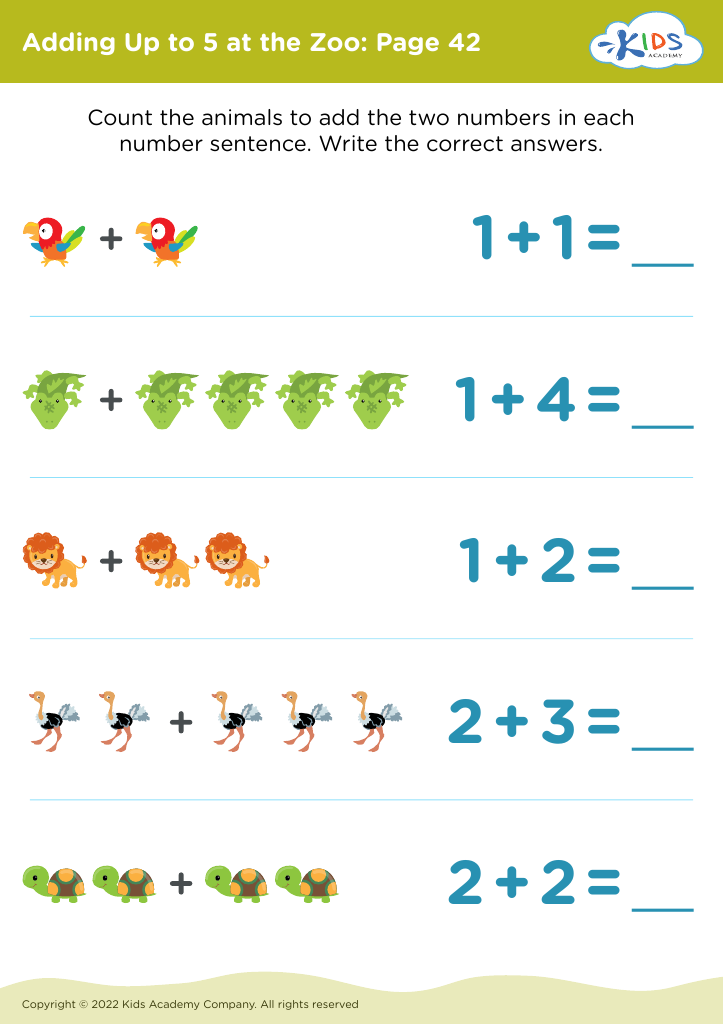
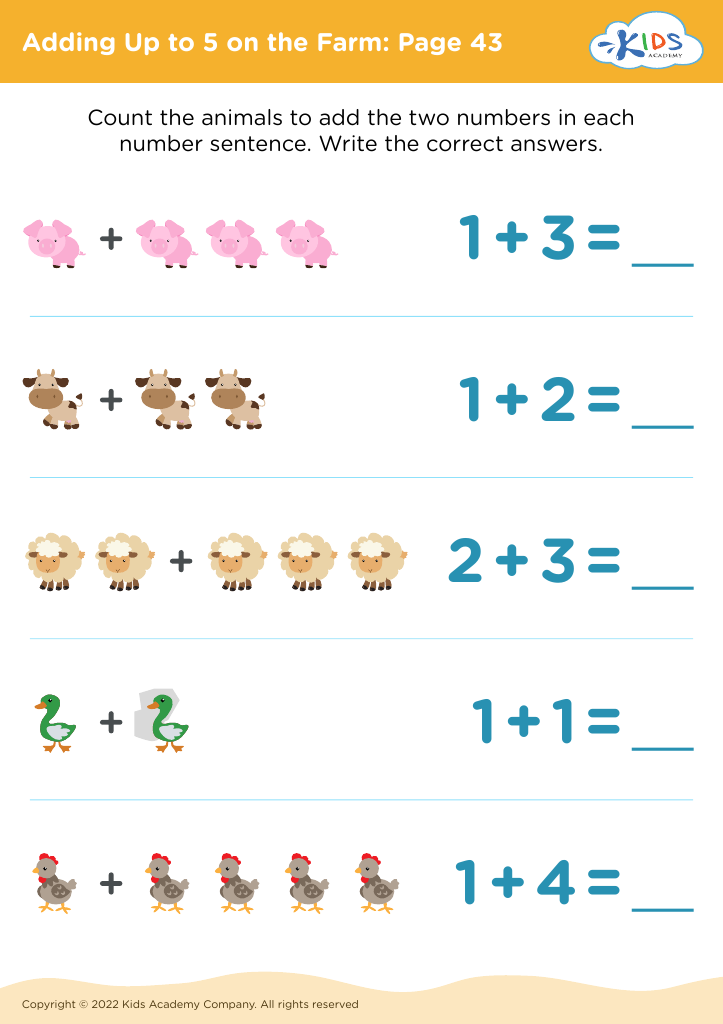
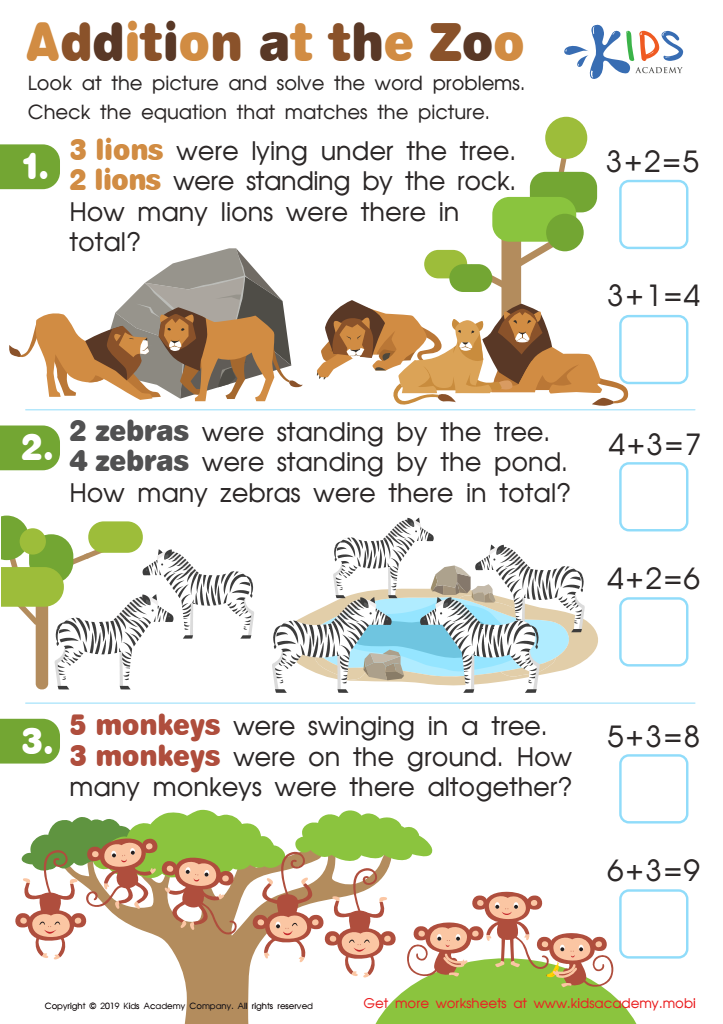
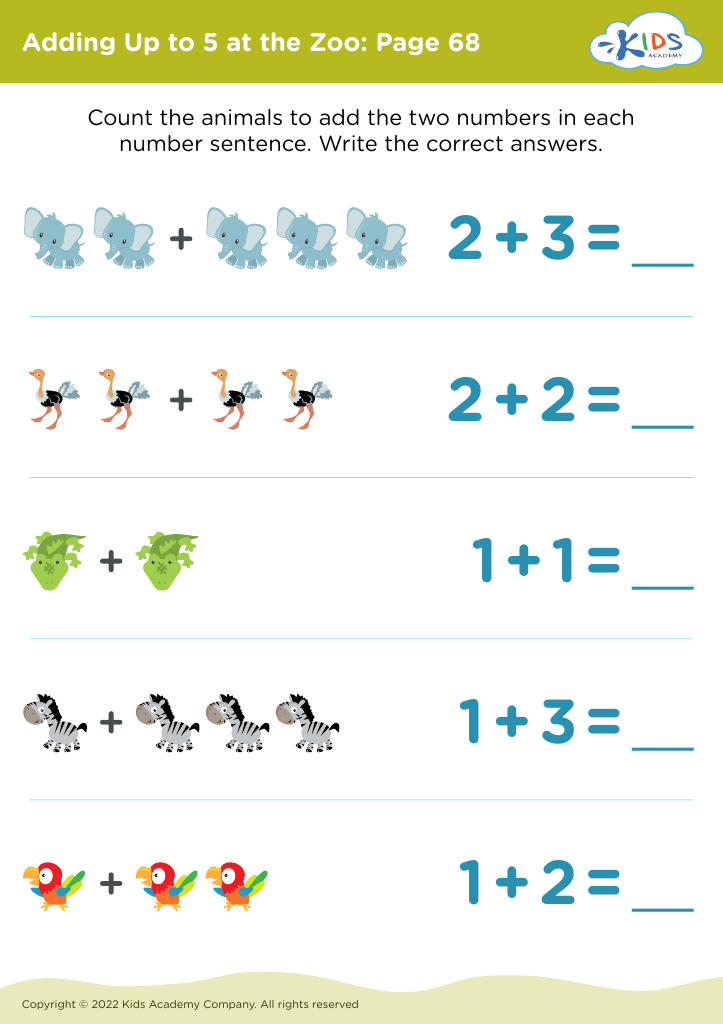
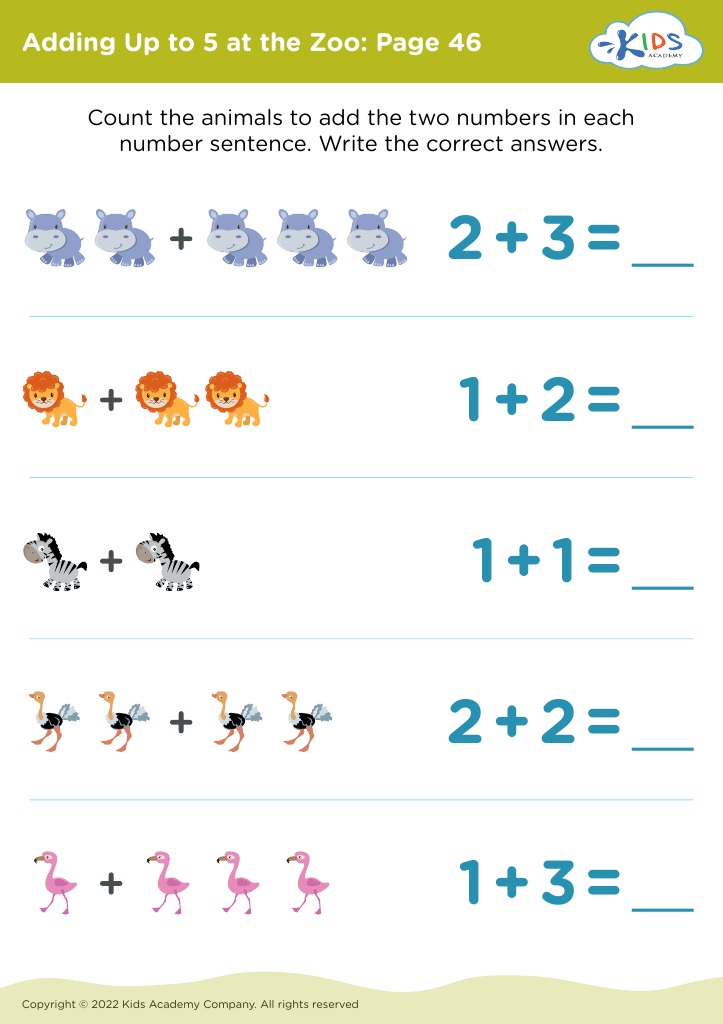
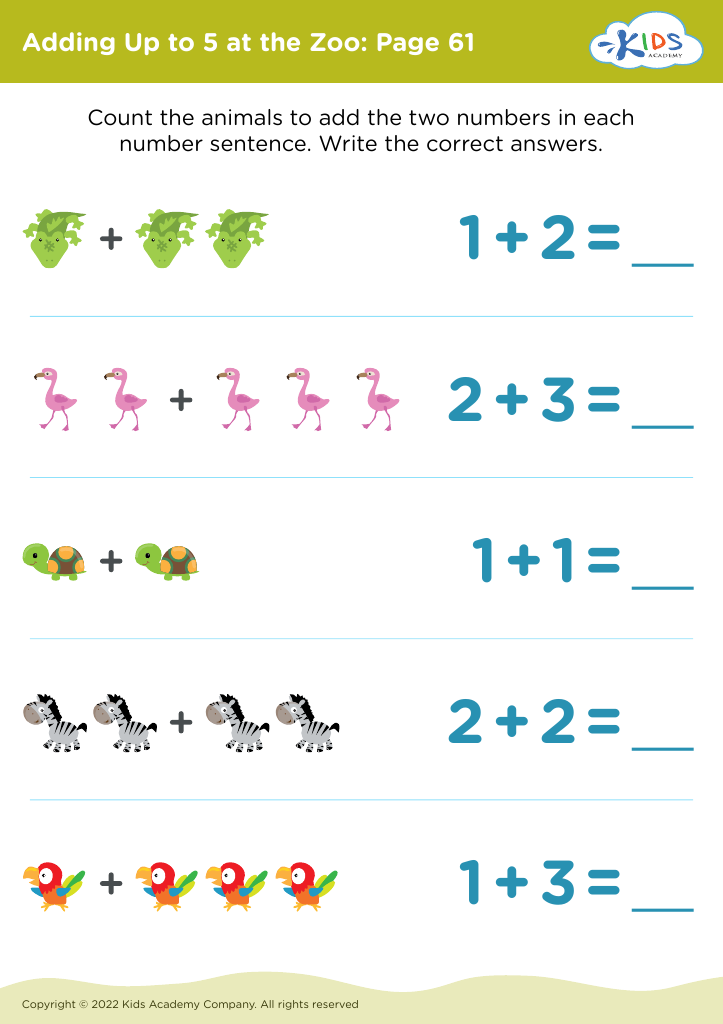
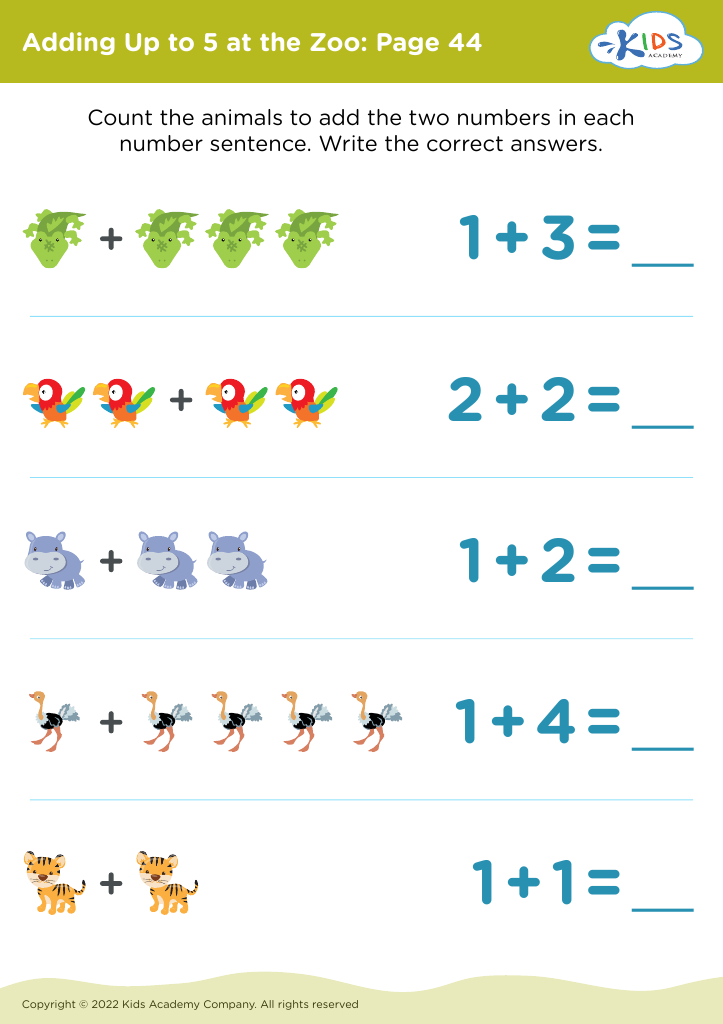
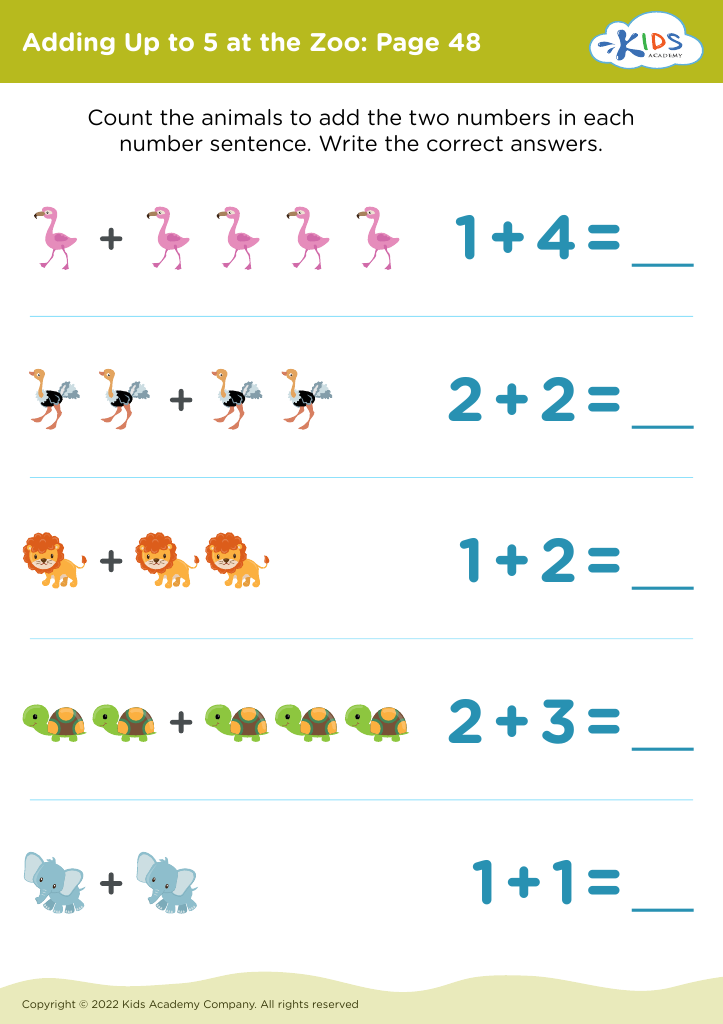
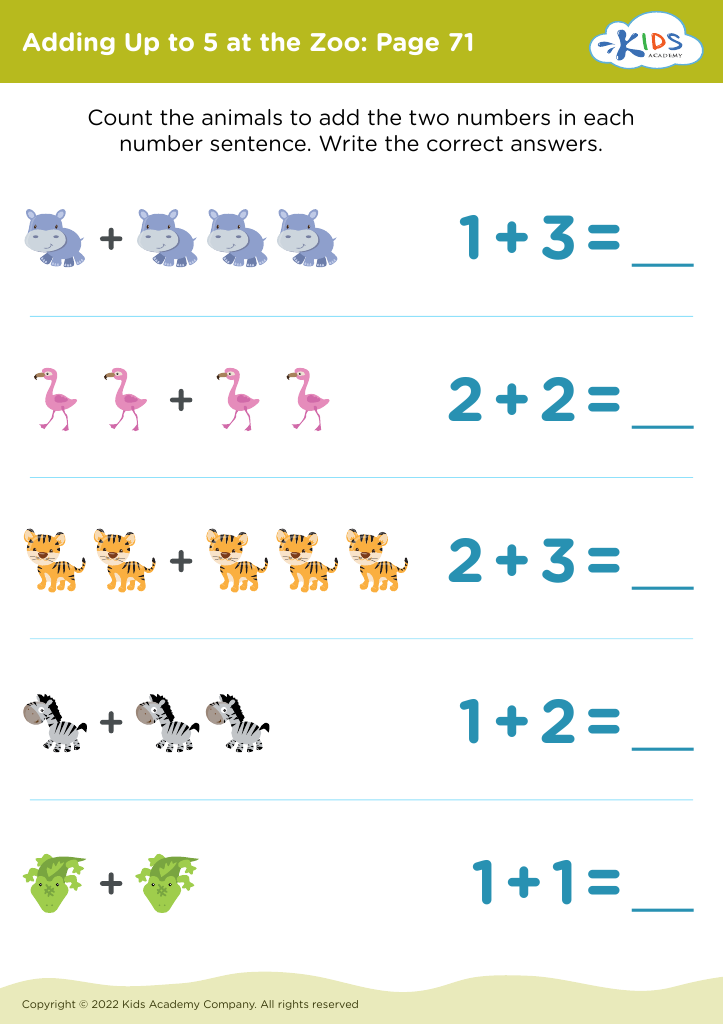
Addition at the Zoo Worksheet








Animal recognition for children ages 3-5 is a pivotal aspect of early childhood development that parents and teachers should care about for several reasons. Firstly, learning to recognize animals enhances cognitive development by helping children improve their memory and categorization skills. They learn to differentiate animals by shapes, sizes, and characteristics, which boosts their observational skills and enriches their vocabulary.
Secondly, understanding animals and their habitats nurtures curiosity and a love for nature. This knowledge foundation can inspire lifelong learning and positive environmental attitudes. Recognizing animals also encourages social-emotional development; children often feel fascinated and compassionate toward animals, teaching empathy and kindness.
Moreover, animal recognition often involves interactive learning—through books, games, and outdoor exploration—which keeps young minds engaged and physically active. Such hands-on experiences are crucial during these formative years when children learn best through play and direct interaction.
Lastly, in a world rich with biodiversity, fostering early awareness and appreciation for different species sets the stage for informed and responsible behavior toward the environment. Overall, integrating animal recognition into early childhood education supports comprehensive development and cultivates well-rounded individuals curious about the world around them.
Thus, encouraging animal recognition is invaluable in a child’s early years.








