
Basic measurement concepts Worksheets for Ages 3-5
8 filtered results
Difficulty Level
Grade
Age
-
From - To
Subject
Activity
Standards
Explore our engaging "Basic Measurement Concepts Worksheets" designed specifically for children aged 3-5! These worksheets introduce young learners to foundational measurement skills through fun and interactive activities. Your little ones will enjoy practicing concepts such as length, weight, volume, and simple comparisons in an age-appropriate way. Each worksheet is thoughtfully crafted to enhance early math skills while promoting critical thinking and problem-solving abilities. Perfect for both home and classroom use, our worksheets cater to diverse learning styles, ensuring that every child can grasp essential measurement concepts through play and exploration. Start measuring up the fun in learning today!
Favorites
With answer key
Interactive
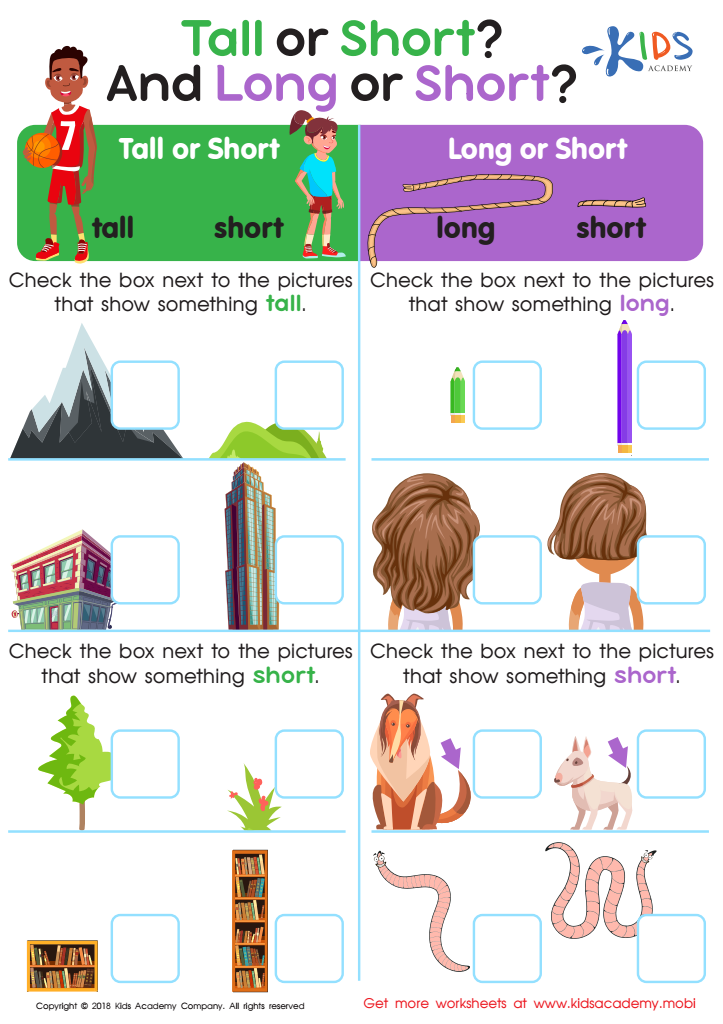
Tall or Short and Long or Short? Worksheet
This worksheet is fun and helpful for kids to understand the difference between height and length. With pictures of familiar objects, they can compare and choose the box with the right answer. This helps them gain skills and a better foundation for future measuring.
 Assign to My Students
Tall or Short and Long or Short? Worksheet
Worksheet
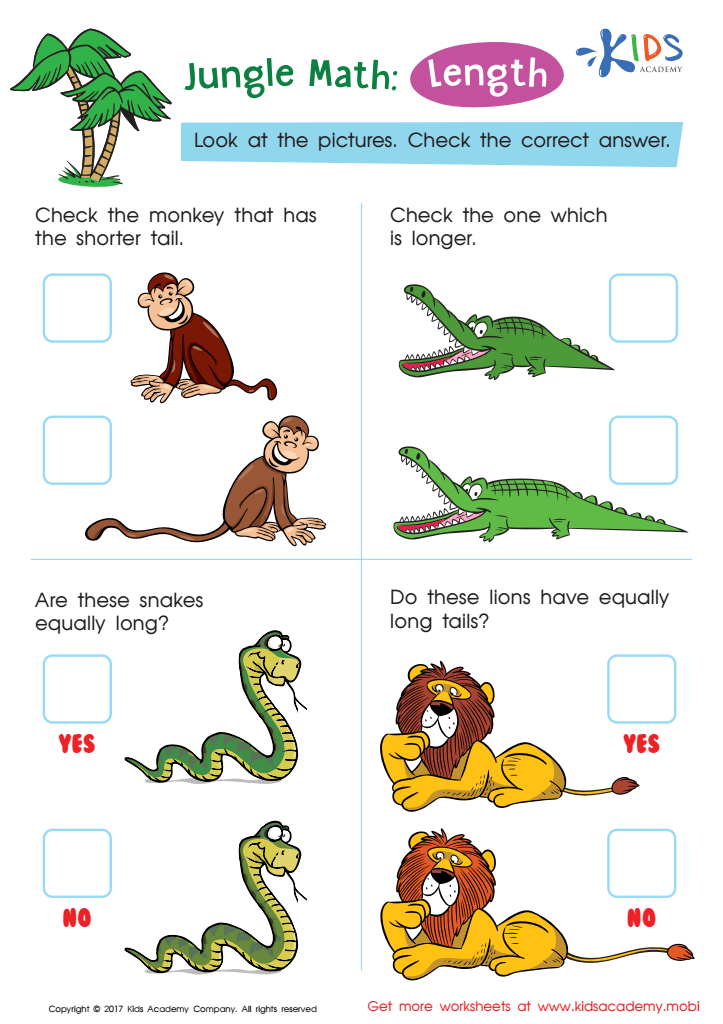
Which One Is Longer - Length Worksheet
Let's go to the jungle - kids get excited to practice math with animal-filled worksheets! This one is sure to have your pupil mastering length in no time.
Which One Is Longer - Length Worksheet
Worksheet
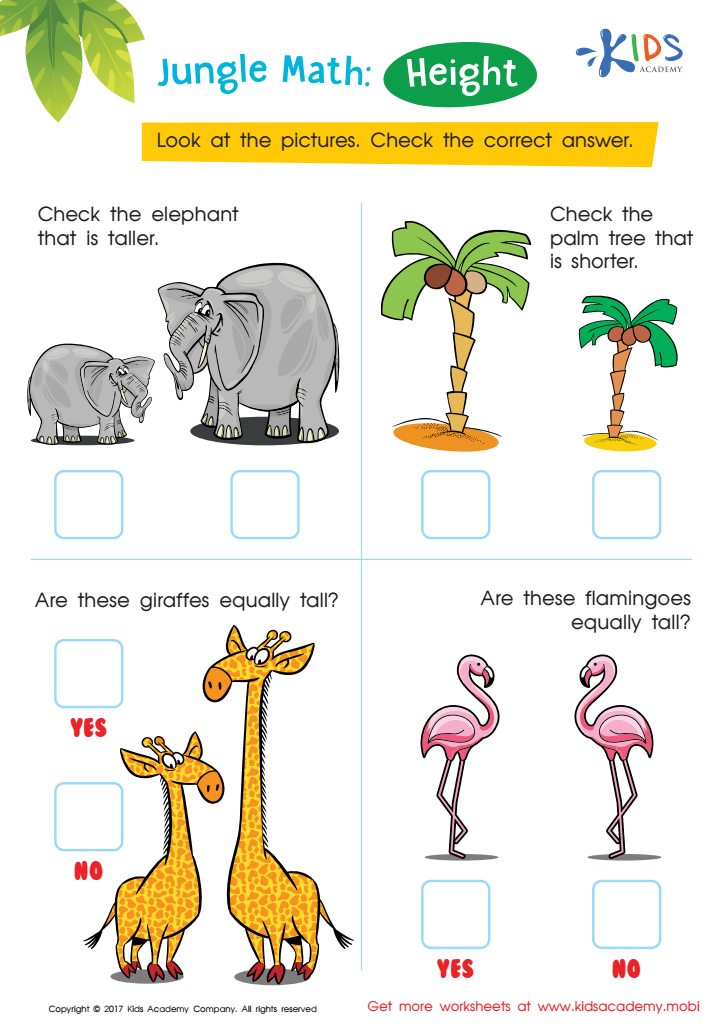
Which Is Taller Worksheet
Help your kindergartner learn about height with this fun worksheet! They'll love comparing zoo animals and deciding which are taller, shorter, or equal. It's a great way to practice math and have fun!
Which Is Taller Worksheet
Worksheet
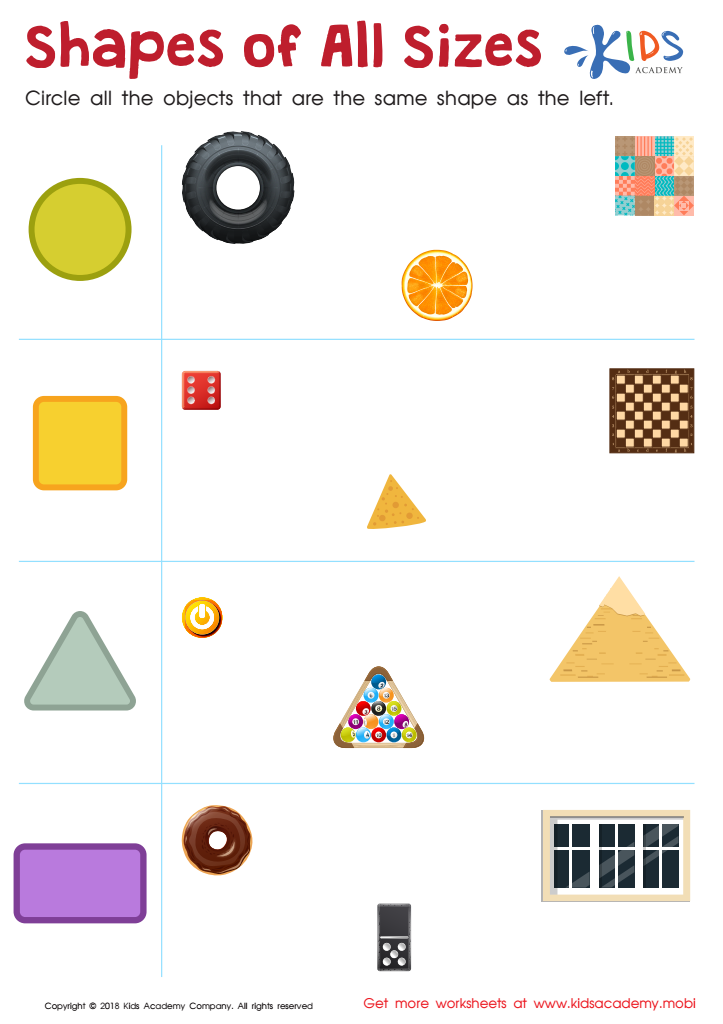
Shapes of All Sizes Worksheet
Students will have fun comparing basic shapes to familiar objects with this worksheet. It's an excellent way to help them recognize similarities in geometric shapes, building strong foundations for understanding congruence and similarity.
Shapes of All Sizes Worksheet
Worksheet
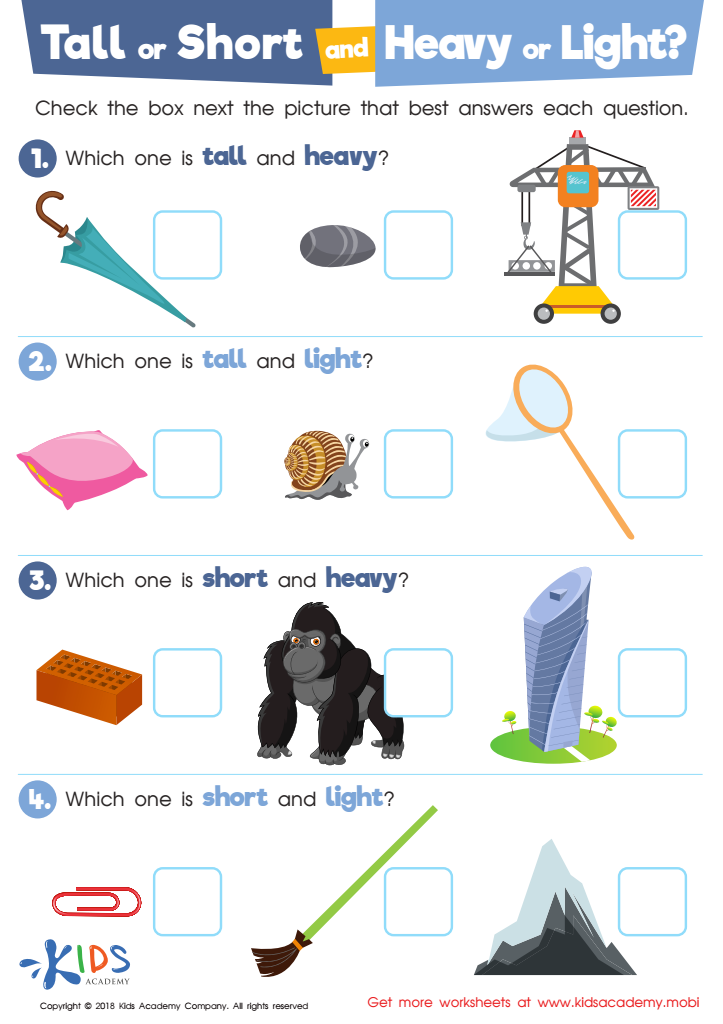
Tall or Short and Heavy or Light? Worksheet
Young children can find basic measurement concepts tricky. This PDF introduces them to the appropriate vocabulary for describing heavy, light, tall and short items, by using familiar pictures. It helps them accurately select which items fit each category.
Tall or Short and Heavy or Light? Worksheet
Worksheet
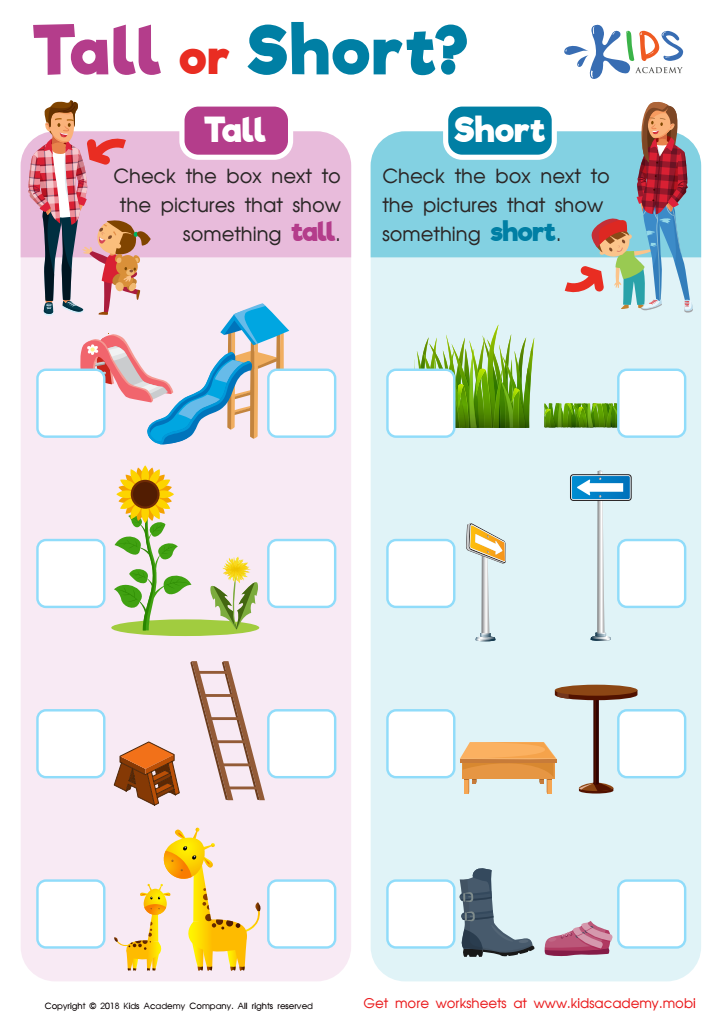
Tall or Short? Worksheet
Comparing tall and short objects is an early math skill. Our free worksheet uses fun colors and pictures to help kids practice. This will give them a head start for higher-level measurement skills, and they'll remember tangible objects for comparison.
Tall or Short? Worksheet
Worksheet
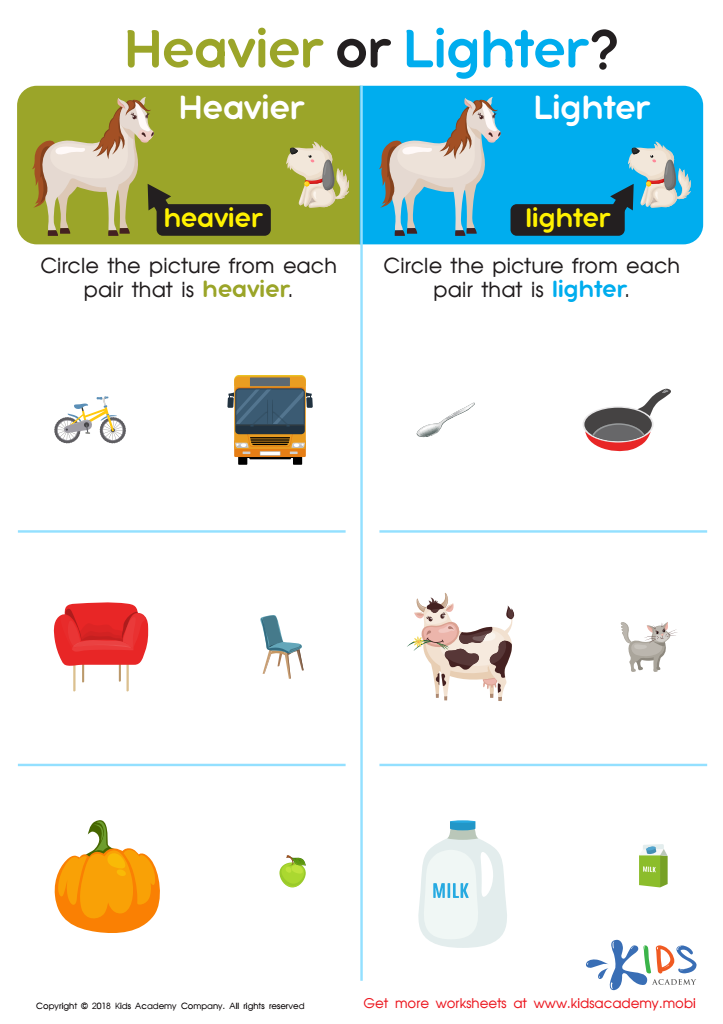
Heavier or Lighter? Worksheet
This PDF provides children an opportunity to practice concepts of heavier and lighter with familiar pictures. They must use fine-motor skills to circle the heavier or lighter item in each pair. Picture clues help build a foundation for future, harder concepts. Kids will love this fun worksheet!
Heavier or Lighter? Worksheet
Worksheet
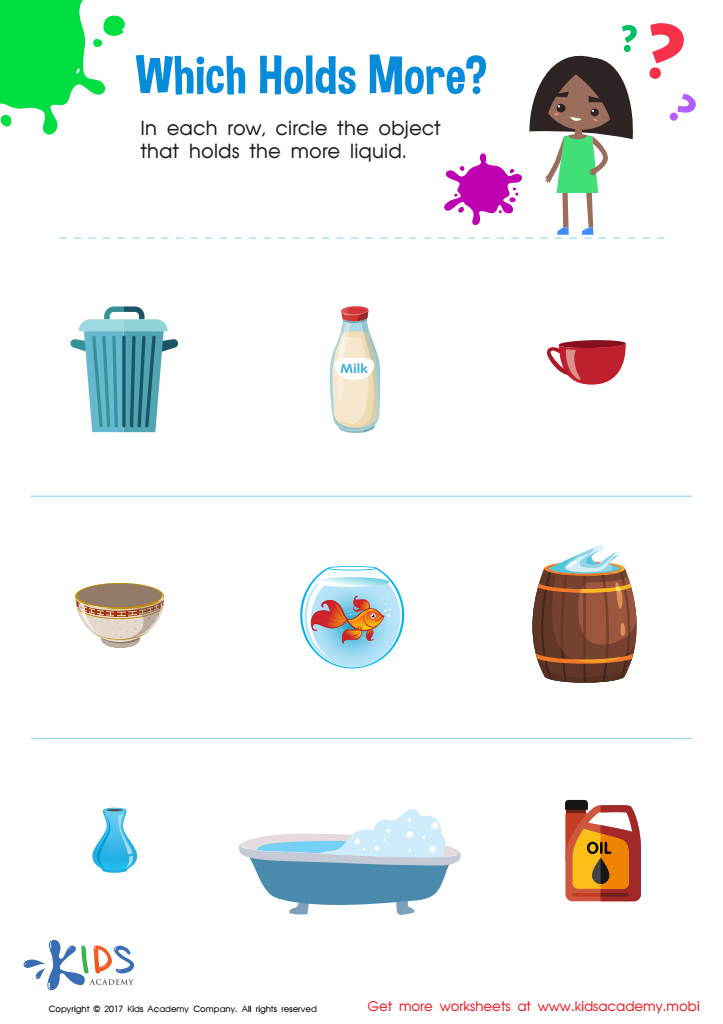
Which Holds More: Capacity Worksheet
Kids learn volume with containers of different capacities, such as mugs and barrels, and understand which can hold more liquid. A fun and interactive way to teach essential math concepts.
Which Holds More: Capacity Worksheet
Worksheet
Join Kids Academy for Free
Who is primarily going to use this learning content?



.jpg)



Understanding basic measurement concepts is essential for children aged 3-5 as it lays the groundwork for critical thinking, problem-solving, and mathematical reasoning. During these formative years, young learners develop foundational skills that influence their future academic success. When parents and teachers engage children in measuring activities, such as comparing heights, weighing objects, or measuring liquid, they foster curiosity and promote hands-on exploration.
These activities help children to recognize and understand concepts like length, weight, volume, and time in a concrete manner. By introducing vocabulary related to measurement, such as "longer," "heavier," or "more," adults enhance language skills and ensure that children can articulate their understanding effectively.
Moreover, measurement concepts are interconnected with everyday experiences—from baking to gardening—making learning relevant and engaging. When children make comparisons, estimate quantities, and discuss measurements with adults, they build social skills and learn to collaborate.
Ultimately, investing time in measurement concepts not only supports early mathematical development but also enriches overall cognitive growth. Young learners become better prepared for more complex mathematical concepts in later years, leading to greater confidence and success in formal education settings. Therefore, enhancing measurement understanding positively impacts children's holistic development.








