Comparative analysis Worksheets for Ages 3-5
3 filtered results
-
From - To
Introduce your young learners to comparative analysis with our engaging worksheets designed specifically for ages 3-5. These fun and educational printables cover fundamental skills such as identifying differences, sorting by attributes, and recognizing patterns. Perfect for preschool and kindergarten children, these activities promote early critical thinking and logical reasoning. Kids will enjoy colorful illustrations and diverse exercises that make learning feel like play. Ideal for classroom and at-home practice, our worksheets help build a strong foundation for future academic success. Visit us today to explore our collection and give your little ones a head start in their educational journey!
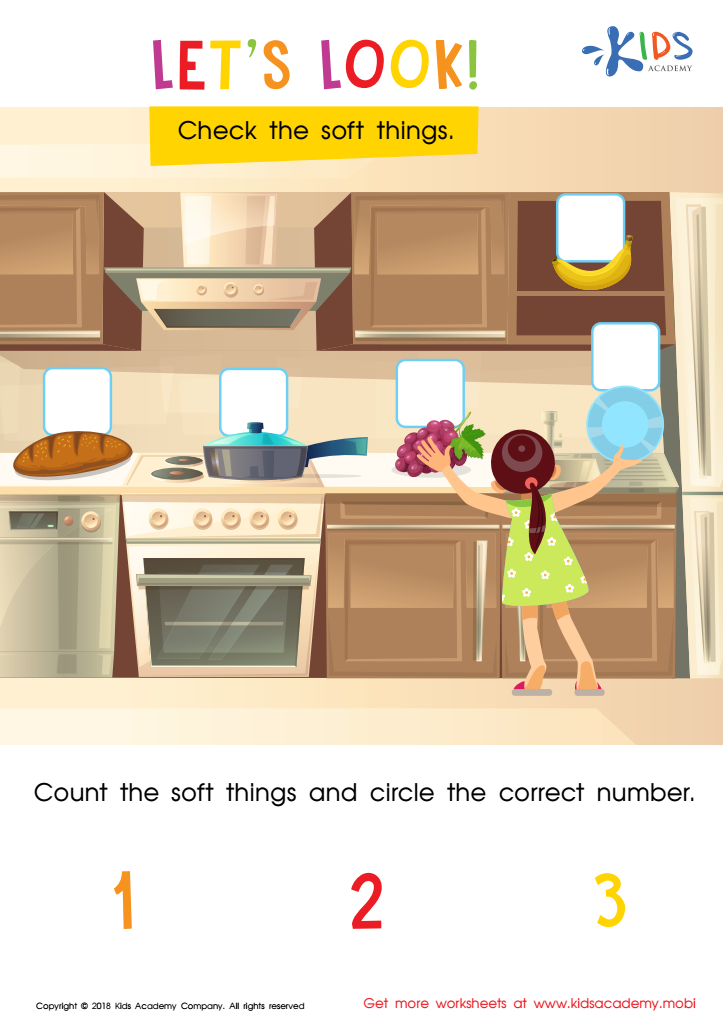
Let's Look! Assessment Worksheet
 Assign to My Students
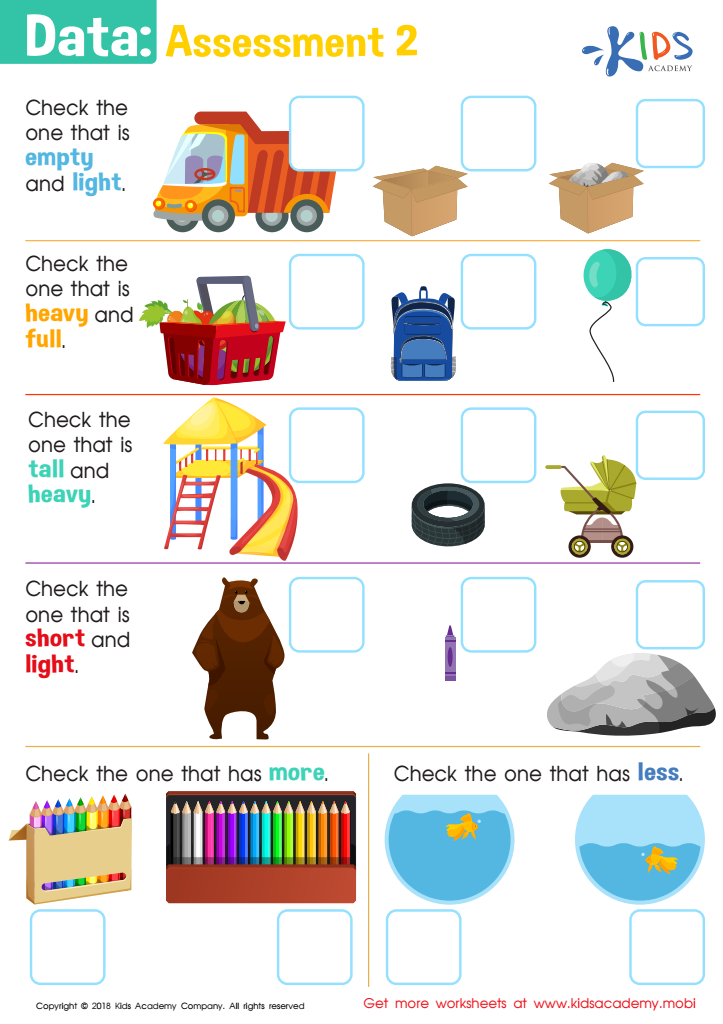
Data: Assessment 2 Worksheet






Comparative analysis for children ages 3-5 is vital for both parents and teachers as it fosters a deeper understanding of early childhood development. By examining the milestones and behaviors typical for this age group, adults can more accurately identify where a child stands in relation to peers. This aids in recognizing any potential developmental delays or advanced abilities, allowing for timely interventions or enrichment activities tailored to the child's needs.
For parents, comparative analysis offers insight into whether their child is growing healthily in cognitive, social, emotional, and physical domains. Knowing what is typical helps alleviate unnecessary worries or identify concerns that need professional attention. For instance, if a child is not speaking as clearly as peers, this could signal the need for a hearing evaluation or speech therapy.
Teachers benefit from this analysis by better tailoring educational approaches to suit diverse developmental levels within the classroom. It aids in planning appropriate activities that challenge yet support each child, fostering a balanced and inclusive educational environment. Additionally, understanding how children of the same age develop differently helps educators implement varied teaching strategies, which can improve learning outcomes and overall classroom management.
Through comparative analysis, both parents and teachers can create supportive, responsive environments that nurture the individual potential of each child.








