Comparing lengths Worksheets for Ages 3-5
3 filtered results
-
From - To
Explore our engaging "Comparing Lengths Worksheets" designed specifically for children aged 3-5. These worksheets foster early mathematical skills through fun activities that help little learners understand length concepts. With interactive comparisons, colorful visuals, and simple instructions, your child will enjoy measuring, comparing, and categorizing various objects. Ideal for preschool and kindergarten settings, our resources promote critical thinking and boost problem-solving abilities. Each worksheet encourages hands-on learning experiences, ensuring that kids grasp the fundamental ideas of length in an enjoyable way. Perfect for parents and educators looking to enrich their child’s educational journey while making learning a delightful experience!
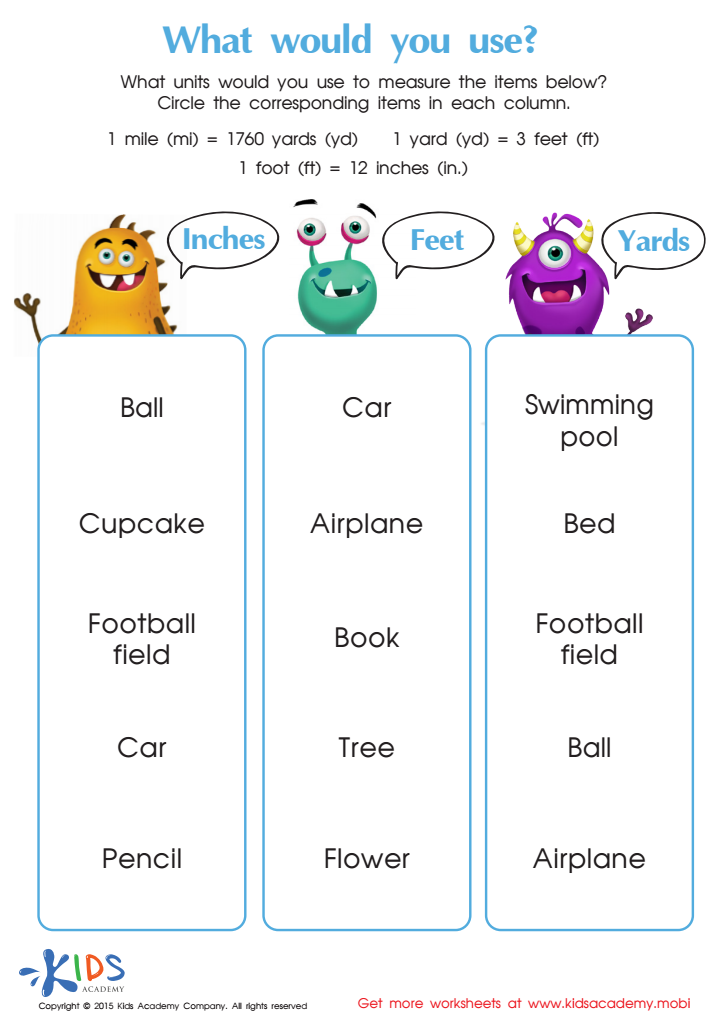
Learning about measuring objects in inches, feet and yards Worksheet
 Assign to My Students
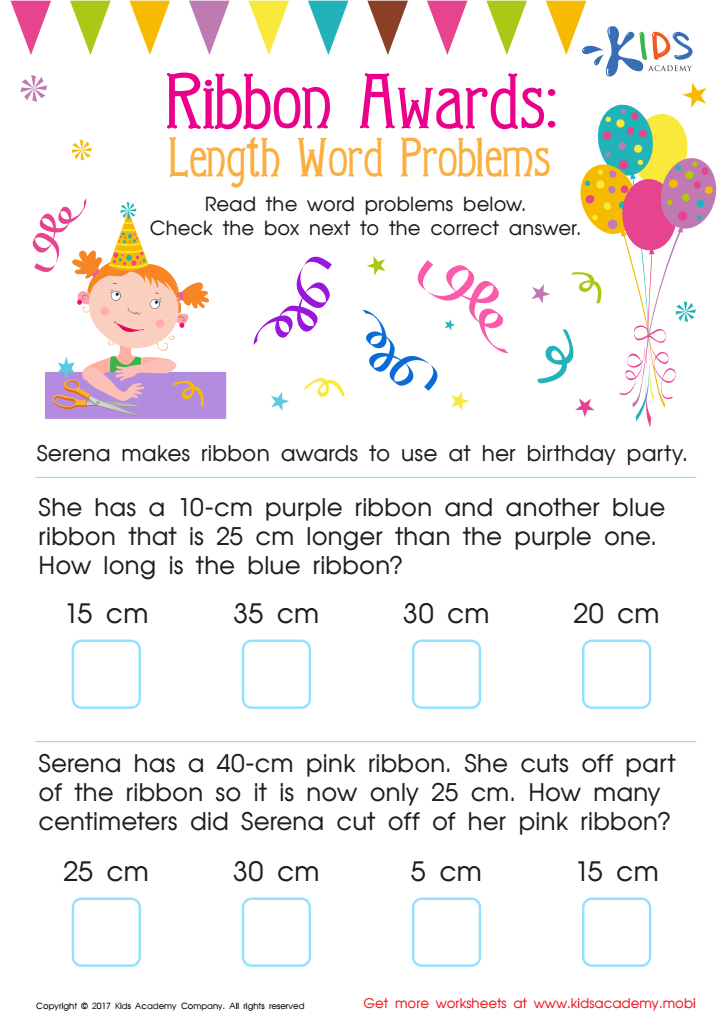
Length Word Problems Worksheet
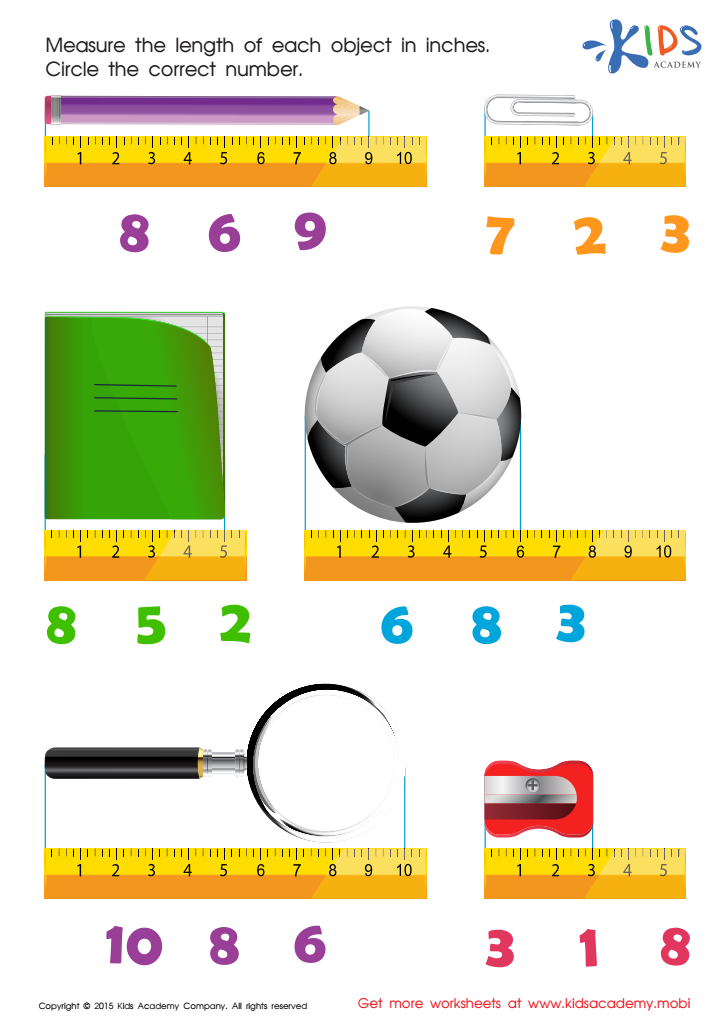
Learning measuring objects in inches Worksheet








Understanding comparing lengths is fundamental for children aged 3-5 as it lays the groundwork for essential mathematical concepts. At this developmental stage, children are naturally curious and eager to explore their surroundings, making it an ideal time to introduce concepts of size and length. Engaging young learners in comparing lengths helps them develop critical thinking skills as they learn to observe, measure, and make comparisons.
Parents and teachers should care because it enhances children’s cognitive development. When children compare lengths, they are not just learning about measurements; they are also building vocabulary and boosting language skills by discussing “longer,” “shorter,” and “equal.” Additionally, measuring heights of objects or comparing everyday items fosters hand-eye coordination and fine motor skills.
This early exposure to math helps children apply similar concepts later in schoolwork and real-life situations, forming a strong foundation for future learning. Encouraging comparing lengths also promotes social interaction when children work together to measure or discuss their discoveries, enhancing cooperation and communication skills. Ultimately, nurturing this learning at an early age supports holistic development and builds a positive attitude towards math and science.








