Comparing quantities Worksheets for Ages 3-5
5 filtered results
-
From - To
Discover a vibrant collection of "Comparing Quantities Worksheets for Ages 3-5" designed to nurture early math skills! These child-friendly worksheets, offered by Kids Academy, introduce young learners to concepts of more, less, and equal through fun and interactive activities. Perfect for preschool and kindergarten children, these resources develop critical thinking and quantitative reasoning. Each worksheet is thoughtfully crafted to engage kids with colorful images and relatable objects, making learning a delightful adventure. Encourage your little one’s mathematical journey with our easy-to-follow, print-friendly worksheets, ensuring foundational skills are strong and confidence is built in a joyful manner!
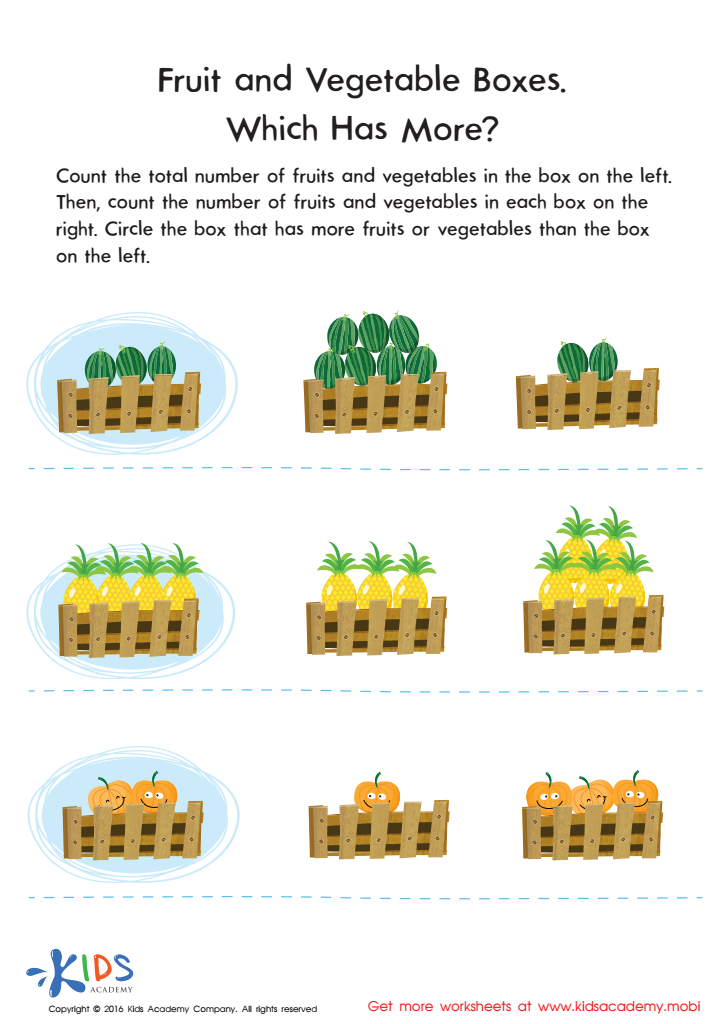
Which Has More? Size Worksheet
 Assign to My Students
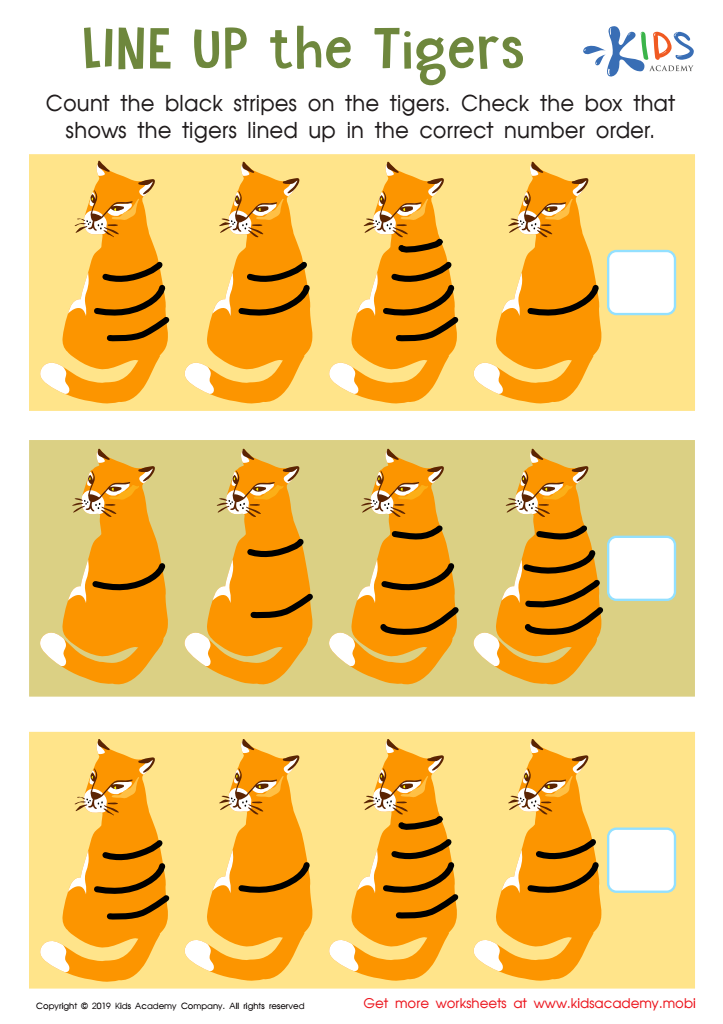
Line up the Tigers Worksheet
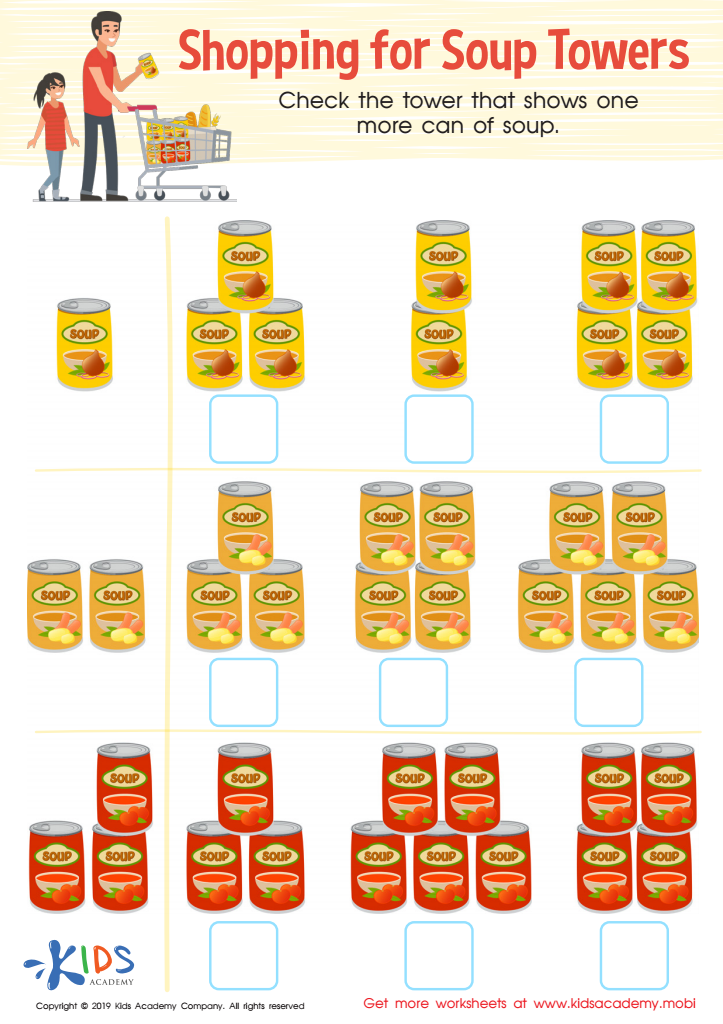
Soup Towers Worksheet
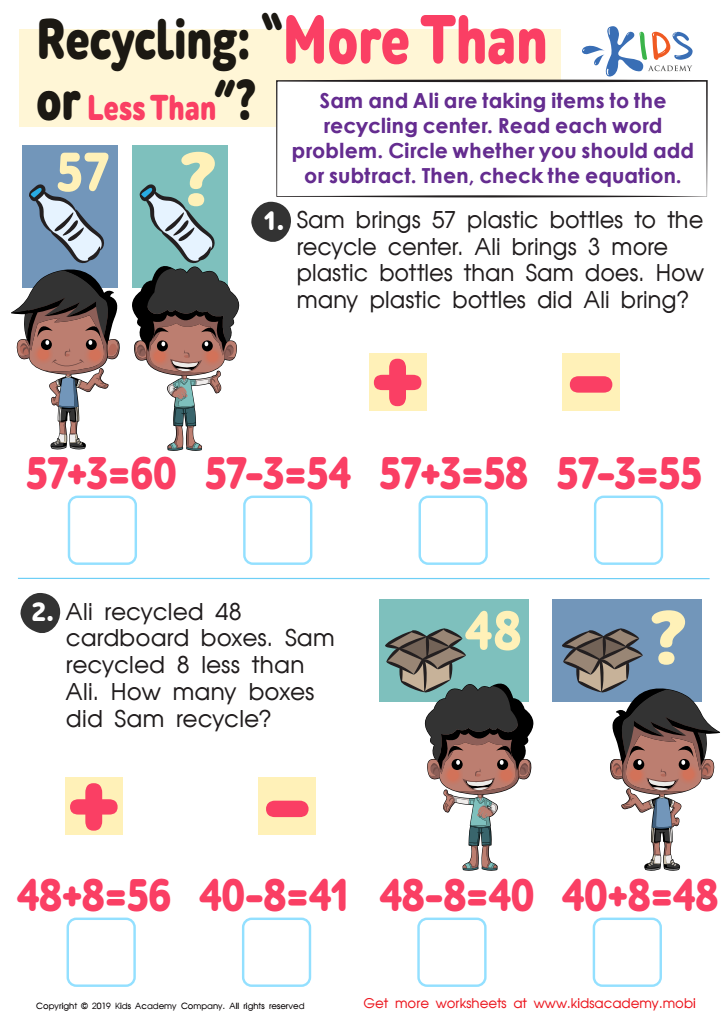
Recycling - More or Less Worksheet
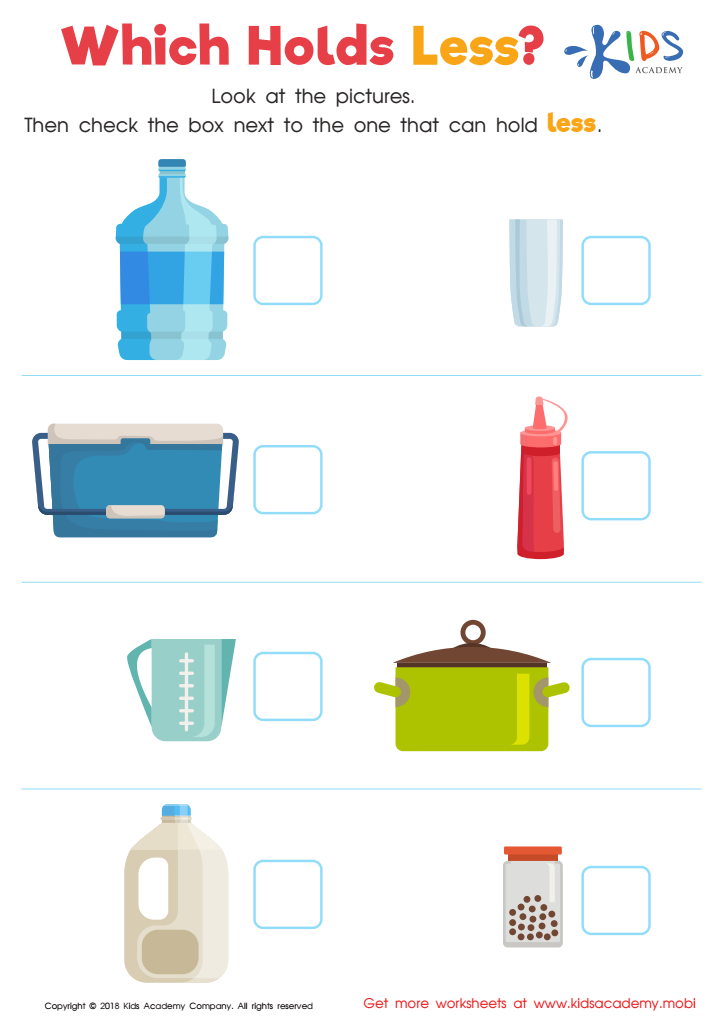
Which Holds Less? Worksheet






Comparing quantities is a foundational math skill that is crucial for young children's cognitive development. Parents and teachers should prioritize this for several reasons. Firstly, when children compare quantities, such as more vs. less or bigger vs. smaller, they start to understand the world around them in more quantifiable terms. This understanding forms the basis for later mathematical concepts including addition, subtraction, and understanding proportions.
Furthermore, comparing quantities fosters critical thinking and problem-solving skills. For example, if a child determines which pile of blocks is taller, they are engaging in observation, experimentation, and reasoning—all key components of cognitive development.
Moreover, language skills are enriched as children learn the vocabulary associated with comparing sizes and amounts, such as "more," "less," "equal," "greater than," and "smaller than." This not only boosts their mathematical language but also overall linguistic ability.
Social interactions also benefit; children often compare and discuss their findings with peers, fostering collaborative learning and communication skills. Additionally, early success in comparing quantities can build confidence and interest in math, setting a positive foundation for future learning.
Involvement in hands-on and practical activities concerning quantity comparison helps children develop fine motor skills and hand-eye coordination, crucial for their comprehensive development. These activities prepare them for real-life decisions and tasks, promoting both academic and everyday practical successes.








