
Enhance fine motor skills Worksheets for Ages 3-5
3 filtered results
Difficulty Level
Grade
Age
-
From - To
Subject
Activity
Standards
Welcome to our "Enhance Fine Motor Skills Worksheets" for children aged 3-5! These engaging and interactive worksheets are designed to support early learners in developing essential fine motor skills crucial for their growth and everyday tasks. Filled with fun activities such as tracing, cutting, and coloring, our worksheets help refine hand-eye coordination and dexterity while keeping children entertained. Perfect for preschool or home learning, each activity encourages creativity and independence, setting a strong foundation for future learning. Explore our vast collection and give your child the tools they need to succeed while making learning enjoyable and effective!
Favorites
With answer key
Interactive
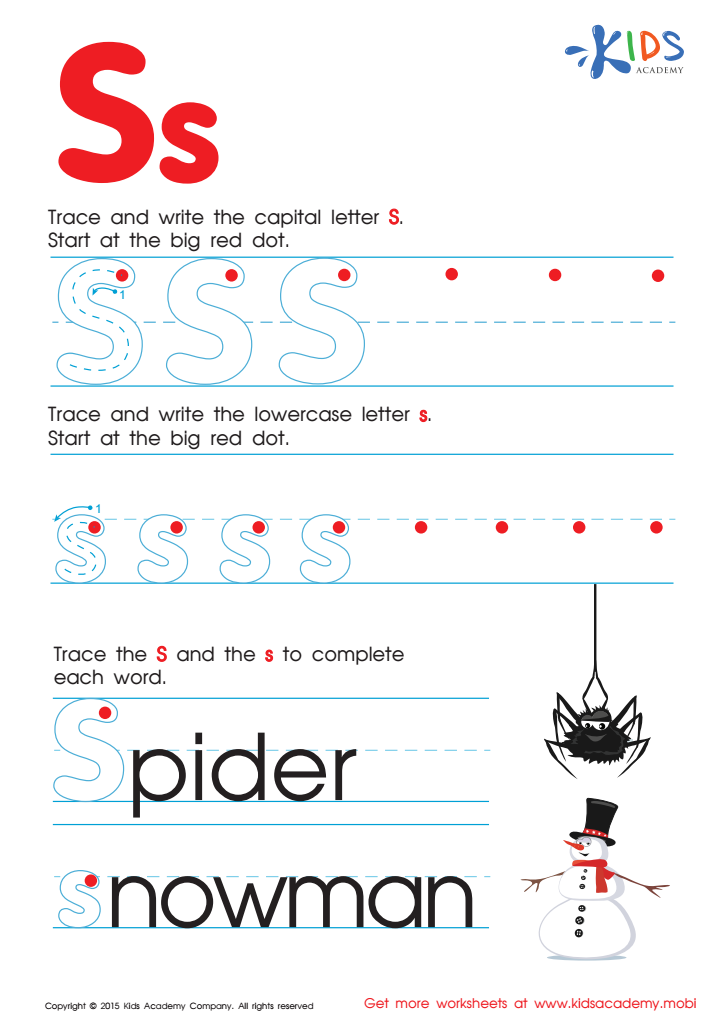
Letter S Tracing Page
Trace and write the capital and lowercase "S" on this ABC worksheet for kindergarten. Start with the big red dot and be careful. When you finish, help the spider and snowman in the pictures restore their words with the capital and lowercase letters. Continue learning the alphabet with Kids Academy.
 Assign to My Students
Letter S Tracing Page
Worksheet

Join Kids Academy for Free
Who is primarily going to use this learning content?








Enhancing fine motor skills in children aged 3-5 is crucial for their overall development and learning. These skills involve the coordination of small muscles in the hands and fingers, which are essential for activities like writing, buttoning shirts, and tying shoelaces. Early proficiency in fine motor tasks lays the groundwork for future academic success, particularly in literacy and numeracy.
Parents and teachers should prioritize fine motor development because it boosts children's self-confidence and independence. As children master tasks like drawing or building with blocks, they experience a sense of accomplishment that fosters a positive attitude toward learning. Additionally, these skills are linked to cognitive development; while practicing fine motor tasks, children enhance their problem-solving abilities and creativity.
Moreover, engaging children in fine motor activities promotes social interaction. Activities that involve sharing materials, like crafts or games, encourage teamwork and communication with peers. This skill development not only prepares children for school-related tasks but also equips them with essential life skills. By focusing on fine motor skills during these critical early years, parents and teachers can help cultivate happy, competent, and confident learners who are ready to thrive in school and beyond.








