Punctuation understanding Worksheets for Ages 3-5
4 filtered results
-
From - To
Introduce your little ones to the world of punctuation with our Punctuation Understanding Worksheets for Ages 3-5! Designed with young learners in mind, these engaging worksheets help children grasp the basics of punctuation marks such as periods, question marks, and exclamation points. Through fun and interactive activities, kids can enhance their reading and writing skills, while also developing an early understanding of grammar. Perfect for parents and teachers, these printable resources make learning punctuation both enjoyable and educational. Foster a love for language and set the foundation for future literacy success with our expertly crafted worksheets!
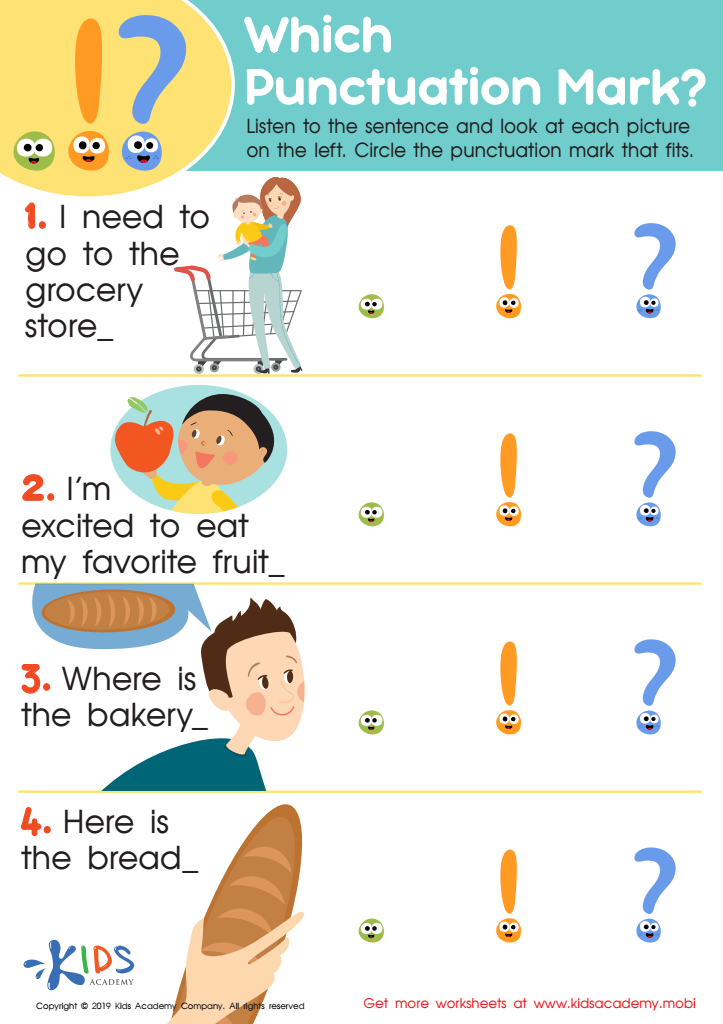
Which Punctuation Mark Worksheet
 Assign to My Students
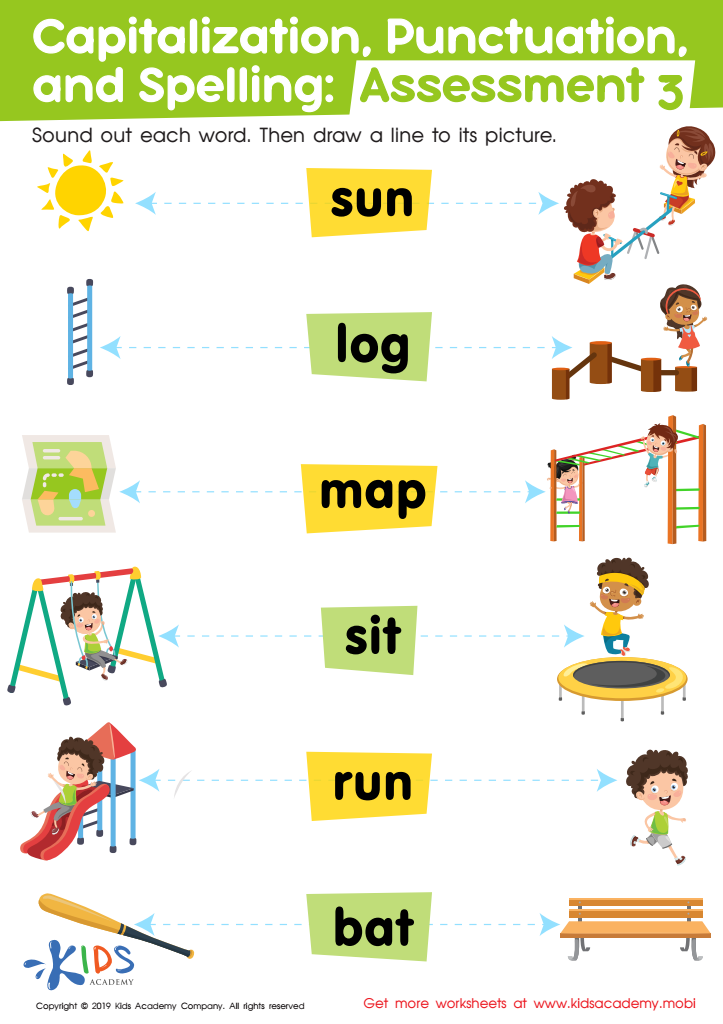
Capitalization. Punctuation. Spelling. Assessment 3 Worksheet
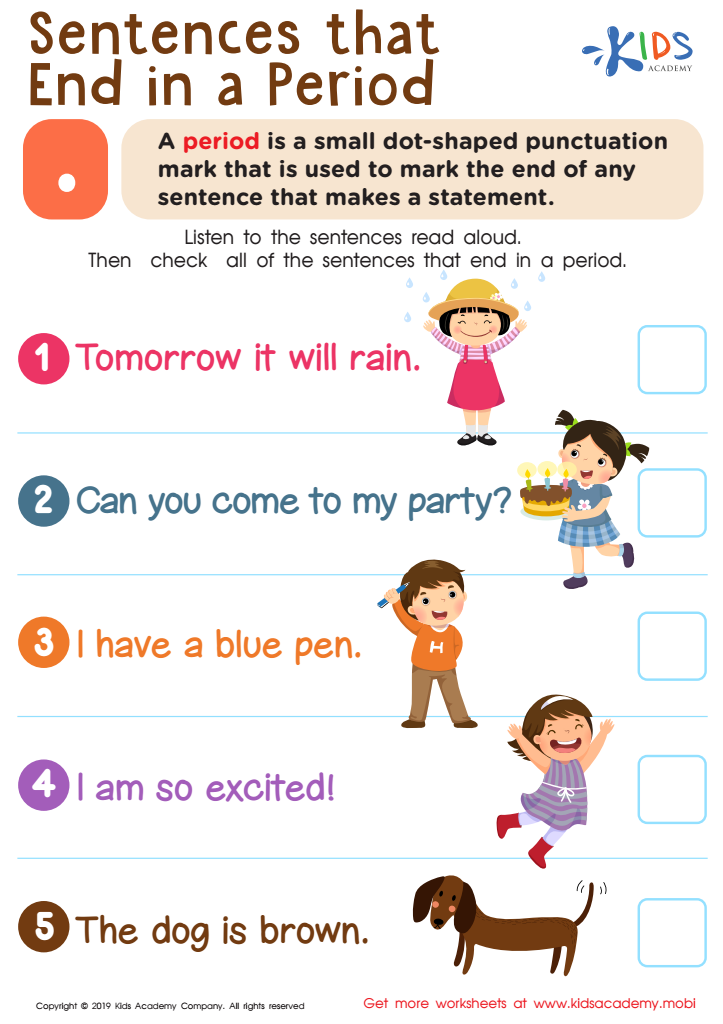
Sentences That End in a Period Worksheet
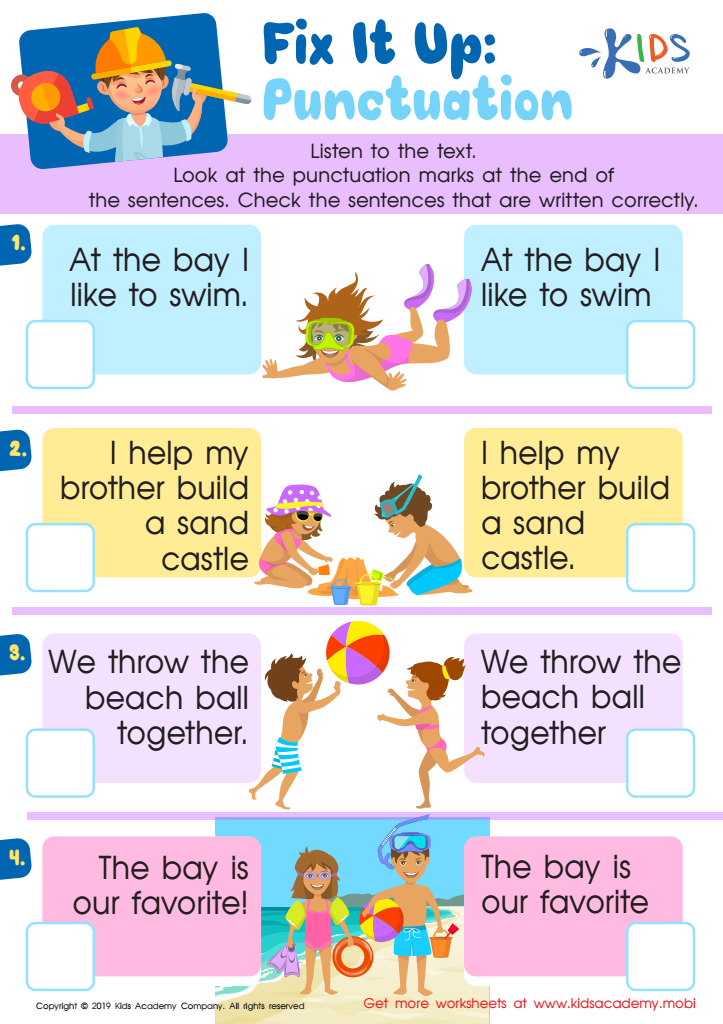
Fix Punctuation Worksheet








Punctuation may seem advanced for children aged 3-5, but introducing basic concepts can have significant long-term benefits. At this age, children are developing foundational language and literacy skills. Understanding punctuation fosters early reading comprehension, as it helps them grasp the natural rhythm and flow of sentences. For instance, pauses created by periods or commas teach kids to take breaths in the right places, making listening and storytelling more engaging.
Learning punctuation early also aids in social communication. It allows children to express emotions and intentions more clearly, whether through speaking or writing. For example, exclamation marks can convey excitement, while question marks indicate curiosity. These small, but crucial, cues help children develop empathy and nuanced expression.
Furthermore, early punctuation education boosts cognitive skills. It engages children's attention to detail and reinforces pattern recognition. By recognizing punctuation marks and understanding their use, kids enhance their memory and problem-solving abilities.
Lastly, familiarity with punctuation prepares children for formal education. As they transition to kindergarten and beyond, a basic understanding of punctuation can give them a head start in phonics, reading programs, and writing tasks. It provides a seamless bridge to more complex literacy skills, setting the foundation for academic success.








