
Understanding adjectives Worksheets for Ages 3-5
3 filtered results
Difficulty Level
Grade
Age
-
From - To
Subject
Activity
Standards
Our "Understanding Adjectives Worksheets for Ages 3-5" are designed to introduce young learners to the exciting world of adjectives. Through fun and engaging activities, children will discover how to describe objects, animals, and people using descriptive words. These worksheets are perfect for helping kids develop their language and observational skills, giving them a strong foundation for future learning. Easy to follow and enjoy, our worksheets incorporate vibrant images and simple exercises that are ideal for preschoolers. Download now to make learning adjectives an enjoyable experience for your little one!
Favorites
With answer key
Interactive
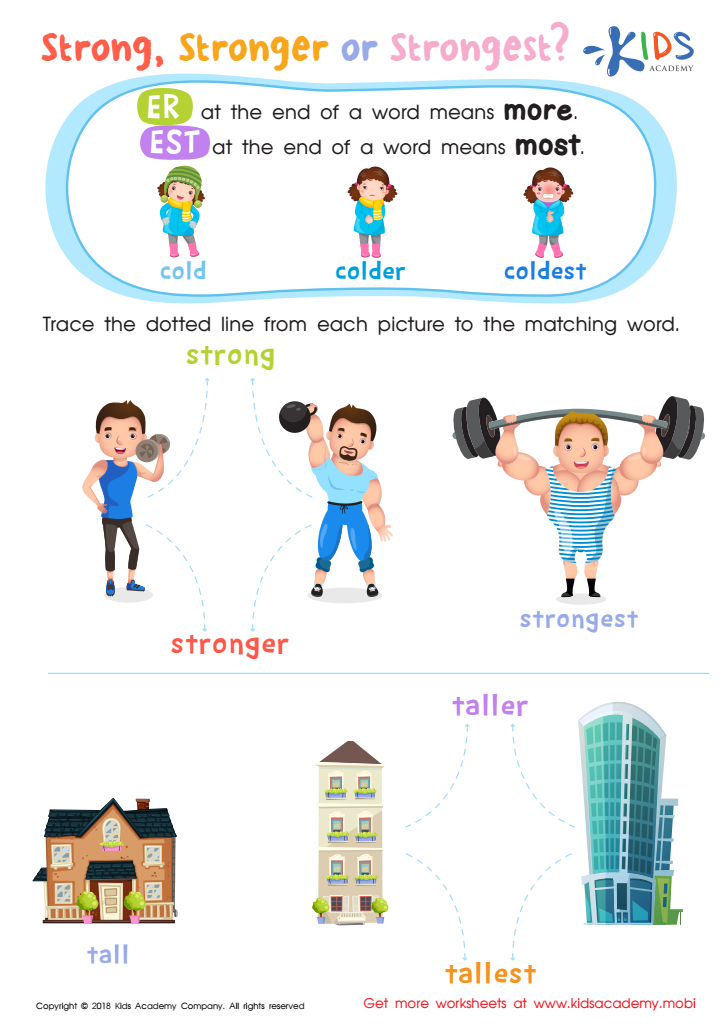
Strong or Stronger? Worksheet
Help your child understand the concept of size gradients with a fun worksheet. Explain to them that adding "-er" to words means "more" and "-est" means "most". Point to the pictures and have your little one trace the dotted line to the corresponding words to learn the concept of highest and lowest.
 Assign to My Students
Strong or Stronger? Worksheet
Worksheet
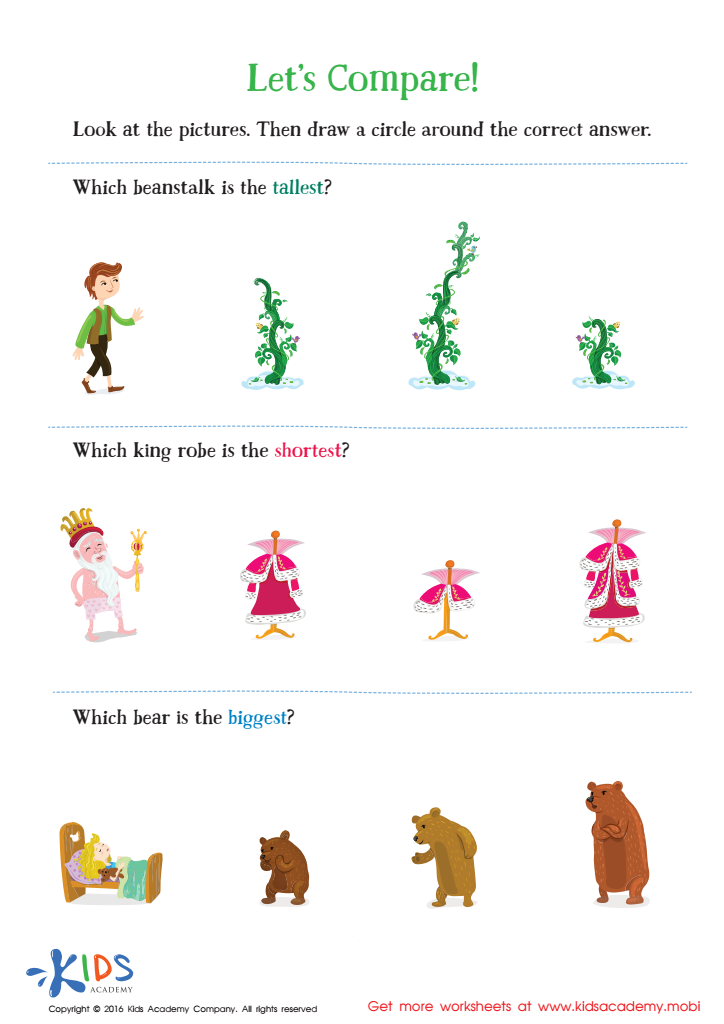
Fairy Tale Worksheet: Let's Compare
Preschoolers need to recognize different sizes of objects. This worksheet combines fun fairy tales with size practice, helping them read, problem solve, and sort through pictures. Your child will love the images and be eager to complete it. Enhance their learning by talking about the tales to build comprehension.
Fairy Tale Worksheet: Let's Compare
Worksheet
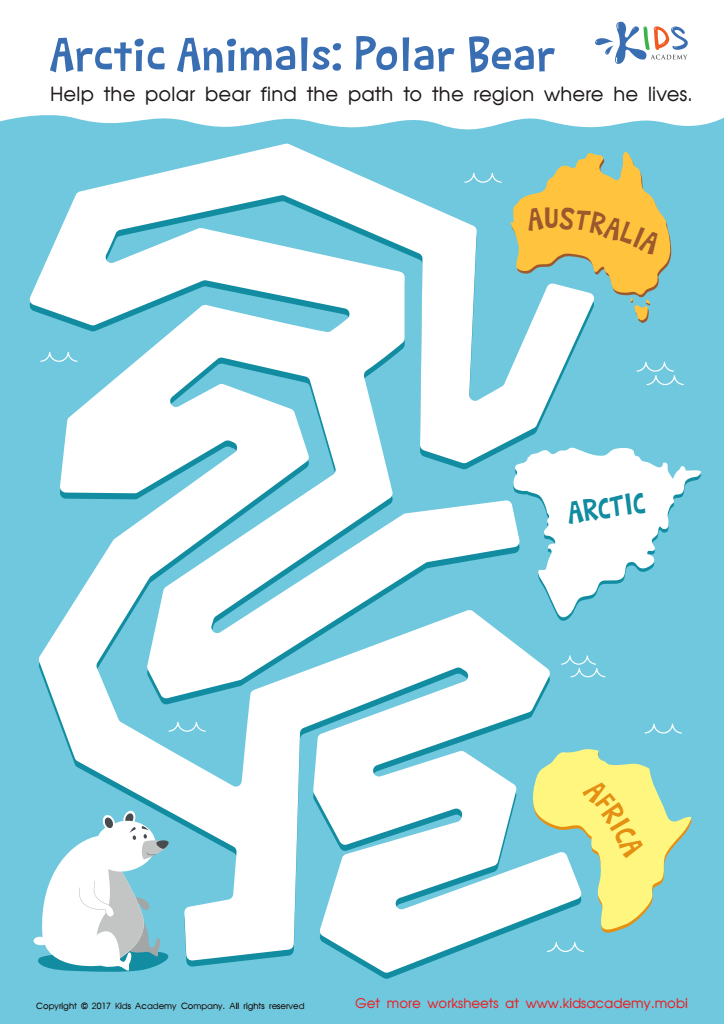
Arctic Animals: Polar Bear Worksheet
Oh no! Our polar bear friend is lost! Let's help him find his way back to the arctic with this fun worksheet. It reinforces science and social studies and kids will learn about the climate and habitats of different continents. They'll also develop logical reasoning skills! You can enrich the experience by looking up pictures of real polar bears after the worksheet is complete.
Arctic Animals: Polar Bear Worksheet
Worksheet
Join Kids Academy for Free
Who is primarily going to use this learning content?



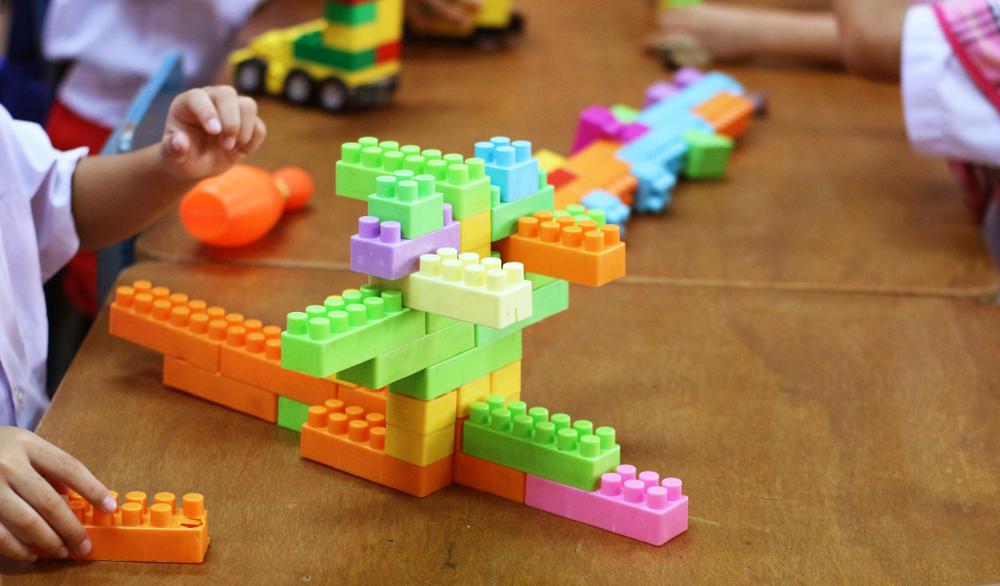



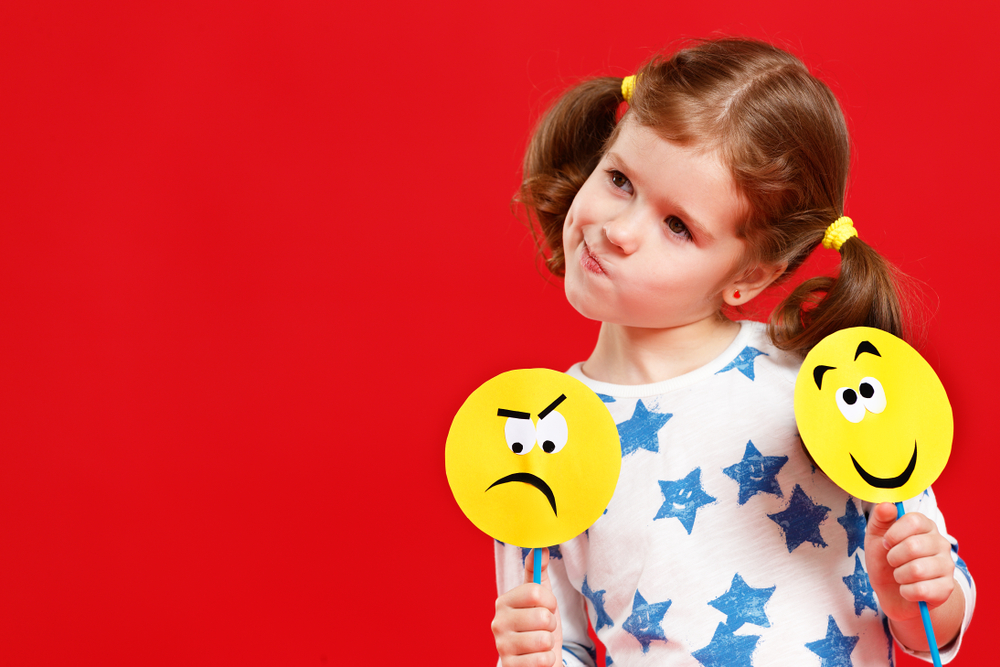
Understanding adjectives is crucial for young children, especially between the ages of 3-5, as it lays the foundation for effective communication and cognitive development. At this formative stage, children are rapidly expanding their vocabulary and communication skills. Adjectives enrich their language use, enabling them to describe people, places, objects, and experiences with greater specificity and nuance. This skill helps them articulate their needs, feelings, and observations more clearly, fostering better interactions with peers and adults.
Moreover, exposure to adjectives enhances cognitive development. When children learn to identify and use descriptive words, they engage in higher-order thinking processes, such as categorization, differentiation, and reasoning. For instance, distinguishing between a "red ball" and a "blue ball" helps with color recognition and develops their ability to differentiate and categorize diverse attributes.
Pedagogically, understanding adjectives can bolster emergent literacy skills. Children who grasp descriptive language are better prepared for reading and writing activities, as they can comprehend and create more detailed and vivid stories. Additionally, a well-developed vocabulary is linked to improved reading comprehension and academic success later on. Thus, parents and teachers should emphasize the importance of adjectives to support holistic language development and set the stage for future learning milestones.








