Understanding comparisons Worksheets for Ages 3-5
3 filtered results
-
From - To
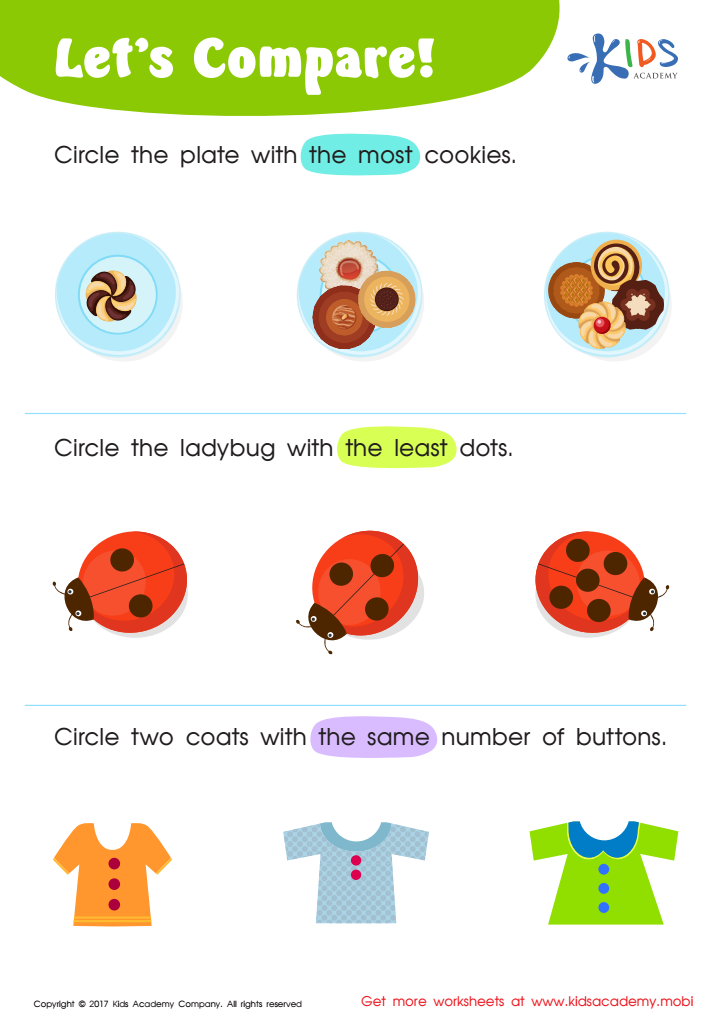
Understanding Comparisons Worksheets for Ages 3-5 are designed to introduce young children to basic concepts of comparison, such as size, quantity, and length. These engaging, colorful worksheets make learning fun while helping kids develop critical thinking and observational skills. Activities include comparing objects, identifying similarities and differences, and making judgments about various characteristics. By using these worksheets, children will enhance their cognitive abilities, laying a solid foundation for future mathematical learning. Ideal for parents and educators, these resources support early developmental milestones and foster a love for learning in preschool-aged children.
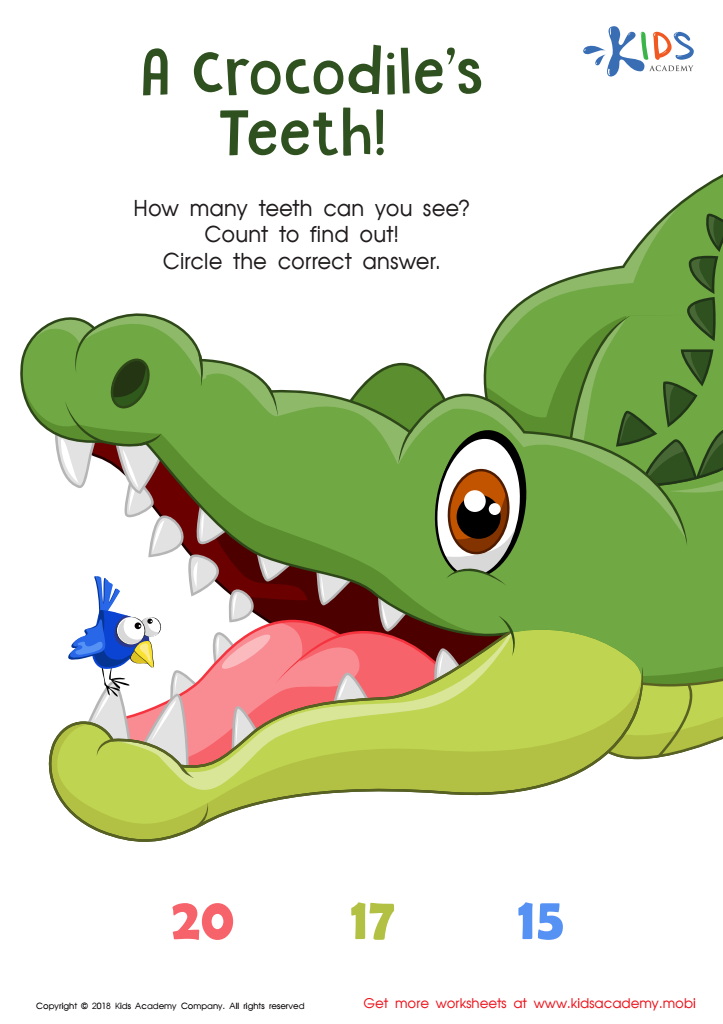
A Crocodile's Teeth Worksheet
 Assign to My Students
Matching: Classifying Toys by Size Worksheet
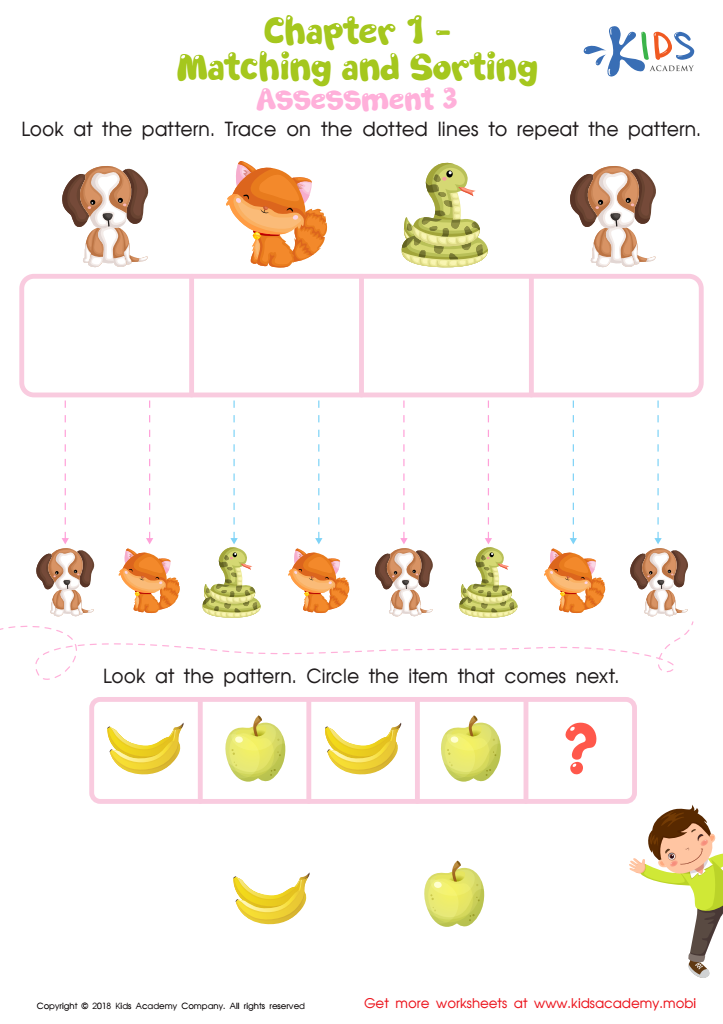
Matching and Sorting for Preschool: Assessment 3 Worksheet






Understanding comparisons is crucial for children aged 3-5 as it forms the foundation for their cognitive development and mathematical reasoning. During these formative years, kids transition from perceiving the world solely through sensory experiences to recognizing relationships and making judgments based on those assessments. By learning to compare sizes, quantities, shapes, and patterns, children develop critical thinking skills essential for day-to-day problem-solving and more complex mathematical concepts in later education.
Teachers and parents who introduce comparison activities support language development, as children are encouraged to use descriptive words like "bigger," "smaller," "taller," or "shorter." This not only boosts vocabulary but also aids in constructing sentences and improving communication skills. Comparing also encourages observational abilities and attention to detail, teaching focus and perseverance.
Furthermore, engaging in such tasks enhances memory as kids hold multiple attributes in their minds to draw conclusions. It nurtures their confidence when they succeed, building a positive attitude towards learning. Additionally, these skills have real-world applications; they help children navigate their environment and make informed decisions.
By emphasizing understanding comparisons, parents and teachers are laying a robust educational foundation that will support all areas of a child’s overall development, nurturing their intellectual growth and love for learning.








