Understanding measurement units Worksheets for Ages 3-5
3 filtered results
-
From - To
Explore our engaging "Understanding Measurement Units Worksheets" designed for children ages 3-5. These interactive activities introduce young learners to basic measurement concepts, including length, weight, and volume, using vibrant visuals and playful themes. Each worksheet encourages hands-on practice, promoting early math skills through fun, relatable examples. As children progress, they develop a foundational understanding of measurement that sets the stage for future learning. Perfect for parents and teachers alike, these printable resources offer a convenient way to support early childhood education. Help your little ones master measurement units while having a great time exploring the world around them!
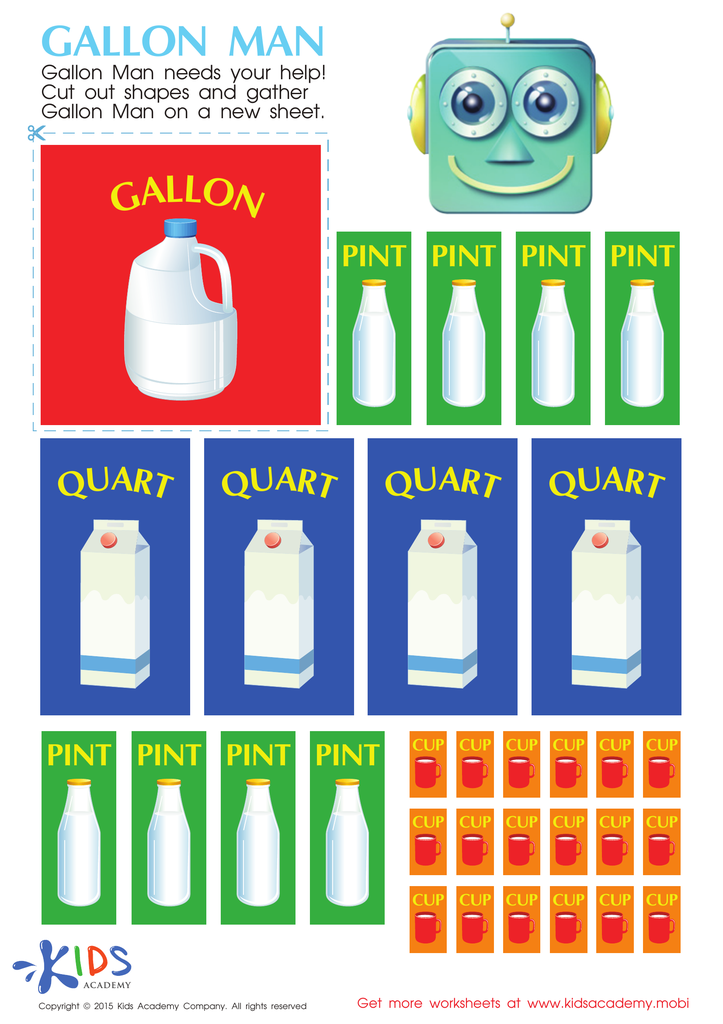
Cups, Pints and Quarts With Gallon Man Worksheet
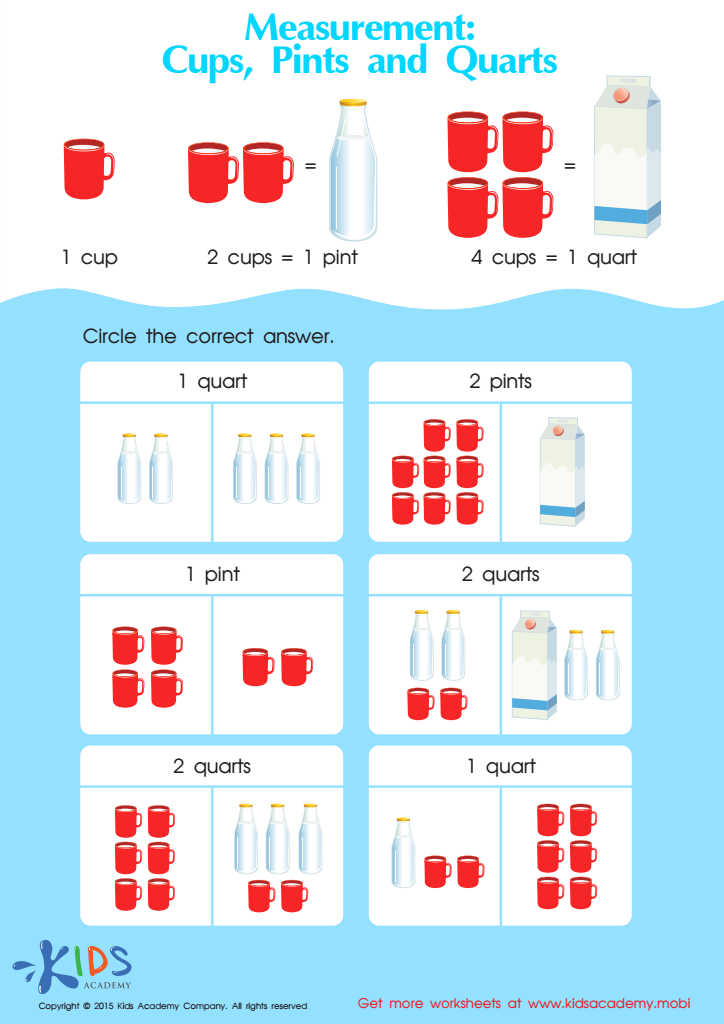
Cups, Pints and Quarts Worksheet
 Assign to My Students
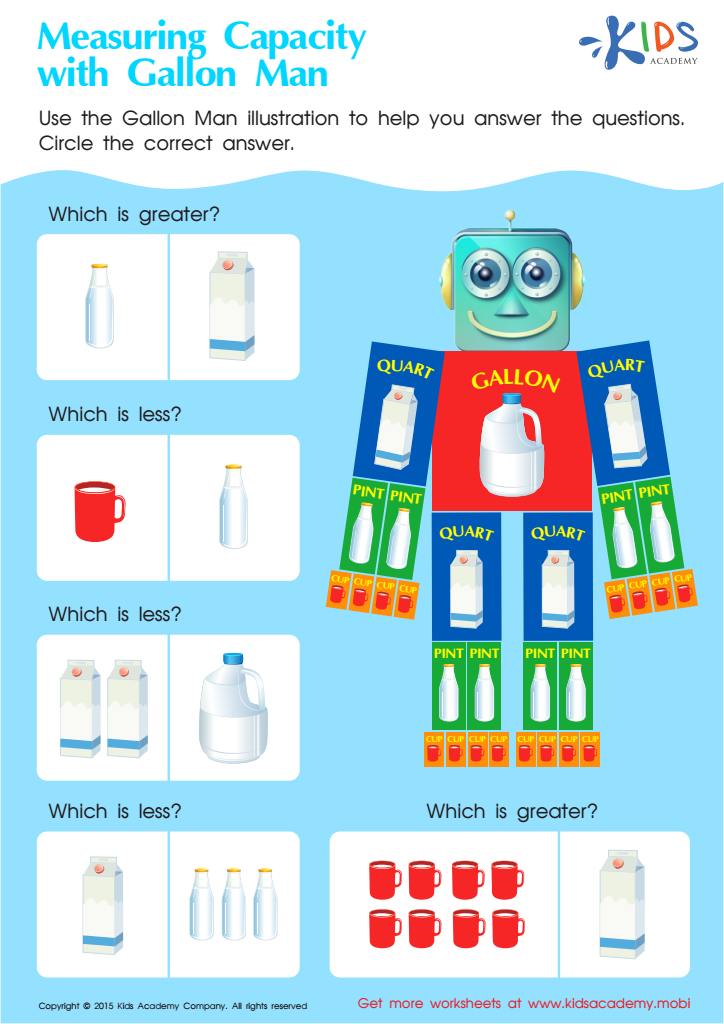
Measurement: Measuring Capacity with Gallon Man Worksheet






.jpg)
Understanding measurement units is crucial for children aged 3-5 as it lays the foundation for their mathematical development and practical life skills. During these formative years, children are naturally curious about the world around them, and introducing them to measurement concepts enhances their exploration and play.
Measurement units help children make sense of size, volume, length, and weight. For instance, when baking, measuring ingredients introduces concepts of quantity and proportion. In play, children learn to compare sizes through toys or blocks, fostering critical thinking. Engaging with these concepts also develops spatial awareness and problem-solving skills, vital for later academic success.
Moreover, early exposure to measuring allows children to communicate more effectively with others. Understanding terms like "tall," "short," "heavy," and "light" equips them with vocabulary essential for engaging discussions and expressing their thoughts clearly.
Parents and teachers should actively incorporate measurement activities into daily routines. Simple everyday experiences, such as measuring toys or comparing objects, can reinforce learning. By nurturing these skills early on, adults can help cultivate confident, inquisitive learners, setting the stage for a strong foundation in mathematics and broader cognitive development. Investing time in understanding measurement can significantly enrich a child's early educational journey.








