Explore our "Understanding Quantities Worksheets" designed specifically for children ages 3-5! These engaging worksheets help young learners grasp fundamental math concepts by focusing on comparing, counting, and recognizing quantities. Through colorful visuals and interactive activities, children will enhance their numeracy skills while having fun! Our materials promote cognitive development, encouraging little ones to make connections between numbers and the world around them. Ideal for both classroom and home settings, these worksheets support early learning by fostering critical thinking and problem-solving abilities. Equip your child with essential math skills today and lay a strong foundation for their educational journey!
Check out this FREE "Understanding Quantities" Trial Lesson for age 3-5!

Adding with 3's

Favorites
With answer key
Interactive
  • 3-5
  • Understanding Quantities
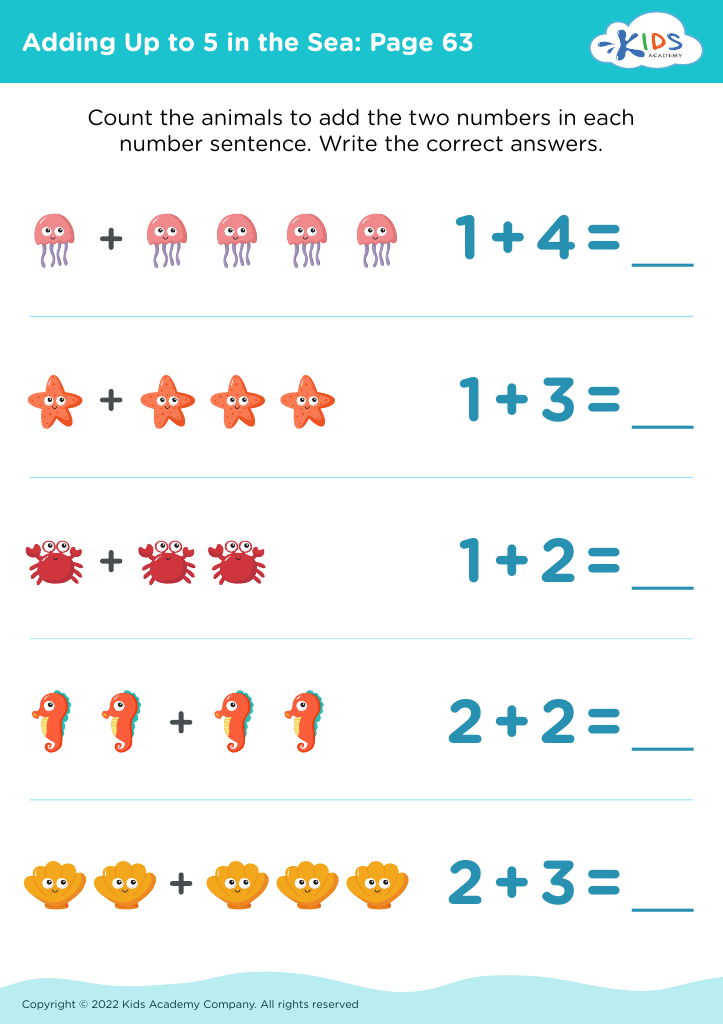
Adding Up to 5 in the Sea: Page 63
Worksheet
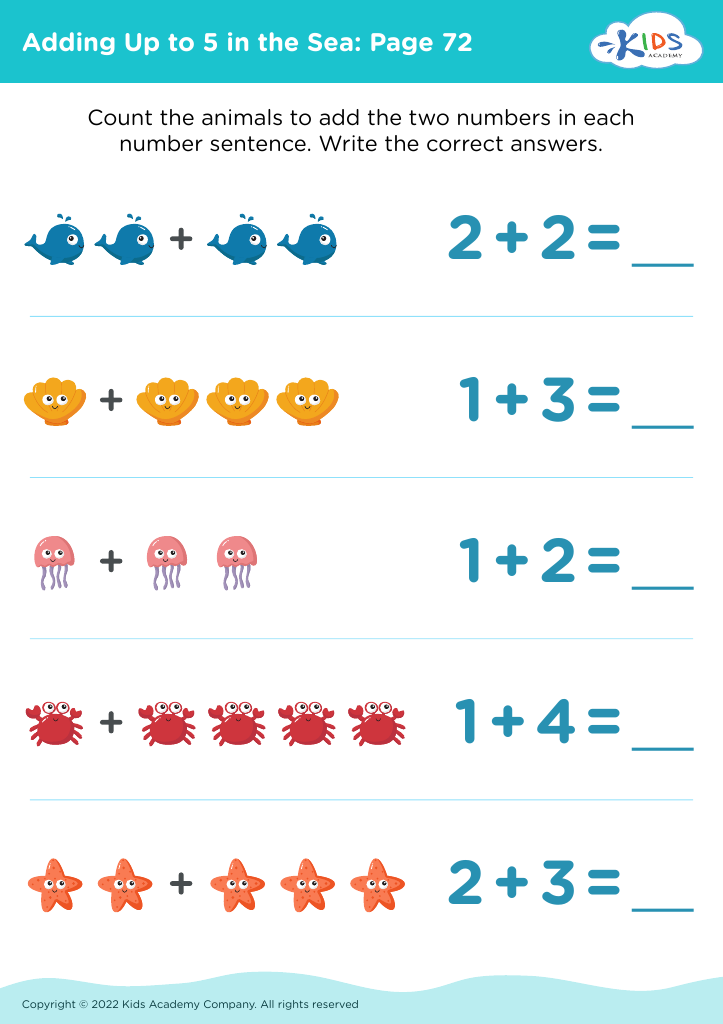
Adding Up to 5 in the Sea: Page 72
Worksheet
Catch the Fish: +3 Worksheet

Catch the Fish: +3 Worksheet

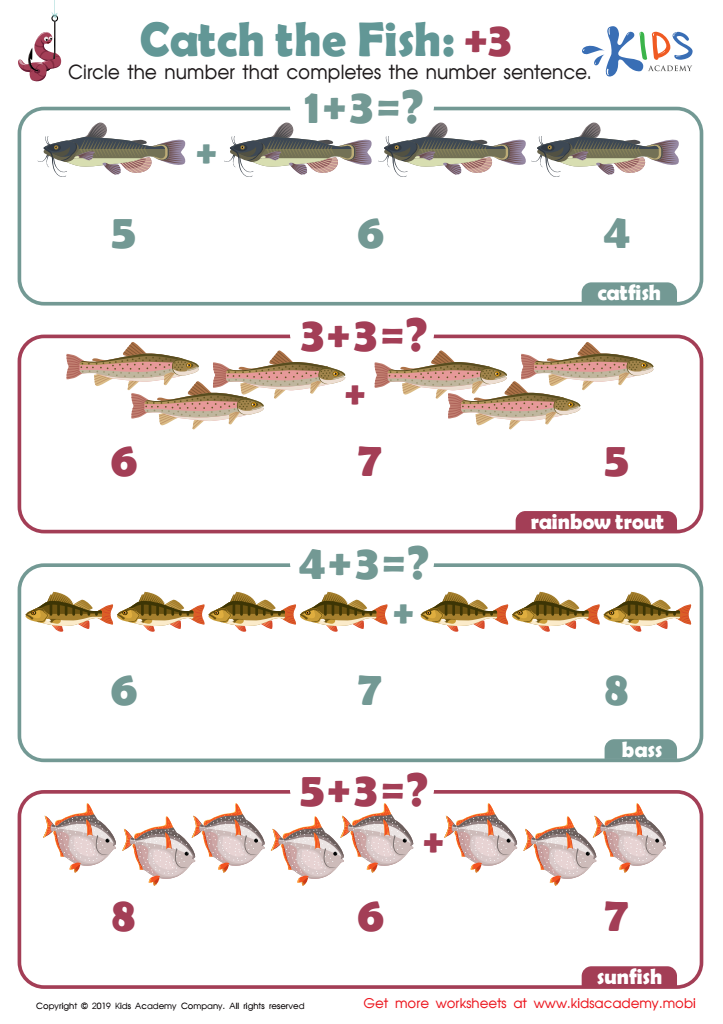
Math may be tricky for your child, with all the numbers and calculations. This worksheet can help them brush up. Ask them to identify the objects in the picture, then count them and help them circle the right number to complete the sentence. It's a simple and effective way to improve math skills.
Catch the Fish: +3 Worksheet
Worksheet
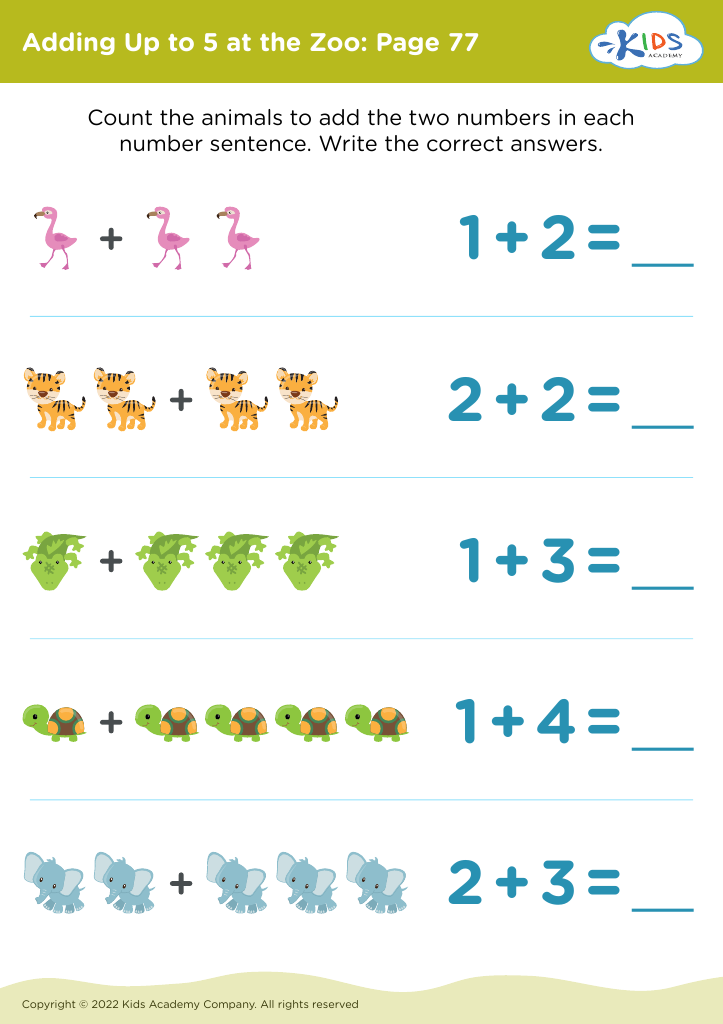
Adding Up to 5 at the Zoo: Page 77
Worksheet
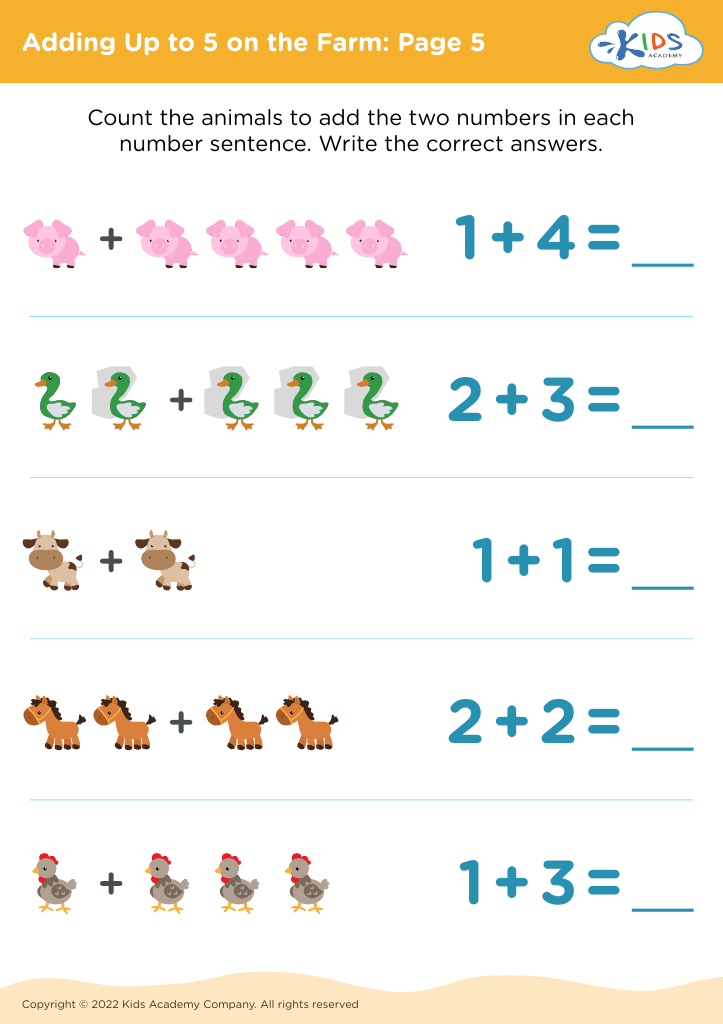
Adding Up to 5 on the Farm: Page 5
Worksheet
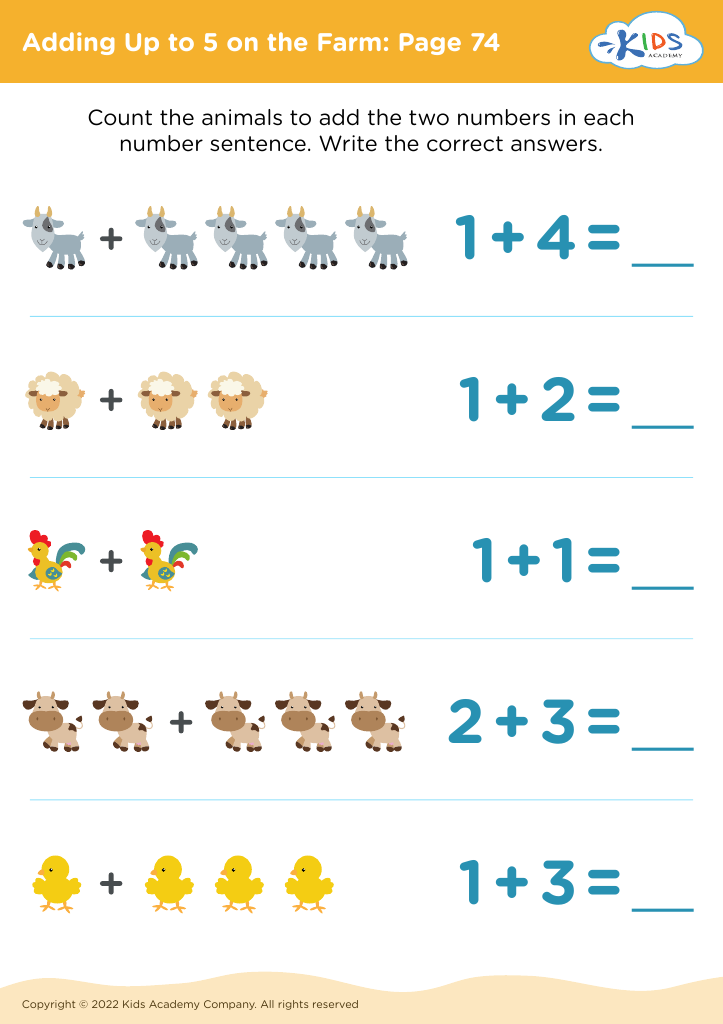
Adding Up to 5 on the Farm: Page 74
Worksheet
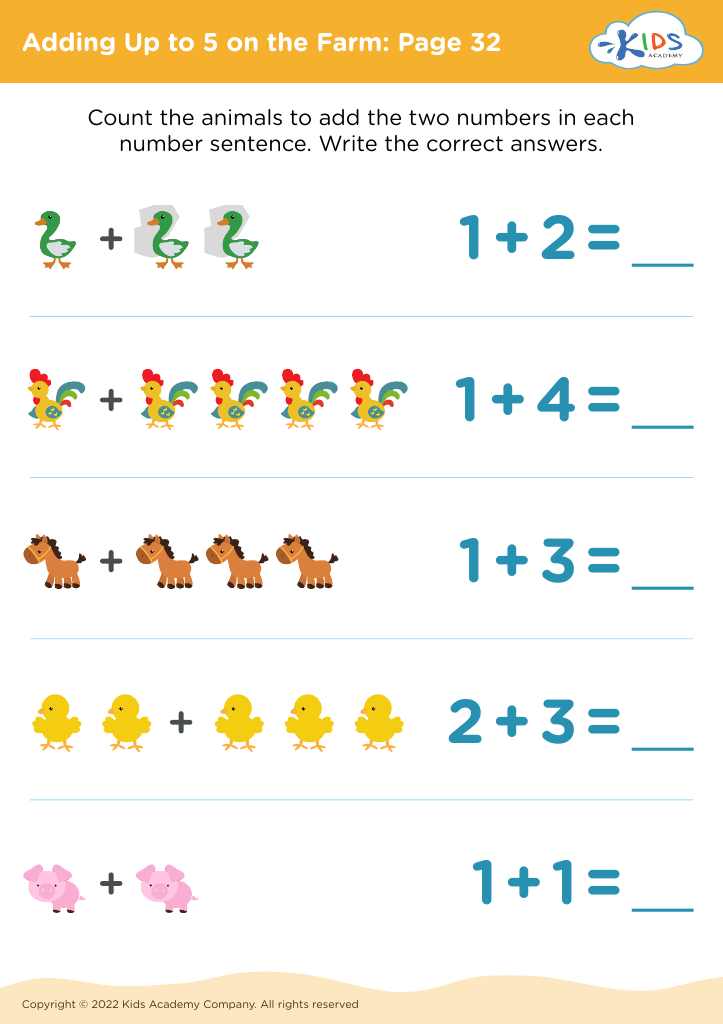
Adding Up to 5 on the Farm: Page 32
Worksheet
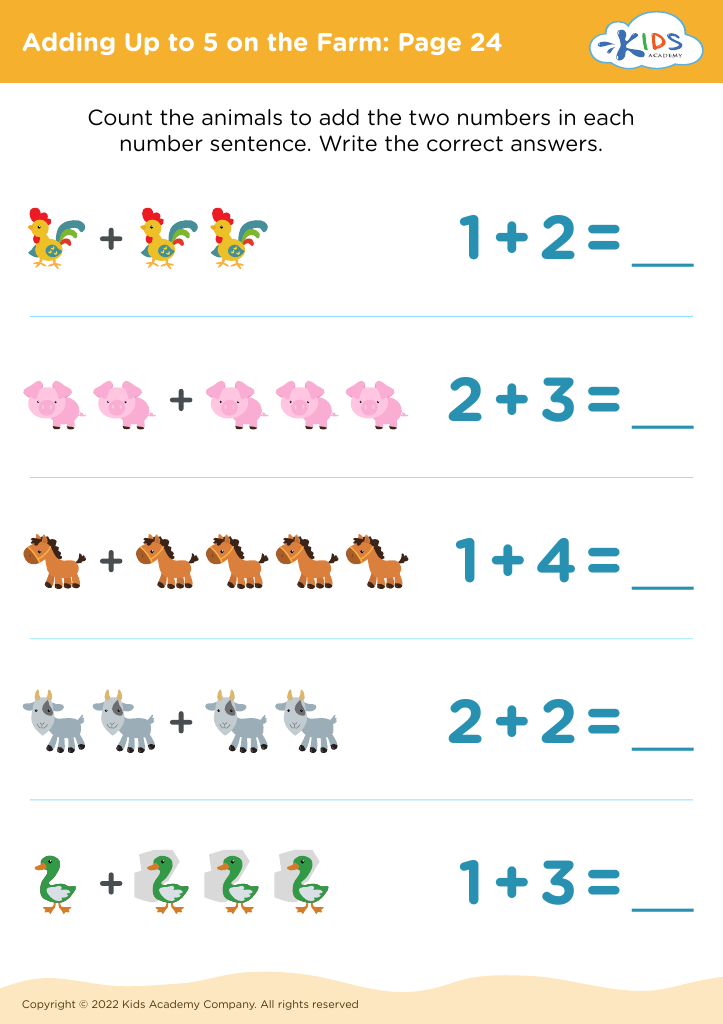
Adding Up to 5 on the Farm: Page 24
Worksheet
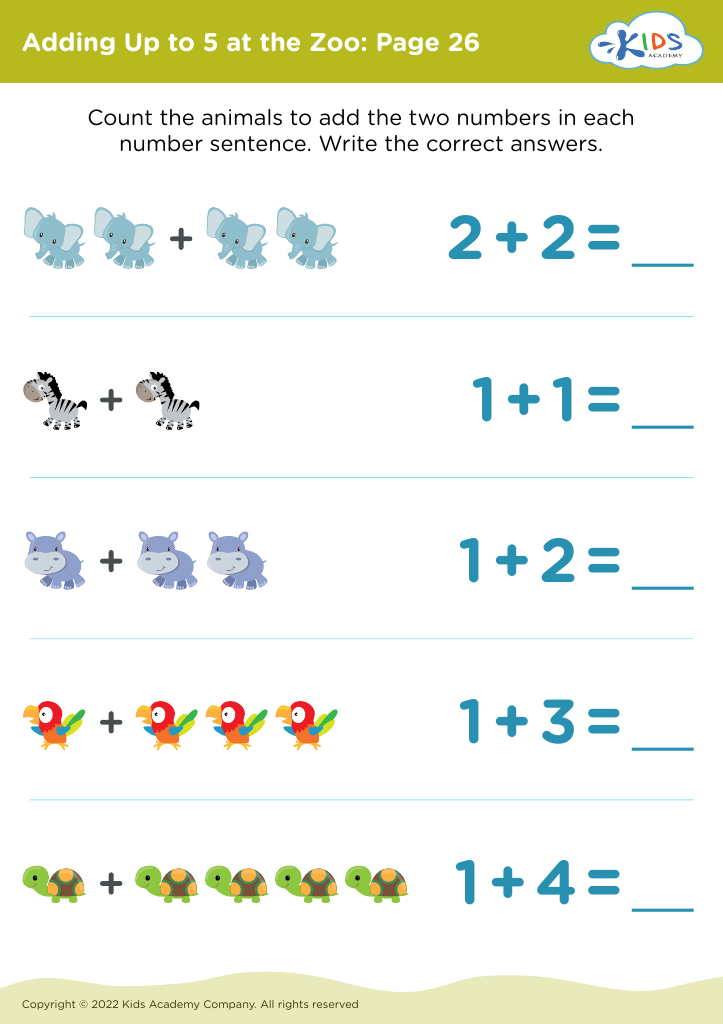
Adding Up to 5 at the Zoo: Page 26
Worksheet
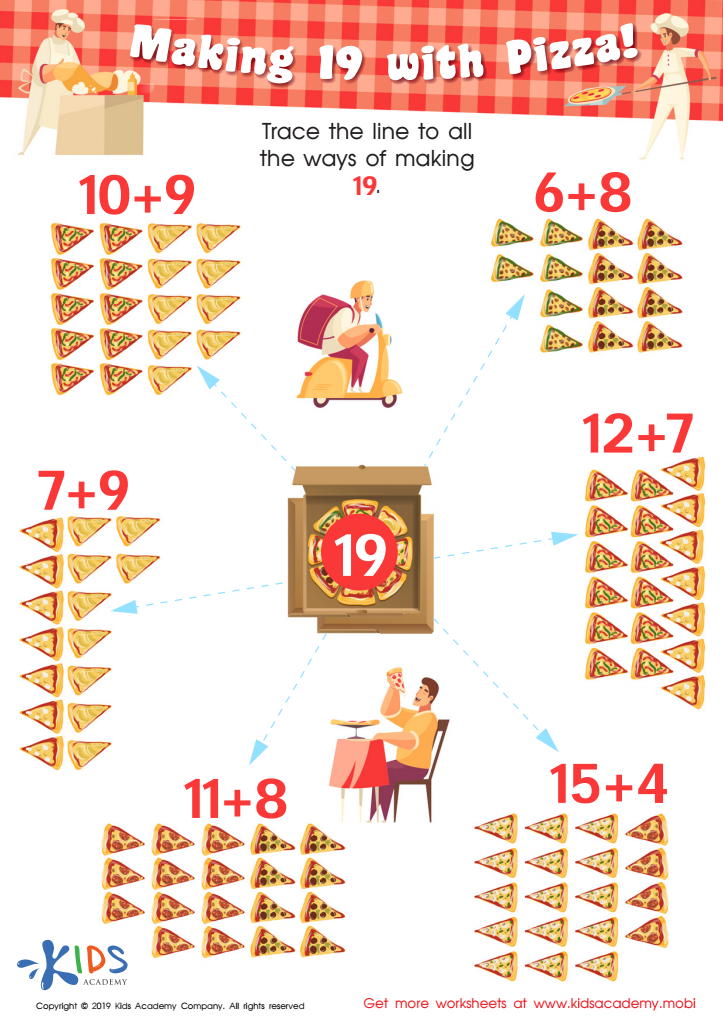
Making 19 with Pizza! Worksheet
Making 19 with Pizza! Worksheet
Who loves pizza? Your kids do! Next time you need to teach them math, make it fun by combining it with something they enjoy. This worksheet uses a pizza-themed problem to help them practice solving equations. Have them trace the line to figure out how to make 19. It's a great way to make learning math fun!
Making 19 with Pizza! Worksheet
Worksheet
Adding Up to 5 with Busy Bugs: Page 50
Worksheet
Adding Up to 5 with Busy Bugs: Page 29
Worksheet
More or Less PDF Printable Worksheet

More or Less Size Worksheet

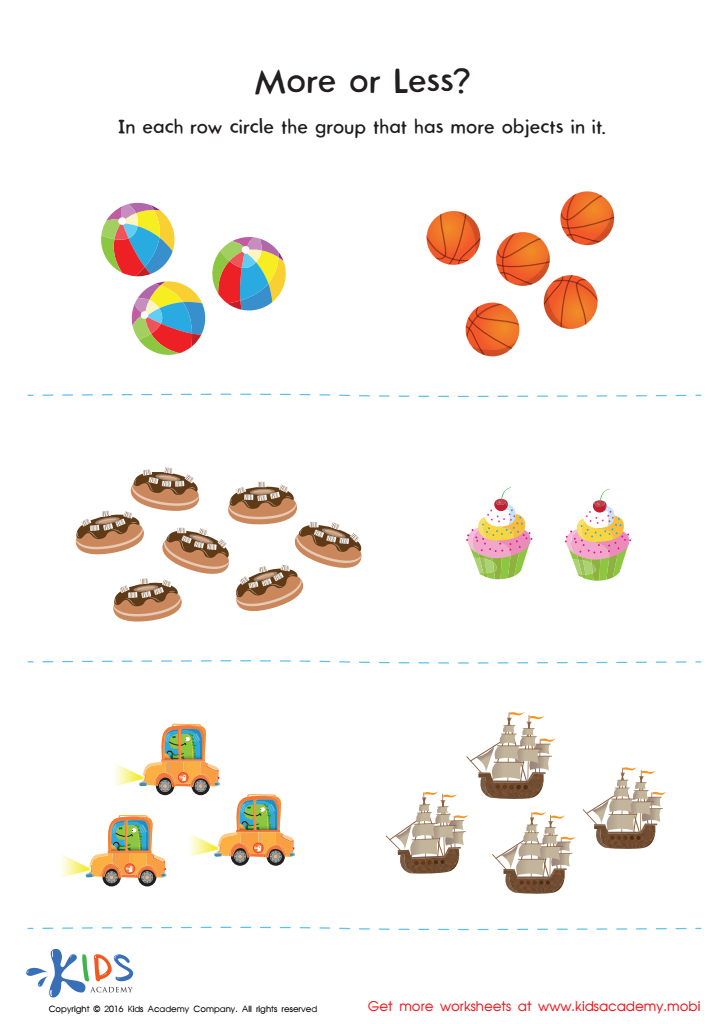
Try this "More or Less" PDF printable worksheet to help them out!
More or Less Size Worksheet
Worksheet
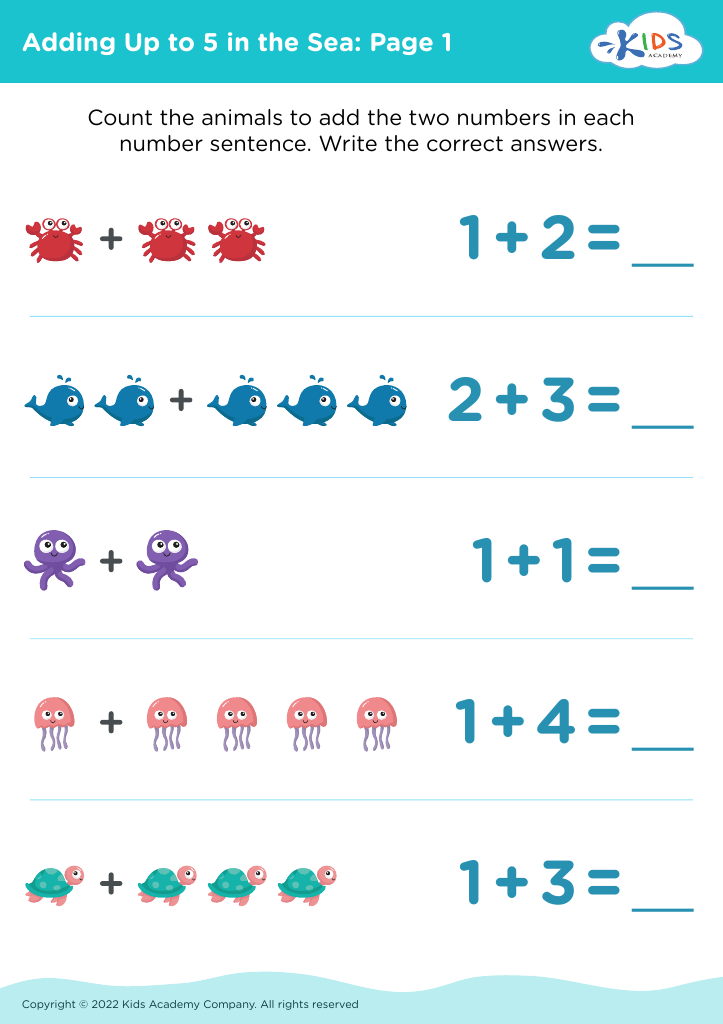
Adding Up to 5 in the Sea: Page 1

Adding Up to 5 in the Sea: Page 1

Adding Up to 5 in the Sea: Page 1
Worksheet
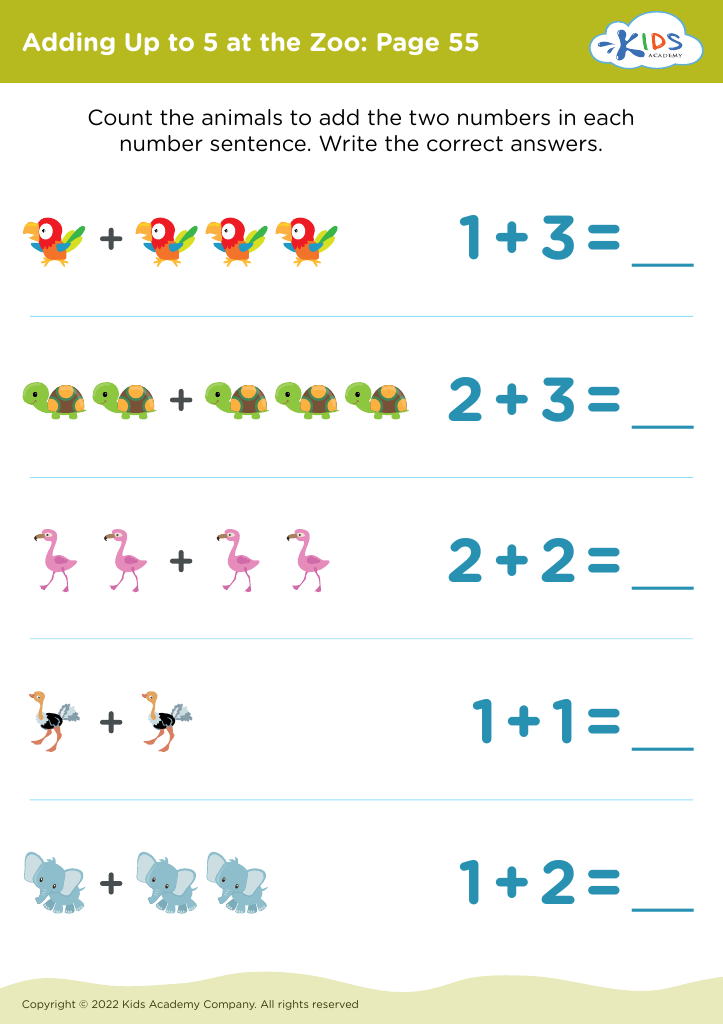
Adding Up to 5 at the Zoo: Page 55
Worksheet
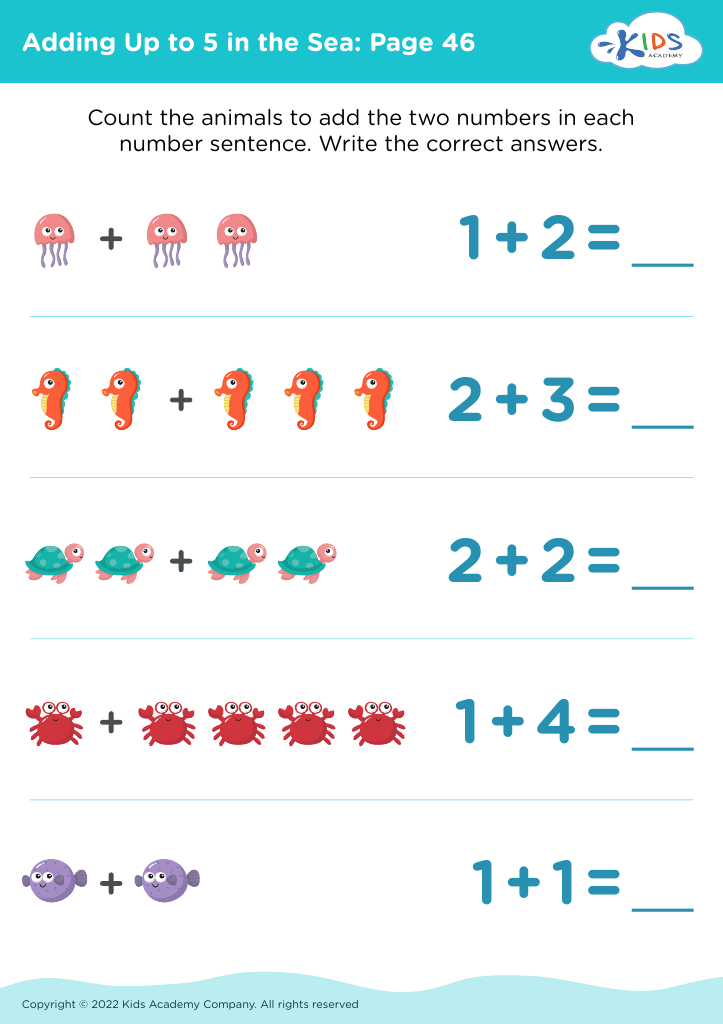
Adding Up to 5 in the Sea: Page 46
Worksheet
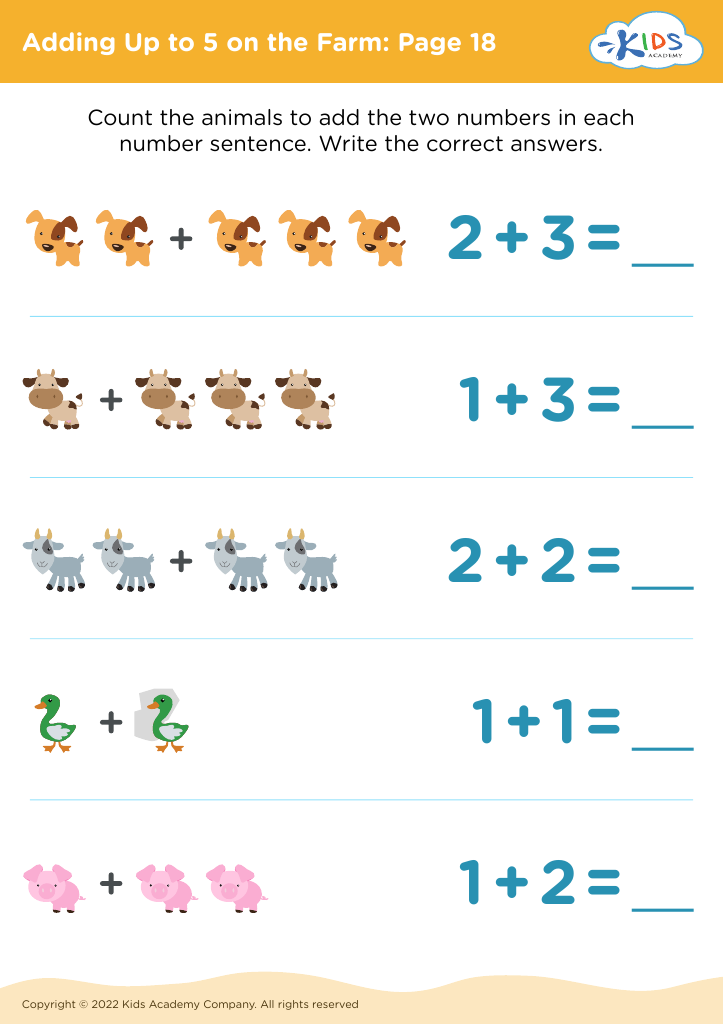
Adding Up to 5 on the Farm: Page 18
Worksheet
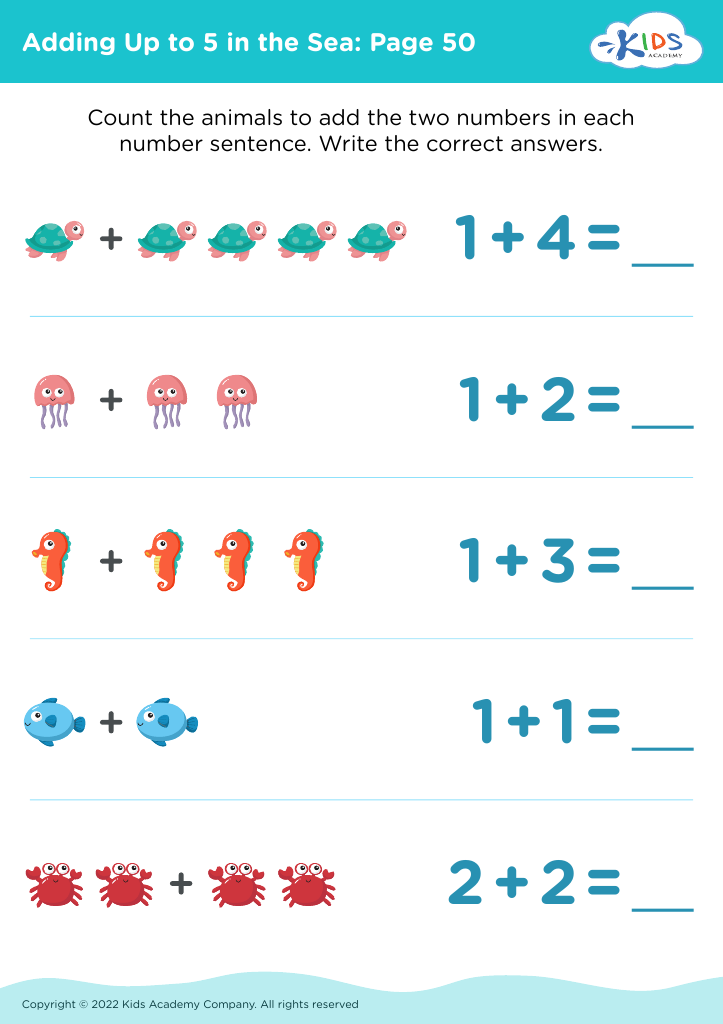
Adding Up to 5 in the Sea: Page 50
Worksheet
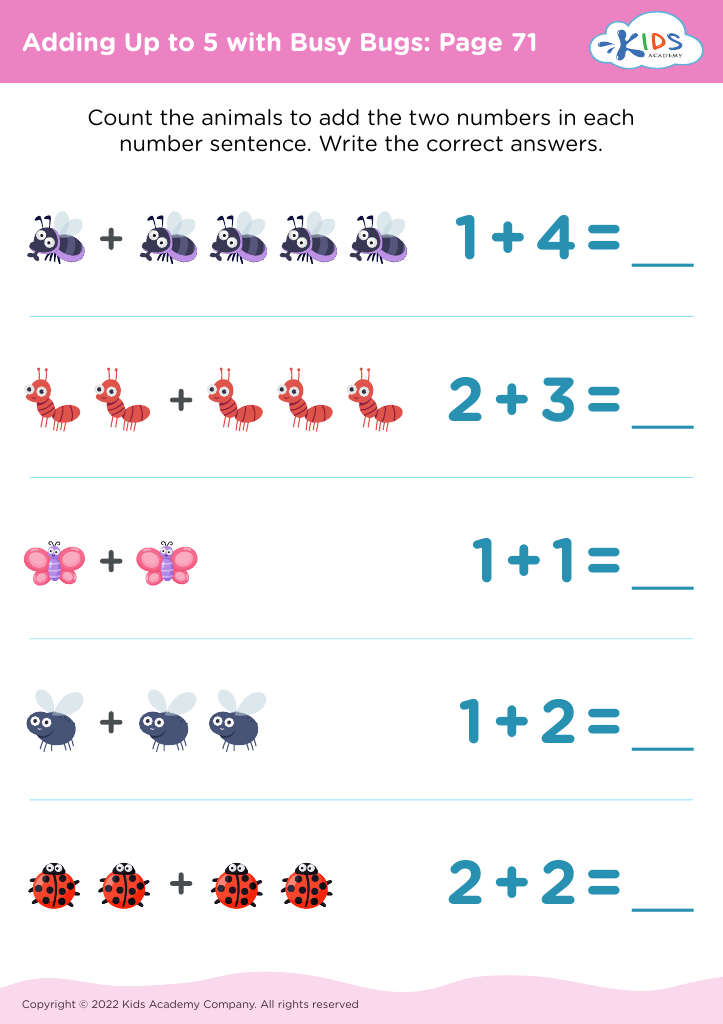
Adding Up to 5 with Busy Bugs: Page 71
Worksheet
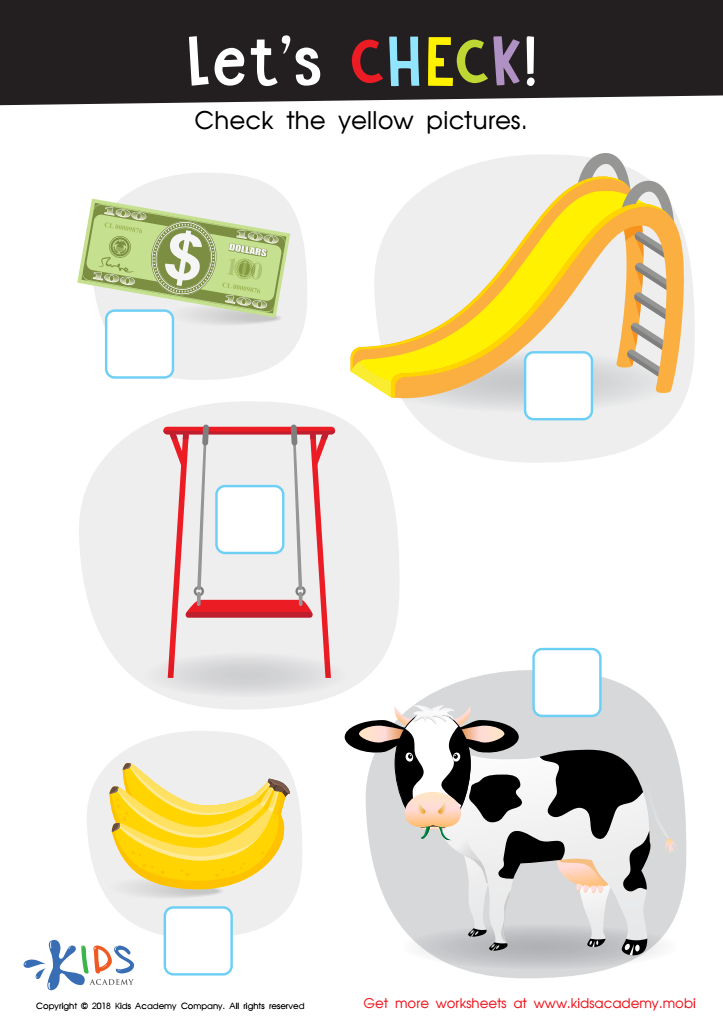
Let's Check! Worksheet
Let's Check! Worksheet
Before starting this coloring sheet, ask your kids to name some colors they know, or point to familiar items and ask them what color they are. Check if they can correctly identify the pictures of yellow objects. Then, you can begin the worksheet.
Let's Check! Worksheet
Worksheet
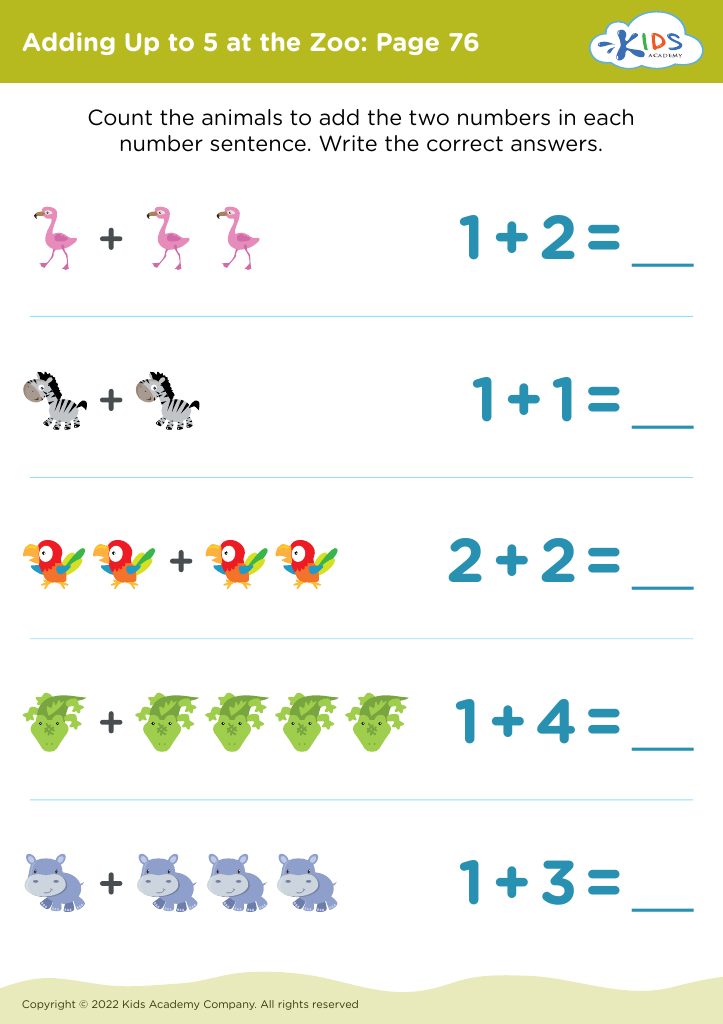
Adding Up to 5 at the Zoo: Page 76
Worksheet
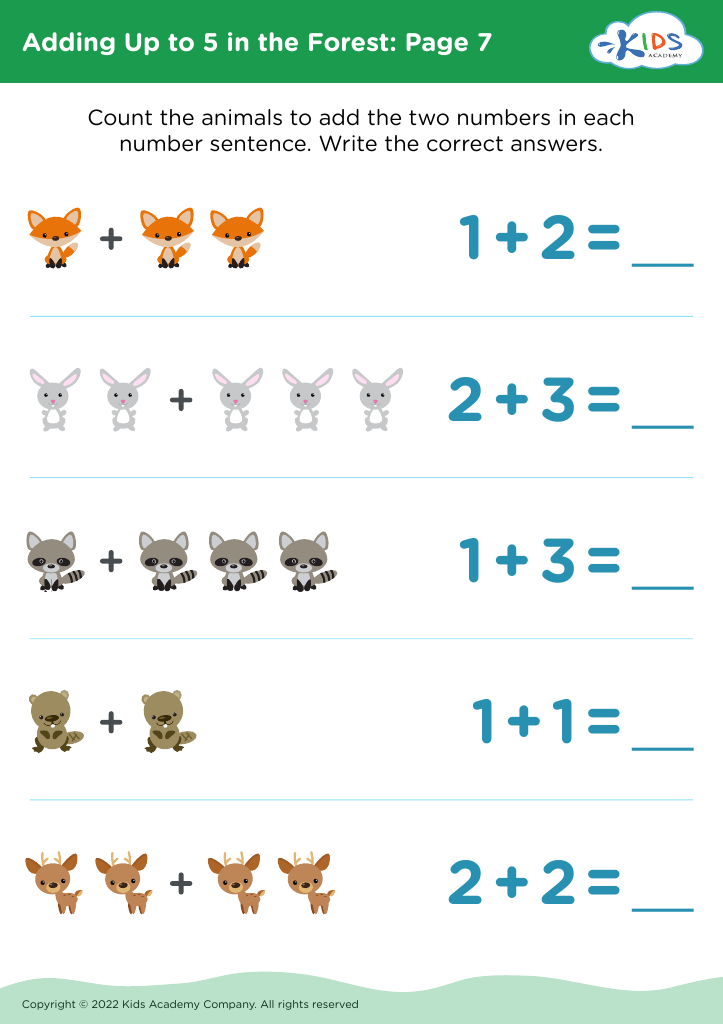
Adding Up to 5 in the Forest: Page 7
Worksheet
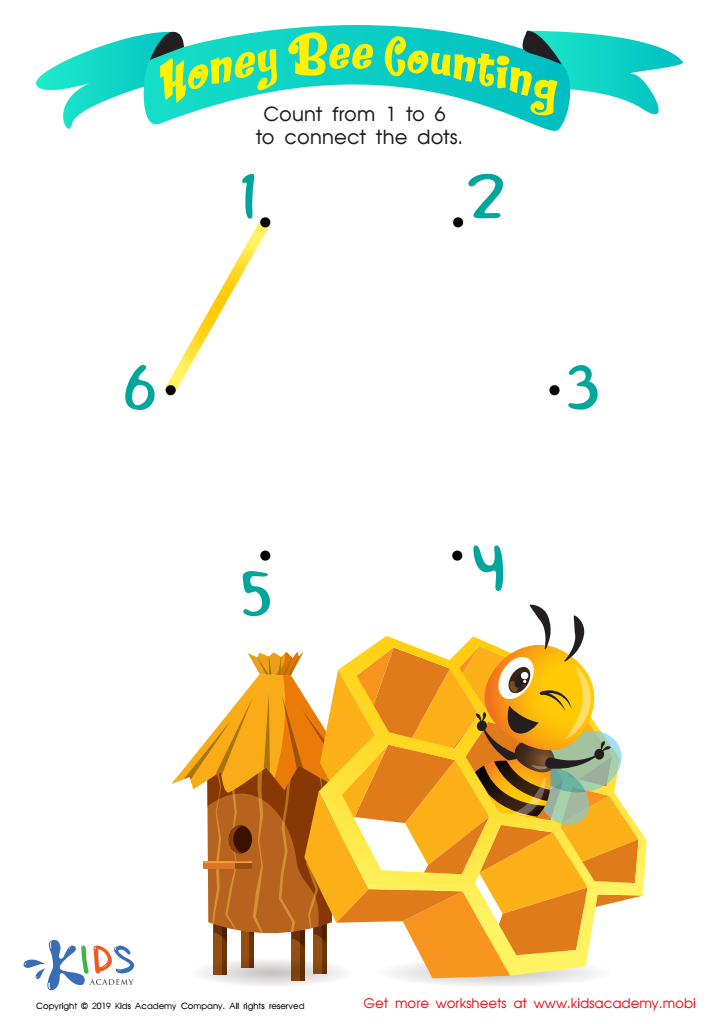
Honey Bee Counting Worksheet

Honey Bee Counting Worksheet

Help your kids learn about honey bees while practising their counting skills! Show them the picture and ask them to point out the bee. Then, give them this worksheet and have them count up to 6, connecting the dots as they go. Numbers are provided for guidance - it's a great way to have fun and learn!
Honey Bee Counting Worksheet

Worksheet
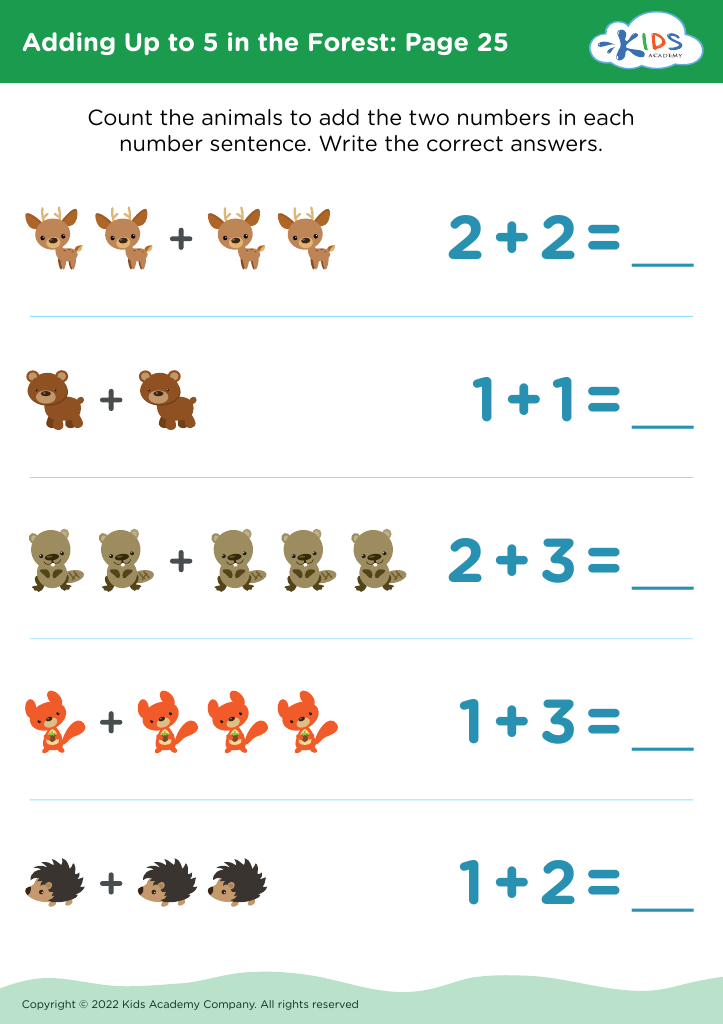
Adding Up to 5 in the Forest: Page 25
Worksheet


Understanding quantities is a crucial early math skill that sets the foundation for future learning in mathematics and problem-solving. For children aged 3-5, developing a grasp of quantities enhances numerical comprehension, which leads to greater mathematical fluency as they grow. By nurturing this awareness, parents and teachers aid children in recognizing numbers, counting objects, and comparing sizes. This foundational knowledge improves cognitive development and helps children understand the world around them, as quantities are everywhere in daily life—from sharing snacks to counting toys.

Engaging with quantities fosters critical thinking skills; children learn to categorize, estimate, and organize information. Furthermore, a strong understanding of quantities lays the groundwork for more complex skills such as addition and subtraction, which are vital for academic success.

Moreover, early engagement with quantities promotes social-emotional growth, as collaborative counting games and activities encourage sharing and teamwork. Teaching children about quantities also builds their confidence in tackling math-related challenges later on in school. Overall, nurturing an understanding of quantities in early childhood supports holistic development, ensuring children are not just prepared academically, but also socially and emotionally for future learning experiences.