Verb identification Worksheets for Ages 3-5
3 filtered results
-
From - To
Boost early literacy with our verb identification worksheets for ages 3-5! Perfectly crafted to captivate young learners, these engaging worksheets help little ones recognize and understand verbs through fun, interactive activities. Each worksheet combines colorful illustrations with simple exercises designed to make learning verbs enjoyable and effective. Ideal for preschool and kindergarten, our resources lay a strong foundation for language development, encouraging kids to identify action words in a playful context. Foster a love for learning and enhance essential skills with our expertly designed verb identification worksheets! Explore a fun way to practice verbs today!
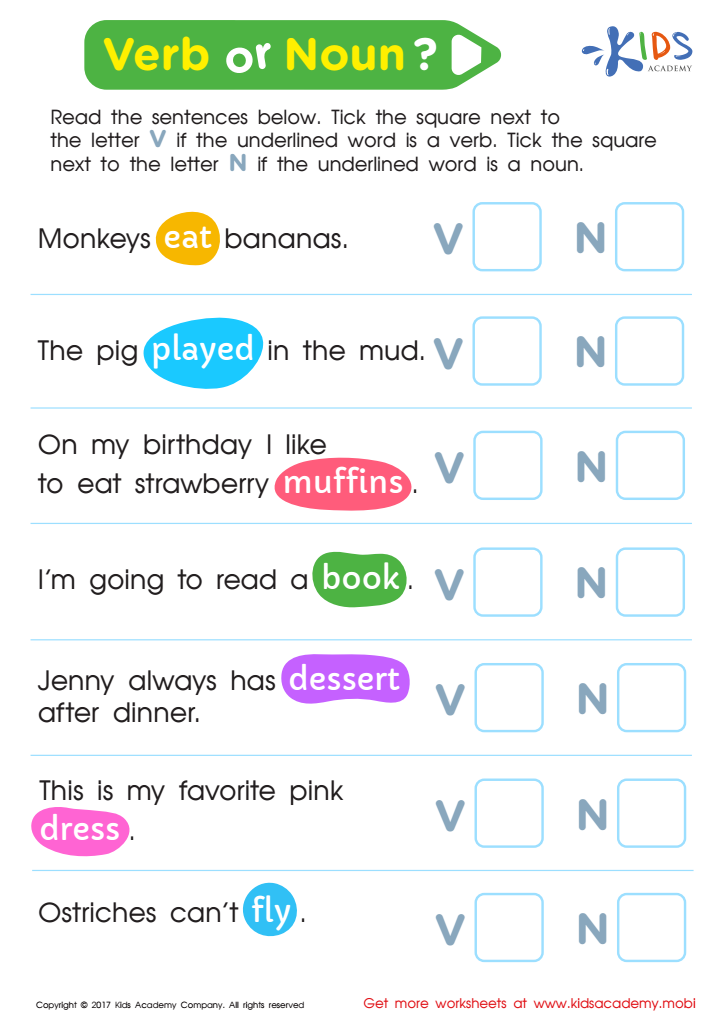
Verb or Noun Worksheet
 Assign to My Students
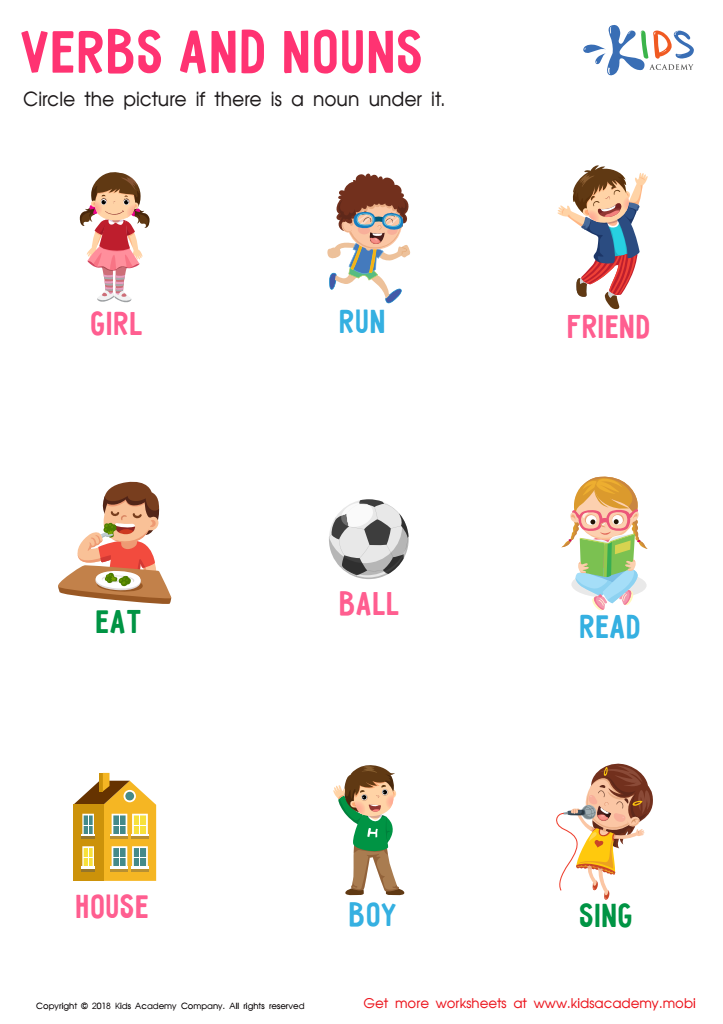
Verbs and Nouns Worksheet
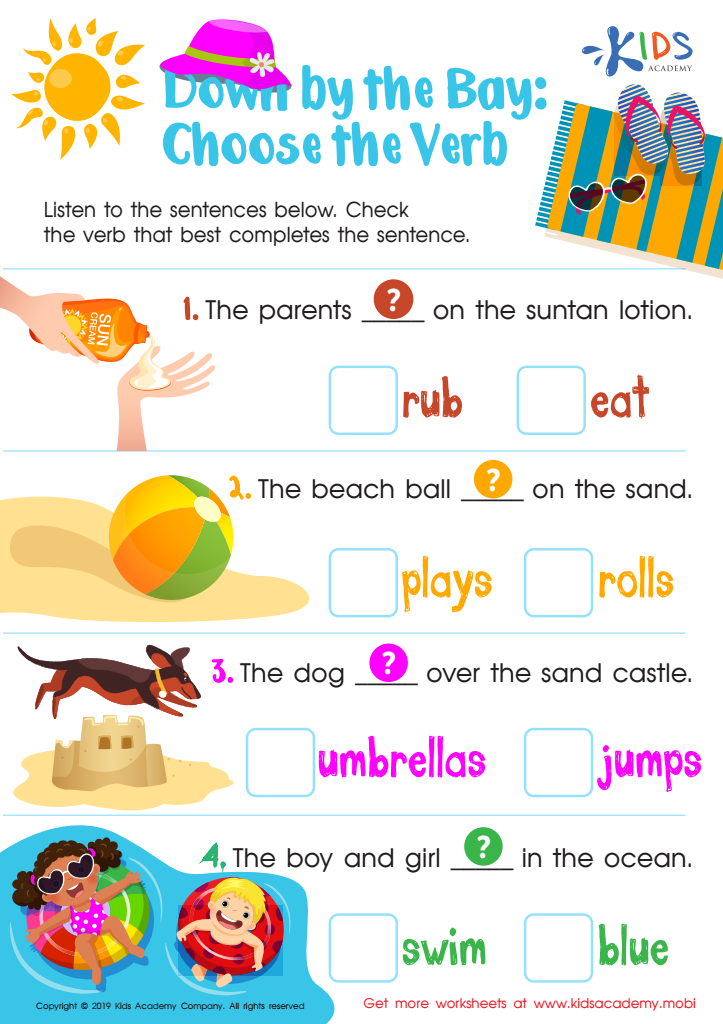
Down by the Bay: Choose the Verb Worksheet








Understanding and identifying verbs is crucial for children aged 3-5 as it lays the foundation for effective communication and literacy skills. Verb recognition supports the development of sentence structure, enabling young learners to express actions, thoughts, and feelings accurately. When children can identify verbs, they begin to construct more complex sentences, moving beyond simple two-word phrases to fuller, more expressive forms of communication.
Moreover, early verb identification helps in building vocabulary and enhancing comprehension skills. By recognizing and using different verbs, children expand their linguistic repertoire, making it easier for them to describe a wide range of activities and experiences. This increased vocabulary is beneficial not only for daily communication but also for reading and writing as they enter school.
Parents and teachers should also care about verb identification because it nurtures cognitive development. Understanding action words assists children in grasping concepts of time (like past, present, and future), which is fundamental for developing critical thinking skills. Children’s ability to sequence events and understand causality is bolstered when they can effectively use and distinguish between various verbs.
In summary, early verb identification plays a pivotal role in language development, aids in expanding vocabulary, and fosters cognitive growth, all of which are essential for a child’s overall development and academic success.








