Basic addition practice Adding at the Zoo Worksheets for Ages 3-5
3 filtered results
-
From - To
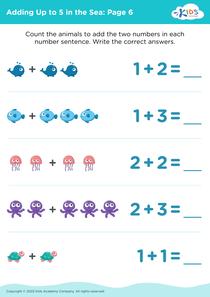
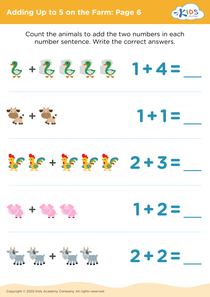
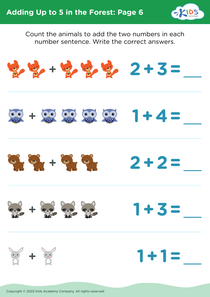
Discover engaging "Adding at the Zoo" worksheets designed for preschoolers ages 3-5 to enhance their basic addition skills. These fun activities feature colorful animals and playful scenarios, making learning math enjoyable and interactive for young children. Our worksheets offer a range of exercises that develop cognitive abilities, fine motor skills, and number recognition, allowing kids to practice simple addition through visual and hands-on experiences. Perfect for parents, teachers, or homeschoolers, these resources provide a creative way to introduce mathematical concepts in a delightful setting. Encourage early learners to explore addition with our exciting zoo-themed worksheets and watch their confidence grow!
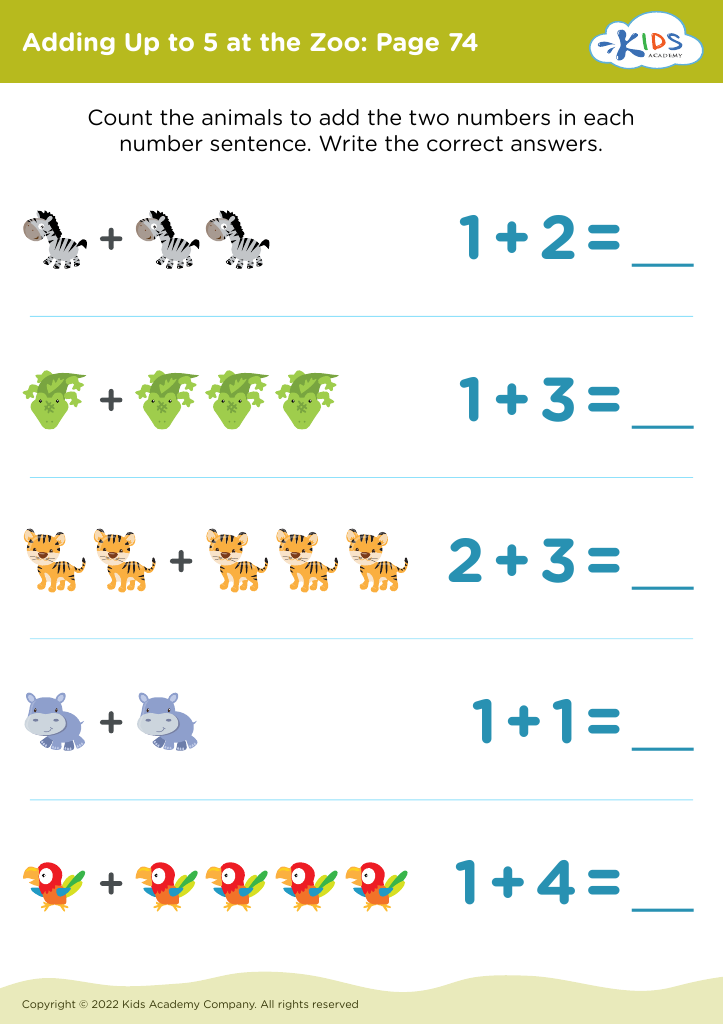
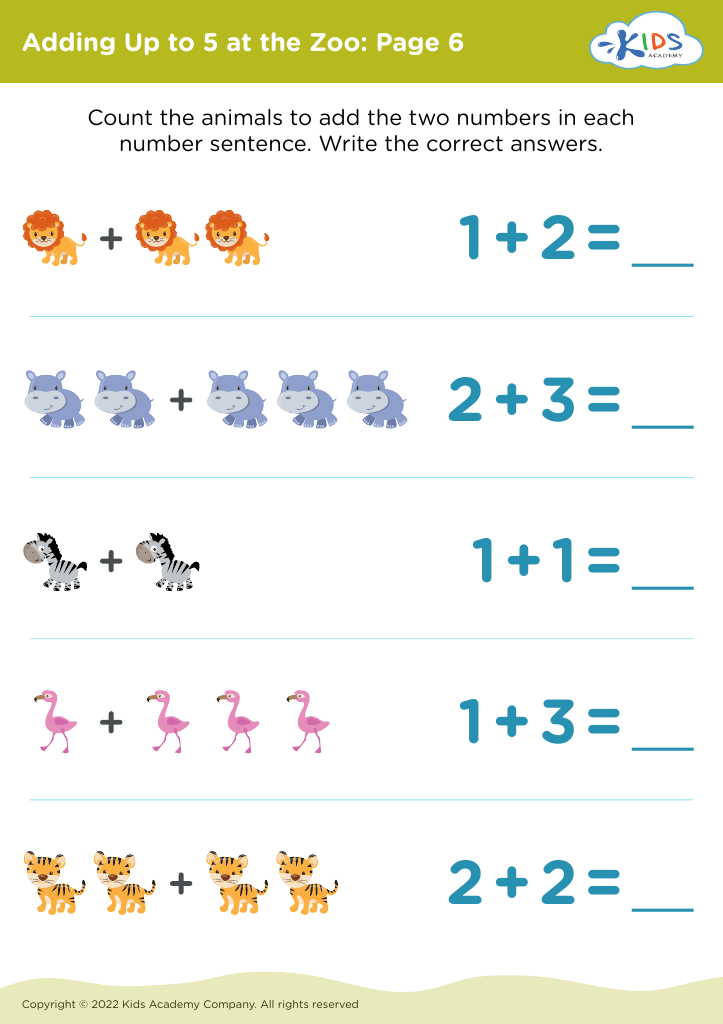
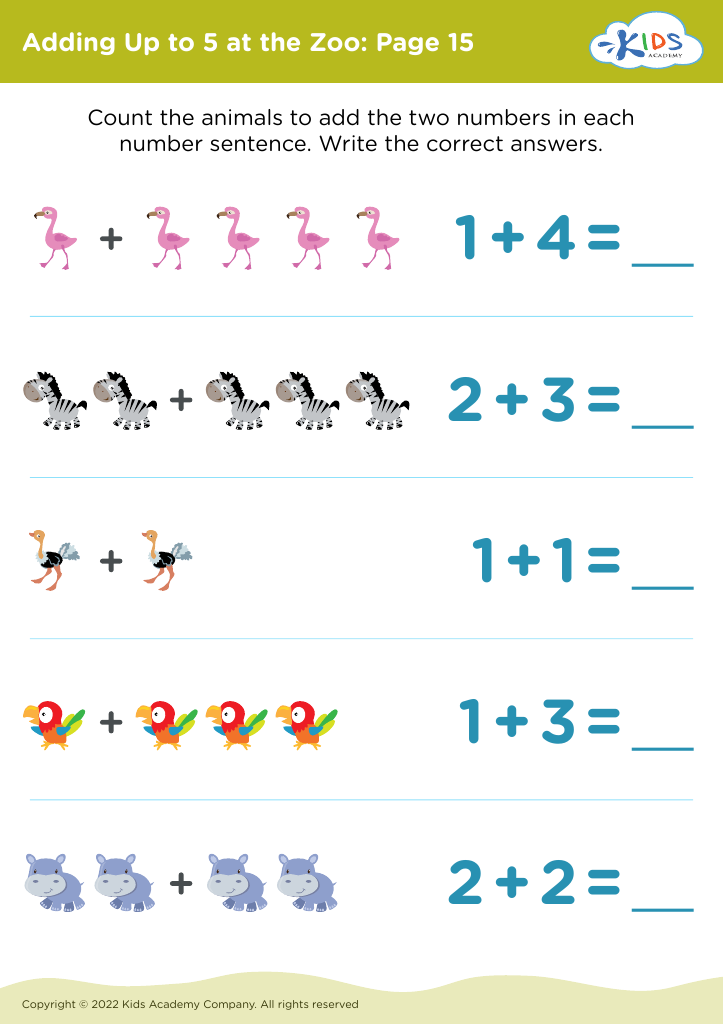



Basic addition practice, like the "Adding at the Zoo" activity, is crucial for young children aged 3-5 for several reasons. Firstly, it lays the foundation for mathematical skills crucial in later schooling. During this developmental stage, children are naturally curious and learning through play is most effective. Integrating math with imaginative scenarios, like a zoo, makes learning engaging and relatable.
Secondly, activities focused on basic addition support cognitive development. They encourage problem-solving and critical thinking, helping children to understand quantities, groupings, and basic arithmetic operations. This not only enhances their math skills but also boosts their overall confidence in learning.
Additionally, these practices enrich social skills. Through collaborative activities, children learn to share ideas, pool resources, and celebrate each other’s successes, which fosters teamwork and communication.
Lastly, introduction to math concepts at a young age can pave the way for a positive attitude toward learning in general. When parents and teachers emphasize fun, accessible math activities, they cultivate a love for learning, making children more likely to pursue further education and appreciate the world of numbers. Thus, basic addition practice, such as "Adding at the Zoo," is an essential, enriching experience during early childhood education.