Filters

18 filtered results

Clear all filters
Favorites
With answer key
Interactive

18 filtered results

Difficulty Level

Grade


Explore the exciting "Cognitive Development Adding at the Zoo Worksheets" designed for children ages 3-5! These engaging worksheets provide a fun way for young learners to enhance their math skills while discovering various animals at the zoo. Each activity focuses on simple addition concepts, encouraging cognitive growth through interactive exercises. As children count and add adorable zoo creatures, they strengthen their number recognition and problem-solving abilities. Perfect for home or classroom use, these worksheets blend learning with play, fostering an enjoyable educational experience. Let your little ones embark on a mathematical adventure with the delightful world of the zoo!
Check out this FREE Trial Lesson on Adding at the Zoo for age 3-5!

X

Favorites
With answer key
Interactive
  • 3-5
  • Cognitive Development
  • Adding at the Zoo
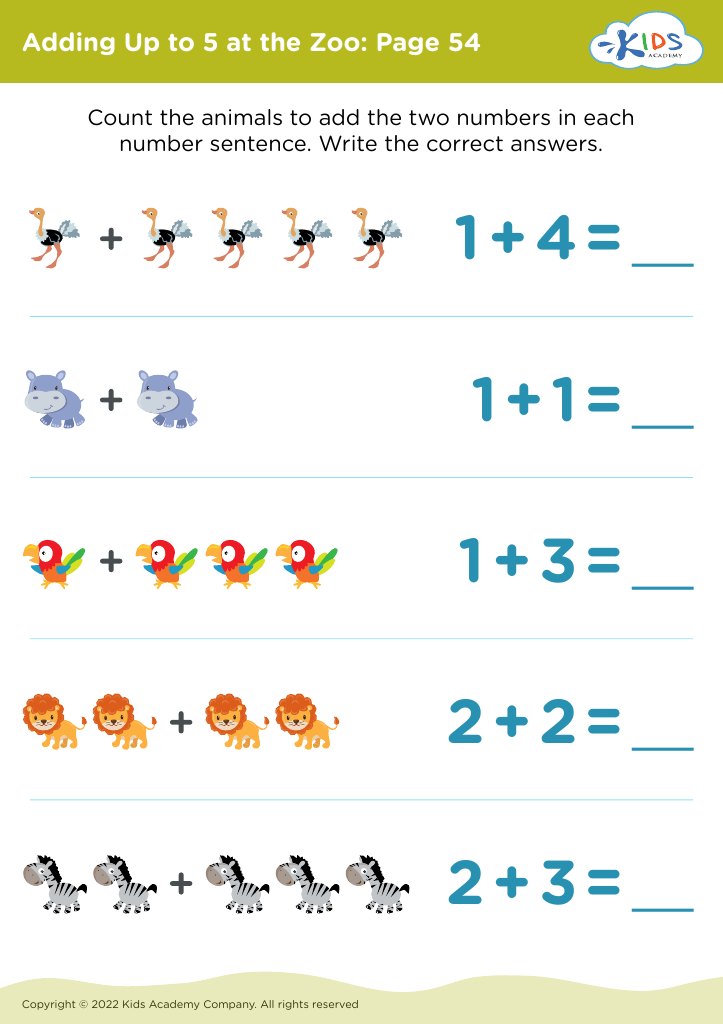
Adding Up to 5 at the Zoo: Page 54
Worksheet
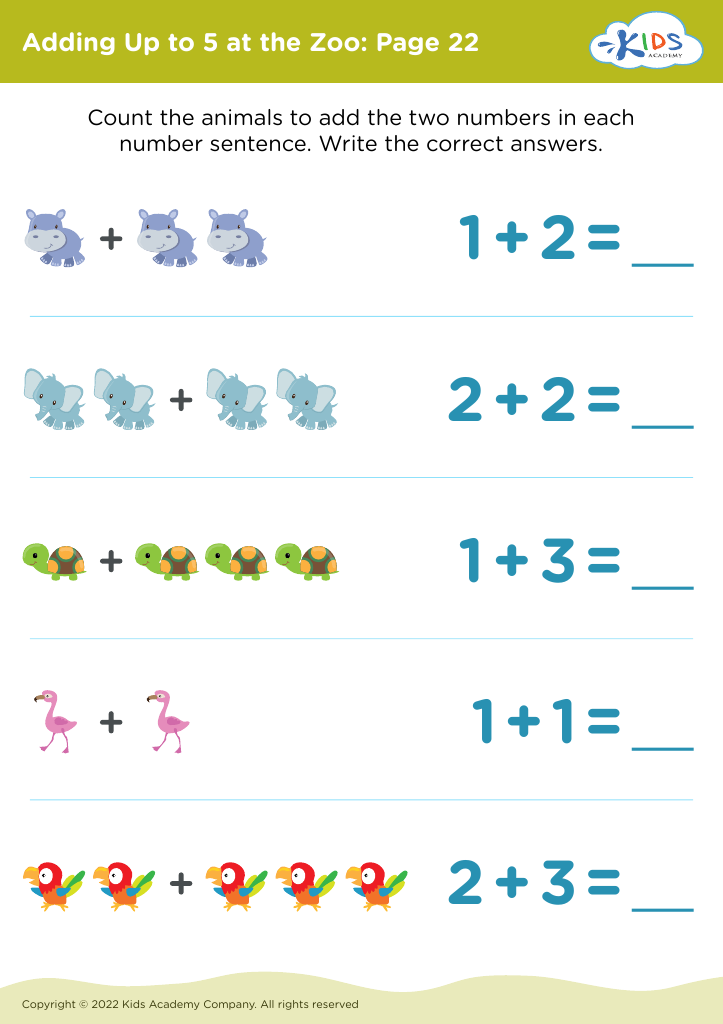
Adding Up to 5 at the Zoo: Page 22
Worksheet
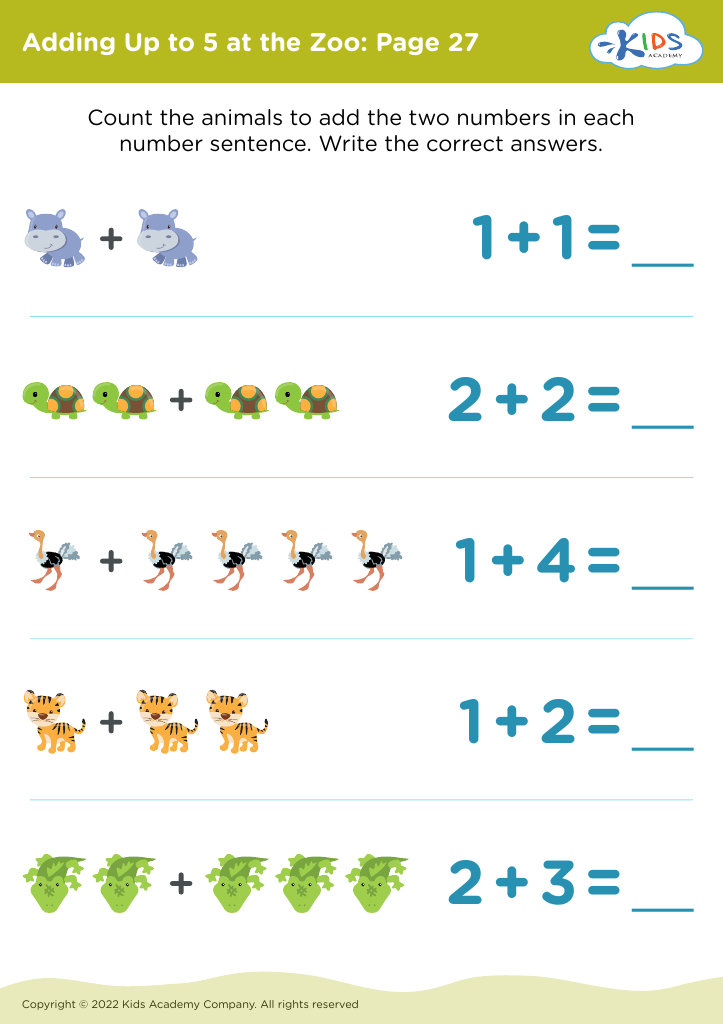
Adding Up to 5 at the Zoo: Page 27
Worksheet
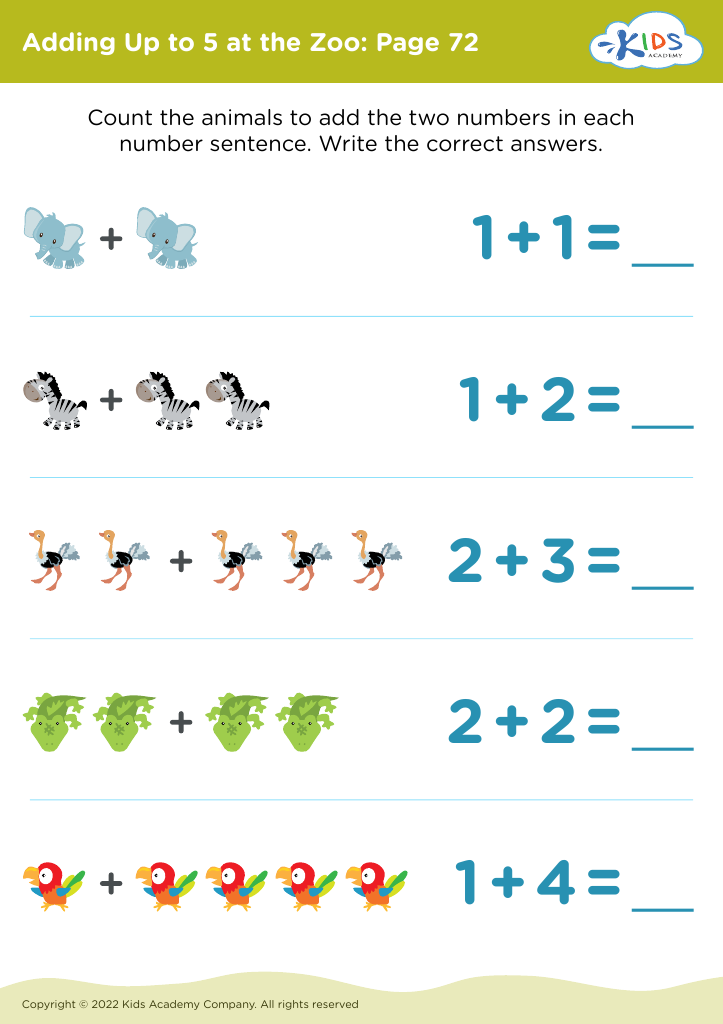
Adding Up to 5 at the Zoo: Page 72
Worksheet
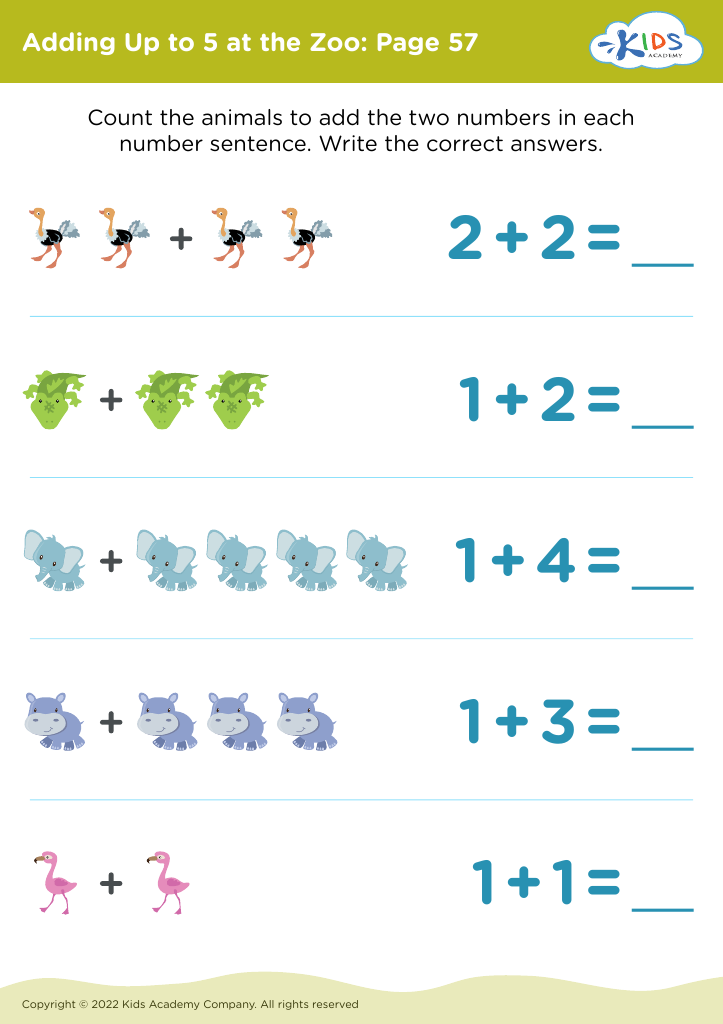
Adding Up to 5 at the Zoo: Page 57
Worksheet
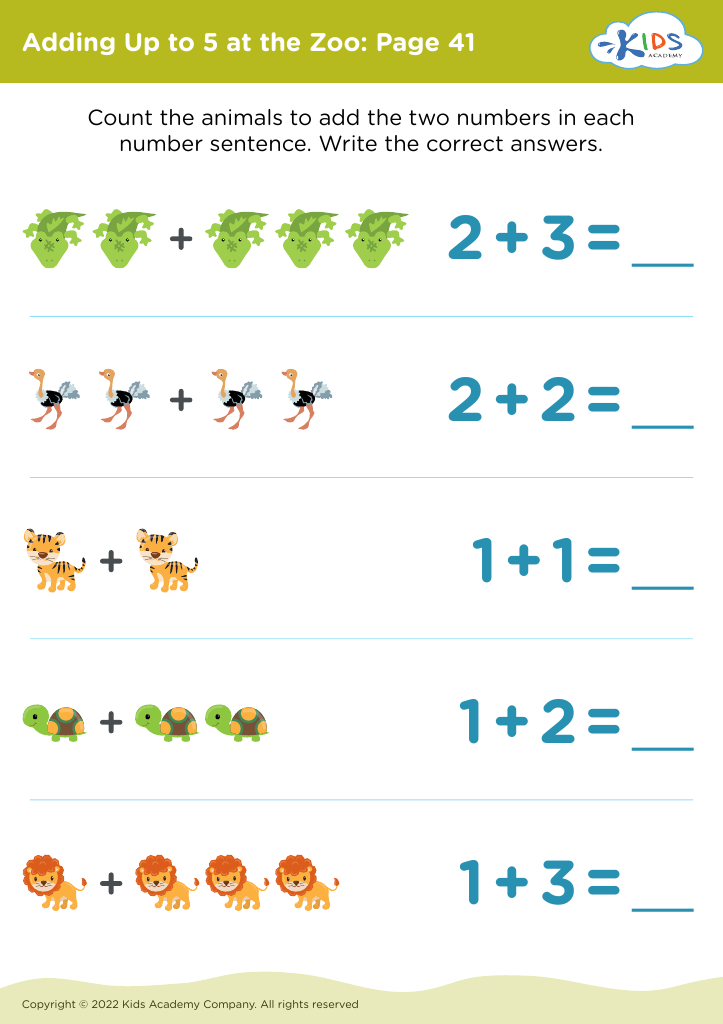
Adding Up to 5 at the Zoo: Page 41
Worksheet
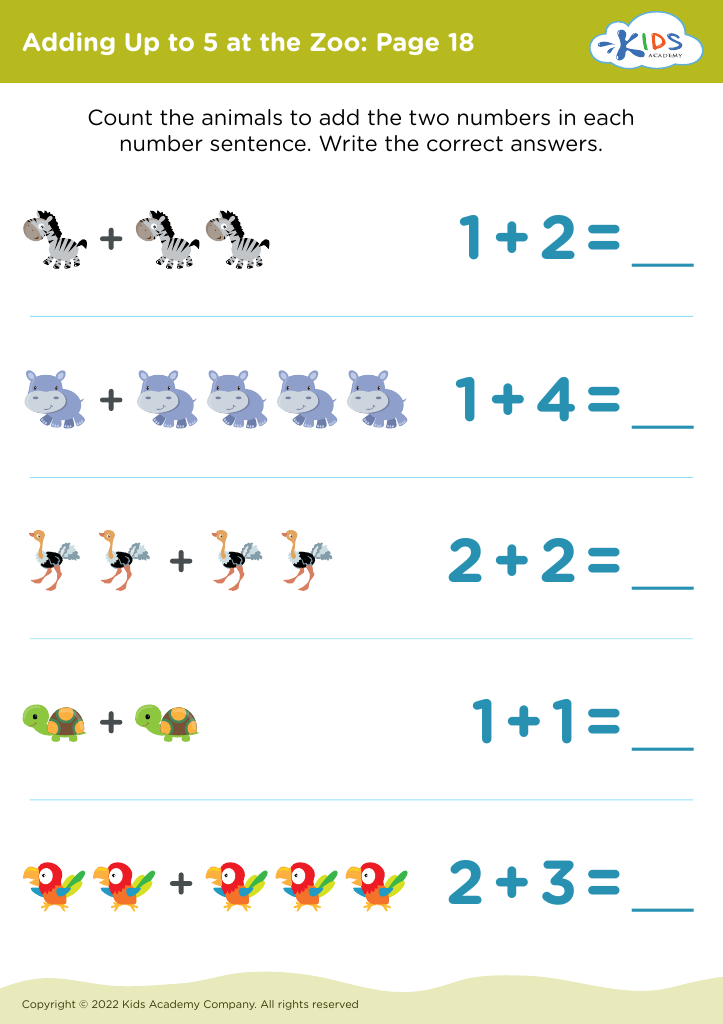
Adding Up to 5 at the Zoo: Page 18
Worksheet
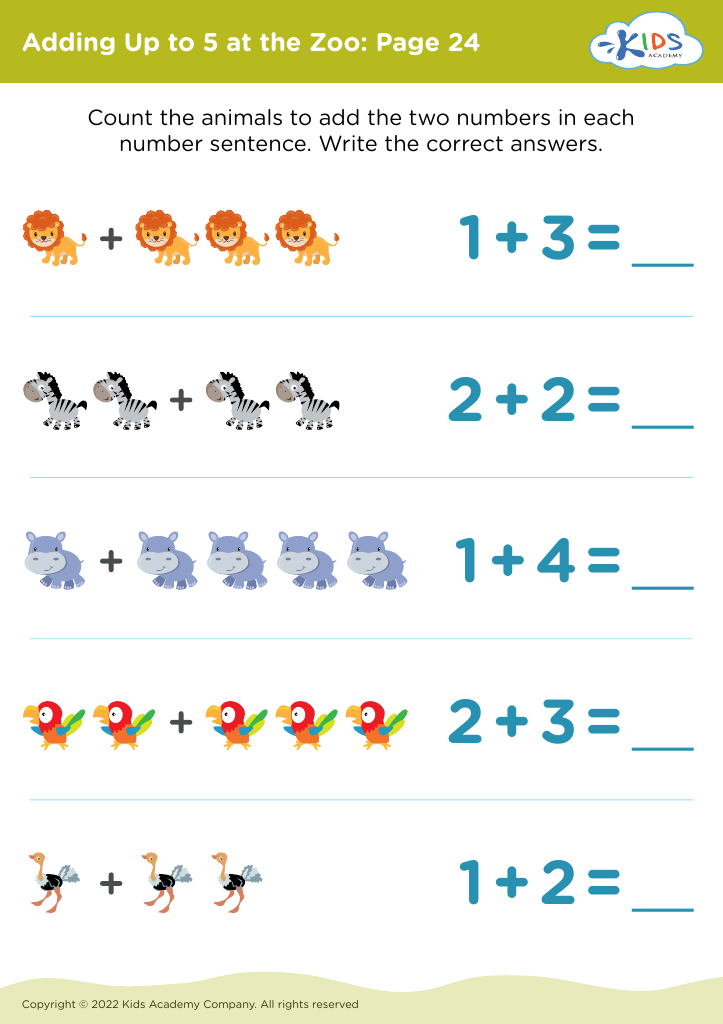
Adding Up to 5 at the Zoo: Page 24
Worksheet
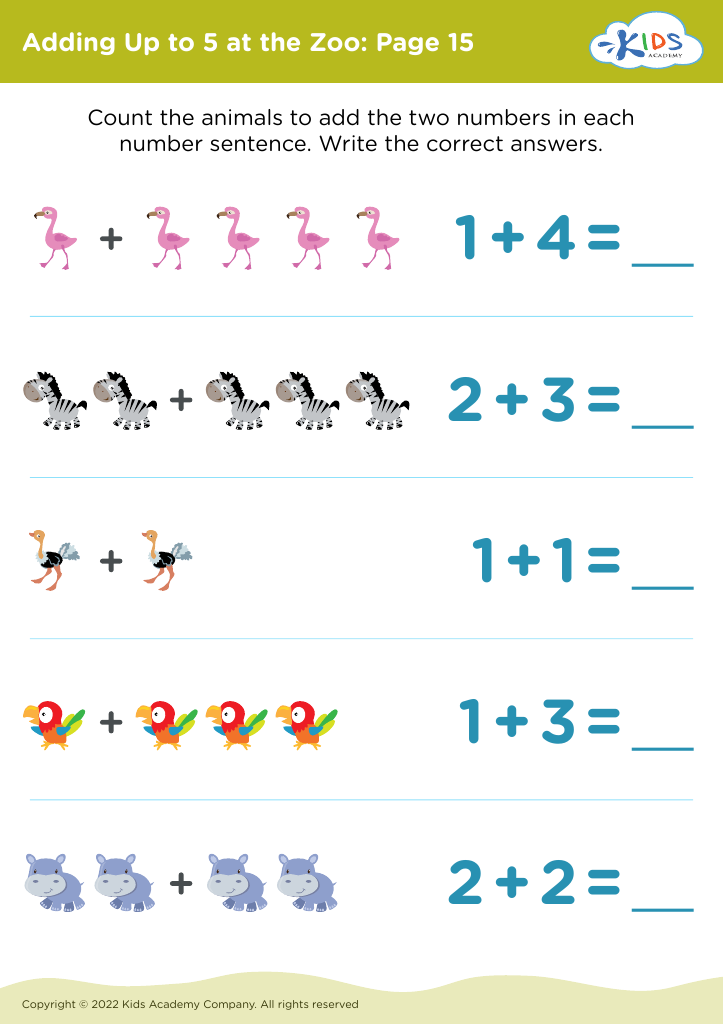
Adding Up to 5 at the Zoo: Page 15
Worksheet
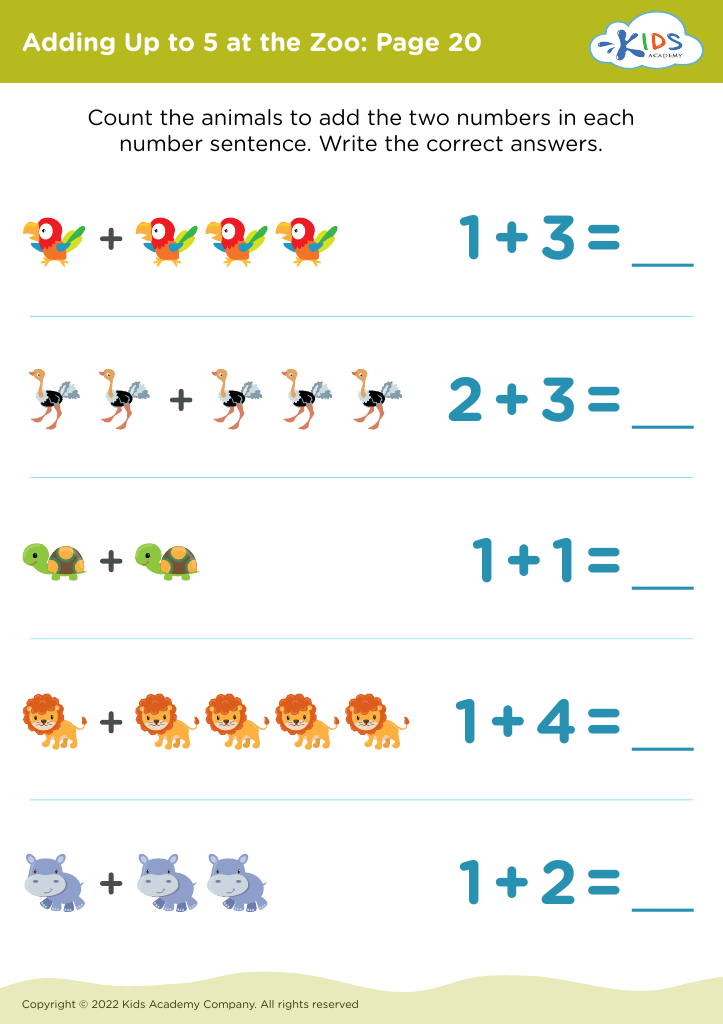
Adding Up to 5 at the Zoo: Page 20
Worksheet
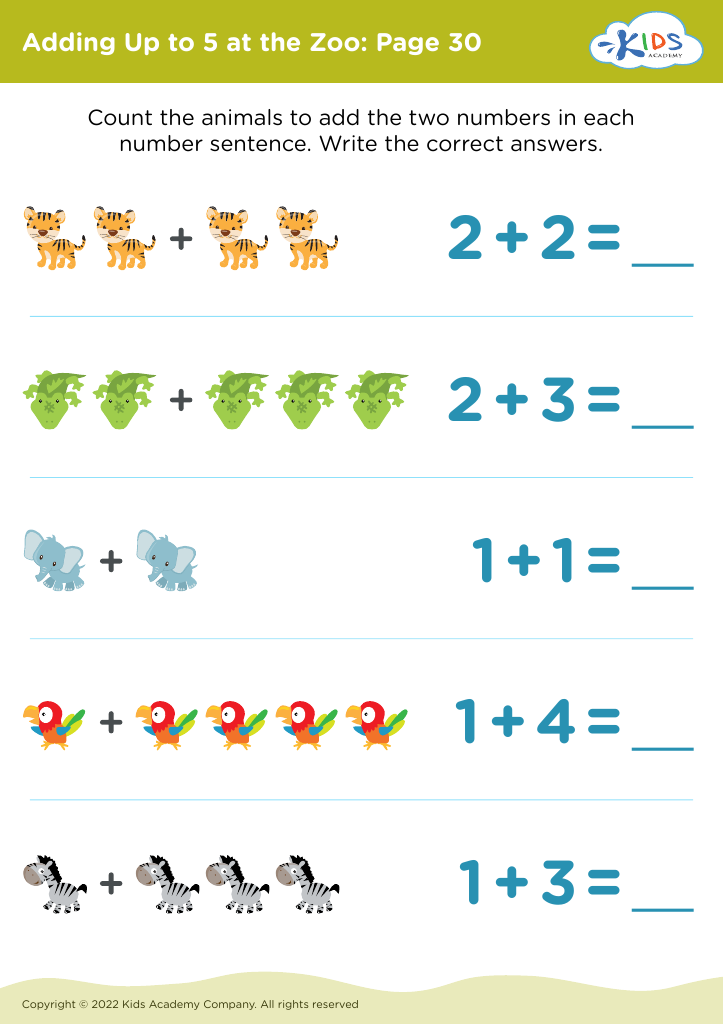
Adding Up to 5 at the Zoo: Page 30
Worksheet
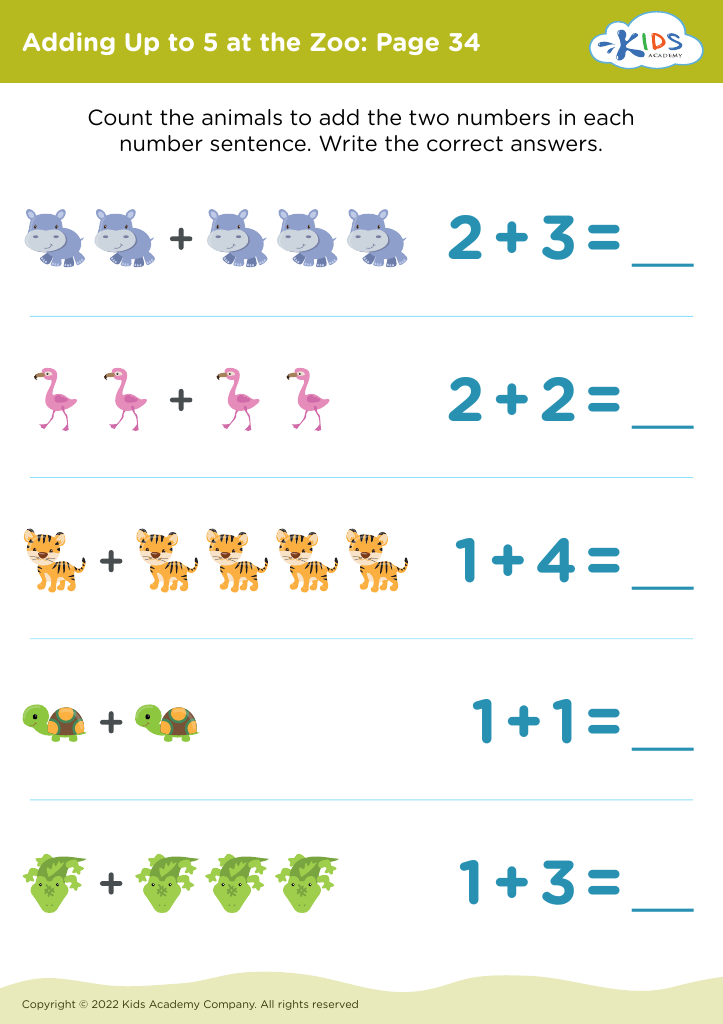
Adding Up to 5 at the Zoo: Page 34
Worksheet
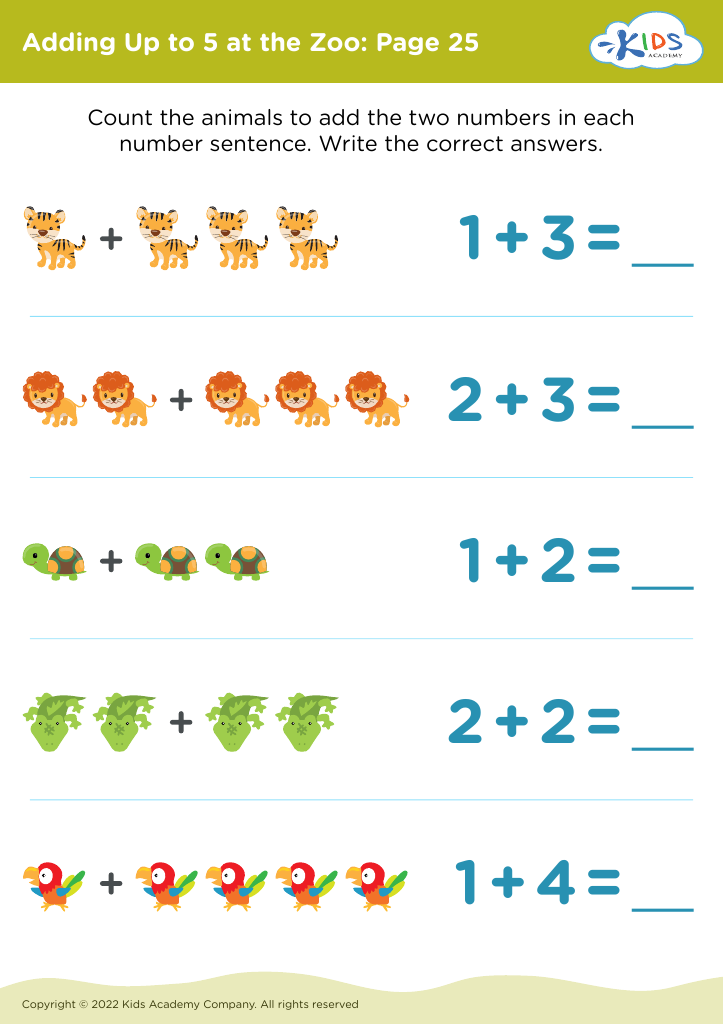
Adding Up to 5 at the Zoo: Page 25
Worksheet
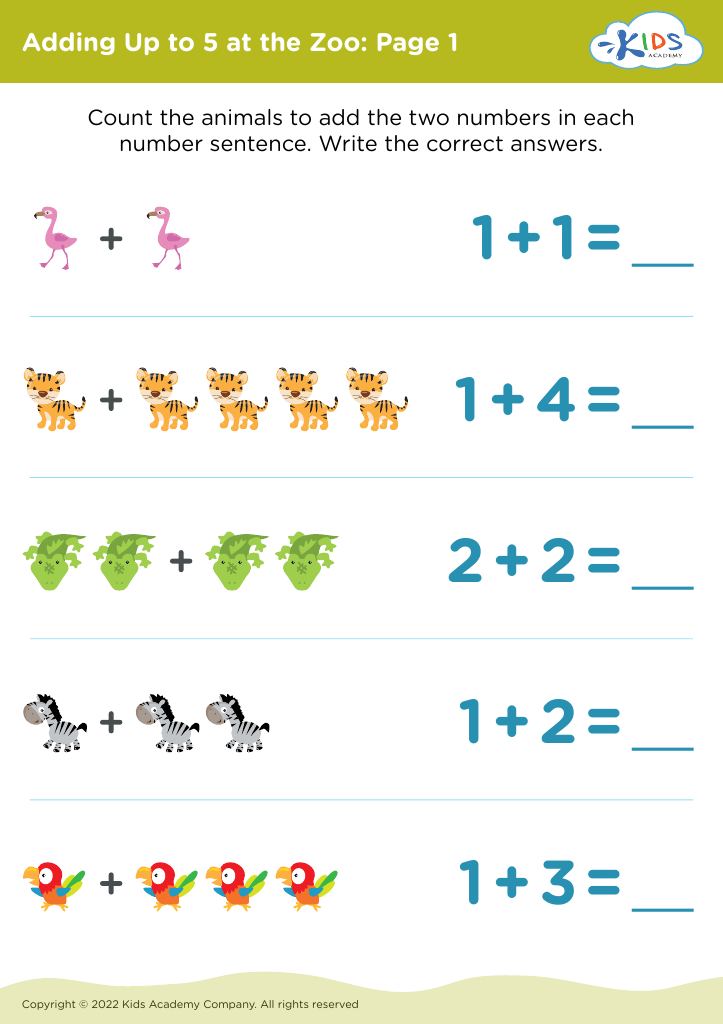
Adding Up to 5 at the Zoo: Page 1

Adding Up to 5 at the Zoo: Page 1

Adding Up to 5 at the Zoo: Page 1
Worksheet
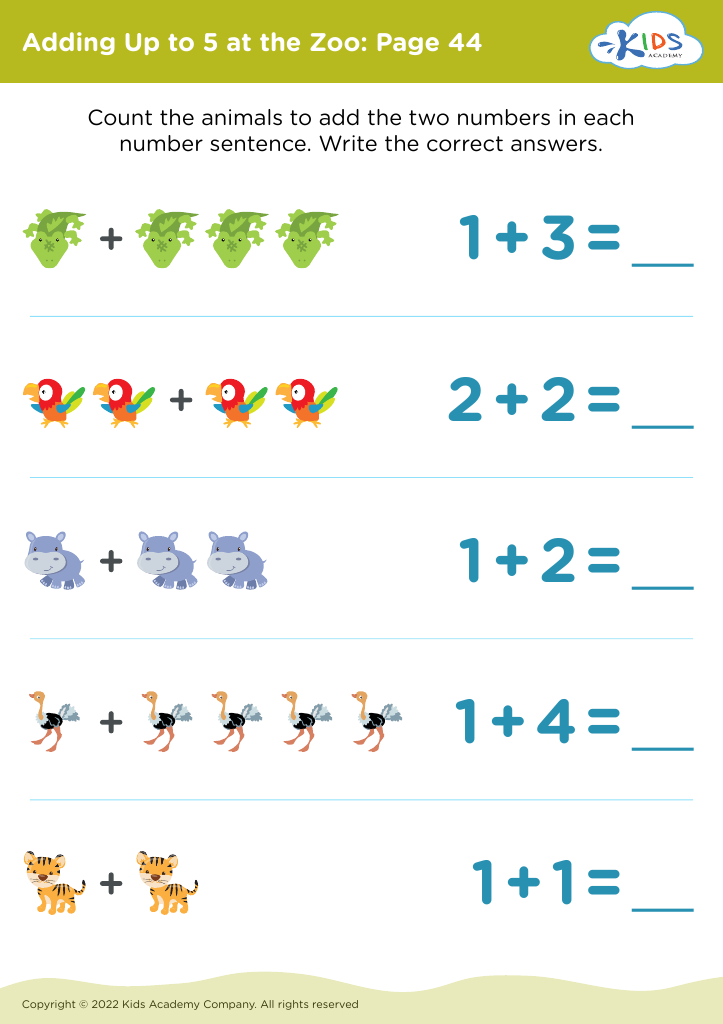
Adding Up to 5 at the Zoo: Page 44
Worksheet
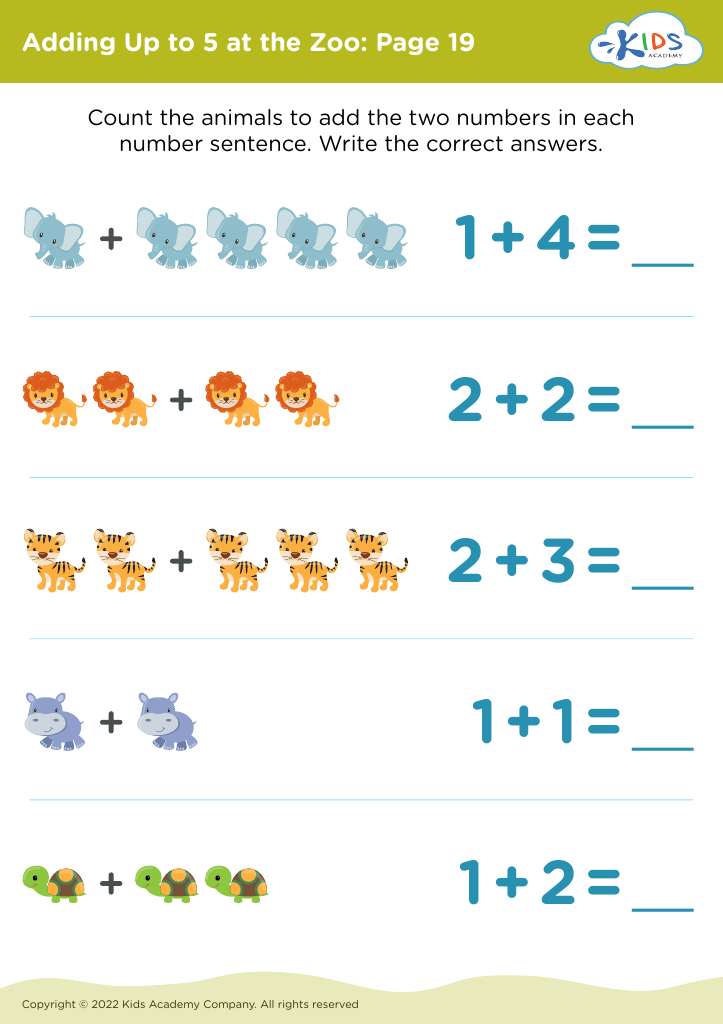
Adding Up to 5 at the Zoo: Page 19
Worksheet
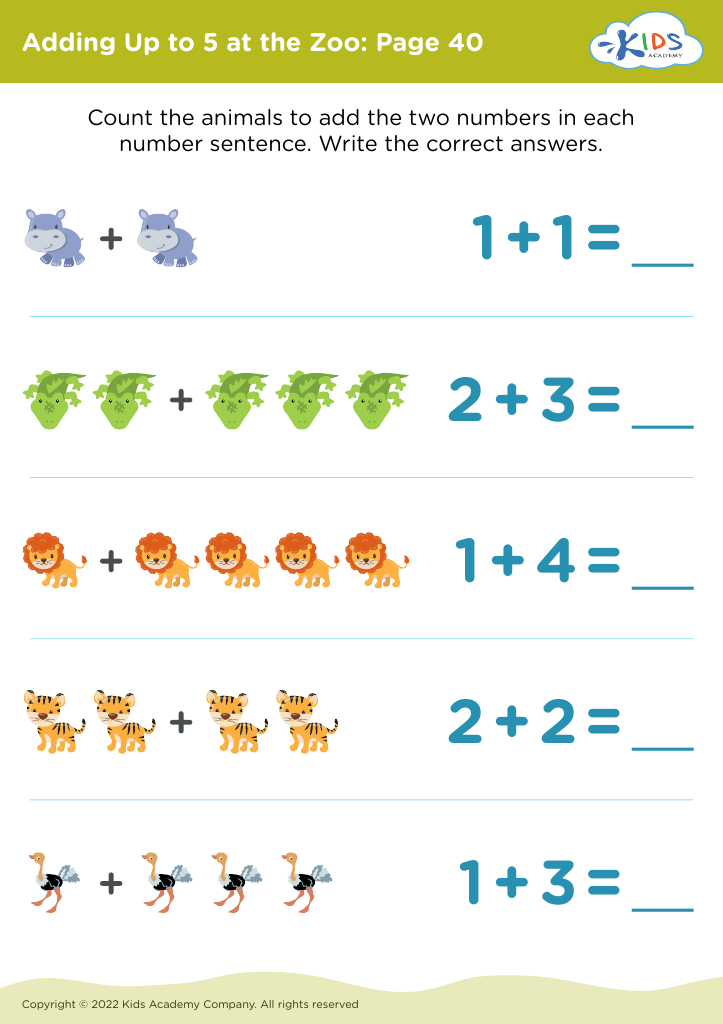
Adding Up to 5 at the Zoo: Page 40
Worksheet
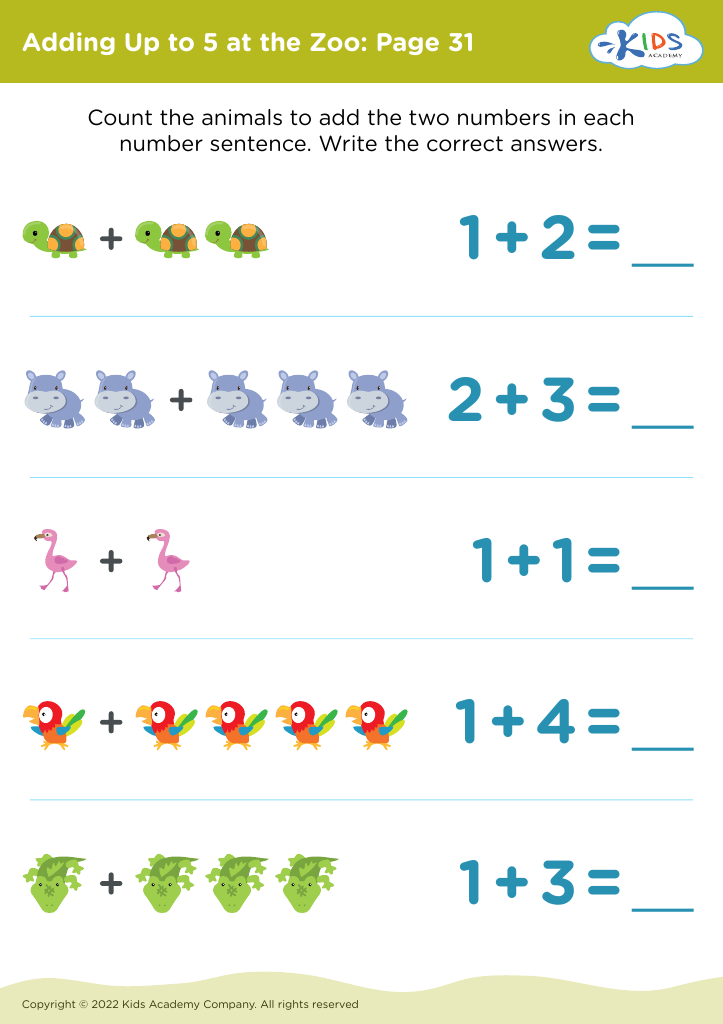
Adding Up to 5 at the Zoo: Page 31
Worksheet


Cognitive development is crucial for young children, particularly in the age range of 3-5 years. As they grow, their brains undergo significant changes, influencing their ability to think, learn, and interact with the world around them. Programs such as "Adding at the Zoo" are valuable because they promote essential cognitive skills like problem-solving, critical thinking, and creativity in a fun and engaging environment. By facilitating early math skills, this program introduces concepts of addition and quantity in a manner that feels relatable and exciting.

Parents and teachers should care about such initiatives because they lay the foundation for future academic success. When children learn to associate numbers and animals through vivid, playful scenarios at the zoo, they not only enhance their mathematical confidence but also their language skills and social connections. Learning in these early years encourages curiosity and enthusiasm for education, positively affecting their lifelong attitudes toward learning.

Moreover, by engaging parents in the learning process, they cultivate a supportive educational atmosphere at home, reinforcing what children learn. Together, both guardians and educators play a vital role in fostering a well-rounded cognitive development approach, ensuring children build strong foundations for future learning experiences.