Fine Motor Skills Adding at the Zoo Worksheets for Ages 3-5
4 filtered results
-
From - To
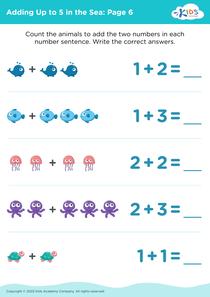
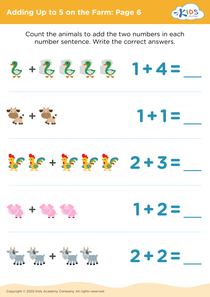
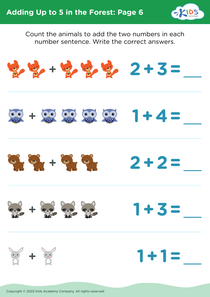
Discover our "Fine Motor Skills Adding at the Zoo Worksheets" tailored for children aged 3-5. These engaging, educational materials help little learners enhance their numeracy skills while boosting fine motor development. Each zoo-themed worksheet encourages children to count and add adorable animals, combining fun and learning. Perfect for developing hand-eye coordination, pencil control, and early math foundations, our worksheets make mastering these essential skills enjoyable. Parents and teachers appreciate the easy-to-follow format, designed to support young children in a nurturing, playful environment. Make math at the zoo a delightful adventure today!
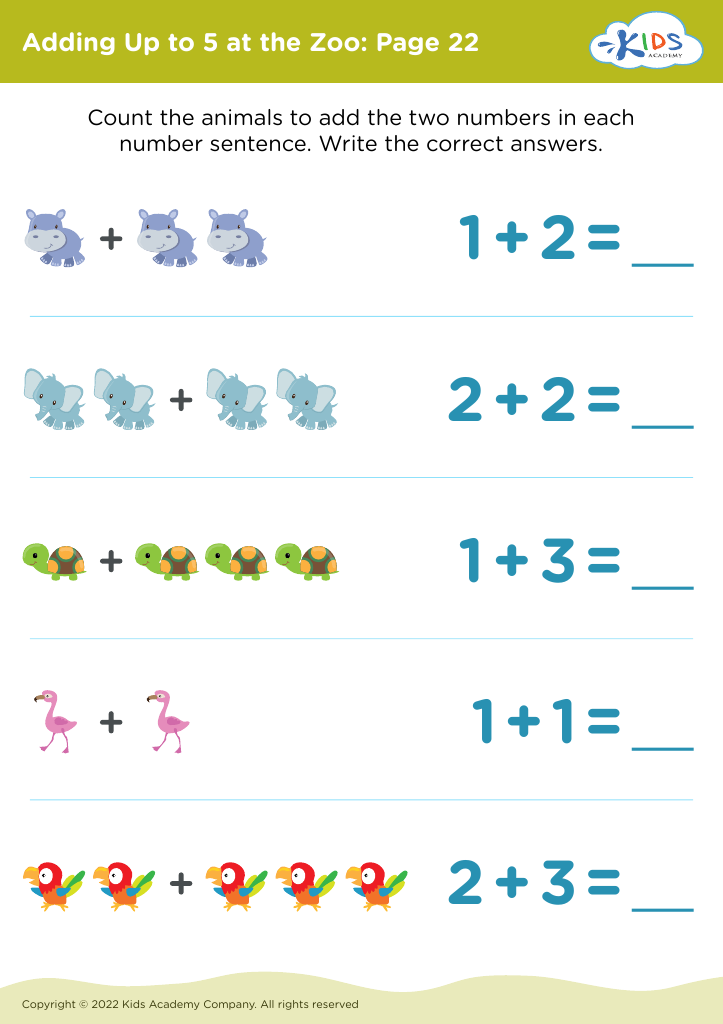
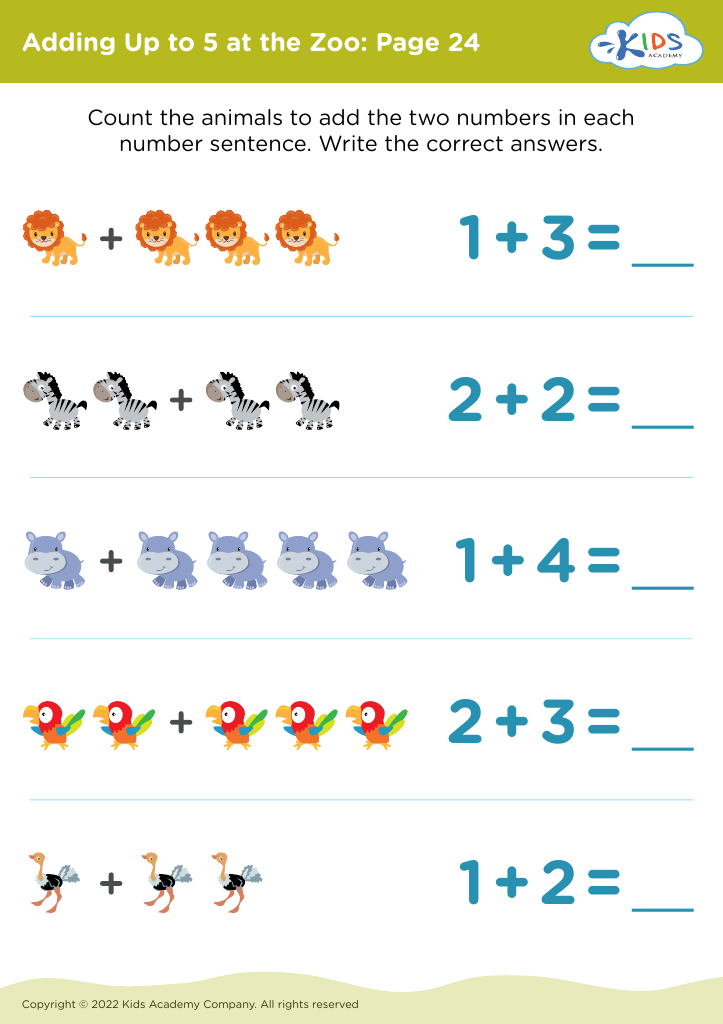
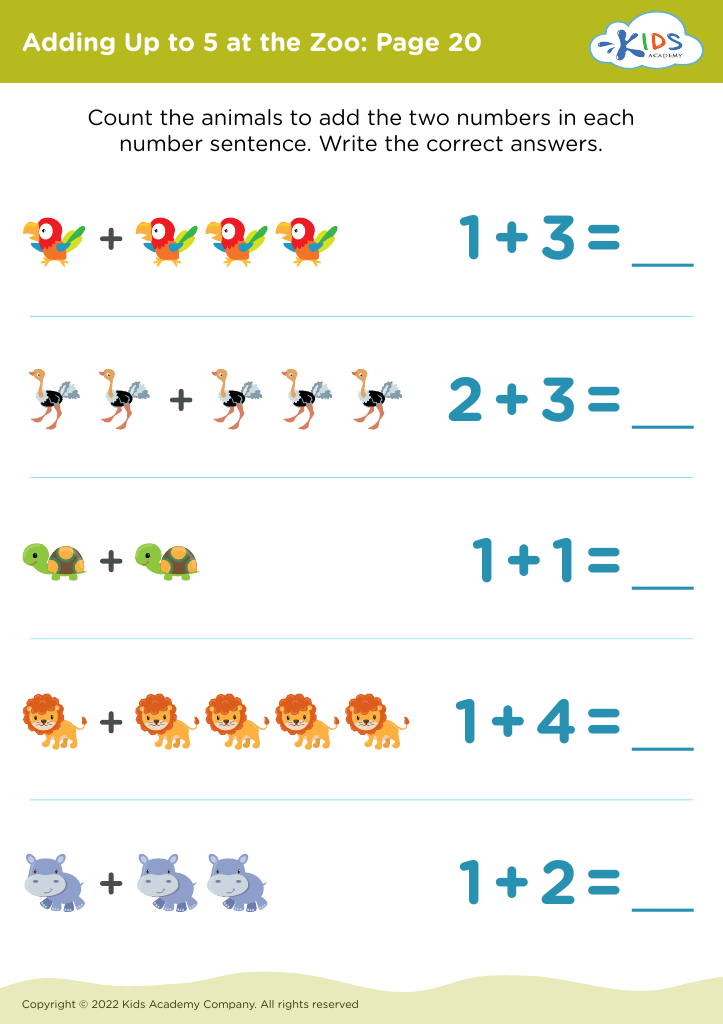
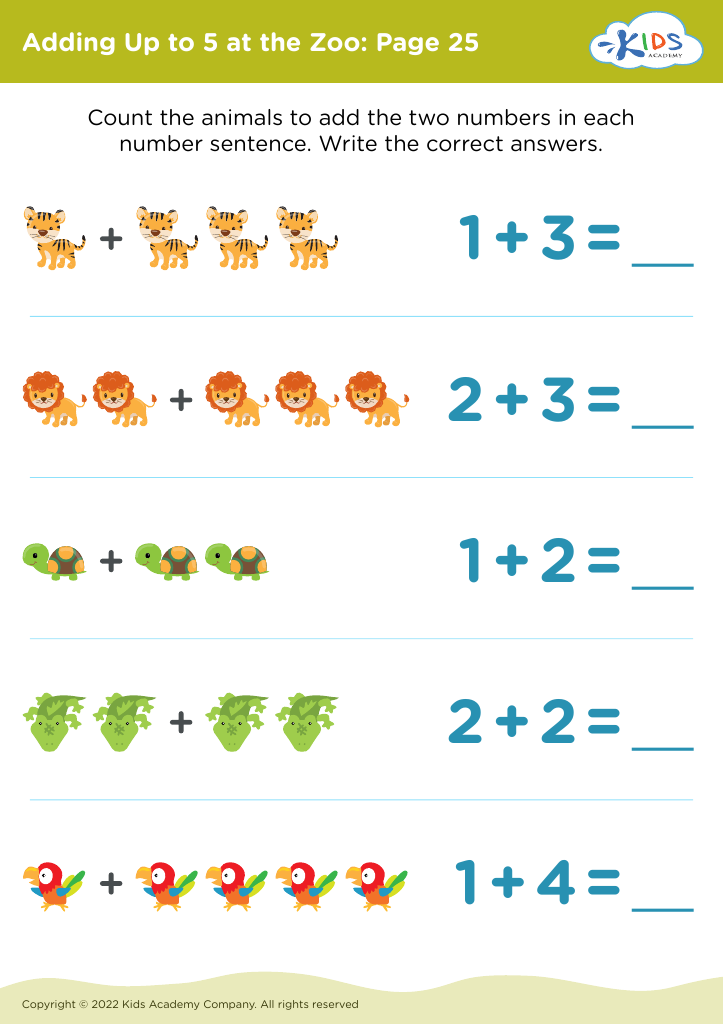



Fine motor skills are essential for the overall development of children ages 3-5, serving as a foundation for more advanced life skills. Fine Motor Skills Adding at the Zoo offers a unique, captivating way to engage young learners in activities that bolster these crucial abilities. Through activities like manipulating small objects, children develop hand-eye coordination, finger dexterity, and muscular control. These skills are essential for everyday tasks such as writing, buttoning clothes, and using utensils.
Parents and teachers should prioritize these activities because they promote brain development and cognitive growth. By engaging in fun, zoo-themed counting and sorting exercises, children not only improve their fine motor skills but also enhance their mathematical understanding and problem-solving abilities. This type of learning is engaging and memorable, making it more effective than traditional rote methods.
Moreover, engaging in a themed environment like the zoo adds an element of excitement and curiosity, which can foster a love for learning in young minds. It helps develop social skills through shared play and cooperation, reinforcing the notion that learning can be enjoyable and collaborative. Therefore, integrating Fine Motor Skills Adding at the Zoo into early childhood education is a multifaceted strategy that holistically contributes to a child's developmental milestones.