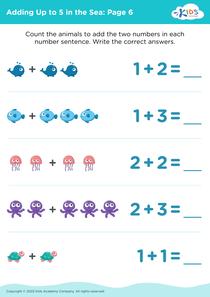
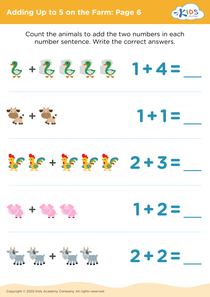
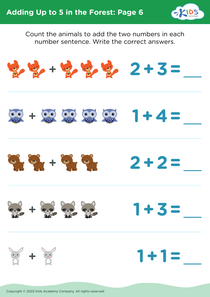
Fine motor skills (writing numbers) Adding at the Zoo Worksheets for Ages 3-5
3 filtered results
-
From - To
Introduce young learners to numbers and early math in a fun, engaging way with our "Adding at the Zoo Worksheets for Ages 3-5!" specially designed to develop fine motor skills. Each printable page combines counting, simple addition, and adorable zoo animal themes to capture children's imagination. By tracing and writing numbers, kids refine their hand-eye coordination, control, and precision. These worksheets provide a playful yet structured approach to mastering the basics of mathematics, making early learning enjoyable and effective. Perfect for preschool and early kindergarten students, these exercises pave the way for a smooth academic journey. Discover the joy of math with our interactive zoo adventure!
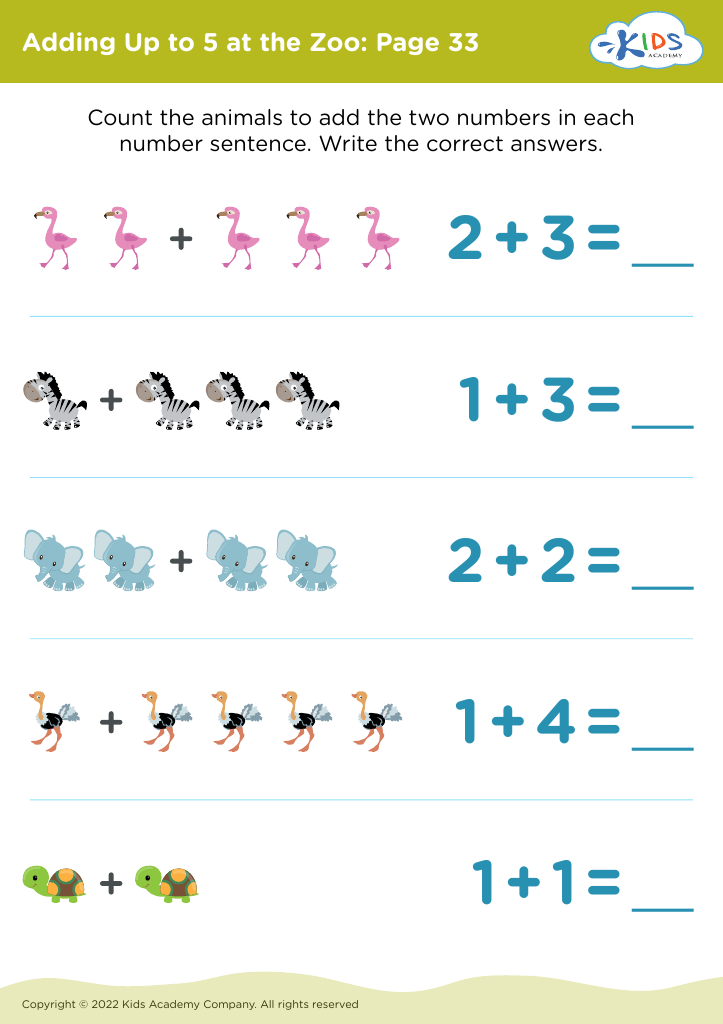
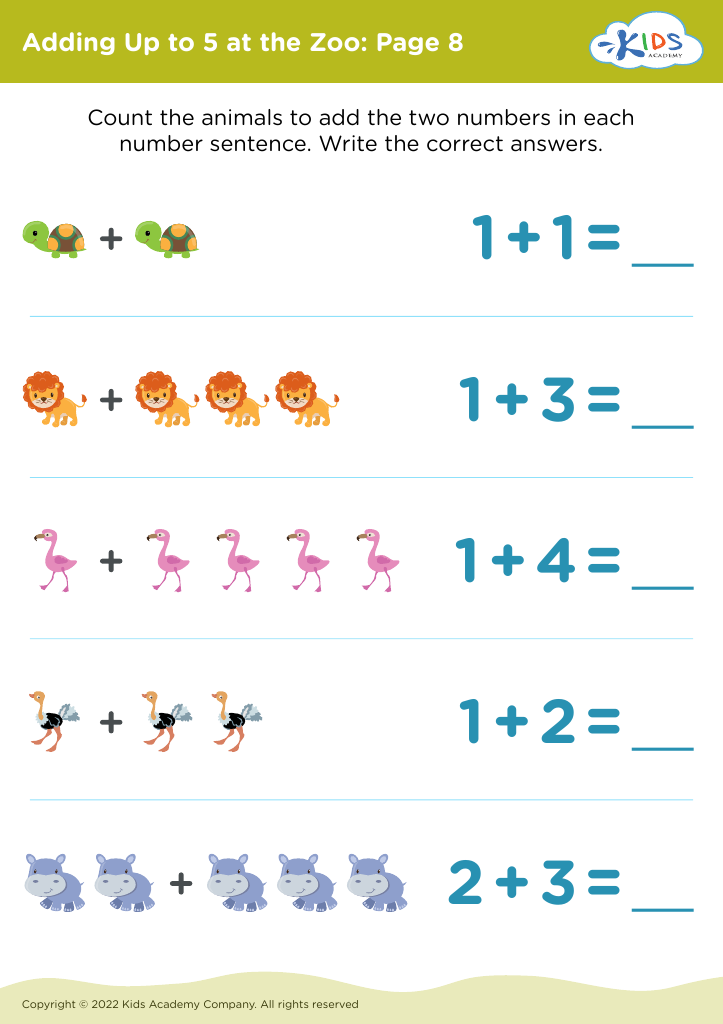
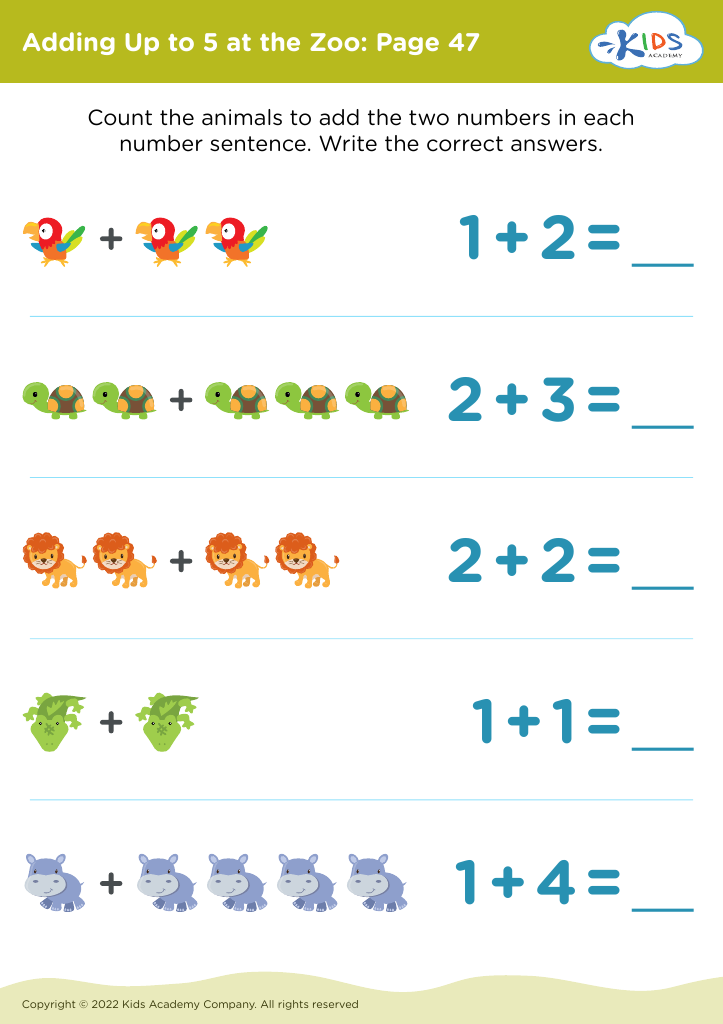



Fine motor skills are crucial for young children’s development, as they enable them to effectively perform tasks that require precise hand movements, like writing numbers. Fostering these skills at an early age, particularly through engaging activities like "Adding at the Zoo," can significantly benefit children aged 3-5 in multiple ways.
First, activities that involve fine motor skills, such as gripping a pencil or threading beads, contribute to the development of hand-eye coordination and finger strength. These foundational skills are essential for writing numbers correctly and legibly, which is foundational for academic success in math and other subjects.
Second, embedding mathematical concepts like addition into these activities makes learning feel more like play and less like work. An activity themed around a zoo—where children might count lions or add tigers—provides a narrative that captures their imagination and keeps them engaged. This dual approach of blending fine motor skills with basic arithmetic lays a strong foundation for future learning by turning everyday tasks into educational experiences.
Finally, fine motor activities are excellent for building patience and concentration. For children aged 3-5, the more they exercise these skills, the better equipped they'll be to tackle more complex tasks ahead. Parents and teachers who invest time in activities that combine motor skills with learning ensure a well-rounded educational experience.