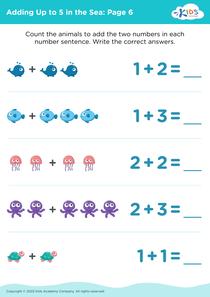
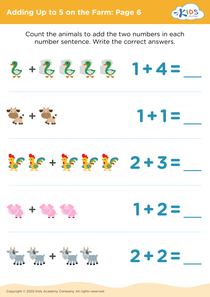
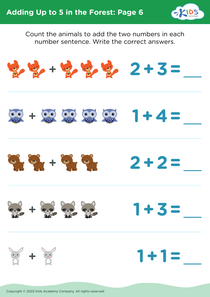
Hand-eye Coordination Adding at the Zoo Worksheets for Ages 3-5
3 filtered results
-
From - To
Enhance your child's hand-eye coordination and math skills with our "Hand-eye Coordination Adding at the Zoo Worksheets" designed for ages 3-5! These engaging and interactive worksheets use vibrant zoo-themed visuals to make learning fun. As children match animals and earn stickers, they develop essential pre-math skills while improving their hand-eye coordination. Perfect for preschool learning environments or at-home activities, these worksheets encourage counting, addition, and fine motor skills in an enjoyable way. Watch your little ones grow confident in their early math abilities and coordination as they explore their favorite animal friends. Download now and let the learning adventure begin!
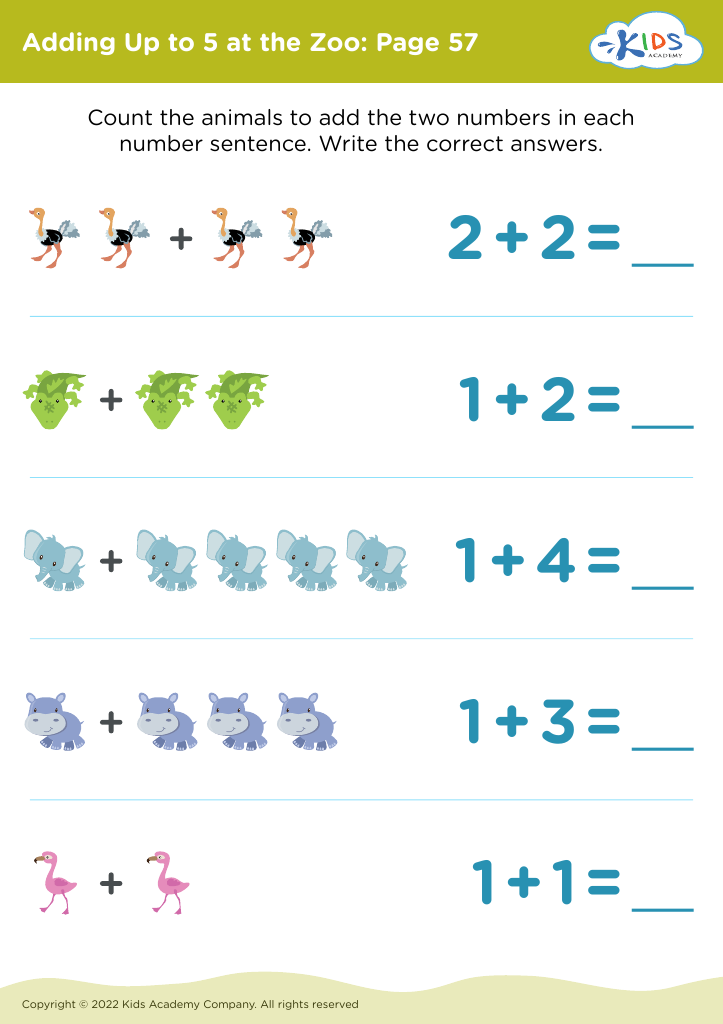
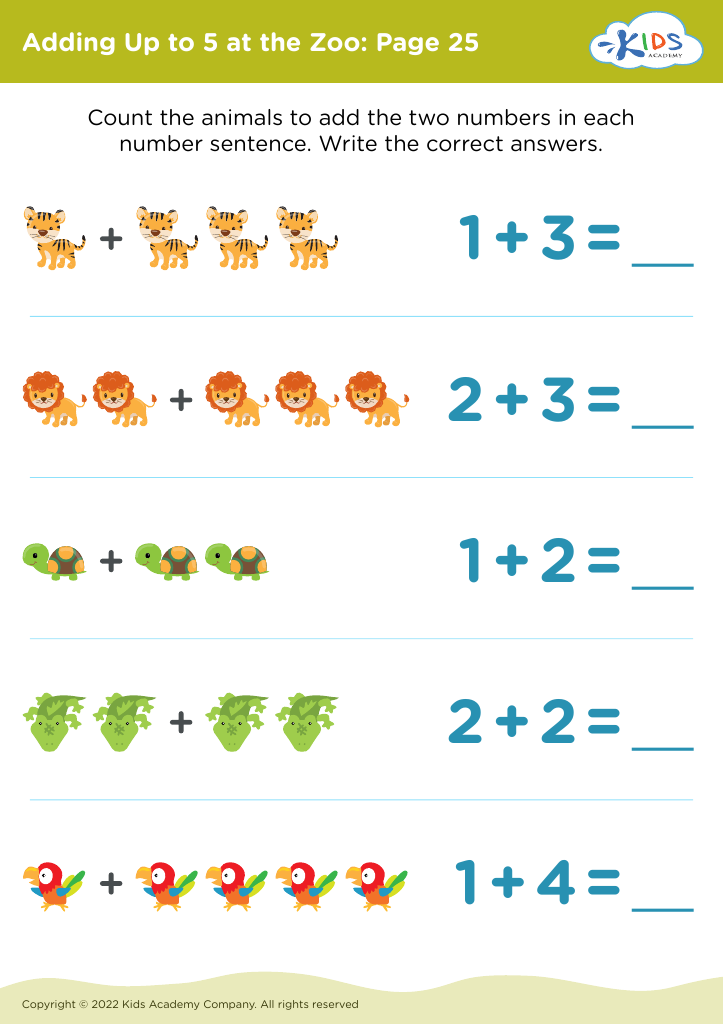
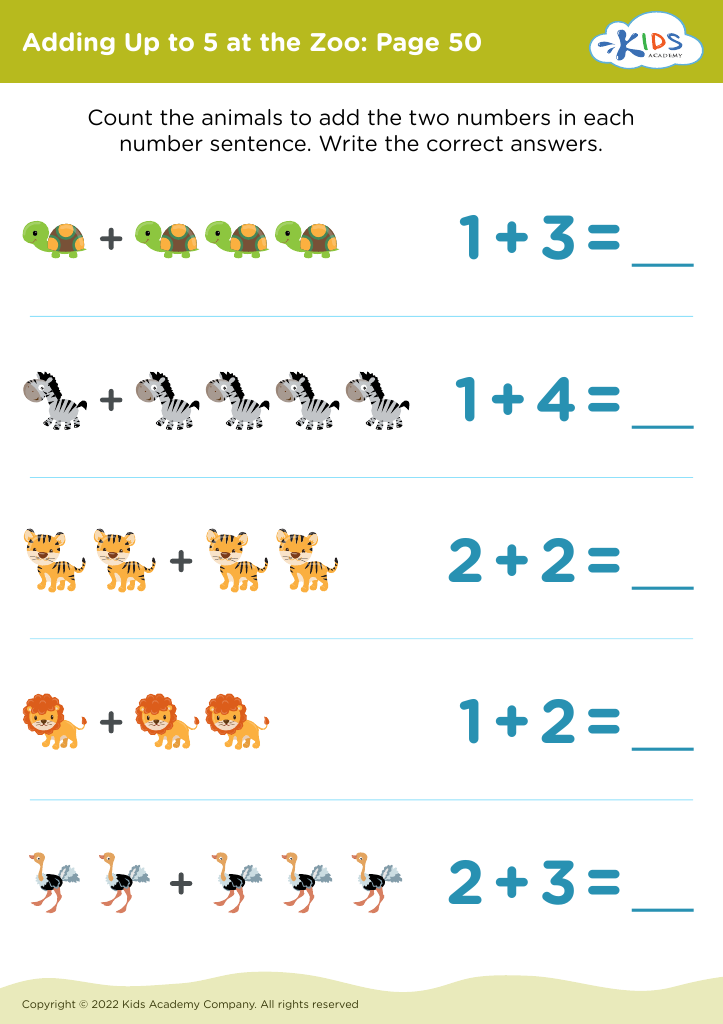



Hand-eye coordination is a crucial skill that develops through early childhood activities, and parents and teachers should pay special attention to it, particularly in engaging settings like a zoo. For ages 3-5, activities like "Hand-eye Coordination Adding at the Zoo" can enhance learning through play, combining movement with cognitive skills. This type of activity allows children to engage both physically and mentally, which is essential in early development.
When children participate in fun, interactive games that promote hand-eye coordination, they are improving their ability to control hand movements while visually tracking objects. This is foundational for several tasks like writing, drawing, catching a ball, and even more complex activities as they grow.
Moreover, learning while exploring the zoo adds a layer of excitement, as children can connect abstract concepts, like addition, with real-world examples like counting animals. This contextual learning fosters curiosity, promotes cognitive development, and increases the likelihood that children retain information.
Finally, strong hand-eye coordination enhances fine motor skills, which are vital for daily activities and future academic success. Ultimately, by fostering these skills early through enjoyable activities, parents and teachers set children on a path for lifelong physical and cognitive development.