Problem Solving Adding at the Zoo Worksheets for Ages 3-5
3 filtered results
-
From - To
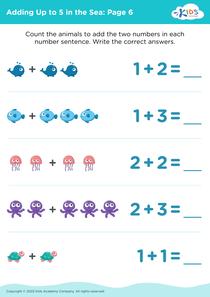
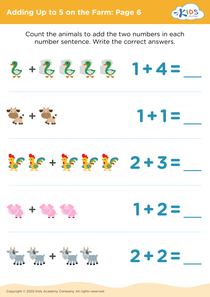
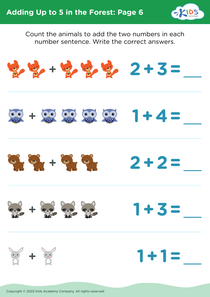
Explore our engaging "Problem Solving Adding at the Zoo" worksheets, specially designed for young learners aged 3-5! These colorful, interactive resources introduce basic addition concepts through fun zoo-themed visuals. Kids will help adorable animals gather their friends, enhancing their counting skills and ability to solve simple math problems. With various activities that encourage critical thinking and imaginative play, children will love learning through play. Perfect for preschool or homeschool settings, these worksheets will make math enjoyable while developing essential problem-solving skills. Discover the joy of early math with our captivating Zoo Adventure worksheets today!
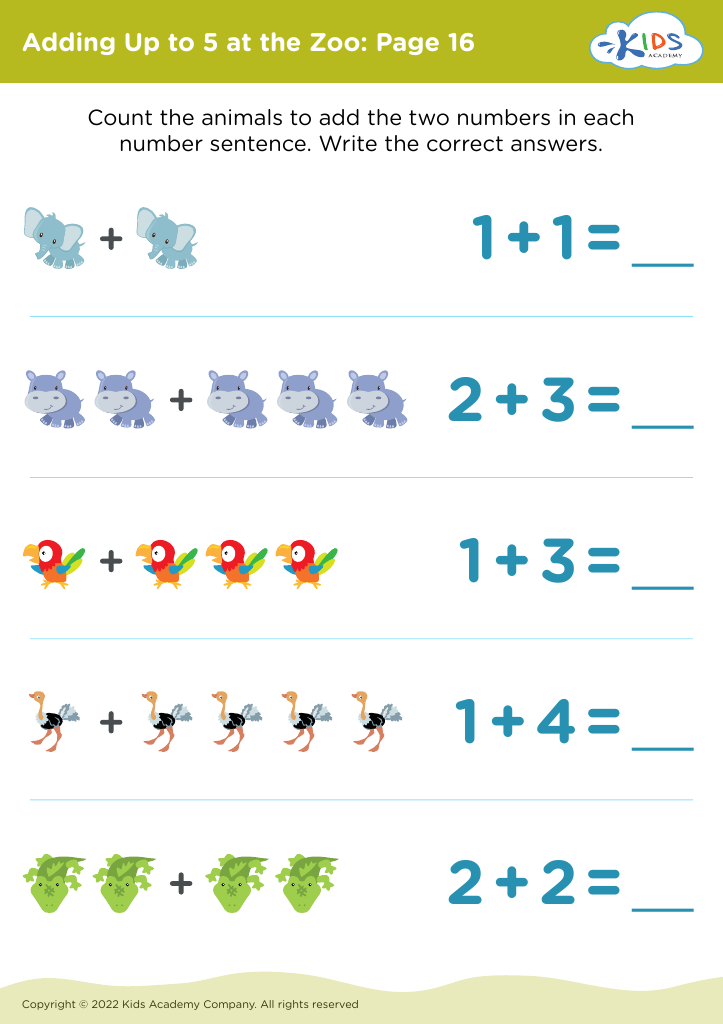
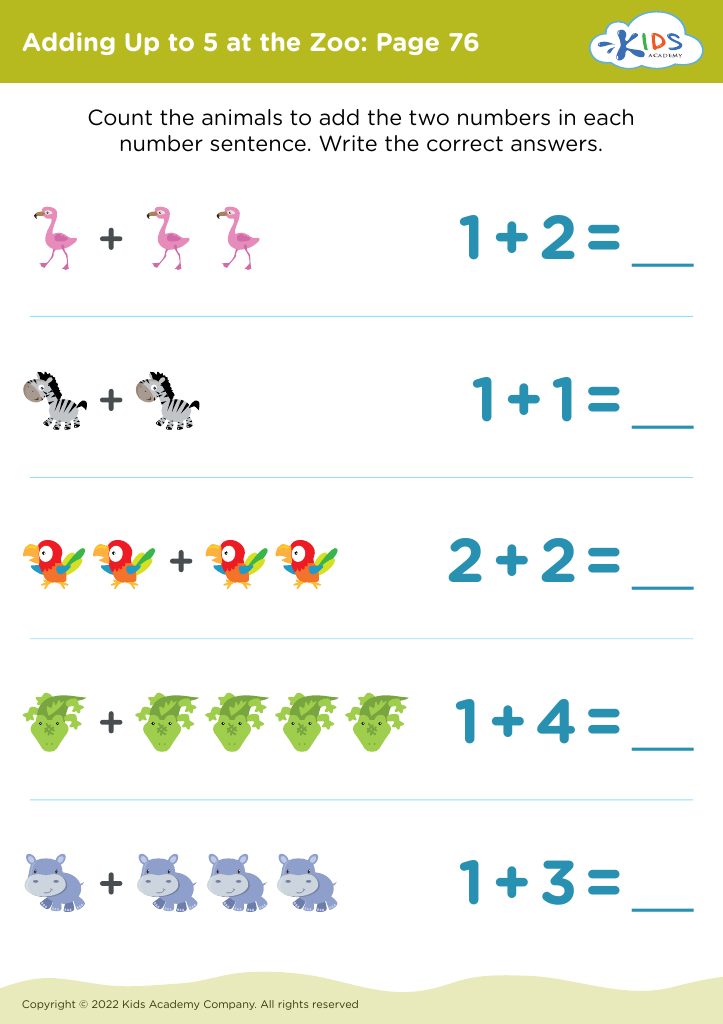
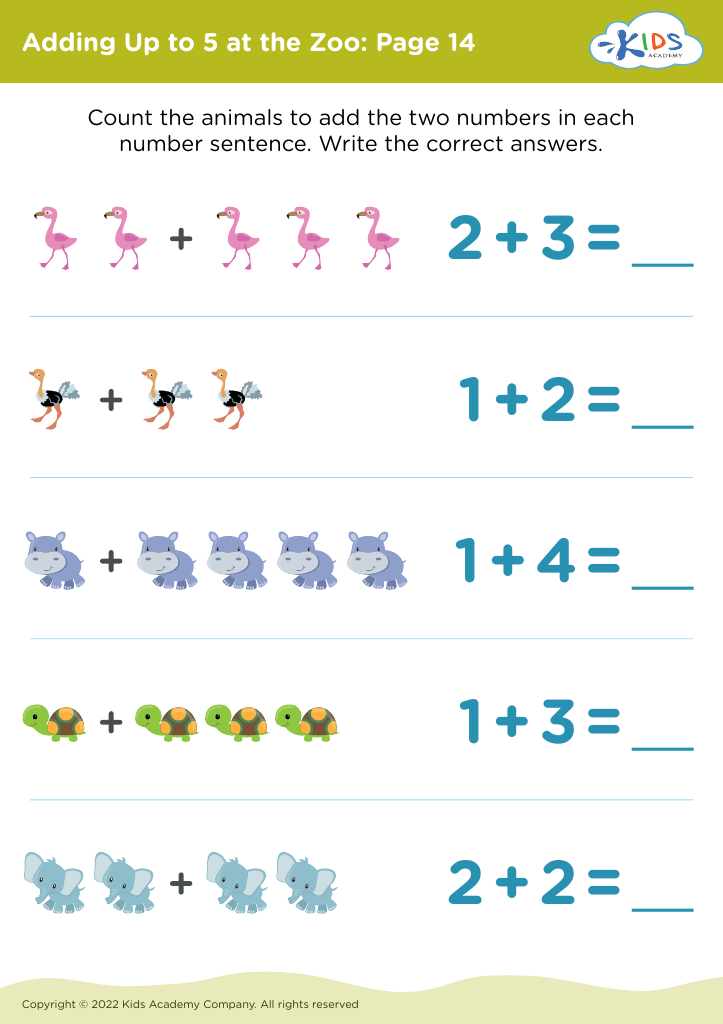



Problem Solving Adding at the Zoo is a valuable educational activity for children ages 3-5, and it's crucial for both parents and teachers to prioritize such experiences. This engaging approach introduces foundational math concepts in a fun, relatable environment, allowing young learners to explore addition through the context of animals, enhancing their interest in learning.
By participating in this type of problem-solving activity, children develop critical thinking skills and learn to approach challenges methodically. As they add different animals or count their unique features, they cultivate mathematical fluency and number sense, laying a strong foundation for future learning. Furthermore, integrating animals and zoos into lessons helps capture children's imaginations, making math enjoyable and engaging.
Moreover, this activity promotes social skills as children often work collaboratively, sharing ideas and solutions. Parents and teachers play a vital role in facilitating these experiences, helping children articulate their thought processes and encouraging them to engage actively in learning. Ultimately, focusing on problem-solving in fun contexts like the zoo empowers children, fostering a positive attitude towards math and reinforcing vital cognitive and interpersonal skills that will benefit them throughout their educational journey.