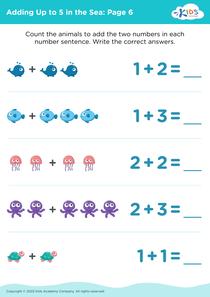
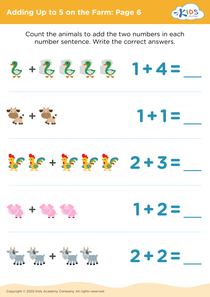
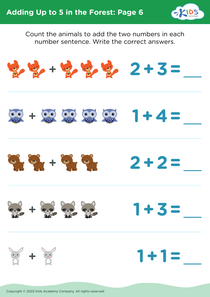
Problem-Solving Skills Adding at the Zoo Worksheets for Ages 3-5
4 filtered results
-
From - To
Unlock the joy of learning with our "Problem-Solving Skills Adding at the Zoo" worksheets, specially designed for ages 3-5! These engaging activities encourage young learners to explore mathematical concepts through delightful zoo-themed scenarios. Kids will love helping animals find their way to fun solutions as they practice addition and problem-solving skills. Each worksheet is crafted to enhance critical thinking while fostering early math abilities, making learning both enjoyable and educational. Perfect for home or classroom use, these worksheets will inspire curiosity and build confidence in young mathematicians as they embark on their zany zoo adventures!
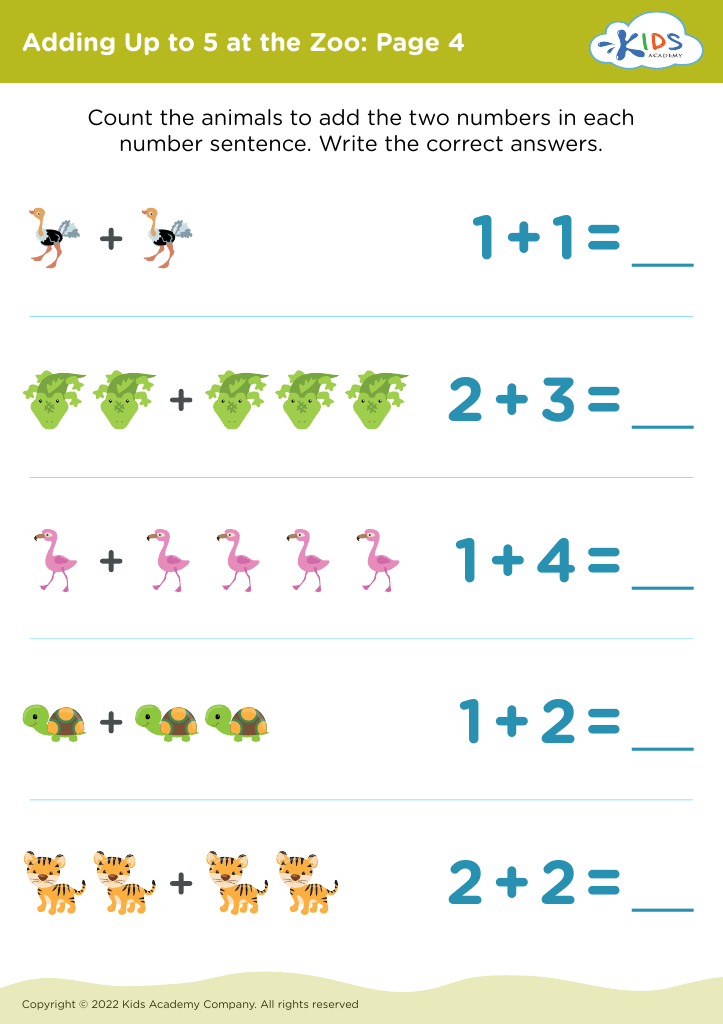
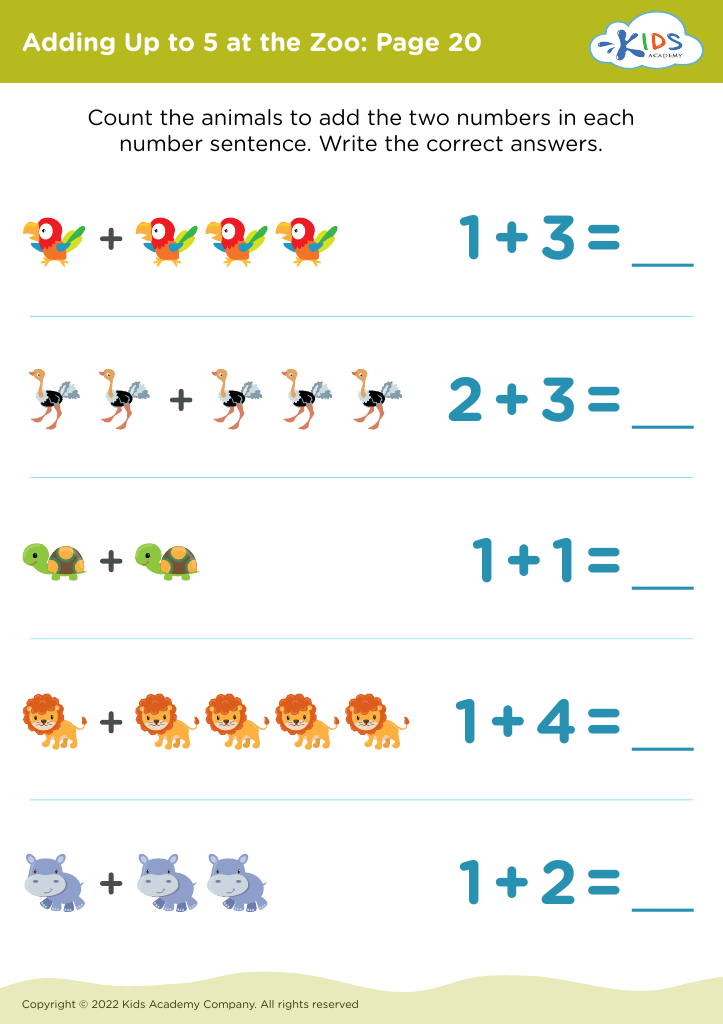
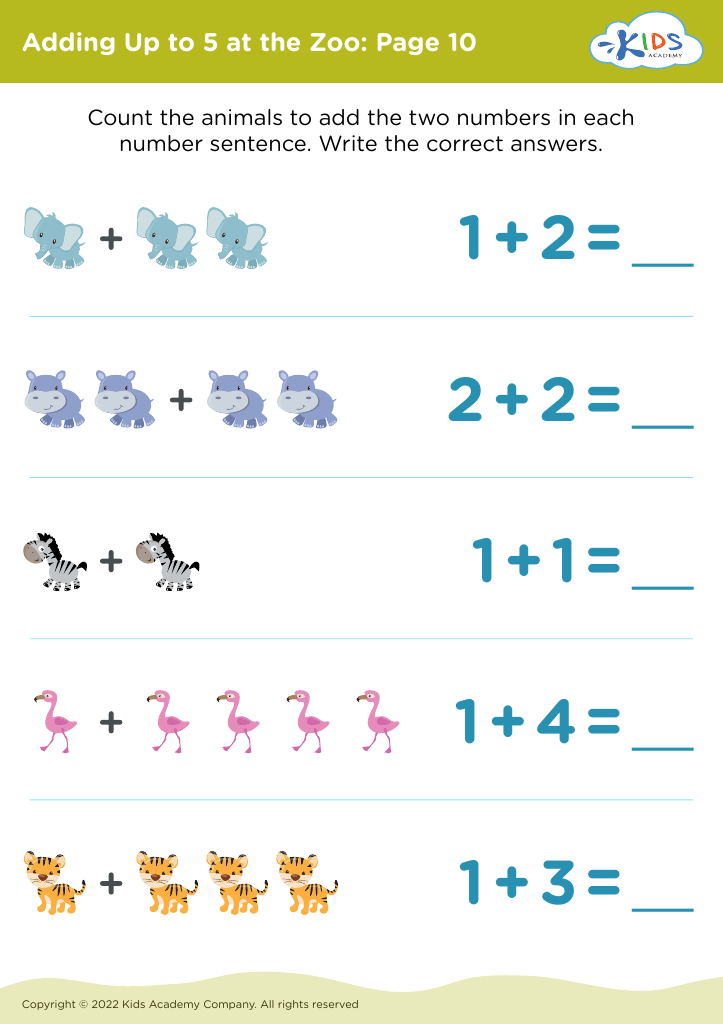
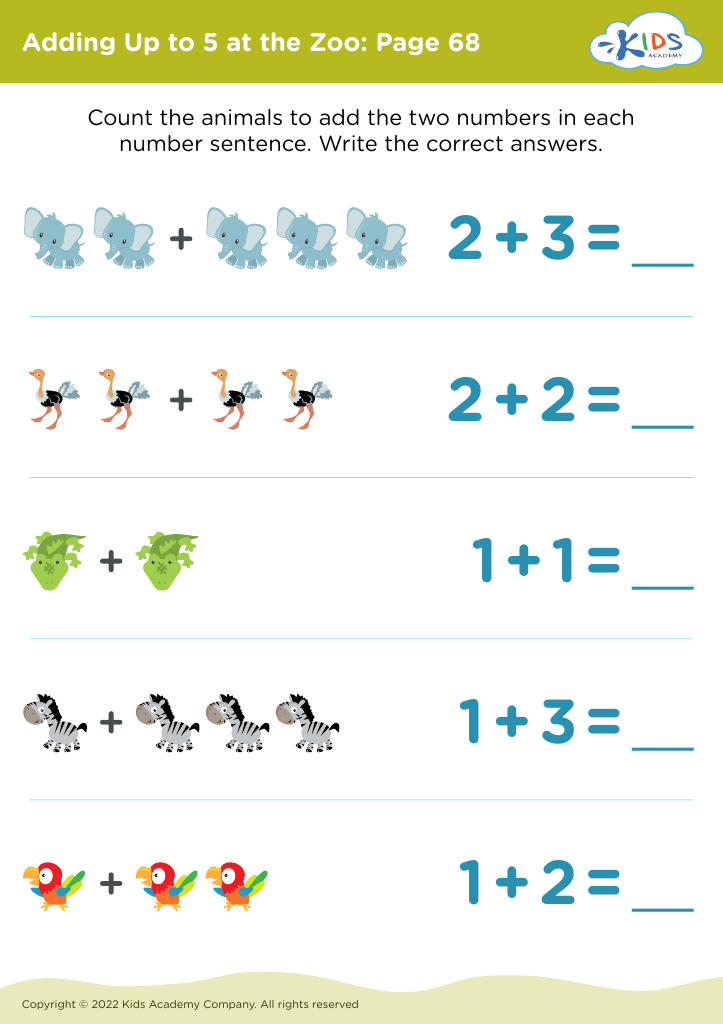



Problem-solving skills are essential for young children, and activities like "Problem-Solving Skills Adding at the Zoo" for ages 3-5 provide an engaging and interactive way to develop these abilities. First and foremost, such activities encourage critical thinking, which is vital for lifelong learning. When children encounter challenges or puzzles related to zoo animals, they learn to analyze the situation, consider various solutions, and apply their reasoning skills.
Additionally, learning through play fosters curiosity and creativity. A zoo-themed approach not only captures children's imaginations but also offers a rich context for understanding numbers and addition in a fun manner. By integrating mathematics within a familiar setting, children can see the real-world application of their skills, making learning more meaningful.
Collaboration and communication become inherent in these activities as children often work in pairs or groups. They learn to articulate their thoughts, listen to others, and work towards a common goal. This environment supports social-emotional development—a key aspect of early childhood education.
Ultimately, parents and teachers should prioritize such problem-solving activities as they lay the foundation for essential cognitive, social, and emotional skills that prepare children for future academic challenges and life experiences.