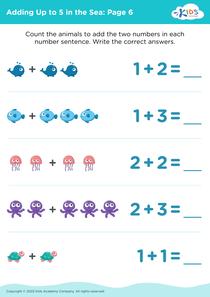
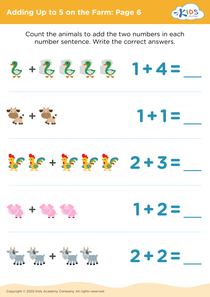
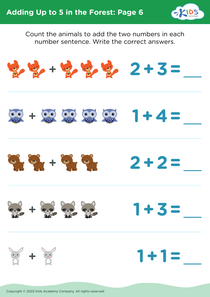
Visual comprehension Adding at the Zoo Worksheets for Ages 3-5
3 filtered results
-
From - To
Introduce your little learners to the magical world of math with our "Visual Comprehension Adding at the Zoo" worksheets, specially designed for ages 3-5. These engaging worksheets effortlessly combine fun zoo-themed activities with essential math skills, allowing children to practice addition through vibrant visuals and captivating stories. Perfect for building early math confidence, each worksheet encourages critical thinking and visual comprehension, making learning both enjoyable and effective. Explore how animals, colors, and numbers blend seamlessly to transform the way children perceive math. Ideal for both classroom use and at-home practice, making math an adventure every day!
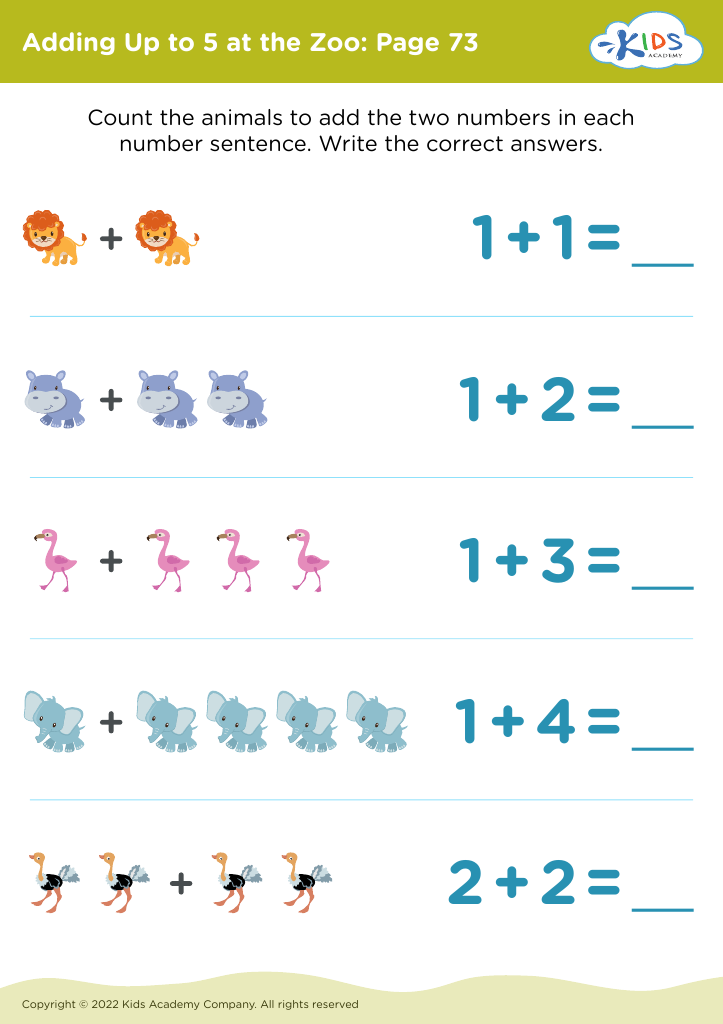
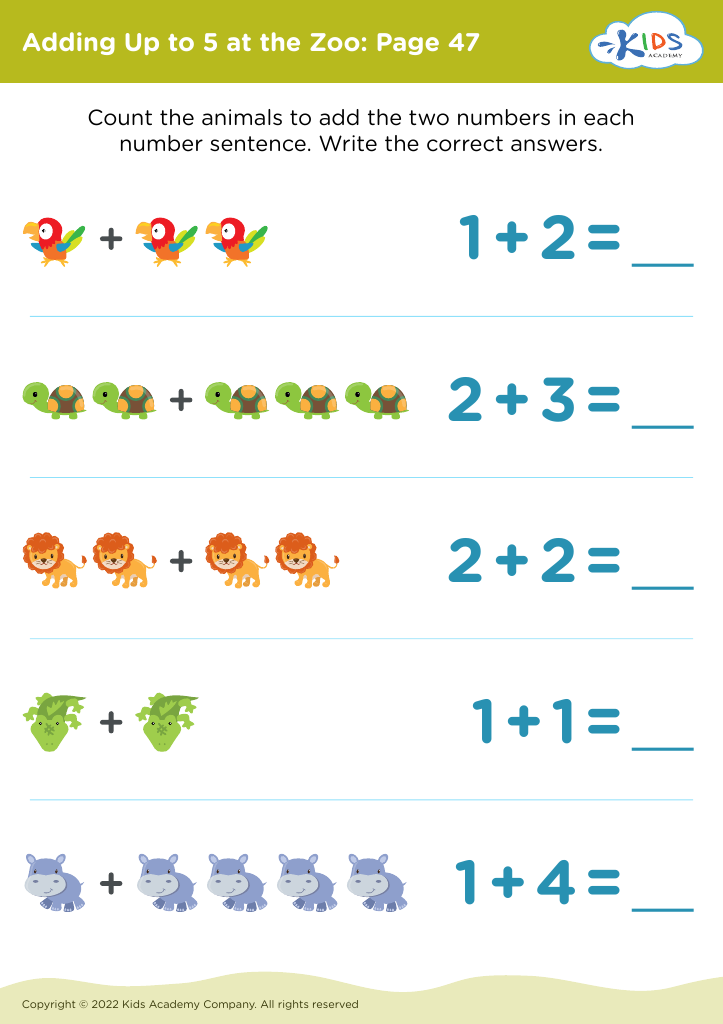
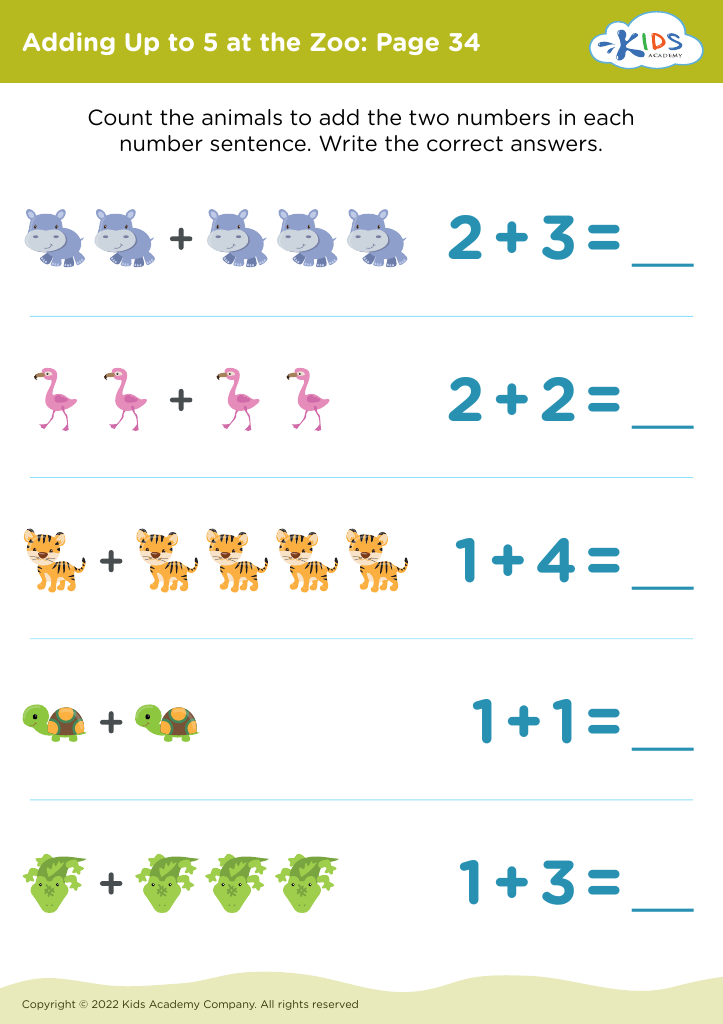



Visual comprehension activities such as "Adding at the Zoo" are crucial for young children aged 3-5 as they lay the foundation for essential cognitive skills in a fun and engaging manner. At this developmental stage, children are primarily visual learners, and integrating visuals aids in better retention and understanding of new concepts. By incorporating animals at the zoo into math activities, children can connect abstract numbers to concrete real-world objects, making addition more intuitive and enjoyable.
Early exposure to addition through visual means helps young learners grasp basic math concepts in a more natural and less intimidating way. It encourages the development of problem-solving and critical thinking abilities, which are fundamental for future academic success. Furthermore, these activities enhance attention span, focus, and the ability to follow instructions.
Parents and teachers should also recognize that visual comprehension exercises can support language development by introducing new vocabulary related to both math and the zoo theme. It paves the way for collaborative learning, encouraging interaction as children discuss and solve problems together, thereby boosting their social skills.
In summary, "Adding at the Zoo" provides a multidimensional approach to learning that combines visual stimuli, mathematical thinking, language development, and social interaction, making it an invaluable tool for holistic early childhood education.